
How to Train Your Brain to Focus for Better Grades

The Science of Distraction in the Digital Age
In today's fast-paced university environment, staying focused feels like a superpower. Between the constant ping of notifications and the pressure of looming deadlines, our brains are often pulled in a dozen different directions at once. To understand how to train your brain to focus, we first need to acknowledge that focus is not a fixed trait. It is a muscle that can be strengthened through consistent practice and the right environment. Most students struggle not because they lack willpower, but because they are fighting against their brain's natural tendency to seek out dopamine-rich distractions like social media.
Building concentration starts with understanding your cognitive load. Your brain can only handle a certain amount of information at one time. When you try to multitask by watching a lecture while scrolling through TikTok, you are essentially fracturing your attention. This leads to a phenomenon called attention residue, where part of your focus remains stuck on the previous task, making it harder to engage deeply with your studies. To overcome this, you must learn to create boundaries that protect your mental energy and allow 1/2 of your brain to enter a state of deep work.
The Power of Single-Tasking
Despite what many university students believe, multitasking is a myth. Our brains simply switch between tasks rapidly, which increases the likelihood of errors and slows down the learning process. Training your focus begins with the commitment to single-tasking. This means when you are studying for a biology exam, you are only doing that one thing. No extra tabs, no music with lyrics that distract, and certainly no phone within arm's reach. By focusing on one objective at a time, you allow your neural pathways to strengthen around that specific subject, leading to better long-term retention.
Setting Up a Focus-Friendly Environment
Your physical space has a massive impact on your mental state. If your desk is cluttered or you are trying to study in a noisy dorm lounge, your brain is constantly processing external stimuli, leaving less power for your coursework. Find a dedicated study spot that your brain associates only with work. This triggers a psychological shift every time you sit down. Minimize visual clutter and use tools like noise-canceling headphones to signal to your brain that it is time to transition into a high-focus mode. Success in university is often less about working harder and more about working in an environment that allows you to be smart.
Harnessing Technology with Duetoday AI
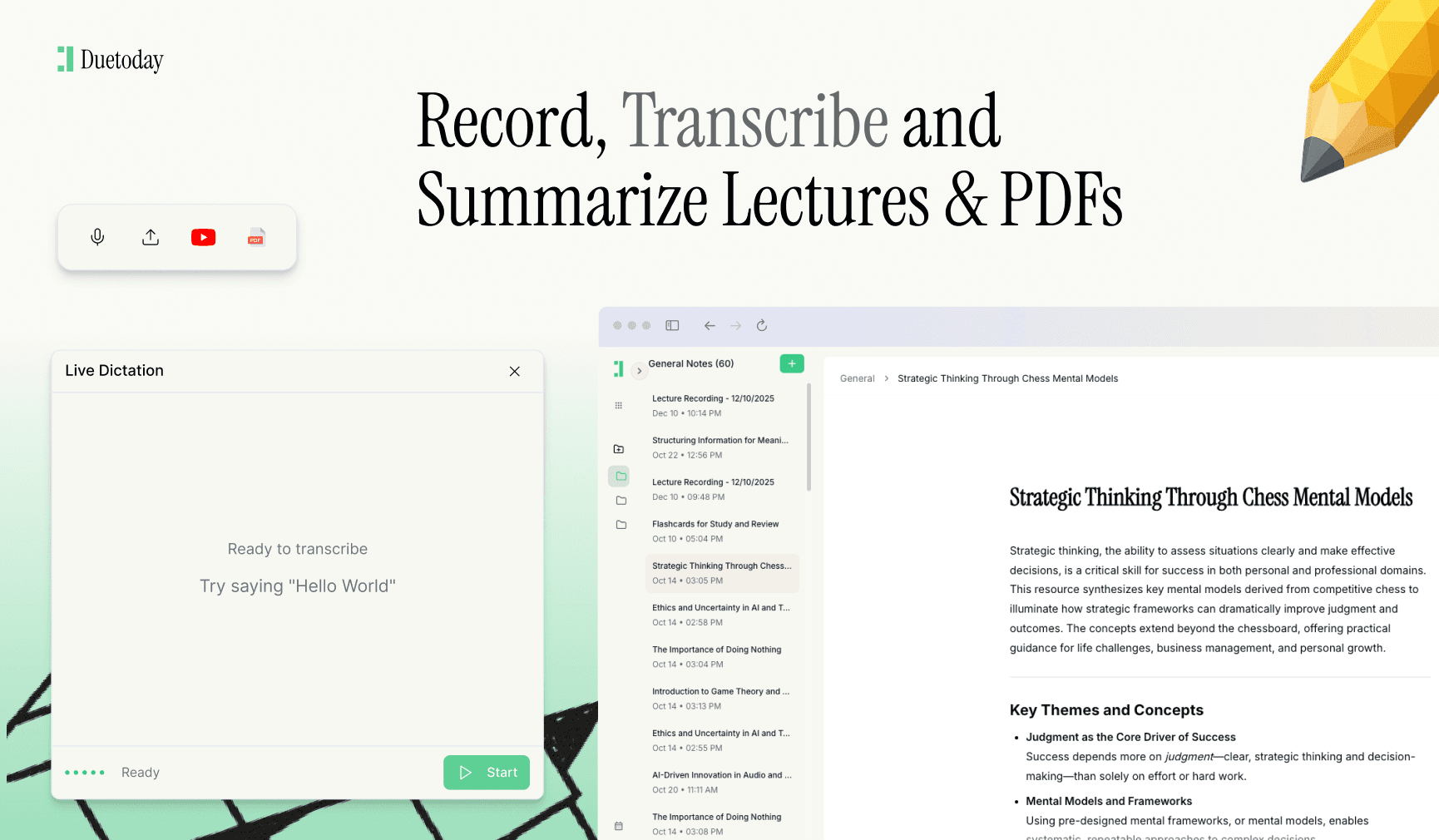
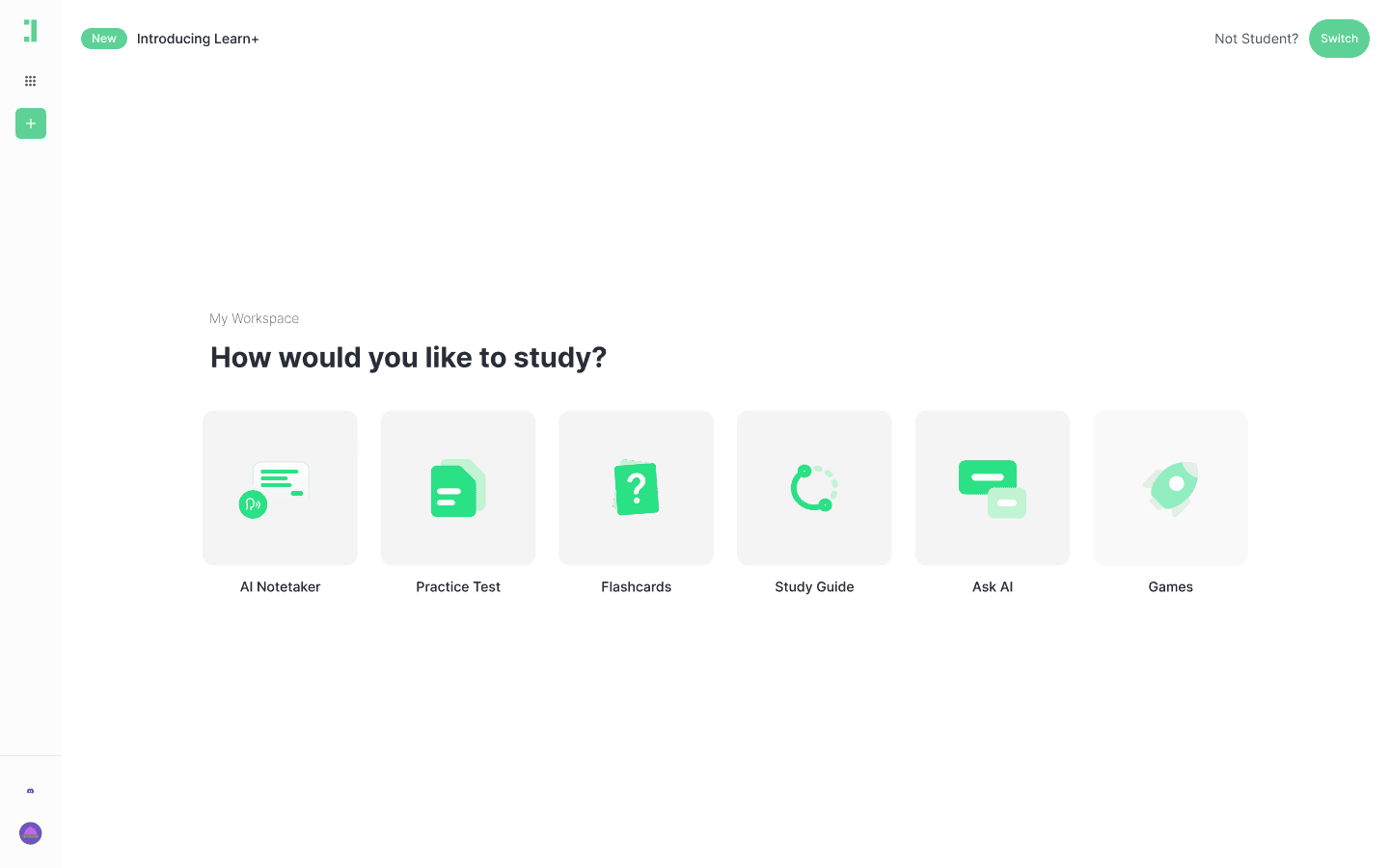
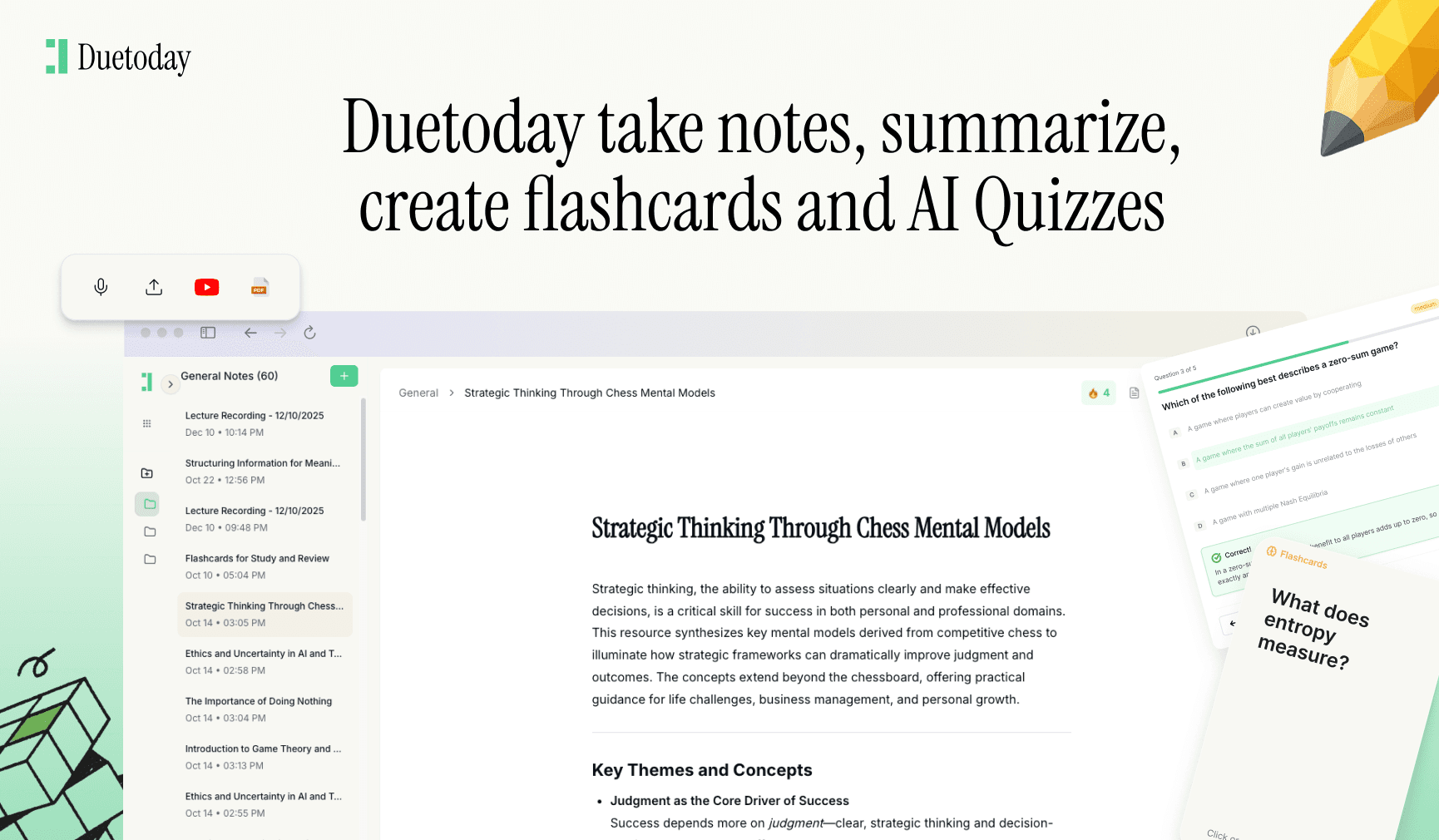
One of the hardest parts of focus is the overwhelming feeling of staring at a massive pile of notes or a 50-page PDF. This is where Duetoday AI becomes an essential part of your study toolkit. Duetoday is an AI-powered learning platform that turns lectures, PDFs, and notes into summaries, flashcards, quizzes, and structured study tools automatically.
It acts like a personalized AI tutor, helping students learn faster, stay organized, and retain information without spending hours rewriting notes. By automating the organizational side of studying, Duetoday AI lets you stay focused on the actual learning, effectively removing the friction that often leads to procrastination.
The Role of Mindfulness and Mental Breaks
You cannot expect your brain to focus for eight hours straight. True cognitive endurance requires scheduled breaks. Techniques like the Pomodoro method, where you work for 25 minutes and break for five, work because they give your brain a definitive finish line. During these breaks, it is crucial to step away from screens. Go for a short walk, stretch, or simply close your eyes. This allows your brain to consolidate the information you just processed. Over time, you can gradually increase your work intervals as your focus muscle grows stronger and more resilient.
Nutrition and Sleep for Cognitive Performance
No amount of productivity hacks can replace the foundation of a healthy brain. For university students, sleep is often the first thing to go, but it is the most critical factor for concentration. During sleep, your brain flushes out toxins and solidifies memory. Similarly, your diet affects your focus levels. Avoid heavy, sugar-laden snacks that cause a energy crash. Instead, opt for brain foods like nuts, berries, and plenty of water. When your body is fueled correctly, your brain doesn't have to fight physical fatigue while trying to tackle complex academic problems.
Consistency Over Intensity
Training your brain is a marathon, not a sprint. You might find it difficult to focus for even fifteen minutes when you first start. That is okay. The key is consistency. By showing up every day and practicing these focus techniques, you are rewiring your brain to handle deeper levels of concentration. Don't get discouraged by setbacks. If you find your mind wandering, gently acknowledge the thought and pull your attention back to the task at hand. This act of redirection is exactly how the 'focus muscle' is built. With time, you will find that getting into 'the zone' becomes faster and easier.

How long does it take to train my brain to focus?
It typically takes about two to four weeks of consistent practice to notice a significant improvement in your ability to stay focused on a single task.
Can music help me focus while studying?
Lofi beats or classical music can help drown out background noise, but music with lyrics often distracts the brain's language processing centers.
Is it better to study at night or in the morning?
This depends on your internal circadian rhythm, but most people find their peak cognitive focus occurs about two to four hours after waking up.
How do I stop procrastinating on hard tasks?
Break the task into the smallest possible steps and use tools like Duetoday AI to summarize complex materials so the starting point feels less intimidating.