
How to Stay Productive During Semester

The Reality of University Life and Productivity
Starting a new semester always feels like a fresh beginning. You have brand new notebooks, a clean digital workspace, and the best intentions to stay on top of your work. However, as the weeks progress, the workload starts to pile up. Lectures become more complex, assignments begin to overlap, and the social pressure of university life starts to compete for your time. Staying productive isn't about working more hours; it is about working smarter and managing your energy effectively throughout the day.
The first step to maintaining high productivity is acknowledging that your brain has limits. You cannot expect to operate at 100% capacity every hour of the day. Successful students are those who identify their peak performance times and protect those hours for deep work. Whether you are a morning person who tackles calculus at 8 AM or a night owl who writes essays at midnight, knowing your biological clock is the foundation of a productive semester. Without a strategy, you end up reacting to deadlines rather than proactively managing your progress.
Mastering Your Schedule and Routine
One of the biggest traps students fall into is the 'empty calendar' fallacy. When you look at your timetable and see big gaps between lectures, it is easy to assume you have plenty of time. In reality, those gaps are often wasted on mindless scrolling or long coffee breaks that don't actually provide rest. To combat this, try implementing time-blocking. This involves assigning specific tasks to specific hours of your day. By treating your study sessions as non-negotiable appointments, you reduce the decision fatigue of wondering what to work on next.
Environment also plays a massive role in your output. While it might be tempting to work from your bed, your brain associates that space with rest. Finding a designated study spot, whether it is a specific corner of the library or a quiet cafe, helps trigger a 'work mode' mental state the moment you sit down. Consistency in where you work can be just as important as when you work. Keep your desk clutter-free and ensure you have all your necessary materials before you start to avoid unnecessary interruptions.
Leveraging Technology for Efficient Learning
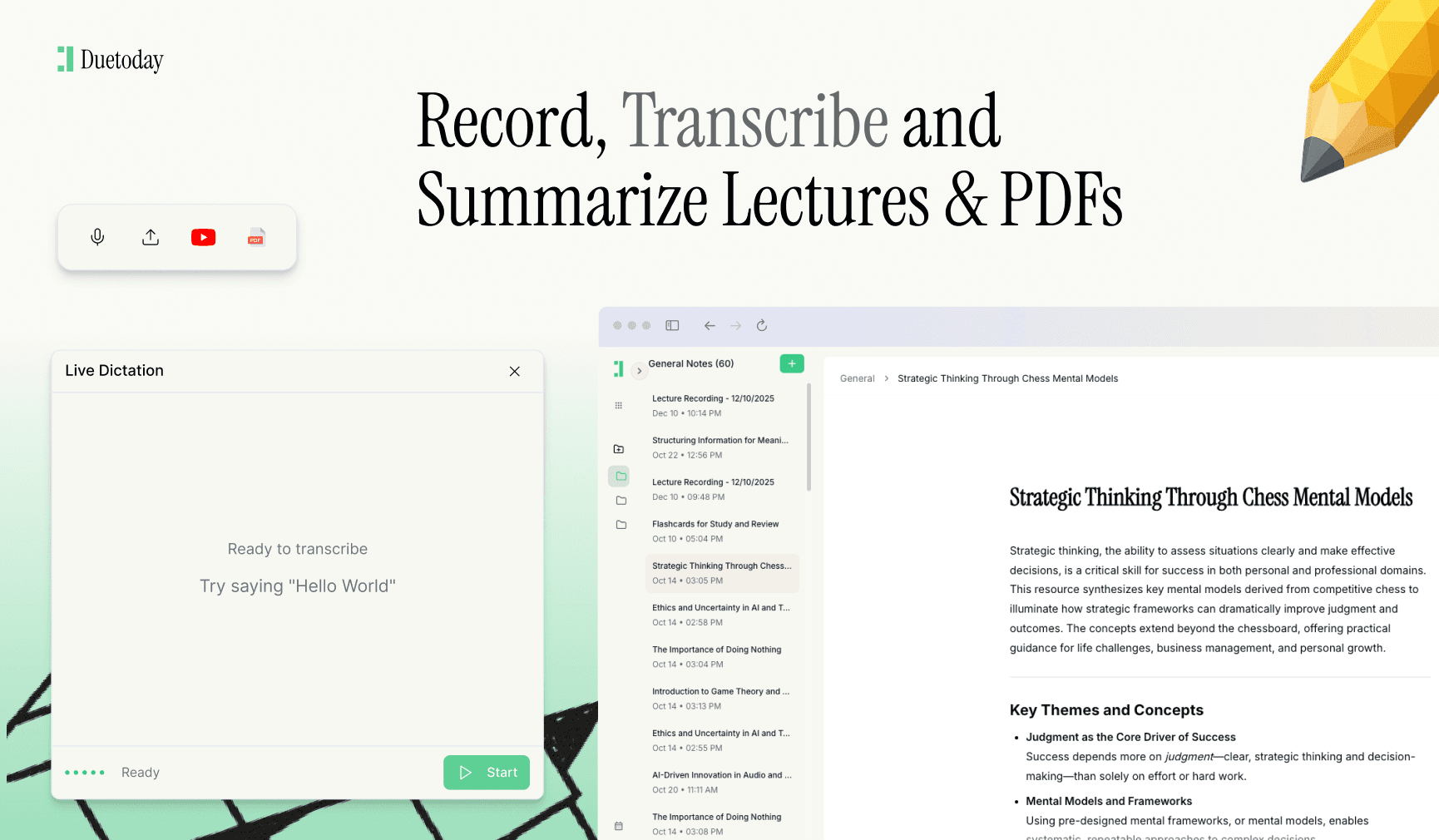
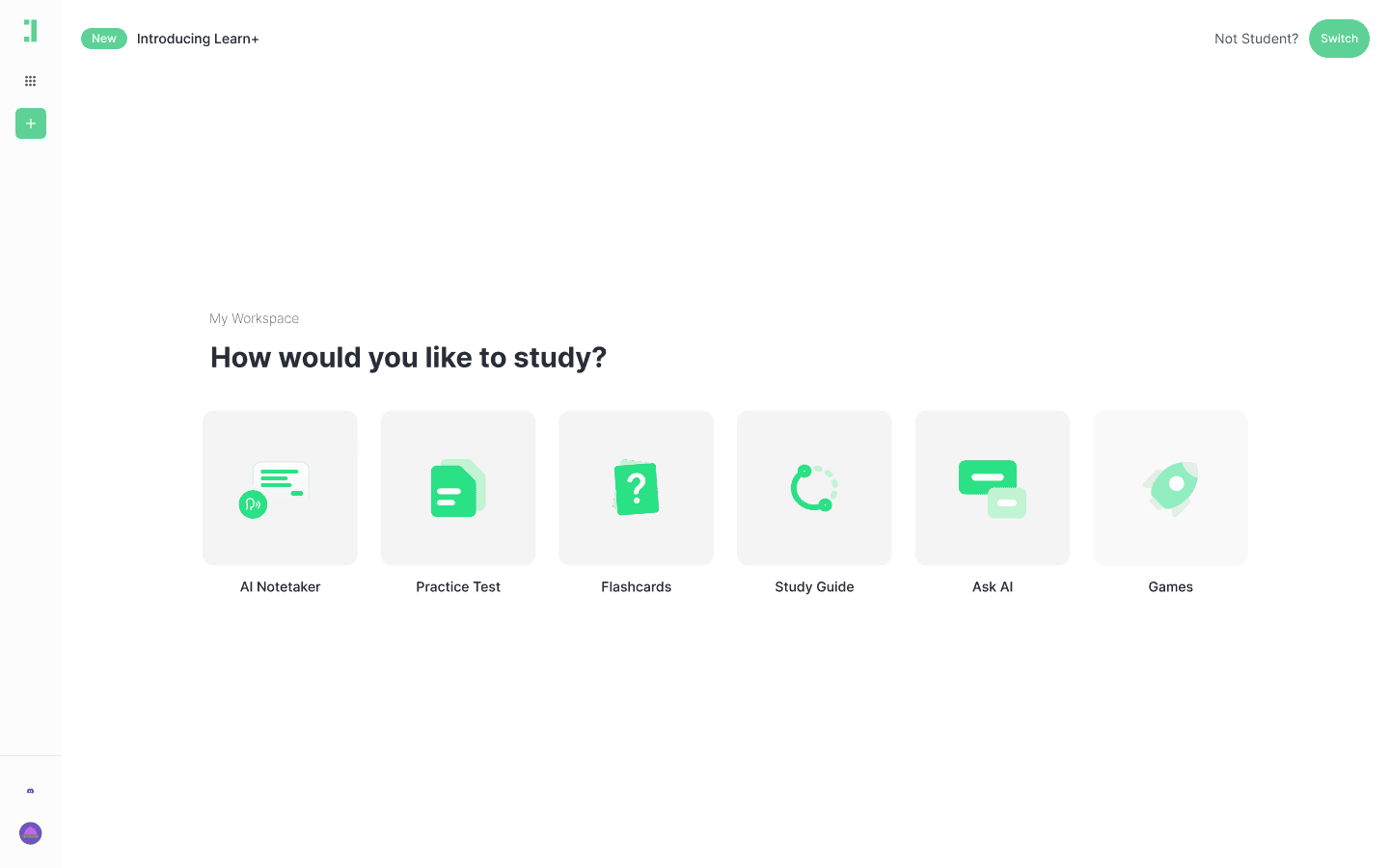
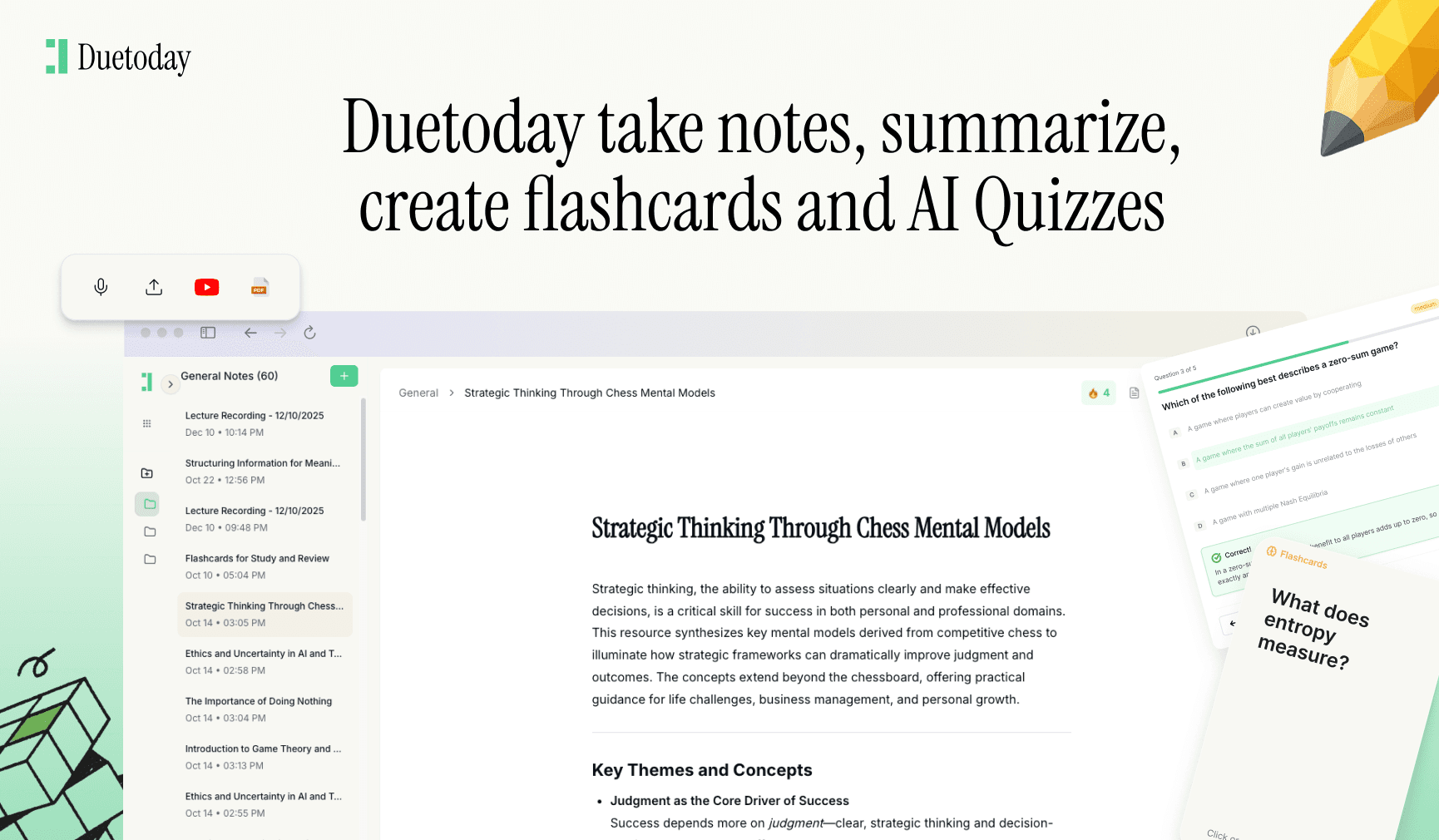
In the modern academic landscape, using the right tools can make a significant difference in how you handle information. Traditional note-taking often results in pages of text that you never revisit. This is where Duetoday AI becomes a game-changer for university students. Duetoday is an AI-powered learning platform that turns lectures, PDFs, and notes into summaries, flashcards, quizzes, and structured study tools automatically. It acts like a personalized AI tutor — helping students learn faster, stay organized, and retain information without spending hours rewriting notes. Instead of wasting time manually formatting study guides, you can let the AI handle the heavy lifting while you focus on actually understanding the material.
Maintaining Long-Term Mental Energy
Productivity is a marathon, not a sprint. Many students make the mistake of pulling all-nighters early in the term, only to burn out by the time finals arrive. To stay productive for the full three or four months of a semester, you must prioritize recovery. This means getting enough sleep, staying hydrated, and taking genuine breaks. A break isn't just a pause in work; it is an activity that recharges you. Stepping away from screens to take a walk or talk to a friend can provide more mental clarity than twenty minutes spent on social media during a study pause.
Another essential habit is the weekly review. Every Sunday, take twenty minutes to look at your upcoming week. Check your syllabus for hidden deadlines, organize your tasks by priority, and plan your grocery shopping or gym sessions. This small habit prevents the 'Monday morning panic' and allows you to start the week with a clear roadmap. When you know exactly what needs to be done, you spend less time worrying and more time executing. Productivity is often just the absence of confusion.
The Power of Active Recall and Spaced Repetition
Studying for hours is useless if you don't actually retain the information. Many students lean on passive learning, like re-reading textbooks or highlighting sentences. While these feel productive, they are often the least effective ways to learn. Instead, focus on active recall. Testing yourself on the material forces your brain to retrieve information, which strengthens neural pathways. Combining this with spaced repetition—reviewing the content at increasing intervals—ensures that the information moves from your short-term memory to your long-term storage.
Finally, don't be afraid to ask for help or collaborate with peers. Sometimes, a fifteen-minute conversation with a classmate can clarify a concept that you’ve been struggling with for hours. University is a collaborative environment, and using the resources available to you—whether it is office hours with your professor, study groups, or digital learning assistants—is a sign of a smart and productive student. By combining disciplined routines with modern technology and a focus on well-being, you can navigate even the toughest semester with confidence and success.

How can I stop procrastinating on big assignments?
The best way to stop procrastinating is to break the project into tiny, manageable tasks. Instead of writing 'Research Essay' on your to-do list, write 'Find three academic sources.' It is much easier to start a small task than a huge one.
How many hours should I study per day?
Quality matters more than quantity. Focus on 3 to 4 hours of deep, uninterrupted work rather than 8 hours of distracted studying. Use the Pomodoro technique to maintain focus.
What should I do if I feel burnt out mid-semester?
If you feel burnt out, take a full day off from all academic work. Total rest can often reset your motivation levels more effectively than trying to push through the exhaustion.
Is it better to study alone or in groups?
This depends on your learning style. Groups are great for discussing concepts and staying accountable, while solo study is usually better for intense focus and memorization.