How to Study in Short Time Frames: The Ultimate Student Guide

Mastering the Art of Micro-Studying
Being a university student often feels like a race against the clock. Between lectures, social commitments, and part-time jobs, finding a solid four-hour block to sit in the library is nearly impossible. Many students wait for these rare long stretches of time, but the secret to academic success actually lies in mastering short time frames. Learning how to study in thirty-minute bursts can be more effective for your brain than a marathons session fueled by caffeine and stress.
The Power of the Pomodoro Technique
One of the most effective ways to handle short windows of time is the Pomodoro Technique. This method involves breaking your work into 25-minute intervals followed by a five-minute break. When you only have a small window, the pressure of the ticking clock actually helps you stay focused. Instead of scrolling through your phone, you know you only have twenty-five minutes to finish a specific task, which creates a healthy sense of urgency.
High-Intensity Focus Sessions
The key to making short study sessions work is intensity. You cannot afford to spend ten minutes setting up your desk if you only have thirty minutes total. To make this work, you need to have your materials ready at all times. Keep your bag organized so you can whip out your notebook the moment you sit down on the bus or wait for a friend. This transition from doing nothing to active learning is what separates high achievers from the rest.
Breaking Down Your Syllabus
Large tasks are the enemy of short time frames. You cannot "study chemistry" in fifteen minutes, but you can definitely "review three chemical structures." To utilize small gaps in your schedule, you must break your syllabus into micro-tasks. Look at your to-do list and identify things that take less than twenty minutes. This might include answering two practice questions, reading one page of a research paper, or reviewing a handful of vocabulary terms.
Using Environment as a Trigger
Your brain loves patterns. If you train yourself to study every time you are in a specific environment, like the campus coffee shop or the quiet zone of the library, you will find it easier to drop into a flow state instantly. Even if you only have twenty minutes between classes, sitting in your designated study spot tells your brain it is time to work. This reduces the mental friction of starting, allowing you to get straight to the material.
Leveraging Duetoday AI for Efficiency
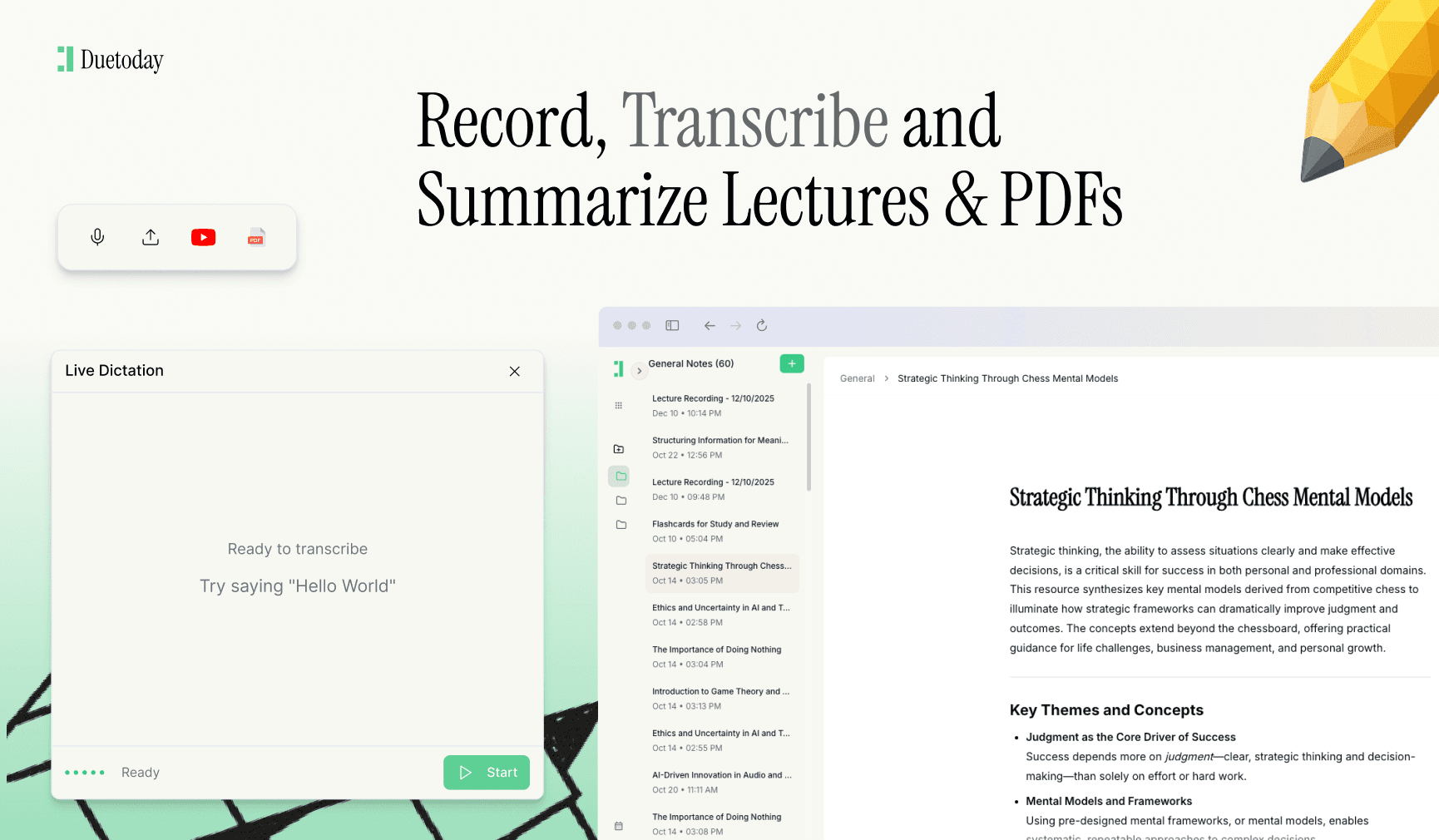
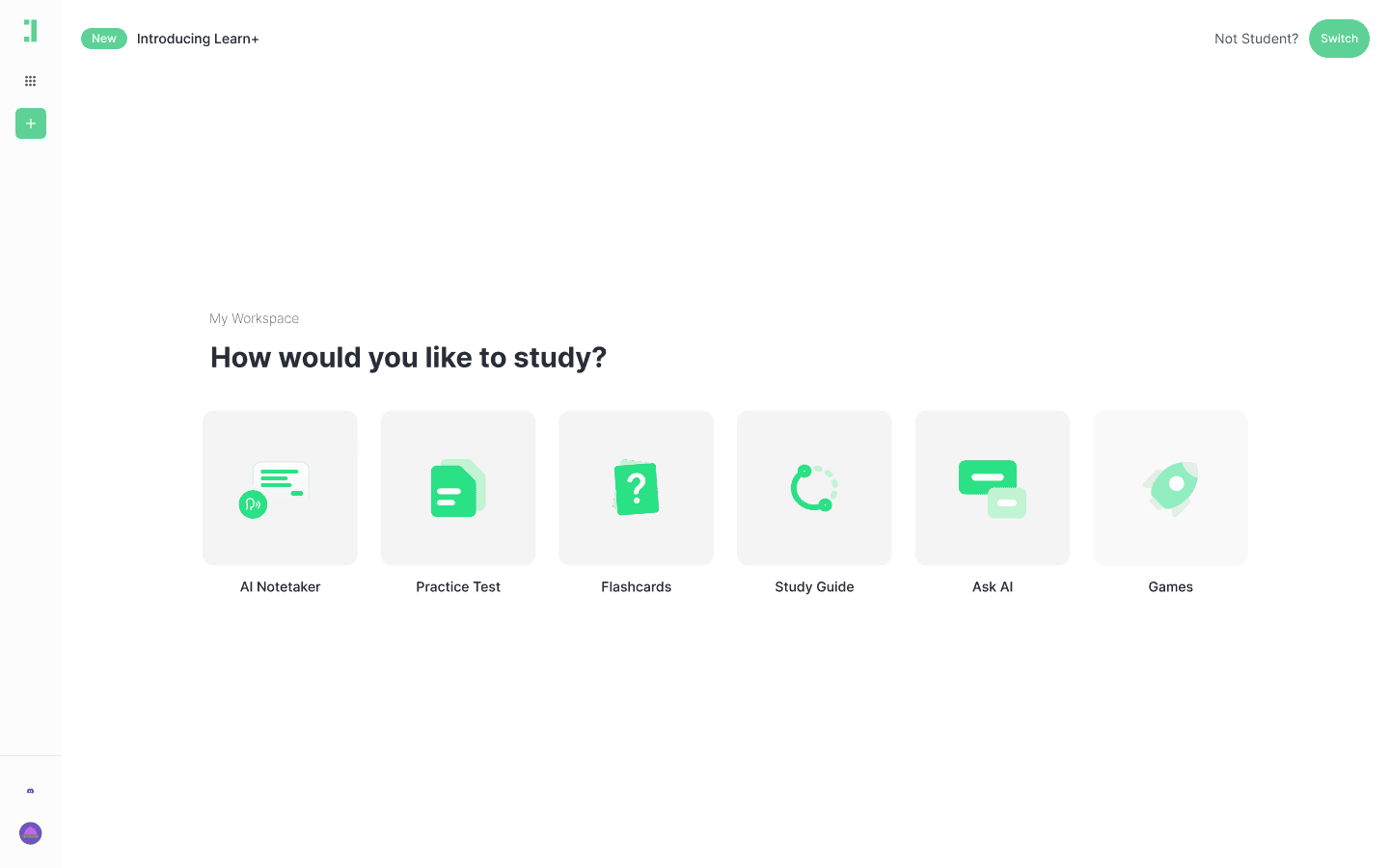
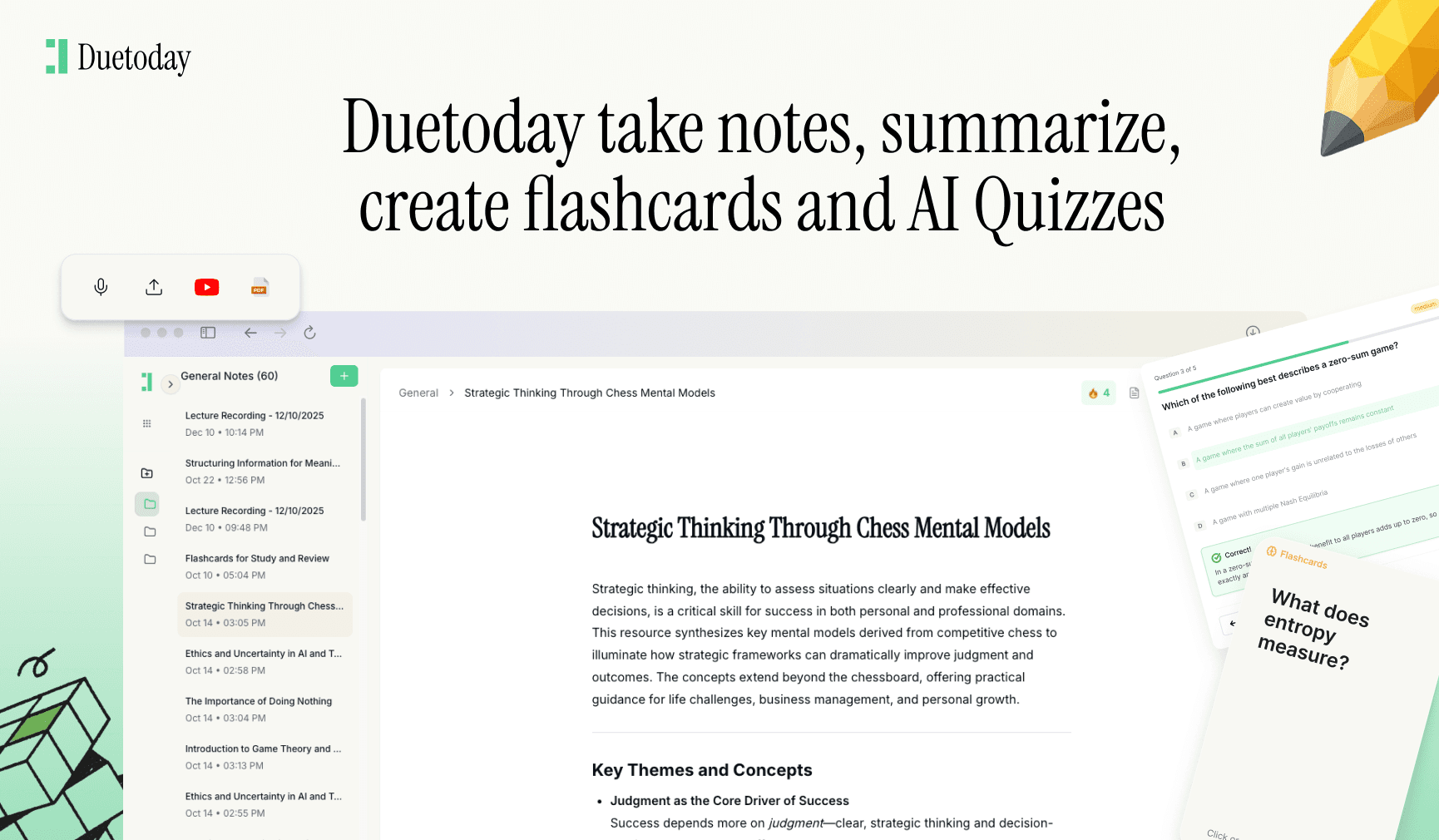
When time is against you, manual note-taking is your biggest hurdle. This is where Duetoday AI becomes an essential part of your toolkit. Duetoday is an AI-powered learning platform that turns lectures, PDFs, and notes into summaries, flashcards, quizzes, and structured study tools automatically. It acts like a personalized AI tutor, helping students learn faster and stay organized without spending hours rewriting notes. Instead of wasting your short break trying to summarize a long chapter, you can upload your file and let the AI generate a concise study guide so you can spend your time actually memorizing the content.
Active Recall on the Go
Active recall is the most scientifically proven way to retain information. Instead of rereading your notes, which is a passive and time-consuming process, use your short time frames to test yourself. Use flashcards or quickly jot down everything you remember about a topic on a scrap piece of paper. This forced retrieval strengthens the neural pathways in your brain, making the information stick much longer than if you had simply read it over and over again.
Learn more about Active Recall here
The Concept of Spaced Repetition
Small study sessions are the perfect vehicle for spaced repetition. This technique involves reviewing information at increasing intervals to prevent forgetting. If you have ten minutes while waiting for the microwave or standing in line, pull out a few key concepts. By touching upon the material frequently in short bursts throughout the week, you encode the information into your long-term memory far more effectively than a single eight-hour cramming session the night before the exam.
Prioritizing High-Value Information
When you are short on time, you have to be ruthless with your priorities. Not every sentence in your textbook is important. Focus on the core concepts, the bolded terms, and the summary sections at the end of chapters. Ask yourself what the most likely exam questions will be and focus your fifteen-minute burst on that specific area. This targeted approach ensures that even if you don't finish everything, you have covered the most vital parts of the curriculum.
Managing Your Mental Energy
Understand that your focus is a finite resource. If you are exhausted after a long day of lectures, your short study bursts should focus on lighter tasks, like organizing your calendar or glancing at upcoming deadlines. Save the heavy-duty problem solving for when you feel fresh. By matching the difficulty of the task to your current energy level, you make the most of every spare minute without burning out before the weekend even arrives.

Can I really learn anything in 15 minutes?
Yes, 15 minutes is enough to review flashcards or summarize a single concept using active recall. These small wins add up significantly over a week.
How do I stay focused during such short bursts?
Eliminate distractions by putting your phone in another room or using a focus app. The knowledge that the session is short makes it easier to stay Intense.
Is it better to study for one long block or many short ones?
Research suggests that many short sessions (spaced repetition) lead to better long-term retention than one long cramming session.
What should I do if I get interrupted?
Don't stress. Mark where you left off and pick it up during your next available window. The goal is consistency, not perfection.