How to Learn Faster in University [Full Guide]

Mastering the Speed of Learning
Stepping into a university lecture hall for the first time is often a wake-up call. The sheer volume of information thrown at you in a single sixty-minute session can feel like trying to drink from a firehose. Many students fall into the trap of thinking that learning more just means spending more hours at the library. However, the secret to academic success isn't just working harder; it is learning how to learn faster. When you optimize your brain’s ability to process and retain information, you free up time for social life, hobbies, and sleep while keeping your GPA high.
The traditional methods we were taught in high school, such as re-reading textbooks or highlighting every second sentence, are actually some of the most inefficient ways to study. These passive methods create an illusion of competence where you feel like you know the material because it looks familiar, but you cannot actually recall it during an exam. To truly accelerate your learning, you need to shift toward active engagement. This means forcing your brain to work during the study process, creating stronger neural connections that make retrieval much easier when the pressure is on.
The Power of Active Recall
Active recall is the single most effective technique for speeding up the learning process. Instead of putting information into your brain, you focus on pulling it out. After reading a chapter or attending a lecture, close your book and try to write down everything you remember. It feels difficult because your brain is straining to find those connections, but that struggle is exactly what signals to your mind that the information is important. By testing yourself frequently, you identify gaps in your knowledge immediately rather than waiting until the middle of a midterm to realize you don't understand a concept.
Utilizing Modern Tools for Efficiency
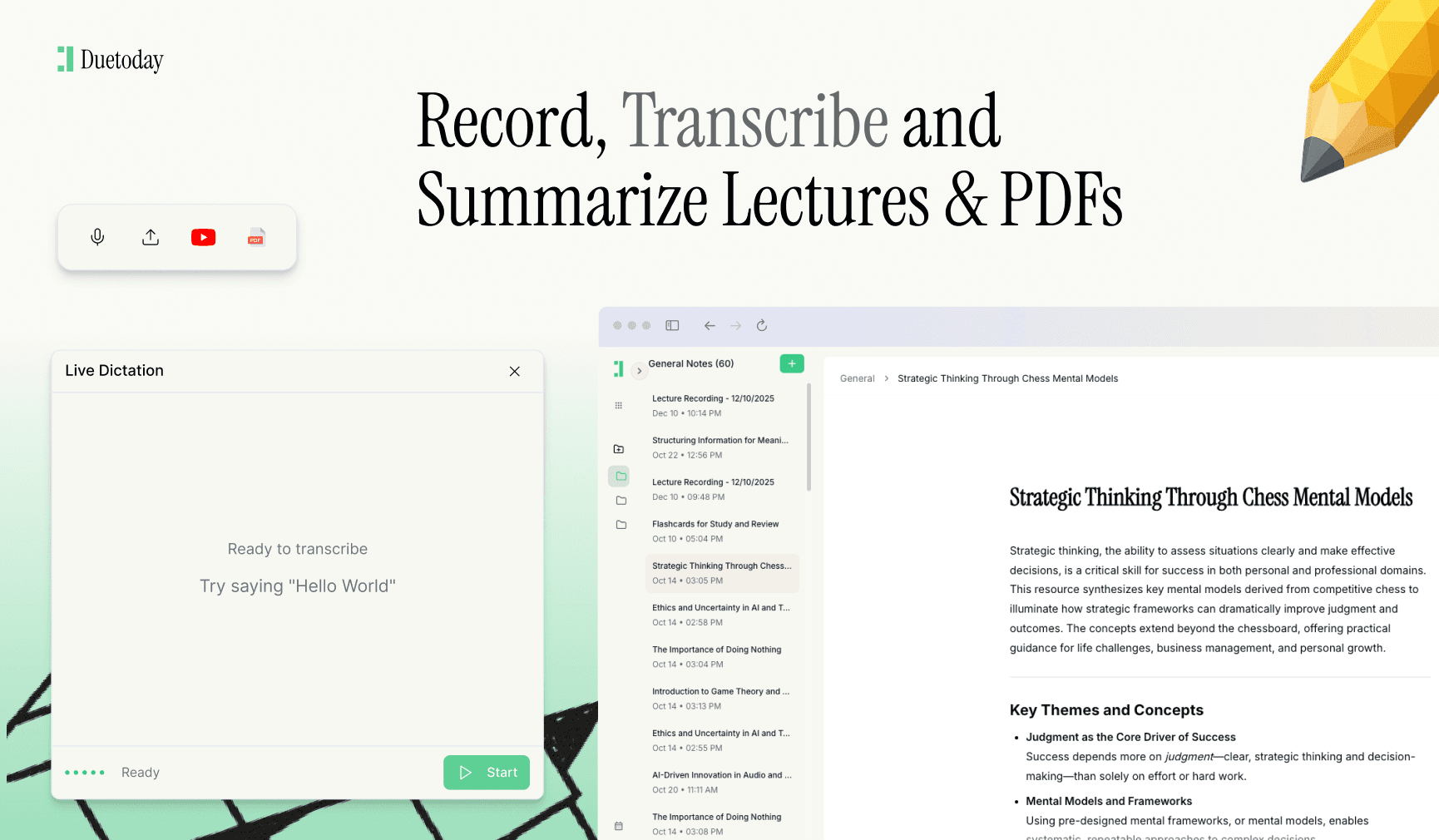
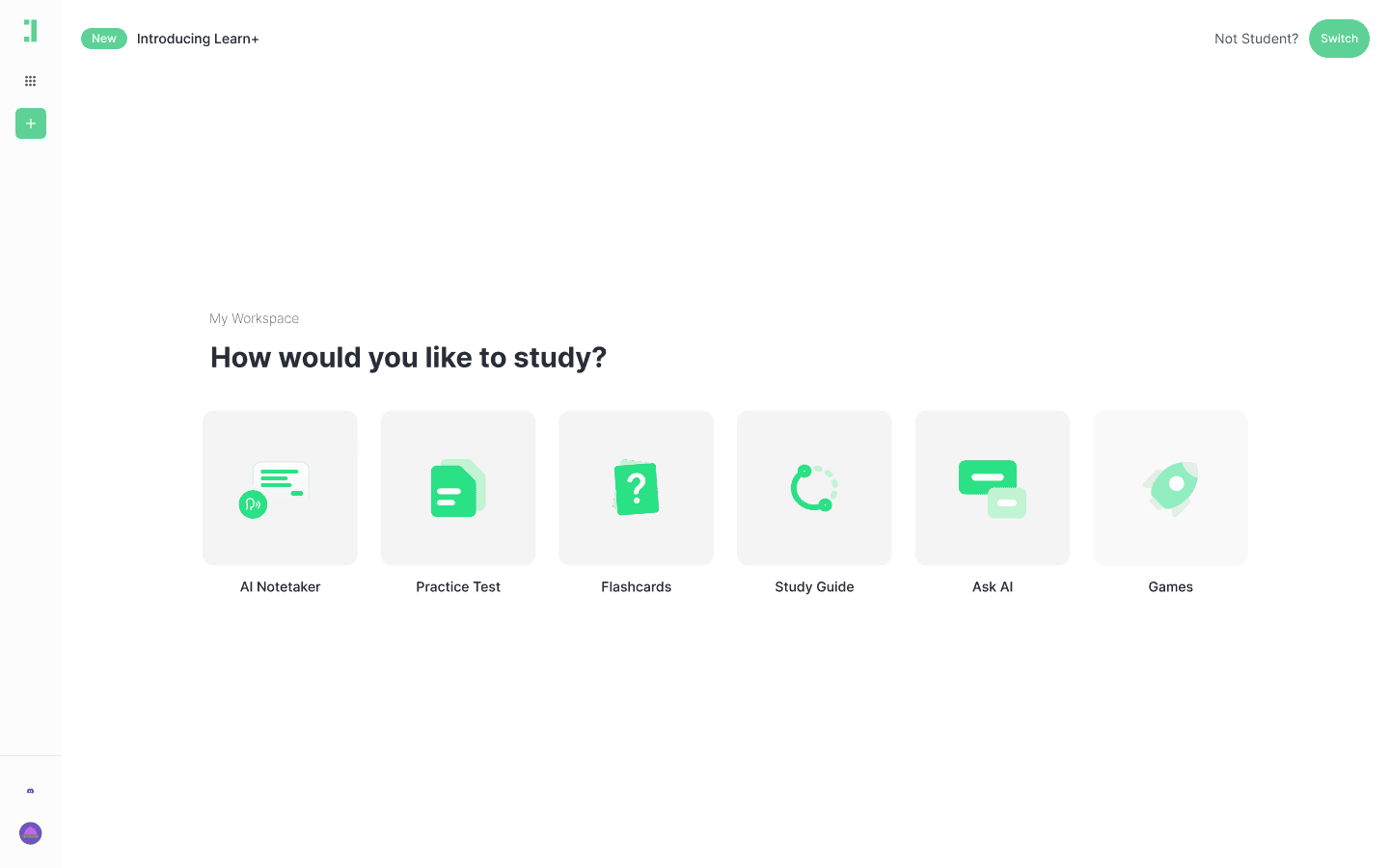
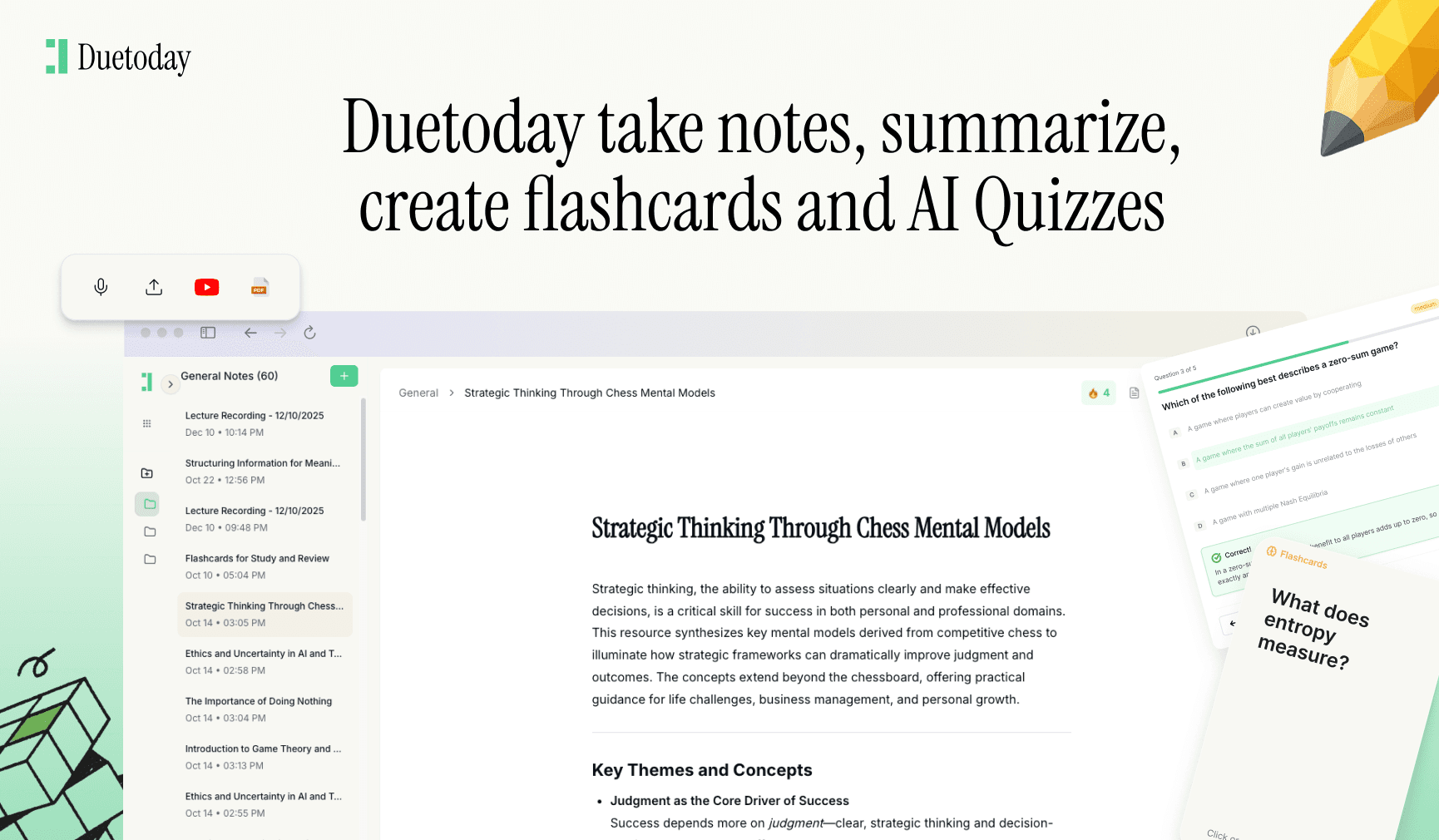
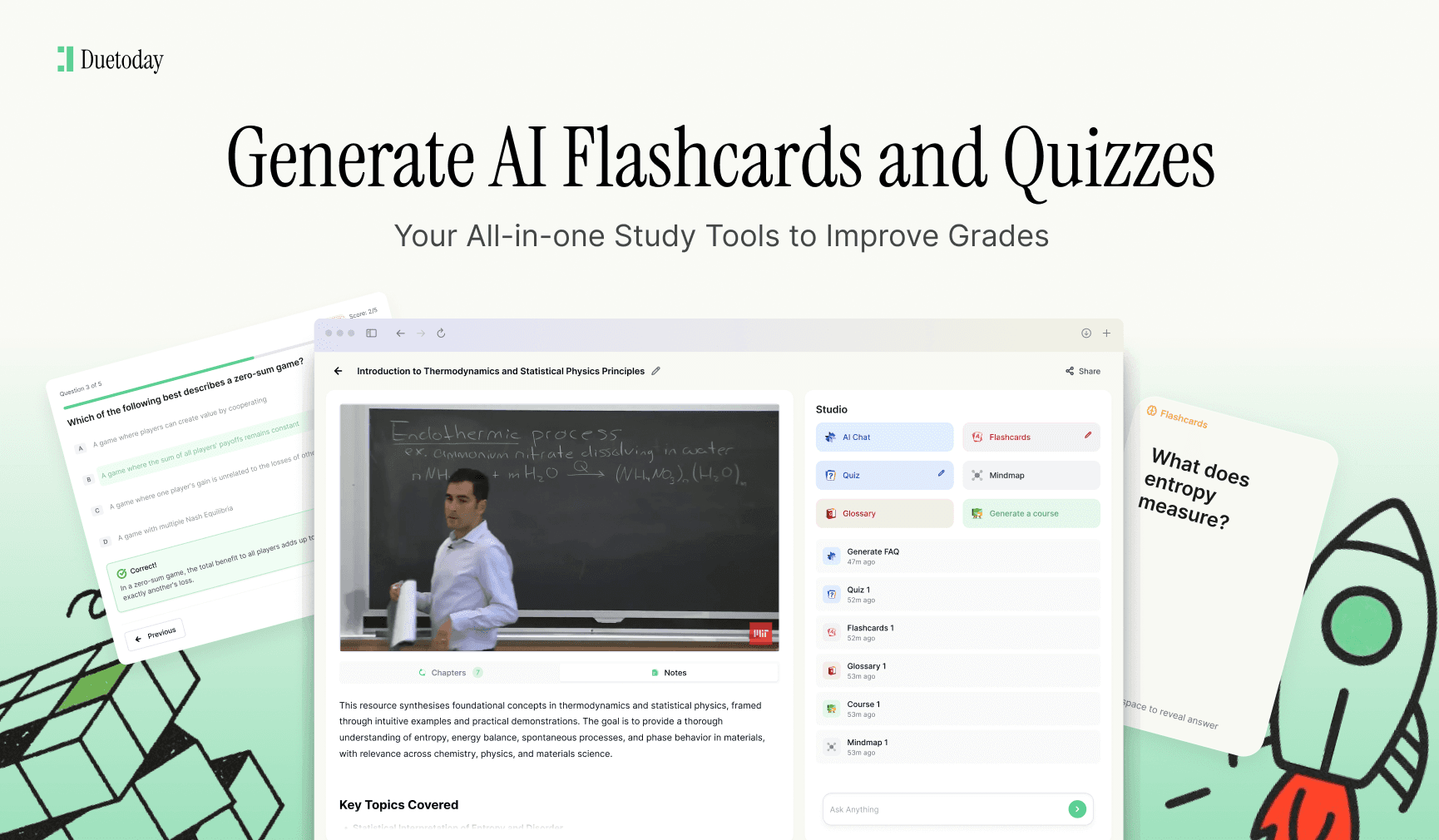
In the digital age, manual note-taking can sometimes slow you down. This is where Duetoday AI comes into play as a game-changer for university students. Duetoday is an AI-powered learning platform that turns lectures, PDFs, and notes into summaries, flashcards, quizzes, and structured study tools automatically.
It acts like a personalized AI tutor, helping you learn faster and stay organized without the tedious process of rewriting notes for hours. By automating the organizational side of studying, it allows you to focus purely on comprehension and retention, which are the core pillars of fast learning.
The Feynman Technique for Deep Understanding
Named after the Nobel Prize-winning physicist Richard Feynman, this technique involves explaining a complex concept in simple terms, as if you were teaching it to a child. If you cannot explain a topic without using technical jargon or complex language, you don't fully understand it yet. When you try to simplify an idea, you quickly spot the 'holes' in your logic. Once you identify those holes, you go back to your source material, relearn those specific parts, and try the explanation again. This iterative process ensures that you aren't just memorizing definitions but building a functional mental model of the subject matter.
Optimizing Your Environment and Biology
Learning faster is as much about your physical state as it is about your mental techniques. Your brain requires a massive amount of energy to process new information. This means that pulling all-nighters is actually counterproductive. Sleep is the time when your brain performs 'synaptic consolidation,' essentially moving information from short-term memory to long-term storage. Without adequate rest, you are essentially trying to write on a full hard drive. Similarly, staying hydrated and taking short, frequent breaks—often referred to as the Pomodoro Technique—prevents cognitive fatigue, allowing you to maintain a high level of focus for longer periods.
Spaced Repetition Systems
We are naturally wired to forget information over time. This is known as the forgetting curve. To combat this and learn faster over the long term, you should use spaced repetition. Instead of cramming for ten hours once a week, you study a topic for thirty minutes at increasing intervals: one day later, three days later, one week later, and then one month later. This constant re-exposure at the point where you are just about to forget the information forces the brain to strengthen the memory. Combining this with digital tools makes the process seamless, as software can track exactly when you need to review a specific card or concept.
Visual Learning and Mind Mapping
The human brain processes images much faster than text. When you are dealing with complex systems or interconnected theories, drawing a mind map can be far more effective than writing linear notes. Start with a central idea and branch out into related sub-topics. Use colors, arrows, and small sketches to create a visual hierarchy of the information. This method helps you see the 'big picture' and how different concepts relate to one another, which is essential for higher-level university courses that require critical thinking rather than simple rote memorization.
The Importance of Focused Deep Work
In a world of constant notifications, the ability to concentrate is a superpower. Deep work is the ability to focus without distraction on a cognitively demanding task. Research shows that every time you check your phone or an email, it takes your brain an average of 23 minutes to return to a state of deep flow. By setting aside dedicated blocks of time where your phone is in another room and your internet tabs are limited to study materials, you can accomplish in two hours what might take a distracted student all day. Speed isn't just about how fast you read; it is about how much of your brain is actually present during the task.
How can I memorize large amounts of information quickly?
The best way is through a combination of active recall and spaced repetition. Test yourself frequently instead of just reading, and spread your review sessions over several days.
Is it better to study alone or in groups?
Studying alone is usually better for initial understanding and deep work, while group study is excellent for the Feynman technique—explaining concepts to others to test your own knowledge.
Does listening to music help you learn faster?
For most people, silence or ambient sounds like brown noise are best for complex tasks. However, instrumental music can help some students maintain focus during repetitive or less demanding tasks.
How long should a university study session be?
Optimal focus usually lasts between 25 to 50 minutes. Using the Pomodoro technique (50 minutes of work, 10 minutes of rest) helps maintain a high learning speed throughout the day.