How to Build Long-Term Retention and Stop Forgetting What You Study
The Science of Remembering
University life often feels like a constant race against the clock. You attend a lecture on Monday, spend hours highlighting your textbook on Wednesday, and by Friday, half of that information has seemingly vanished into thin air. This is the classic struggle of the 'Forgetting Curve,' a psychological phenomenon that shows how quickly humans lose information if they don't actively try to retain it. Transitioning from short-term memorization to long-term retention is the difference between passing a test and actually mastering a subject for your future career.
The first step to building lasting memory is understanding that your brain isn't a hard drive that stores everything permanently the first time it hears it. Instead, your brain is more like a muscle that needs consistent, varied stimulation. To move information from your working memory into long-term storage, you need to engage in encoding. This process involves making the information meaningful. If you just read words on a page without connecting them to things you already know, your brain filters them out as 'noise.' To combat this, you should always try to explain new concepts in your own words or find real-world examples that resonate with your daily life.
Moving Beyond Passive Reading
Many students fall into the trap of passive learning. Rereading notes and highlighting text feels productive, but research shows these are some of the least effective ways to build long-term retention. These methods create an 'illusion of competence' where you recognize the information because it's right in front of you, but you haven't actually learned how to retrieve it from your own mind. To truly retain information, you must switch to active recall. This means closing the book and forcing your brain to retrieve the information without any prompts.
When you struggle to remember a concept during active recall, you are actually strengthening the neural pathways associated with that information. It feels harder because it is harder, but that mental effort is exactly what signals to your brain that this information is important enough to keep. By testing yourself frequently throughout the semester rather than just before finals, you ensure that the foundations of your knowledge are solid. This approach prevents the 'cram and forget' cycle that leaves many students feeling lost in more advanced courses.
The Power of Distributed Practice
Spacing out your study sessions—a technique known as spaced repetition—is perhaps the most powerful tool in your academic arsenal. Instead of studying for ten hours in a single day, you will see much better results by studying for one hour over ten different days. This technique works by revisiting information just as you are about to forget it. Each time you refresh your memory, the rate of forgetting slows down, and the information becomes more deeply embedded in your long-term memory.
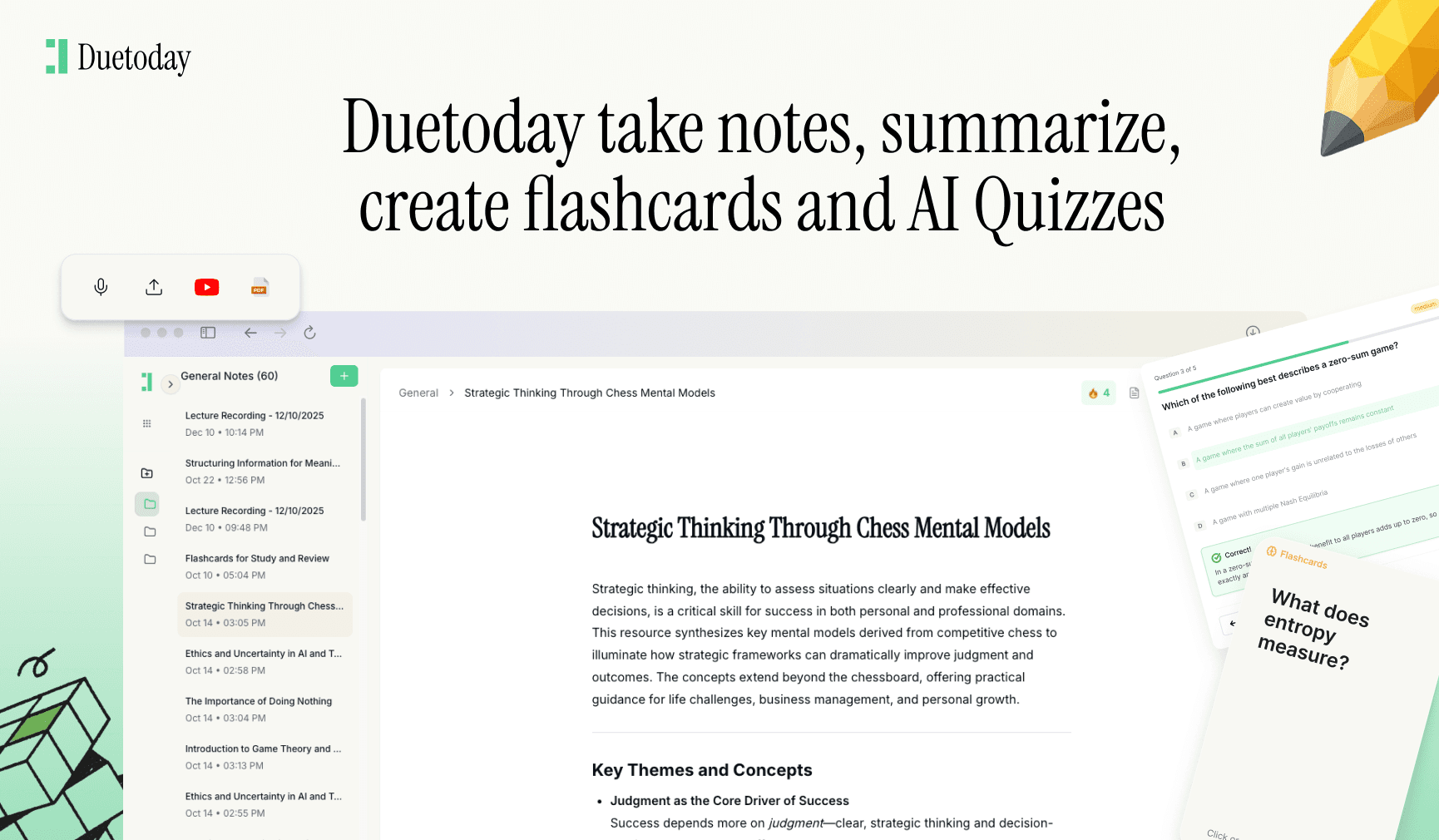
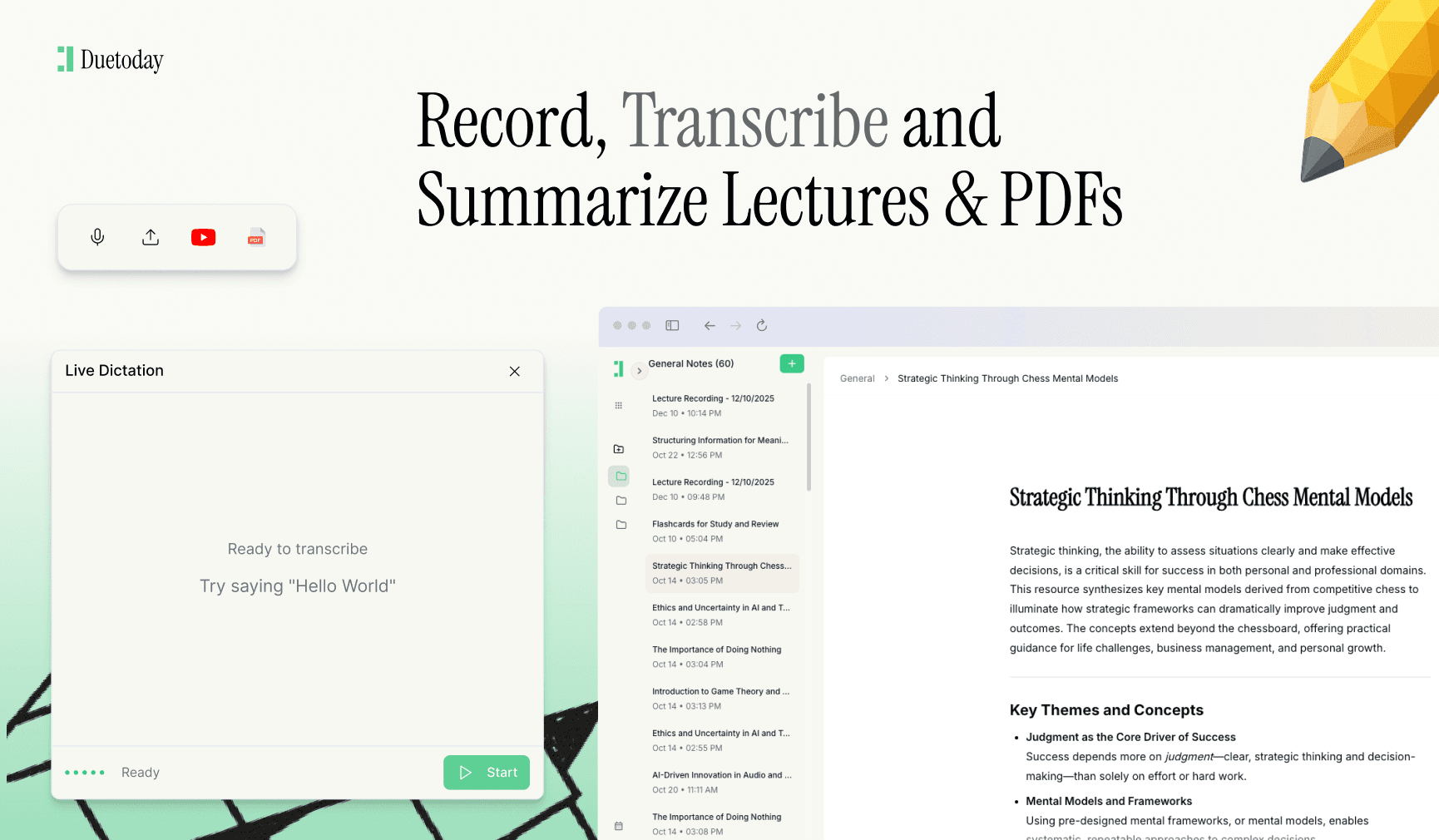
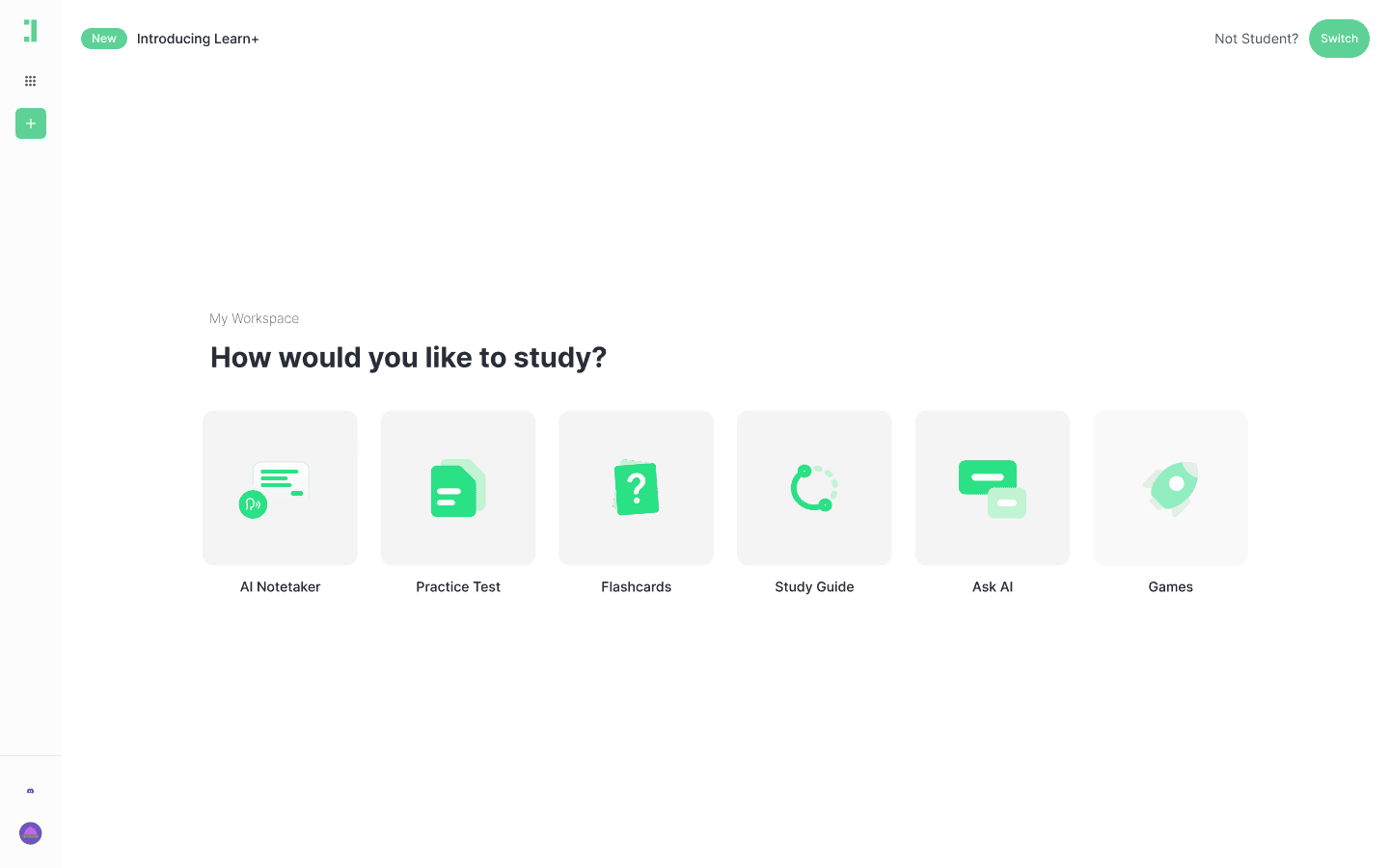
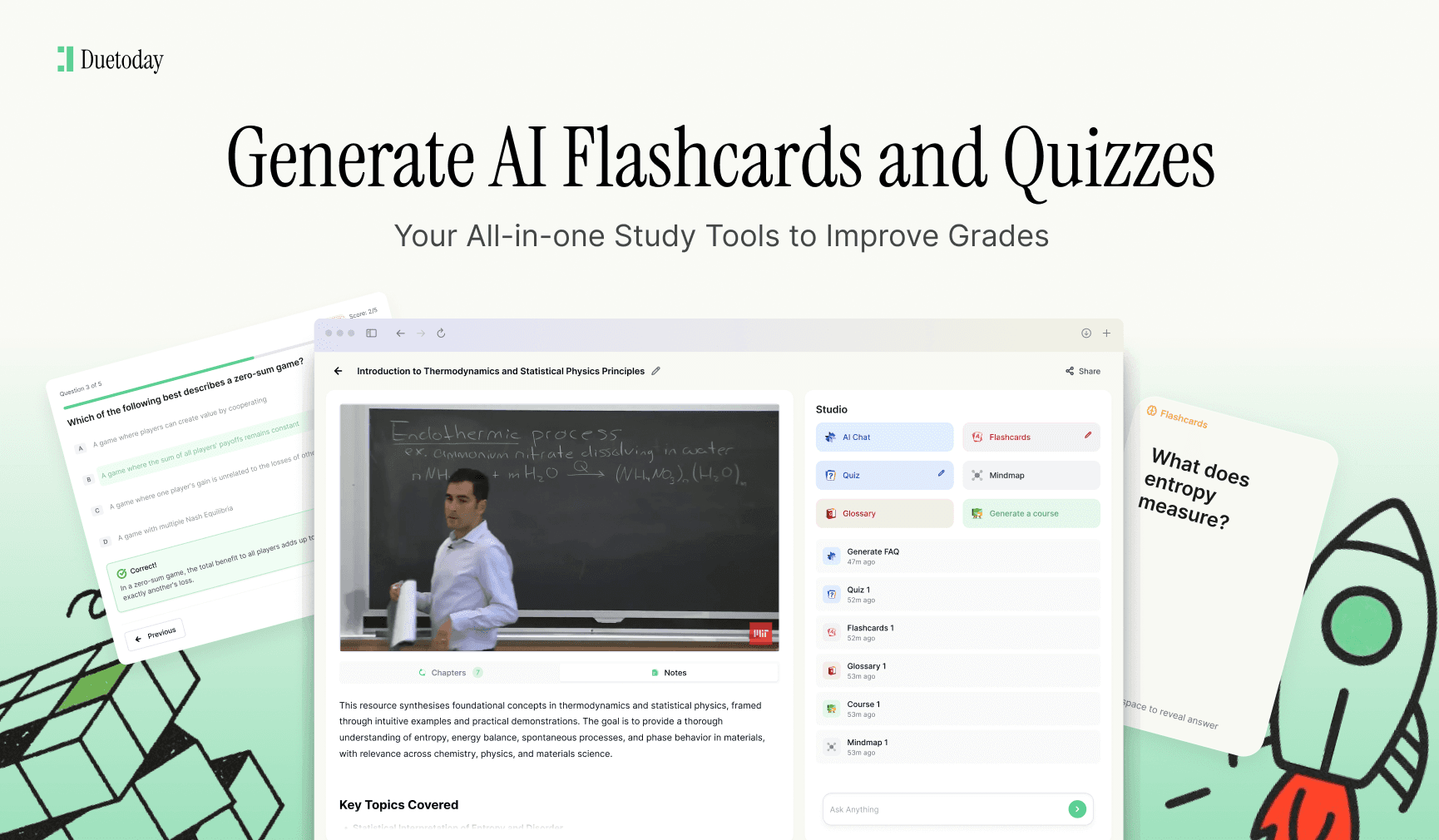
While manual spaced repetition can be difficult to manage with five different classes, technology has made this process significantly easier. This is where Duetoday AI becomes an essential part of your study routine. Duetoday is an AI-powered learning platform that turns lectures, PDFs, and notes into summaries, flashcards, quizzes, and structured study tools automatically. It acts like a personalized AI tutor—helping students learn faster, stay organized, and retain information without spending hours rewriting notes. By letting the AI handle the organization and generation of study materials, you can focus entirely on the active learning process that builds real mastery.
The Role of Context and Association
Another key to retention is the method of association. Our brains are associative machines; we remember things better when they are linked to other pieces of information. For example, if you are learning a complex chemical reaction, try to remember the physical environment of the lab where you first saw it or link it to a similar reaction you studied in a previous module. Creating mind maps or visual diagrams can also help by showing how different concepts interconnected. When you have a network of ideas rather than isolated facts, forgotting one piece doesn't mean you lose the whole concept, as you can 'triangulate' the missing info from the surrounding context.
Sleep and physical well-being also play a massive role in how the brain consolidates memory. During deep sleep, your brain replays the day’s learning and literally rewires itself to store that data. Pulling an all-nighter is counterproductive because it robs your brain of the very time it needs to move information into long-term storage. Combined with proper hydration and short breaks, your brain becomes far more efficient at processing and keeping what you read. Remember, long-term retention is a marathon, not a sprint. By implementing active recall, using tools like Duetoday to streamline your workflow, and respecting your body's need for rest, you will find that university content sticks with you long after the final exam is over.
Applying These Methods Daily
Start small by choosing one difficult subject to apply these techniques to. Instead of simply attending the lecture, come home and spend ten minutes writing down everything you remember without looking at your notes. Then, use a tool to generate some practice questions based on that day's materials. By making this a daily habit, you eliminate the need for high-stress cramming at the end of the term. You'll find yourself walking into exams with confidence, knowing that the information isn't just in your notebook, but actually in your head.
What is the most effective way to improve long-term memory?
The most effective method is highly recognized as active recall combined with spaced repetition. This involves testing yourself on the material and revisiting it at increasing intervals over time.
Why do I forget everything right after an exam?
This usually happens because of cramming, which relies on short-term memory. Without spacing out your study and using active learning techniques, the brain doesn't see a reason to store the information long-term.
How can I use AI to help me study?
AI tools can automate the creation of flashcards, summaries, and practice quizzes from your lecture notes, allowing you to spend more time on actual learning and less time on manual organization.
Does sleep really affect my grades?
Yes, sleep is when memory consolidation happens. Depriving yourself of sleep prevents your brain from moving information into long-term storage, making it harder to recall facts during a test.