How to Write Faster Without Losing Quality

Mastering the Art of Efficient Writing
University life often feels like a constant race against time. Between attending lectures, participating in extracurriculars, and trying to maintain a social life, the mounting pressure of assignments can be overwhelming. Many students find themselves staring at a blank screen for hours, struggling to find the right words while the deadline looms closer. The key to success isn't just working harder; it's learning how to write faster without letting the quality of your work slip.
The first step in accelerating your writing process is changing your mindset about what a first draft should look like. Professional writers often follow the principle of the messy first draft. When you try to edit every sentence as you type it, you break your creative flow and stall your progress. By allowing yourself to write freely and focusing on getting your ideas down first, you significantly decrease the time spent on the initial phase of any essay or report.
Preparation is the secret weapon of fast writers. Jumping straight into a 2,000-word essay without a roadmap is a recipe for writer's block. Spending just twenty minutes creating a detailed outline can save you hours of uncertainty later. An outline acts as a skeletal structure for your thoughts, ensuring that each paragraph has a specific purpose and leads logically to the next. When you have a plan, the actual writing becomes a much simpler task of filling in the gaps rather than deciding what to say next.
Setting the Right Environment
Your physical and digital environment plays a massive role in how quickly you can produce high-quality work. Constant notifications from your phone or the temptation to check social media are the biggest enemies of productivity. Deep work requires total concentration. Try using website blockers or putting your phone in another room during your peak writing hours. Many students find that the Pomodoro technique, which involves twenty-five minutes of intense focus followed by a five-minute break, helps maintain a high writing pace without leading to burnout.
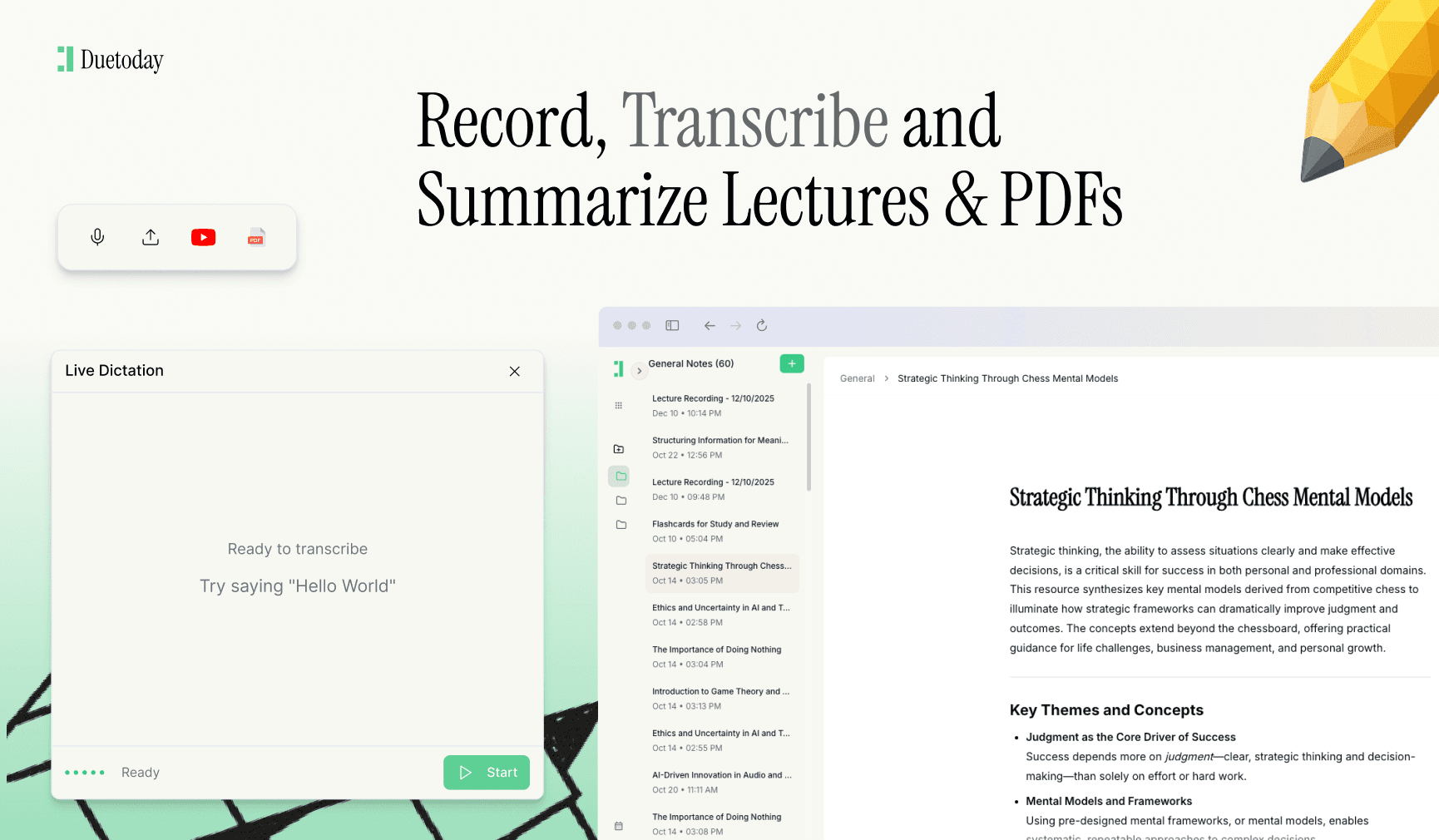
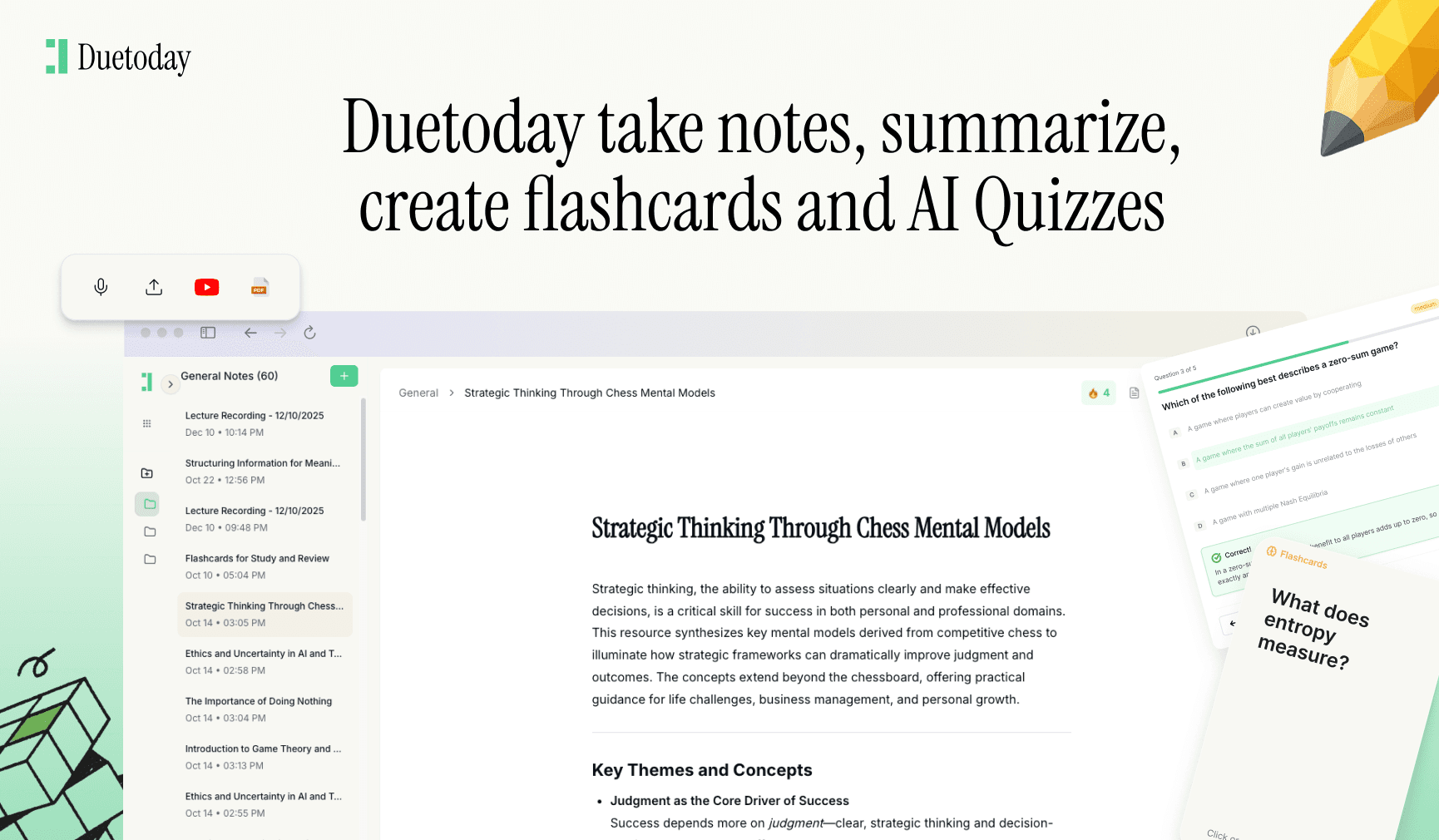
If you find that your biggest hurdle is the initial phase of organizing lecture notes and research, Duetoday AI can be a total game-changer for your workflow. Duetoday is an AI-powered learning platform that turns lectures, PDFs, and notes into summaries, flashcards, quizzes, and structured study tools automatically. It acts like a personalized AI tutor, helping students learn faster, stay organized, and retain information without spending hours rewriting notes. By letting the AI handle the heavy lifting of organization, you can jump straight into the writing process with a clear understanding of your material.
Techniques to Boost Your Typing Speed and Thought Flow
While physical typing speed matters, the speed of your synthesis is what truly counts. One effective way to write faster is to use dictation software. Sometimes we can speak our ideas much more fluently than we can type them. Narrating your main arguments and then refining the transcribed text later can help you bypass the internal critic that slows you down. This approach is especially useful for introductory paragraphs or concluding thoughts where you need to summarize complex ideas simply.
Another vital strategy is the use of templates. While every essay is unique, the underlying structure of academic writing is often quite consistent. Having a go-to framework for how you introduce a topic, present evidence, and transition between points can save you from having to reinvent the wheel every time you start a new assignment. Over time, these structures become second nature, allowing you to focus entirely on the nuances of your specific subject matter rather than the format of the document.
The Power of Research and Iteration
Research often takes up more time than the writing itself. To write faster, you need to become an efficient researcher. Instead of reading every source from cover to cover, learn to skim for relevant keywords, read abstracts, and focus on the introduction and conclusion of academic papers. Once you have gathered your evidence, group your sources by the specific point they support. This prevents you from having to stop your writing to go back and find a specific quote or statistic.
Finally, never underestimate the power of a final polish. Writing fast is about getting the core message across, but the quality is refined in the editing stage. Instead of editing as you go, set the work aside for at least a few hours. When you return with fresh eyes, you will spot grammatical errors and logic gaps much more quickly. Shortening the gap between thought and text through these methods ensures that you not only meet your deadlines but also submit work that reflects your true potential as a university student.

Can I really write fast without making mistakes?
Yes, the goal is to separate the drafting and editing phases. Speed comes from the drafting phase, while quality is cemented during the editing phase.
What is the most common reason for slow writing?
Perfectionism is usually the main culprit. Trying to make the first sentence perfect before moving to the second one stops your momentum and leads to frustration.
How long should I spend on an outline?
For a standard university essay, spending 15 to 30 minutes on a solid outline is usually enough to give you a clear direction and speed up the rest of the process.
Does listening to music help with writing speed?
For many students, lo-fi beats or classical music can help maintain focus, but music with lyrics can often be a distraction when you are trying to formulate sentences.