How to Write an Introduction Paragraph

The Importance of a Strong Start
Writing an introduction paragraph is often the most daunting part of any university assignment. You are staring at a blank screen, the cursor is blinking, and you know that the first few sentences will set the tone for your entire paper. A good introduction does more than just fill space; it acts as a roadmap for your reader, telling them exactly where you are going and why they should care about the journey. For students juggling multiple modules and tight deadlines, mastering this skill is essential for achieving higher grades without the stress of constant rewriting.
To write an introduction that grabs attention, you need to understand its structural components. Think of it like a funnel. You start broad to capture interest, then gradually narrow down your focus until you reach your specific argument. This flow ensures that the reader transitioned smoothly from a general topic into your niche research area. Many students make the mistake of being too vague or, conversely, jumping straight into technical data before setting the scene. The goal is to provide enough context so that even someone not deeply familiar with your specific topic can follow your logic.
Hooking Your Reader from the First Sentence
The first sentence, often called the hook, is your chance to make a first impression. In academic writing, hooks usually take the form of a provocative question, a surprising statistic, or a bold statement that challenges common assumptions. While you want to be engaging, it is important to maintain an academic tone. Avoid using overly dramatic language or cliches like 'since the dawn of time.' Instead, look for a compelling fact that highlights the relevance of your topic in today’s world. If you are writing about economics, you might start with a recent market shift. If it is psychology, perhaps a brief mention of a widely held but debunked myth will do the trick.
Once the hook has done its job, you must provide background information. This section bridges the gap between your catchy opening and your specific thesis. Here, you should define key terms and provide the necessary historical or social context. You don't need to give a full history lesson, but you should explain the current state of the debate you are entering. This helps establish your credibility as a writer who understands the broader field of study. It is about showing that you have done the reading and you know where your essay fits into the larger academic conversation.
Introducing Duetoday AI into Your Workflow
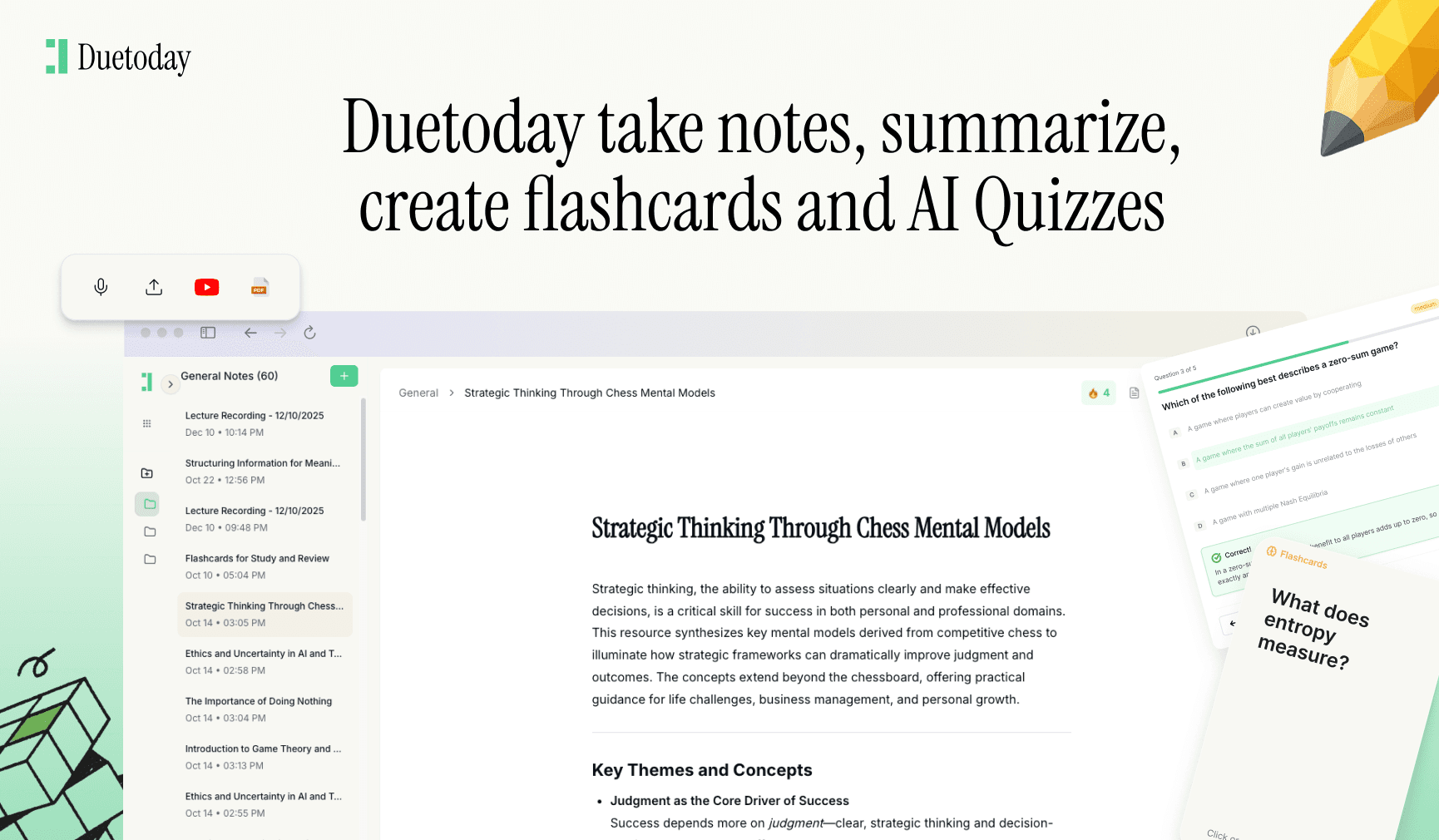
Between drafting introductions and researching complex theories, university life can feel overwhelming. This is where Duetoday AI becomes your secret weapon for academic success. Duetoday is an AI-powered learning platform that turns lectures, PDFs, and notes into summaries, flashcards, quizzes, and structured study tools automatically. It acts like a personalized AI tutor, helping students learn faster and stay organized. Instead of spending hours trying to decipher your lecture notes before you even start writing your intro, you can use Duetoday to generate a clear summary of your materials, making it much easier to identify the key points for your thesis statement and background sections.
Crafting a Powerful Thesis Statement
The thesis statement is the most critical part of your introduction paragraph. Usually placed at the end of the intro, it is a one or two-sentence summary of your main argument. A strong thesis should be debatable and specific. Rather than saying 'pollution is bad,' a university-level thesis would be 'Implementing stricter carbon taxes on manufacturing hubs is the most effective way to reduce urban smog in developing nations.' This tells the reader exactly what you will be proving throughout the rest of your essay. It serves as an anchor for your thoughts, ensuring that you stay on track as you write your body paragraphs.
A common pitfall for students is making the thesis too broad. If your thesis covers too much ground, your essay will likely become superficial. By narrowing your focus, you allow yourself the space to provide deep analysis and evidence. Remember to follow your thesis with a brief outline of the points you will cover. This is often called a 'preview' or 'signposting.' It allows the professor to see the logical structure of your work at a glance, which often leads to better feedback and higher marks. Mastering this structure takes practice, but once you have the formula down, you will find that writing the rest of the essay becomes significantly easier.
Final Polish and Transitions
After you have written your hook, background, and thesis, read the paragraph as a whole. Does it flow logically? Does it lead naturally into your first body paragraph? Sometimes the best time to finalize your intro is actually after you have written the entire essay. This allows you to ensure the intro perfectly matches the content you ended up producing. Keep your sentences concise and avoid filler words that distract from your message. By focusing on clarity and structure, you create an introduction that not only introduces your topic but also convinces your reader through professional and academic authority.

How long should an introduction paragraph be?
In a standard university essay, an intro is typically 10% of the total word count. For a 1500-word essay, aim for about 150 words.
Where does the thesis statement go?
The thesis statement is almost always the final sentence of your introduction paragraph to lead directly into the body.
Can I use a quote as a hook?
Yes, but ensure the quote is directly relevant to your topic and is from a reputable source rather than a generic motivational quote.
Should I define all my terms in the intro?
Define only the most essential terms that are necessary for the reader to understand your thesis. Technical jargon can be defined in the body.