How to Study Psychology [Guide for University Students]

Mastering the Science of the Mind
Studying psychology at the university level is an exciting journey into human behavior, brain function, and social interaction. Unlike many other subjects, psychology requires a unique blend of scientific methodology and critical thinking. To succeed, you cannot simply memorize facts; you must understand how to apply theories to real-world scenarios and evaluate the validity of experimental data. Whether you are aiming for a career in clinical practice or research, building a strong foundation early on is essential for your academic success.
One of the first things you will encounter in your psychology degree is the sheer volume of reading. From foundational theories by Freud and Skinner to modern neuroscientific breakthroughs, the reading list can feel overwhelming. The key is not to read every word but to read with purpose. Start by reviewing the abstract and conclusion of research papers to grasp the core findings before diving into the methodology. This approach helps you categorize information quickly and prevents burnout during exam season.
Active participation in lectures and seminars is another cornerstone of effective psychology study. Instead of just transcribing what your professor says, try to connect new concepts to things you already know. For example, when learning about cognitive dissonance, think of a time you felt conflicted between your beliefs and your actions. Relatable examples make abstract theories stick in your memory much longer than rote memorization ever could. Engaging in group discussions also allows you to see different perspectives on complex psychological issues, which is crucial for developing the critical thinking skills expected at the university level.
Developing Your Research Skills
Research methods and statistics are often the most challenging parts of a psychology degree for many students. However, they are the backbone of the discipline. You need to understand how to design experiments, interpret data, and write reports in APA style. Instead of fearing the math, view statistics as a tool that allows you to prove your hypotheses and contribute to the scientific community. Practice using software like SPSS or R early in your course so you are comfortable with data analysis when it comes time for your final year project.
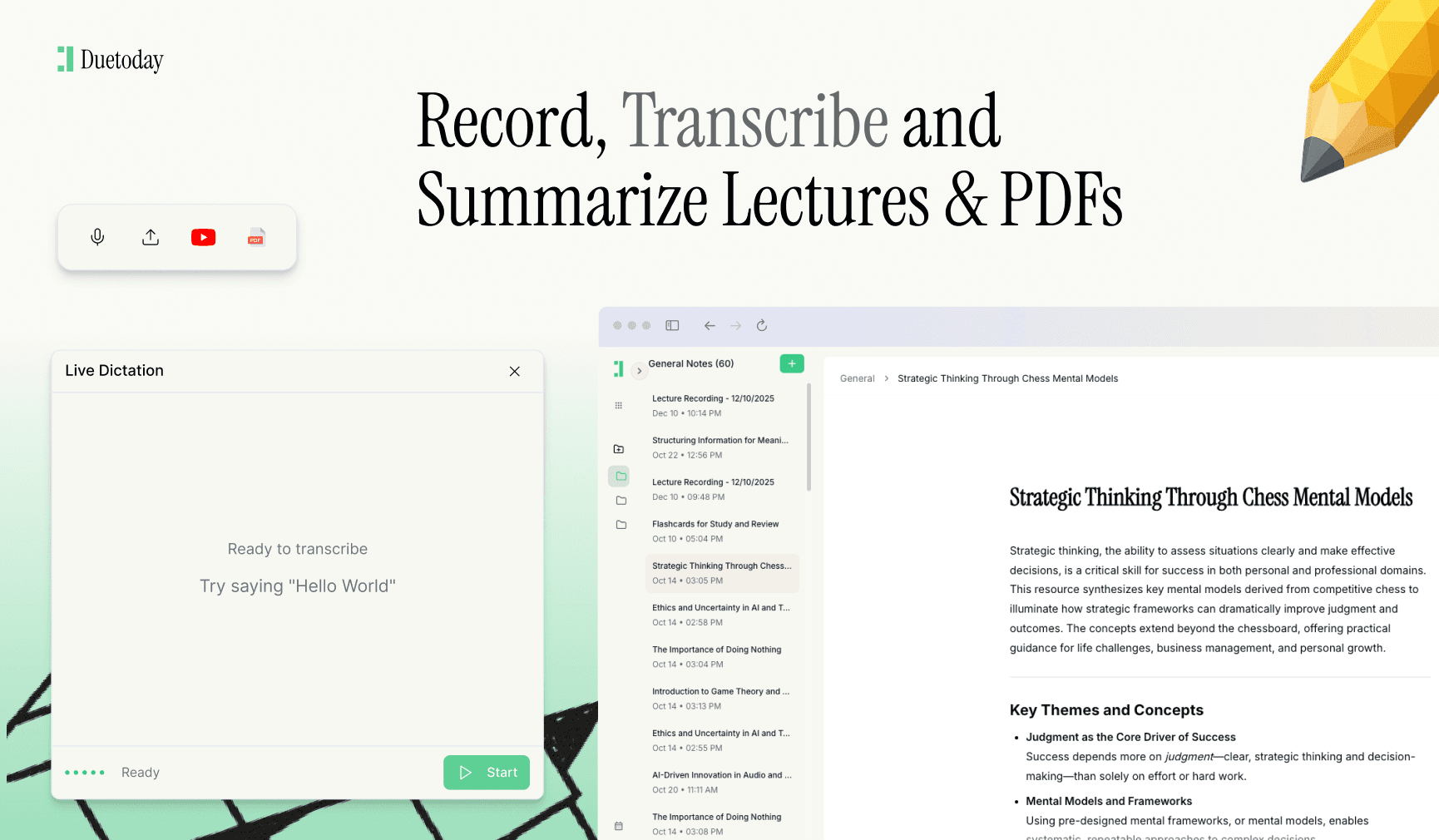
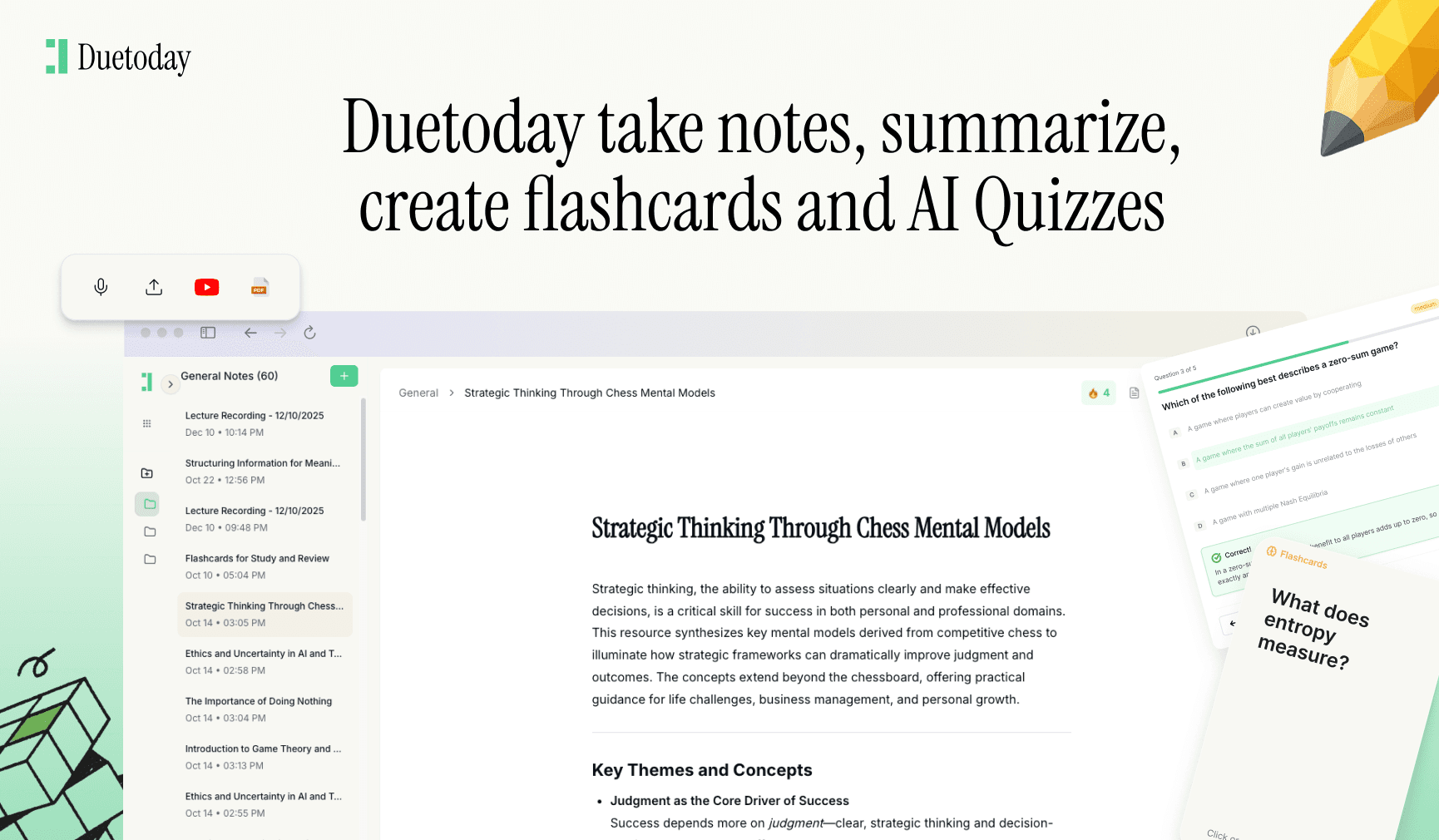
To make your study sessions more efficient, consider using Duetoday AI. This platform is designed specifically for students who need to handle large amounts of information. Duetoday AI turns your lecture recordings, dense PDFs, and handwritten notes into organized summaries, flashcards, and quizzes automatically. It serves as a personalized AI tutor that helps you retain information through structured study tools, ensuring you stay organized without spending hours manually rewriting notes. By incorporating this into your routine, you can focus more on understanding deep psychological concepts rather than getting bogged down in the logistics of note-taking.
Mastering Psychological Theories
Psychology is built on a diverse range of perspectives, from biological and cognitive to social and developmental. It is important to compare and contrast these theories rather than studying them in isolation. Ask yourself how a biological psychologist might explain depression compared to a behavioral psychologist. Understanding these differences will help you excel in essay writing, where markers look for your ability to synthesize different viewpoints and provide a balanced argument supported by evidence.
Optimizing Your Exam Preparation
When exam season approaches, the way you review your material will determine your final grade. Avoid passive studying techniques like re-reading your textbook or highlighting every sentence. Research shows that active recall and spaced repetition are far more effective for long-term retention. Use flashcards to test yourself on key terms like neuroplasticity or social identity theory. By forcing your brain to retrieve information, you strengthen the neural pathways associated with that knowledge, making it easier to recall during the high-pressure environment of an exam.
Writing practice essays is another vital part of psychology preparation. Many psychology exams consist of essay questions that require you to evaluate theories or studies. Practice outlining your answers under timed conditions. Focus on a clear structure: an introduction that defines the topic, several body paragraphs that present arguments and critiques, and a conclusion that summarizes the current state of research. Pay close attention to the strengths and weaknesses of classic studies, such as Milgram’s obedience experiment or Zimbardo’s prison study, as these are frequently tested.
Social and Developmental Psychology Nuances
In social psychology, you will explore how the presence of others affects individual behavior. This involves understanding complex phenomena like groupthink, conformity, and altruism. To study this effectively, try to observe these behaviors in everyday life. Watch how people interact in public spaces or examine how social media influences group dynamics. Relatability is a powerful tool for memory, and seeing these theories in action makes the academic definitions much easier to grasp.
Developmental psychology, on the other hand, focuses on how people change over time. From Piaget’s stages of cognitive development to Erikson’s psychosocial stages, there is a lot of chronological information to manage. Creating timelines or visual diagrams can help you track these changes and understand the milestones of human growth from infancy to old age. Visual aids are particularly helpful in psychology to map out the connections between different developmental theories and their practical implications in education and parenting.
Effective Time Management for Psychology Majors
Managing a psychology workload requires a strategic schedule. Between lab reports, essay deadlines, and weekly readings, it is easy to fall behind. Divide your tasks into manageable chunks and set specific goals for each study session. Dedicate specific blocks of time to different modules so you aren't trying to jump from biopsychology to social psychology too quickly. Consistency is better than cramming, and keeping a steady pace throughout the semester will reduce stress and improve your overall understanding of the material.
Finally, remember to prioritize your mental health. As a psychology student, you are learning about the mind and self-care, so apply those principles to your own life. Get enough sleep, stay hydrated, and take regular breaks. A well-rested brain is significantly more efficient at processing complex information and solving problems. By combining smart study habits with a healthy lifestyle, you will be well on your way to achieving top marks in your psychology degree.

How hard is a psychology degree?
The difficulty varies, but it requires strong scientific reasoning, statistical analysis, and writing skills. It is more than just learning about feelings; it involves significant research and data interpretation.
What is the most effective way to remember psychological terms?
Active recall and spaced repetition are the best methods. Using flashcards and testing yourself regularly on key concepts like 'operant conditioning' or 'synaptic transmission' ensures long-term retention.
Do I need to be good at math for psychology?
You will need a basic understanding of statistics to analyze research data. Most universities teach you the necessary math as part of the research methods modules.
What are the best resources for psychology students?
Academic journals like the Journal of Personality and Social Psychology, textbooks by authors like Myers or Zimbardo, and digital tools like Duetoday AI are excellent for staying ahead.
How do I write a good psychology lab report?
Follow the APA style guide strictly. Ensure your report includes an abstract, introduction, method, results, discussion, and references. Be precise, objective, and clear in your descriptions.