
How to Study Organic Chemistry: The Ultimate Student Guide
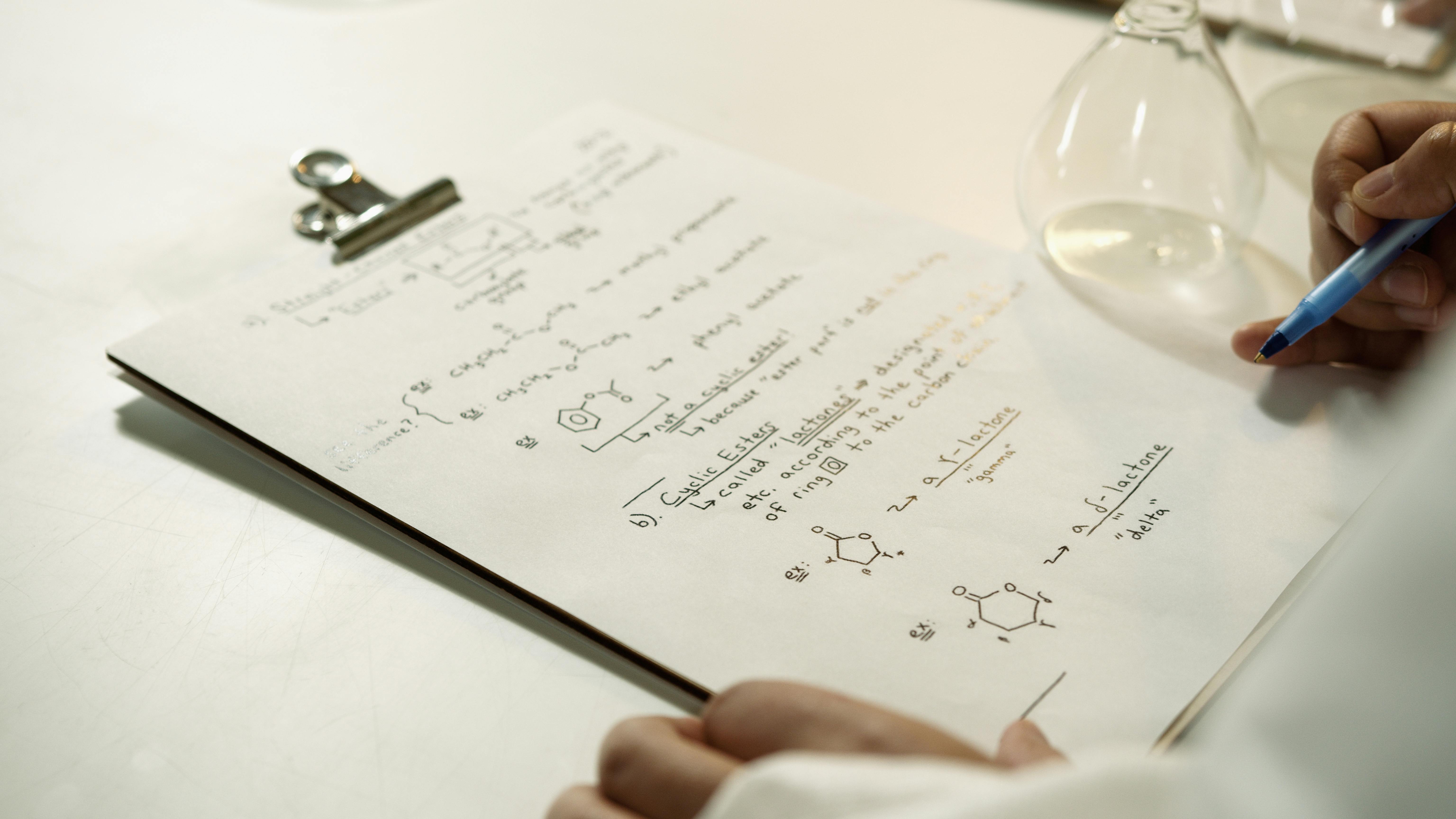
The Challenge of Organic Chemistry
Organic chemistry is often whispered about in university hallways as the ultimate weed-out course. For many students, the transition from general chemistry to the world of carbon-based molecules feels like hitting a brick wall. However, the secret to mastering this subject isn't about having a genius-level IQ; it is about changing how you perceive information. Instead of treating every reaction like a random fact to be memorized, you need to start seeing the patterns that govern molecular behavior.
The first step in your journey to excellence is understanding that organic chemistry is a language. Just as you wouldn't try to read a novel without knowing the alphabet, you cannot expect to solve complex synthesis problems without a firm grasp of molecular structure and bonding. You need to become comfortable with skeletal structures, formal charges, and resonance. These are the building blocks that will make everything else feel intuitive rather than impossible.
Mastering the Fundamentals of Structure
Before you even open the chapter on alkanes, you must have a rock-solid understanding of electronegativity and polar covalent bonds. Most of organic chemistry is simply a story of opposites attracting. Nucleophiles, which are electron-rich, want to find centers of positive charge, known as electrophiles. If you can identify these two players in any given scenario, you have already solved half of the problem. Spend your first few weeks of the semester over-learning these basics until they become second nature.
Another hurdle for students is 3D visualization. Molecules are not flat drawings on a piece of paper; they occupy space. Understanding stereochemistry, such as R/S configurations and chair conformations, requires you to think in three dimensions. Using a physical model kit can be a game-changer during your early study sessions. It allows you to see how atoms rotate and clash, making abstract concepts feel much more tangible.
Why Memorization is Your Enemy
One of the biggest mistakes university students make is trying to brute-force their way through the course using flashcards for every single reaction. While some level of memorization is necessary for reagents, relying on it entirely will lead to burnout. Instead, focus on reaction mechanisms. A mechanism tells the story of how electrons move from one place to another. When you understand the 'why' behind a reaction, you can predict the outcome of a reaction you’ve never seen before on an exam.
To help streamline this process, many students are turning to modern tools that handle the heavy lifting of organization. Duetoday AI is an AI-powered learning platform that turns lectures, PDFs, and notes into summaries, flashcards, quizzes, and structured study tools automatically. It acts like a personalized AI tutor — helping students learn faster, stay organized, and retain information without spending hours rewriting notes. By letting an AI assist with the initial structure of your study materials, you can spend more time actually practicing mechanisms and solving problems.

Active Learning Strategies for Success
Passive reading is the death of grades in organic chemistry. You might feel like you understand a concept while reading the textbook, but that feeling often vanishes the moment you face a blank page. The only way to truly learn is through active retrieval. This means putting the book away and drawing out mechanisms from memory. If you get stuck, look at the answer, then start over from the very beginning. This repetition builds the muscle memory required for fast-paced university exams.
Group study can also be incredibly beneficial, provided the group stays focused. Explaining a reaction to a peer is one of the highest forms of mastery. If you can teach the nuances of an E2 reaction versus an SN2 reaction to someone else, you likely know it well enough to ace the test. It forces you to articulate the logic clearly and helps expose gaps in your own knowledge that you might have otherwise ignored during solo study sessions.
The Power of Practice Problems
There is no substitute for doing hundreds of practice problems. Your textbook usually contains a wealth of exercises at the end of each chapter, and you should aim to complete as many as possible. Don't just do the easy ones; seek out the complex multi-step synthesis questions. These problems force you to integrate knowledge from different chapters, which is exactly what professors love to test. Mastery comes from seeing a starting material and a product and being able to map out the 'road trip' of reagents needed to get there.
Managing Your Time Effectively
Organic chemistry is a cumulative subject. If you fall behind by even one week, the subsequent lectures will feel like they are being delivered in a foreign language. Set aside at least an hour every single day to review what was covered in class. Consistency is far more effective than fourteen-hour cram sessions the weekend before a midterm. Breaking the material down into daily digestible chunks keeps your stress levels low and your retention high. Remember that this course is a marathon, not a sprint, and your daily habits will determine your final grade.
Finally, utilize all the resources available to you. Attend office hours, watch supplementary videos, and use online platforms to quiz yourself. University is about learning how to learn, and organic chemistry is the perfect playground to sharpen those skills. Stay curious, stay disciplined, and you will find that the subject is not only manageable but actually quite beautiful once the patterns start to click into place.

Is organic chemistry harder than general chemistry?
For most students, yes, because it requires a shift from mathematical calculations to spatial reasoning and logical deduction. However, once you understand the basic patterns, it becomes more predictable.
Do I need to buy a molecular model kit?
While not strictly mandatory, a model kit is highly recommended. It helps you visualize 3D structures and stereochemistry, which is often the most difficult part for beginners.
How many hours a week should I study?
Depending on your background, most successful students spend between 10 to 15 hours per week outside of class focusing solely on practice problems and review.
What is the best way to memorize reagents?
Instead of just memorizing the name, learn what the reagent does to a functional group. Categorize them into oxidizers, reducers, acids, and bases to simplify the process.