The Ultimate Guide on How to Study History Without Getting Bored

Getting Started with History at University
Studying history at the university level feels less like memorizing a series of random events and more like unraveling a complex, global detective story. Many students struggle with history because they approach it the wrong way, trying to memorize every single date and name as if they are preparing for a trivia night. However, the secret to mastering this subject lies in understanding the narrative and the connections between different eras. When you start to see history as a collection of human experiences rather than a dry list of facts, the subject becomes significantly easier to digest and far more interesting to explore during those long library sessions.
The first hurdle most students face is the sheer volume of reading required. History degrees are notorious for their heavy reading lists, including primary sources, secondary interpretations, and lengthy academic journals. To keep up, you need a system that organizes information as you consume it. Instead of just reading a chapter from start to finish, try to identify the main argument of the author. What are they trying to prove about a specific period? By focusing on the 'why' and 'how' instead of just the 'what,' you begin to build a mental framework that makes remembering the details much more natural. This deep level of engagement is what separates top-tier students from the rest of the pack.
Building a Chronological Framework
While dates aren't the only thing that matters, they do provide the skeleton for your historical knowledge. Without a clear timeline in your head, the events of the French Revolution might blend into the American Revolution, causing confusion during exams. A great way to build this framework is through visual aids like timelines or thematic maps. Start with the major turning points—the wars, the treaties, the revolutions—and then fill in the gaps with the cultural and social changes that led up to those moments. Once you have the big picture fixed in your mind, the smaller details have a place to live, making them much harder to forget when you are under pressure.
Context is everything in historical study. You cannot understand the Rise of Napoleon without understanding the chaos of the Directoire that preceded it. This is where many students fail; they look at events in isolation. To excel, you should always be asking yourself what external factors influenced a specific event. Was it economic instability? A shift in religious thought? By connecting these dots, you turn a flat list of facts into a three-dimensional world. This approach not only makes the content stick but also prepares you for the high-level analysis required in university essays where instructors look for evidence of critical thinking and synthesis of complex ideas.
The Role of Technology in Modern Learning
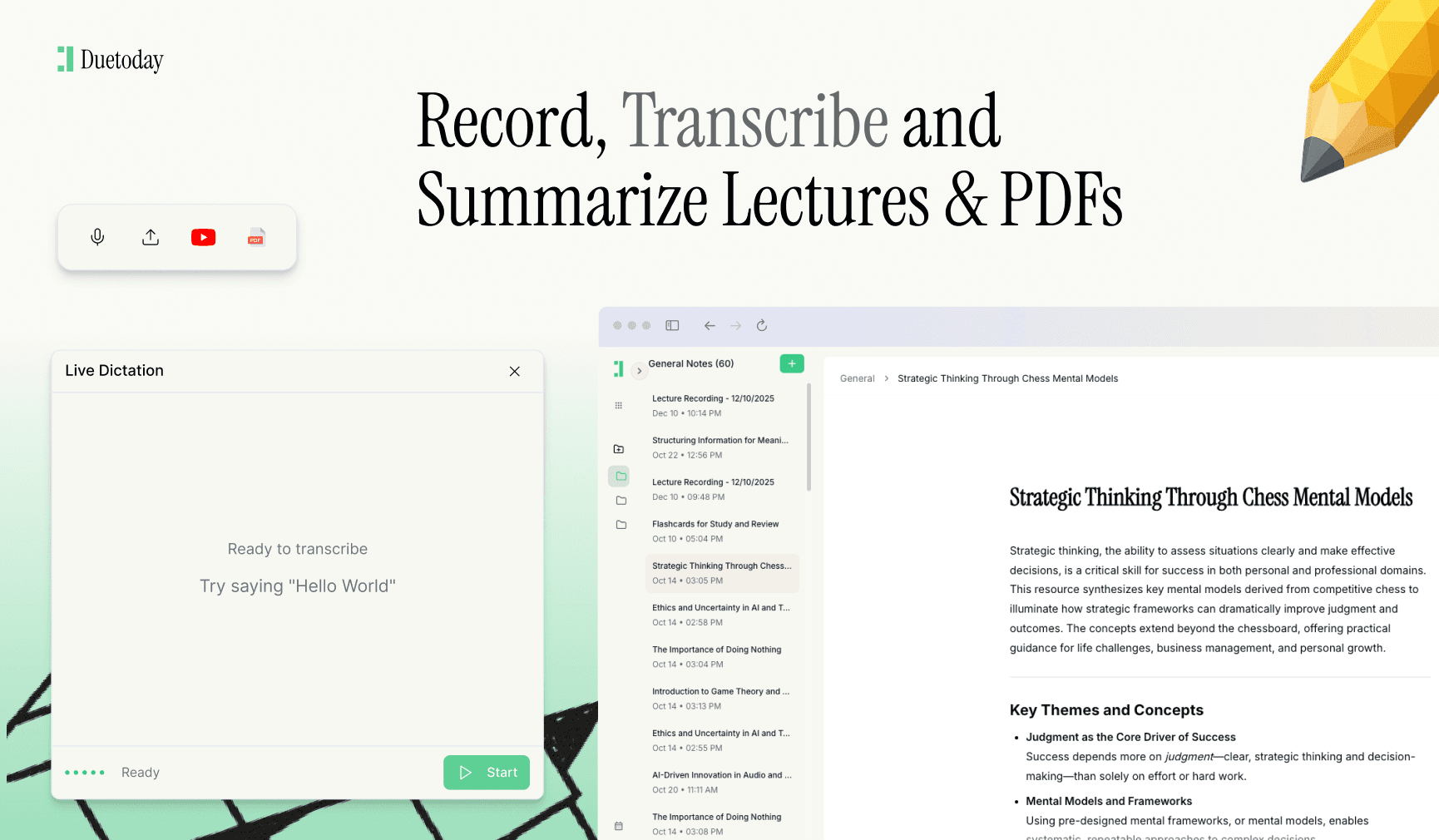
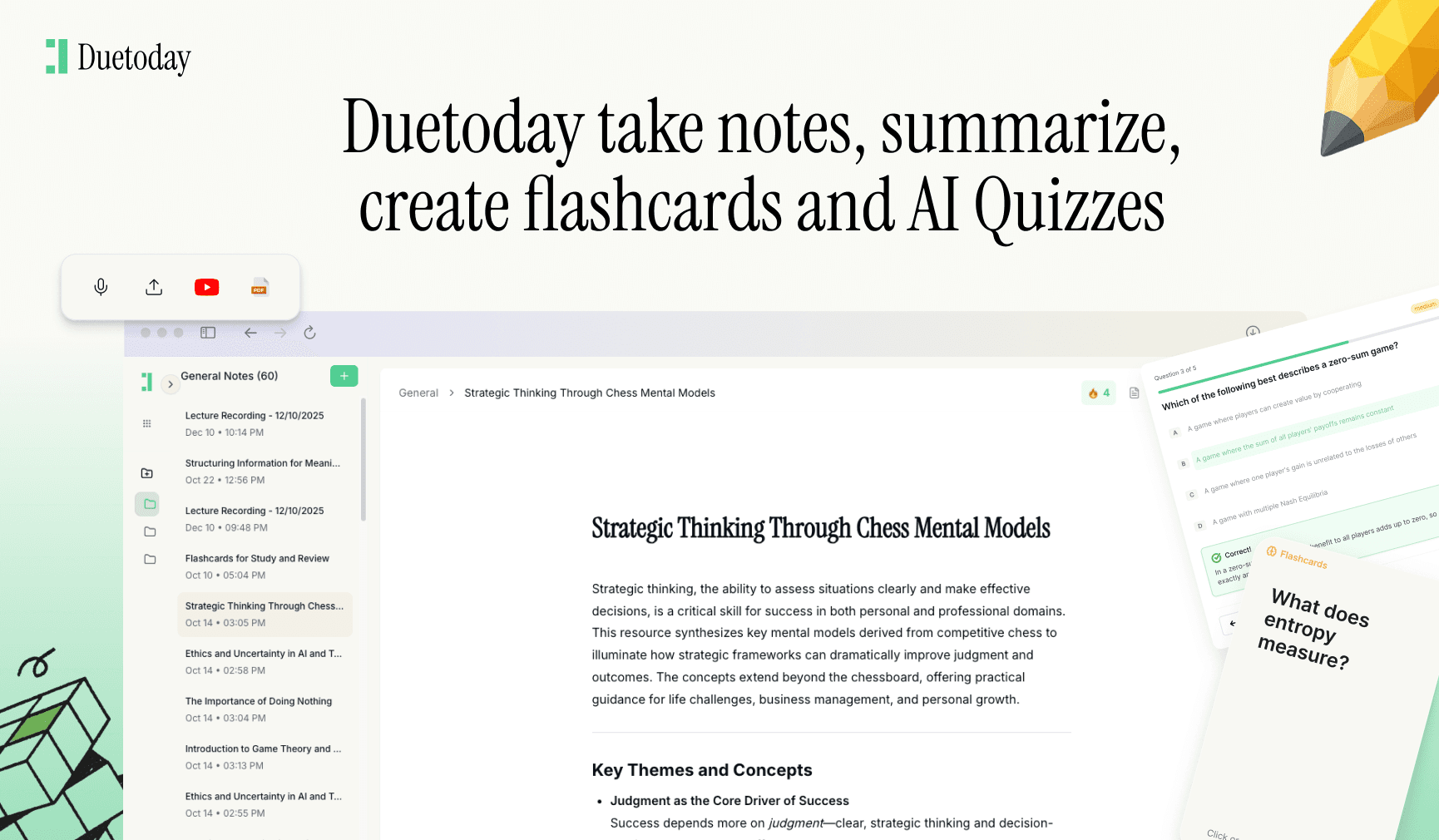
Learning how to study history efficiently means using the best tools available to manage the information overload. Duetoday AI is an AI-powered learning platform that turns lectures, PDFs, and notes into summaries, flashcards, quizzes, and structured study tools automatically. It acts like a personalized AI tutor, helping students learn faster, stay organized, and retain information without spending hours rewriting notes. For history students who are often buried under hundreds of pages of textbooks and primary sources, using a tool like this can be a game-changer, allowing you to focus on the analysis while the AI handles the heavy lifting of organization and content breakdown.
Mastering the Art of Historical Analysis
Once you have the facts down, the next step is analysis. In university, you aren't just tested on what you know, but on how you interpret it. This often involves looking at primary sources—documents or artifacts created during the time period under study. When reading a primary source, you must be a skeptic. Ask who wrote it, who the intended audience was, and what bias might be present. A merchant’s diary entry about a tax hike will look very different from a king’s decree about the same event. Learning to navigate these conflicting perspectives is the core of being a historian and is essential for writing compelling academic papers.
Writing is perhaps the most critical skill for a history student. Your essays should not just be a summary of what happened; they need to be an argument. A strong history essay takes a stance and uses evidence to support it. Use the 'PEEL' method: Point, Evidence, Explanation, and Link. Start each paragraph with a clear point, provide historical evidence (like a quote or a specific event), explain how that evidence supports your point, and then link it back to your overall thesis. This structure ensures your writing remains focused and persuasive, which is exactly what professors look for when grading midterms and finals.
Effective Revision Techniques for History Exams
As exams approach, the best way to revise is through active recall. Reading your notes over and over is one of the least effective ways to study. Instead, try to teach the topic to someone else or participate in study groups where you debate the causes of historical events. Flashcards are also incredibly effective for memorizing specific terms, names, or key dates. If you can explain the significance of the Treaty of Versailles in under two minutes without looking at your notes, you likely have a solid grasp of the material. Breaking your revision into smaller, focused blocks—perhaps one era per day—prevents burnout and ensures you cover the entire syllabus.
Finally, don't ignore the importance of mental health and pacing. History involves a lot of solitary work, which can sometimes feel isolating. Make sure to take breaks, stay hydrated, and get enough sleep. A tired brain cannot form the complex connections needed for historical analysis. Balance your heavy reading days with lighter activities, and remember that the goal is not just to pass a test, but to understand the human story. By applying these strategies, you’ll find that history isn’t just a subject to be survived, but a fascinating journey through time that offers endless insights into our world today.

How do I memorize dates for history exams?
Focus on creating a timeline of major events first. Once the big dates are anchored, link smaller events to them. Use mnemonic devices or flashcards for repetitive practice.
What are primary and secondary sources?
Primary sources are first-hand accounts like diaries or letters from the period. Secondary sources are interpretations by scholars written after the fact, like your textbooks.
How can I improve my history essay writing?
Focus on developing a strong thesis statement and use the PEEL method to structure your paragraphs. Always analyze the evidence rather than just describing it.
Is history just about memorization?
Not at all. While you need basic facts, university-level history is about analysis, understanding cause and effect, and interpreting different viewpoints.