The Ultimate Student Guide to Managing Multiple Exams at Once

Mastering the Art of Concurrent Studying
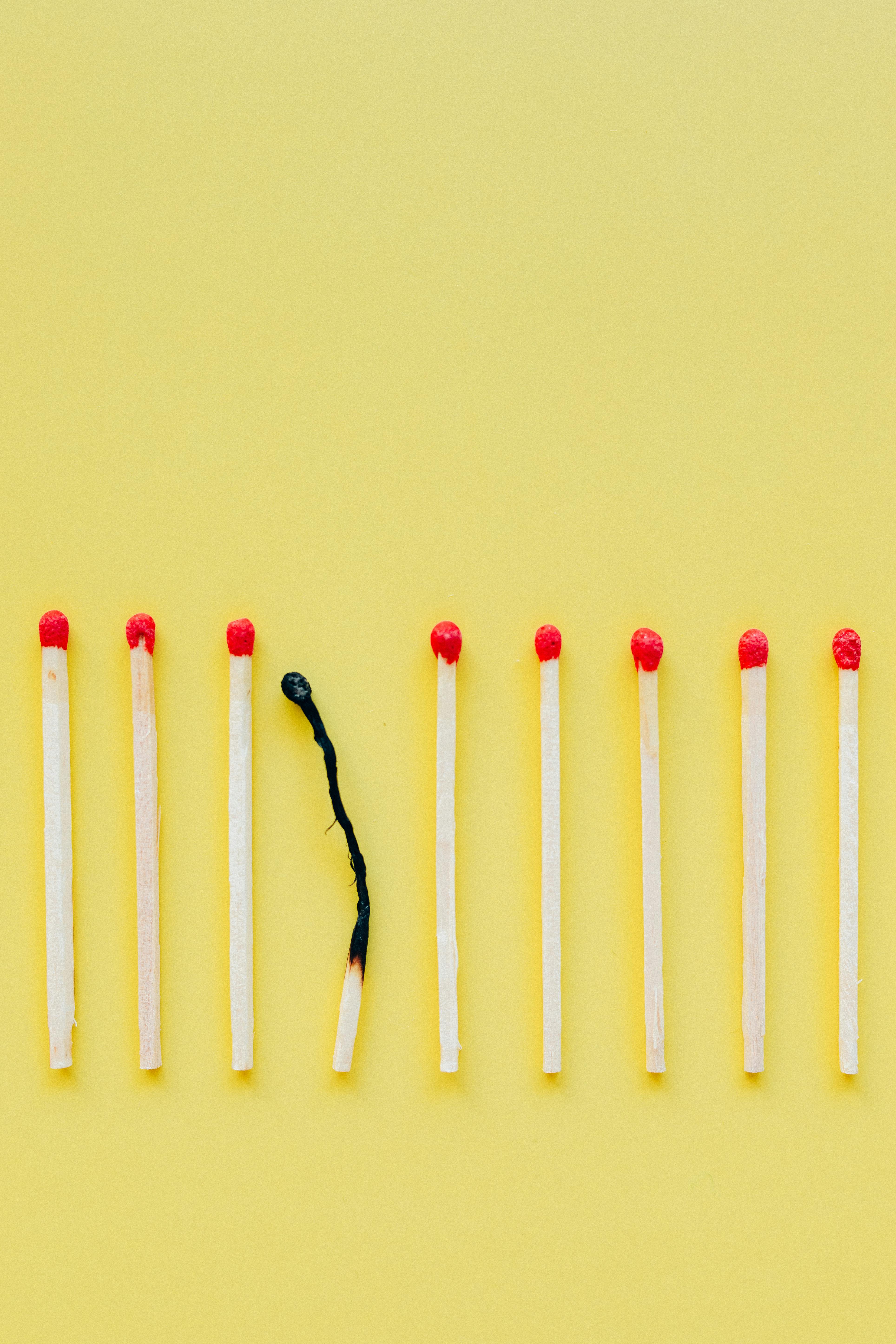
University life often feels like a constant balancing act, but nothing tests your resilience quite like exam season. When you have three, four, or even five subjects to master simultaneously, the sheer volume of information can feel paralyzing. The secret to surviving this period isn't necessarily studying harder, but studying smarter by organizing your cognitive load. Most students make the mistake of focusing on one subject until they are exhausted, only to realize they have neglected another critical course. To avoid this burnout, you need a systematic approach that allows your brain to switch between topics without losing momentum.
One of the most effective ways to handle a heavy exam load is to categorize your subjects by difficulty and type. For instance, pairing a heavy memorization subject like Anatomy with a problem-solving subject like Calculus can prevent mental fatigue. This technique, often referred to as context switching, keeps your brain engaged by changing the way it processes information. When you feel your logic-based energy fading, you can switch to creative or narrative-based study materials to keep the progress moving forward.
Timing is everything when you are juggling multiple deadlines. Instead of vague goals like studying all day, you should implement the block scheduling method. Divide your day into specific segments dedicated to specific modules. By creating hard boundaries for each subject, you prevent the 'looming cloud' of other exams from distracting you while you work. It is about deep work and radical focus during those assigned hours, ensuring that every minute spent at your desk actually contributes to your final grade.
The Role of Duetoday AI in Your Exam Prep
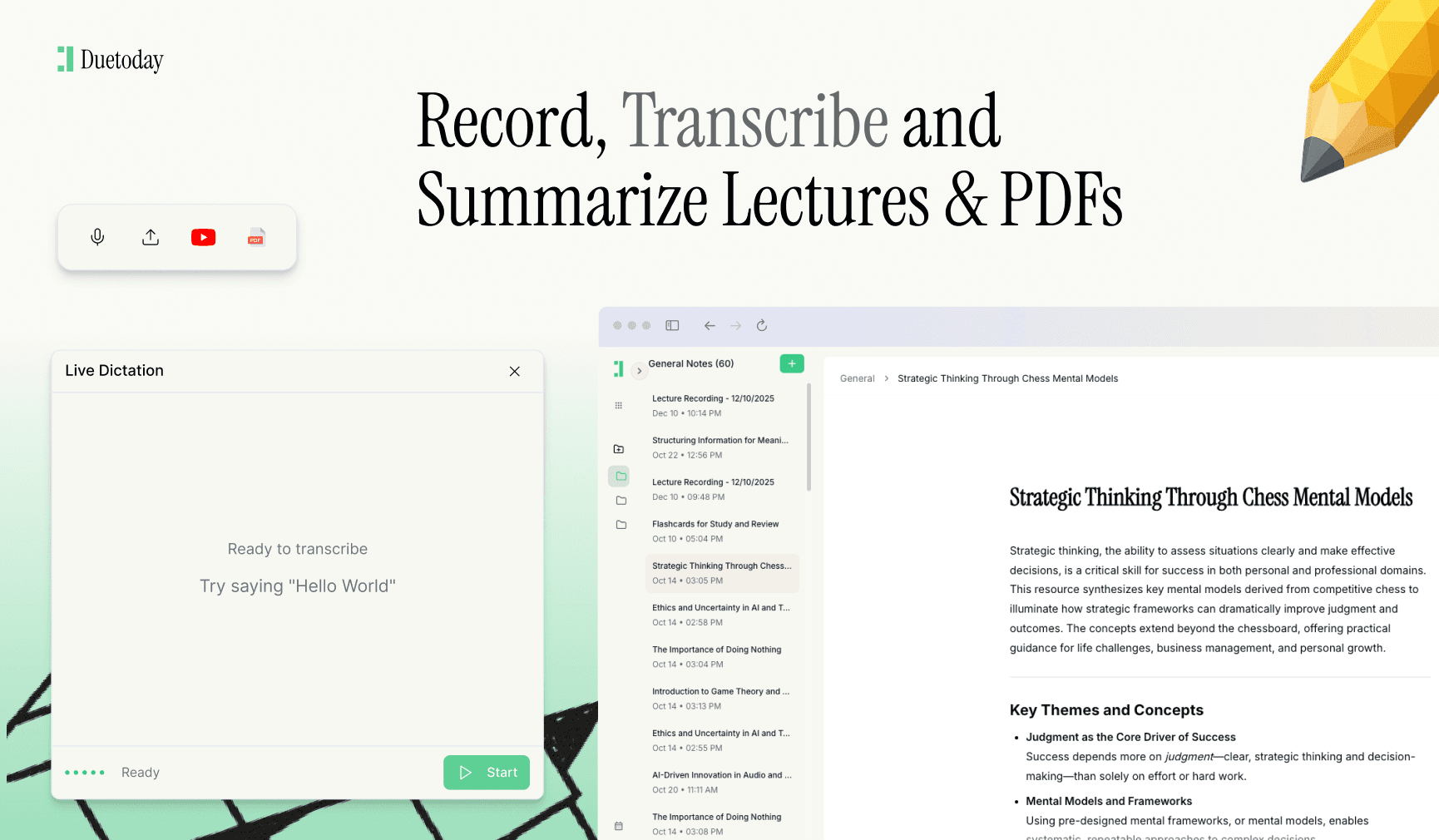
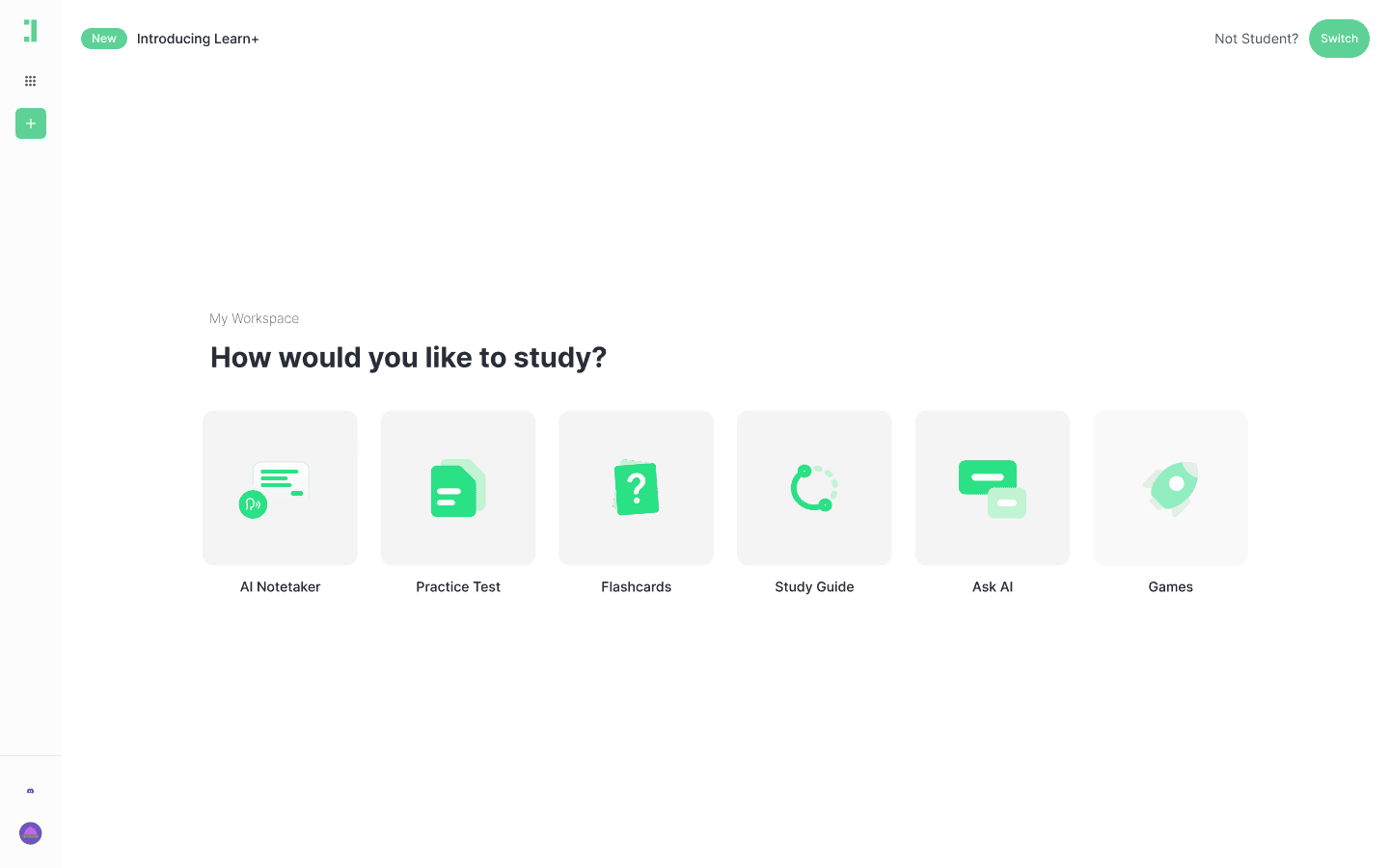
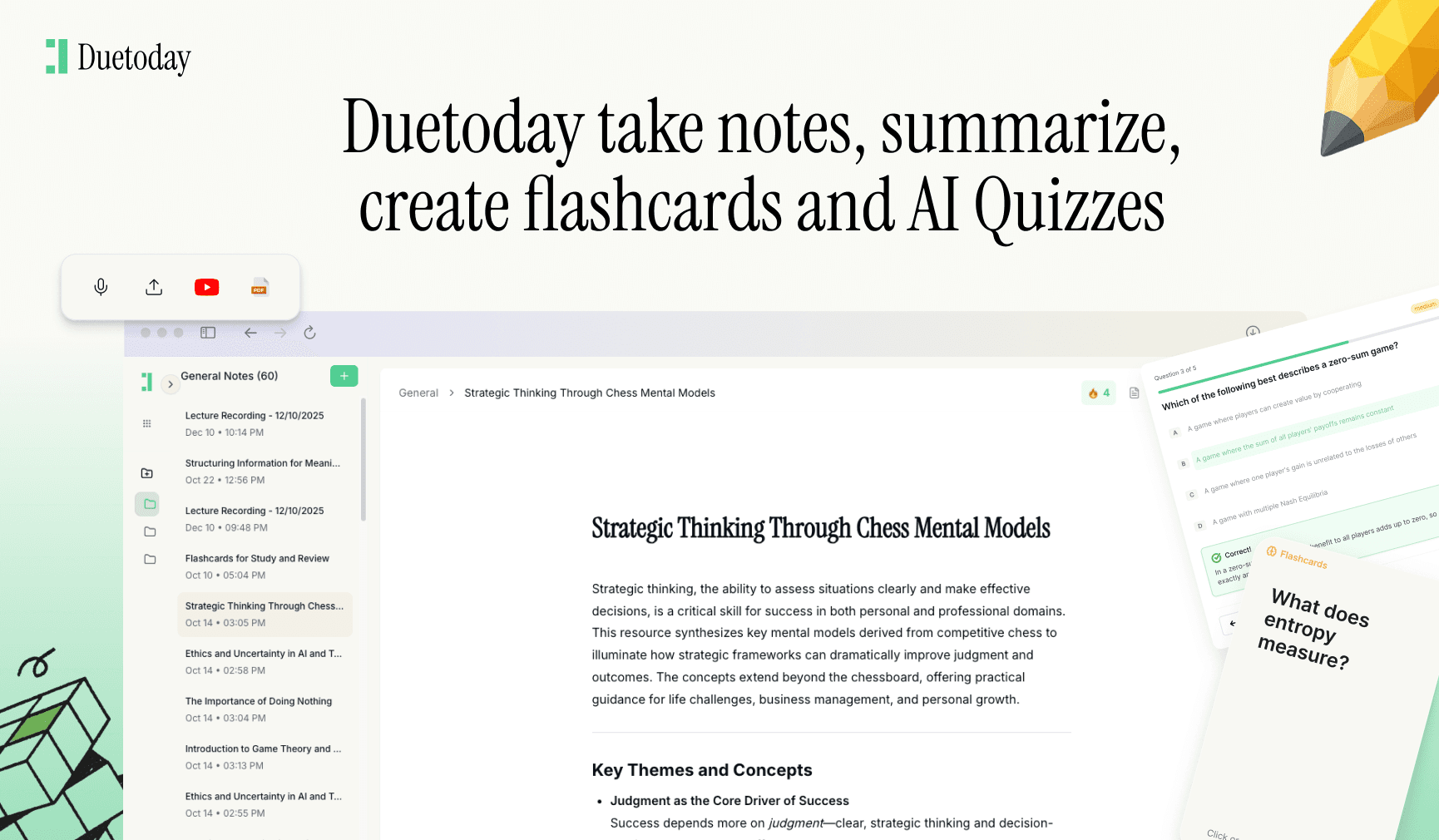
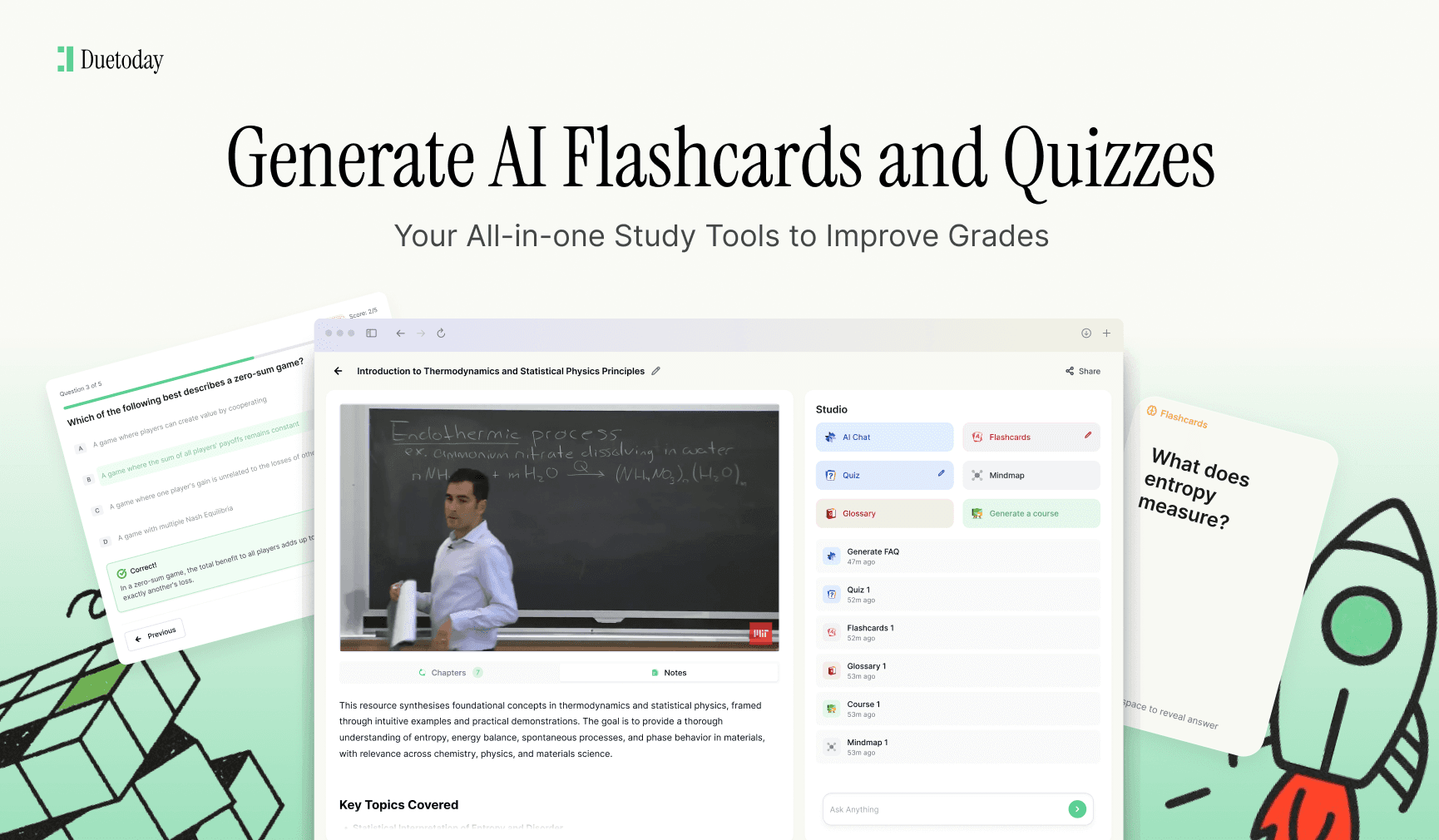
Managing several subjects means dealing with a mountain of different PDFs, lecture slides, and handwritten notes. This is where Duetoday AI becomes a game-changer for university students. Duetoday is an AI-powered learning platform that turns your lectures, PDFs, and messy notes into concise summaries, flashcards, and quizzes automatically. It acts like a personalized AI tutor—helping you learn faster and stay organized across different subjects without the manual labor of rewriting notes. This allows you to spend more time actually active-recalling the material and less time just organizing it, making it the perfect companion for a busy exam schedule.
Tactical Planning and Resource Management
Before you even open a textbook, you need a master calendar that lists every exam date, time, and location. Seeing the entire landscape of your finals week allows you to work backward. If you have two exams on the same day, those subjects need to be prioritized earlier in your revision cycle. You should aim to finish the bulk of your 'learning' phase at least a week before the first exam, leaving the final days strictly for review and practice papers.
Active Recall and Spaced Repetition
The biggest challenge when studying for multiple exams is retention. It is common to feel like information from one class is pushing out information from another. To combat this, you must move away from passive reading. Passive reading is a trap that creates an illusion of competence. Instead, use active recall. Close your book and try to explain a concept out loud or write down everything you remember about a topic on a blank sheet of paper. This forcing of the brain to retrieve information strengthens neural pathways more effectively than highlighting sentences ever will.
Spaced repetition is the second pillar of long-term retention. Rather than cramming a single subject for eight hours, study it for two hours today, another hour tomorrow, and thirty minutes three days later. This constant re-exposure tells your brain that the information is important. When managing multiple exams, you can cycle through your subjects in a loop, ensuring that no topic goes cold for more than forty-eight hours. This keeps all subjects fresh in your mind simultaneously.
Managing Stress and Physical Health
Your brain is a physical organ, and its performance is tied to your physical state. During heavy exam periods, students often sacrifice sleep and nutrition, which is counterproductive. Sleep is actually when your brain consolidates what you have learned during the day. If you don't sleep, you aren't actually 'saving' the information you spent all night studying. Aim for a consistent sleep schedule, even if it feels like you are losing time. The quality of your focused hours after a good night's rest will always outweigh the quality of groggy, caffeinated hours at 3:00 AM.
Finally, remember to incorporate short breaks using the Pomodoro technique. Working for twenty-five minutes followed by a five-minute break keeps your mind sharp. During these breaks, step away from your screens. Go for a quick walk, stretch, or grab a glass of water. These micro-recoveries prevent the mid-afternoon crash and help you maintain the stamina required to study for multiple exams over a long period. Success in university is as much about endurance as it is about intelligence.
Can I study for two exams on the same day?
Yes, but it is best to study subjects that are different in nature, such as one math-heavy and one reading-heavy, to avoid mental confusion.
How many hours should I study per day for finals?
Quality matters more than quantity, but most students find 6-8 hours of focused, broken-up study sessions to be the limit of effective learning.
Is cramming effective for multiple exams?
Cramming is generally ineffective for long-term retention and increases stress. It is better to use spaced repetition over several weeks.
How do I stop mixing up information between subjects?
Maintain separate notebooks and study environments for each subject if possible. Physical triggers help the brain categorize information correctly.