How to Study for Essay Exams

Understanding the Logic of Essay Exams
Unlike multiple-choice tests where you simply need to recognize the correct answer, essay-based exams require a deep, structural understanding of your subject. You aren't just memorizing facts; you are learning how to build a case, defend a position, and synthesize complex ideas under pressure. University students often struggle with these exams because they approach them like a history quiz rather than an exercise in logic and persuasion. To succeed, you need to change your mindset from gathering data to constructing arguments. This starts with looking at your syllabus not as a list of topics, but as a series of debates or themes that intersect with one another.
The first step in your preparation should be analyzing past exam papers. Most professors have a specific style or a recurring set of themes they like to explore. By looking at these questions, you can identify the types of command words commonly used, such as evaluate, analyze, or compare and contrast. Understanding what these words mean is half the battle. If a question asks you to evaluate, and you simply describe the topic, you will lose a significant amount of marks regardless of how much you know. Spend time deconstructing the prompts so that when you sit down for the actual exam, you aren't surprised by the phrasing.
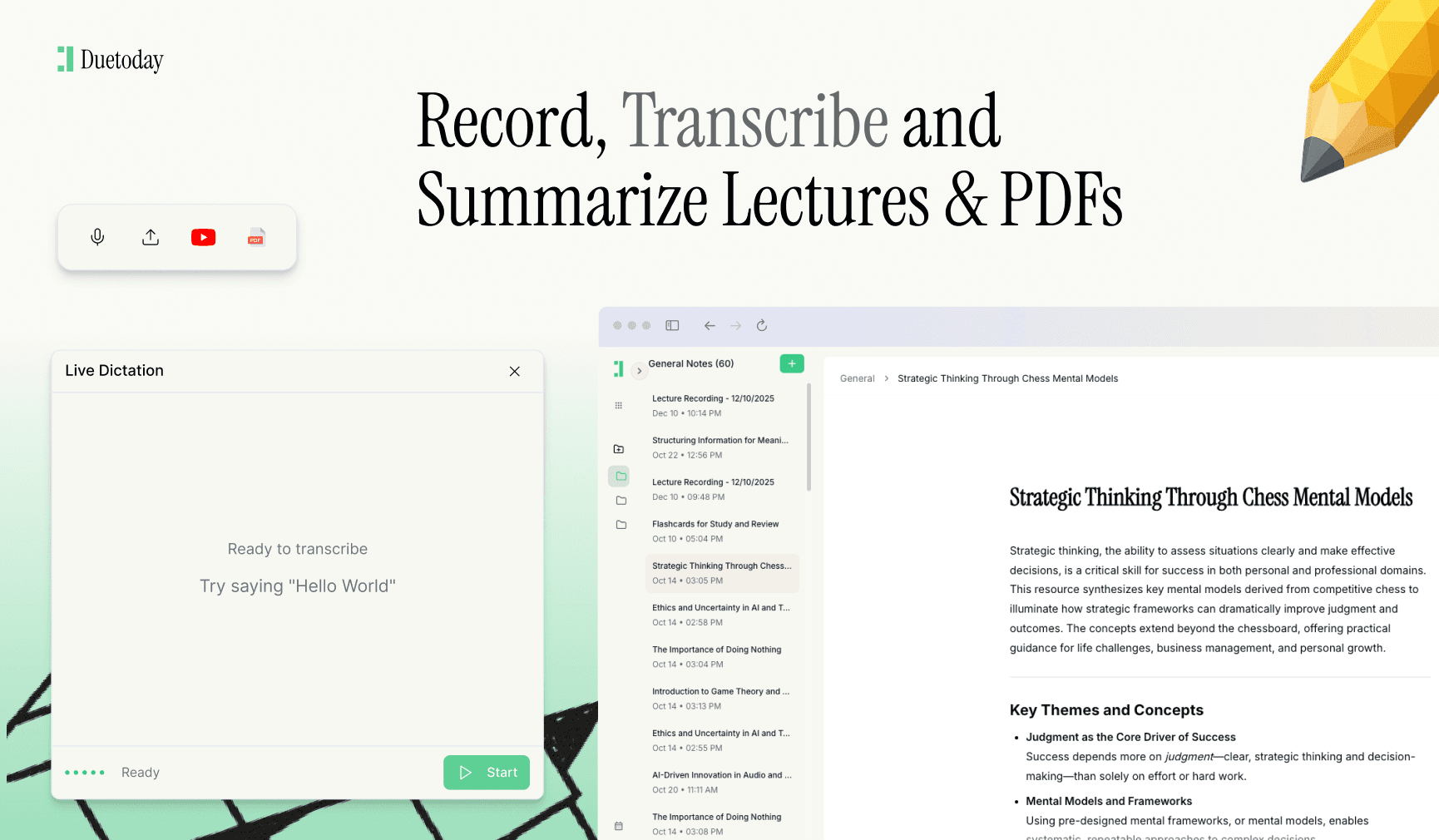
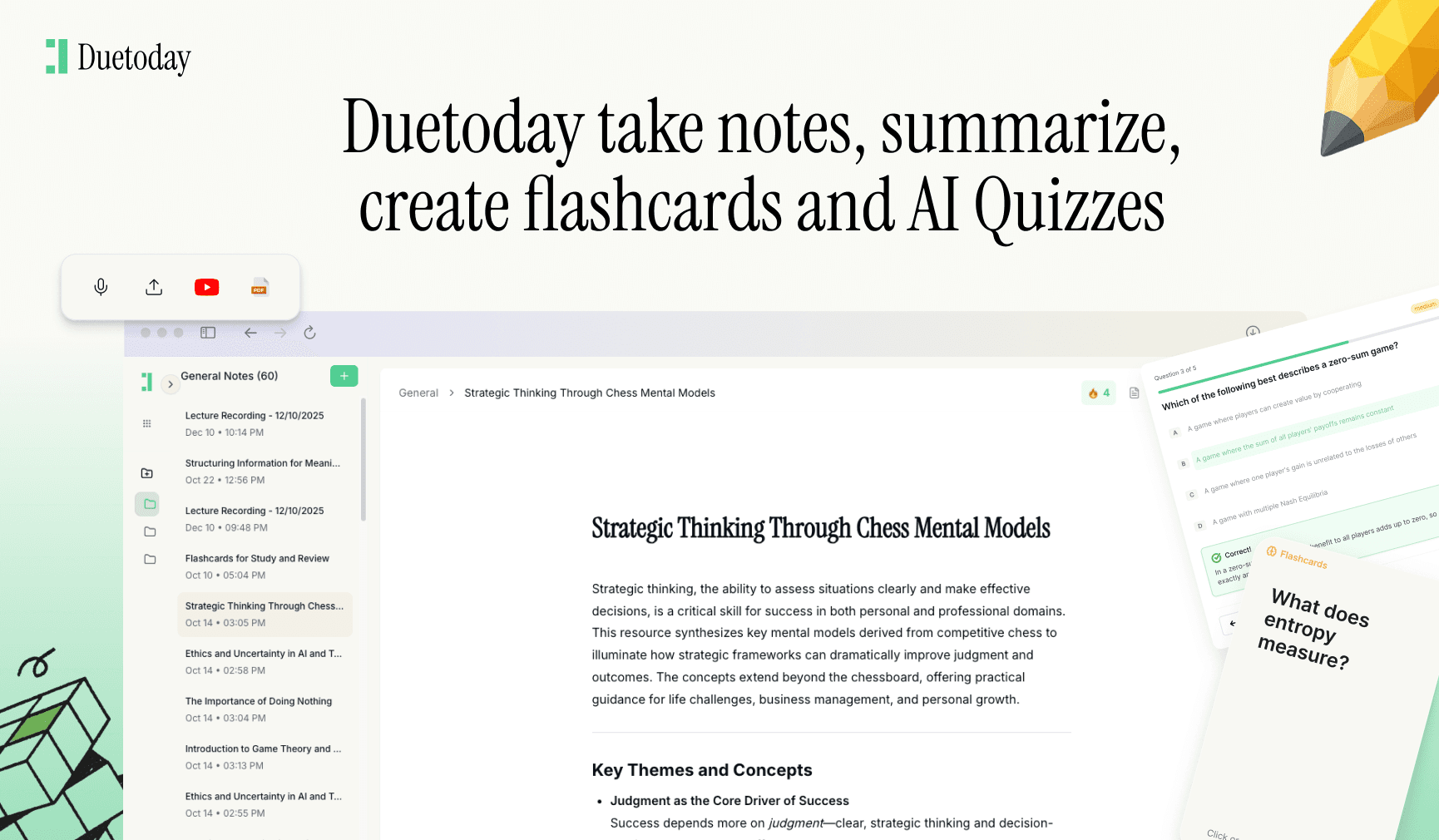
Active recall is your best friend when it comes to long-form writing. Instead of passively reading your textbooks, try to explain a concept out loud as if you were teaching a friend. This forces your brain to organize the information logically. To make this process even more efficient, Duetoday AI serves as a powerful companion for university students. This AI-powered learning platform automatically turns your lecture notes and dense PDFs into structured study tools like summaries and flashcards. Instead of spending hours manually rewriting your notes into a plan, Duetoday AI acts as a personalized tutor, helping you identify the most important themes and keeping your study sessions organized so you can focus on mastering the actual content.
Developing a Flexible Essay Plan
One of the biggest mistakes students make is trying to memorize entire essays word-for-word. This is a risky strategy because if the exam question is slightly different from what you prepared, your memorized response will feel forced and irrelevant. Instead, you should focus on creating flexible essay plans or skeletons. A good skeleton includes a strong thesis statement, three to four main points supported by evidence, and a conclusion that ties everything back to the original question. This allows you to adapt your knowledge to whatever specific angle the examiner takes on the day of the test.
When building these plans, focus on the relationships between different ideas. How does theory A challenge theory B? What evidence supports the consensus, and what outliers complicate the narrative? Mapping out these connections makes your writing feel more academic and sophisticated. Examiners love to see students who can engage with the nuance of a topic rather than providing a one-sided answer. Use your study time to find those interesting links that other students might miss, as these are the details that often push a grade from a B to an A.
Mastering Evidence and Quotations
An essay without evidence is just an opinion. To score high marks at the university level, you must back up your claims with evidence, data, or scholarly quotes. However, you don't need to memorize hundreds of direct quotes. It is often more effective to paraphrase the main arguments of key thinkers in your field. If you do choose to memorize direct quotes, keep them short and punchy. A single sentence that perfectly encapsulates a complex idea is far more valuable than a long paragraph that you might misremember during the stress of the exam.
Focus on a handful of versatile pieces of evidence that can be used across multiple different topics. For example, if you are studying sociology, a specific case study on urbanization might be applicable to questions about economics, social change, or environmental policy. By selecting multi-purpose evidence, you reduce the total amount of information you need to memorize while increasing your ability to tackle a wide variety of questions. Practice incorporating these pieces of evidence into your mock outlines so that they feel natural when you write them out in the exam hall.
The Importance of Timing and Structure
Time management is the silent killer of essay exams. Many students spend too long on their first essay and are forced to rush their second or third, leading to a significant drop in quality toward the end of the paper. To avoid this, you must treat your practice sessions like the real thing. Set a timer and practice writing a full essay within the allotted time. This helps you get a feel for how much you can realistically write and prevents you from going down rabbit holes that don't add value to your argument.
Once you are in the exam, spend the first five to ten minutes planning. It feels counterintuitive to sit there not writing while the clock is ticking, but a well-planned essay is much faster to write than one where you are making up the structure as you go. Your plan serves as a roadmap, ensuring you don't forget your best points and helping you stay on track if you start to feel panicked. A clear structure—Introduction, Body Paragraphs with PEEL (Point, Evidence, Explanation, Link), and Conclusion—will always be more successful than a disorganized ramble, even if the latter contains more information.
Final Review and Refinement
Ensure you leave at least two to three minutes at the end of each essay to proofread. In the heat of the moment, it is easy to skip words or make simple grammatical errors that can distract the marker. Check that your handwriting is legible and that your conclusion actually answers the question you were asked. If you find that you have run out of time, use bullet points to outline the remaining parts of your argument. Most examiners will try to give you some credit for the logic of your intended points even if you didn't have the time to flesh them out into full paragraphs.

How many quotes should I memorize for an essay exam?
Quality is better than quantity. Aim for 3-5 short, versatile quotes per major topic that can be used to support different types of arguments.
What if I forget my plan during the exam?
Take a deep breath and look back at the exam prompt. Write down the 3 main points you want to make on a piece of scrap paper immediately to regain your focus.
Is it better to write one long essay or two medium ones?
Always follow the exam instructions. If you are required to answer two questions, you must finish both. An unfinished second essay usually hurts your grade more than a shorter first essay.
How do I stay calm during essay exams?
Preparation is the best cure for anxiety. Use tools like Duetoday AI to ensure you have mastered the material well in advance, and practice writing under timed conditions.