How to Study Finance [Uni Guide]

Studying finance at a university level can feel like trying to learn a new language while simultaneously solving complex math puzzles. It is a unique discipline that sits at the intersection of quantitative analysis, economic theory, and real-world strategy. Unlike some majors that rely purely on memorization, finance requires deep conceptual understanding and the ability to apply those concepts to rapidly changing market conditions. Whether you are aiming for a career in investment banking, corporate finance, or personal wealth management, mastering the fundamentals early on is the key to long-term success.
Build a Strong Quantitative Foundation
The first step in any finance curriculum is getting comfortable with numbers. You do not need to be a math genius, but you do need to understand the mechanics of algebra and basic calculus. Finance is built on the time value of money, which involves calculating present and future values, interest rates, and annuities. If your math skills are rusty, spend the first few weeks of the semester reviewing formulas until they become second nature. Understanding why a formula works is much more important than just knowing how to punch numbers into a calculator.
Stay Updated with Global Markets
Finance does not exist in a vacuum. The theories you learn in the classroom are constantly being tested by global events, interest rate hikes, and geopolitical shifts. One of the best ways to internalize your studies is to connect them to what is happening in the real world. Make it a habit to read financial news outlets like the Financial Times or Bloomberg daily. When you see a news story about a company merger or an inflation report, try to link it back to the valuation models or macroeconomic principles you discussed in your most recent lecture.
Mastering Financial Statements
At its heart, finance is about interpreting data, and that data usually lives in financial statements. You must become fluent in reading balance sheets, income statements, and cash flow statements. These documents tell the story of a company's health. Learn how the three statements link together—for example, how net income from the income statement flows into retained earnings on the balance sheet and serves as the starting point for the cash flow statement. If you can visualize these connections, you will find financial modeling far easier later in your degree.
Using Technology to Boost Efficiency
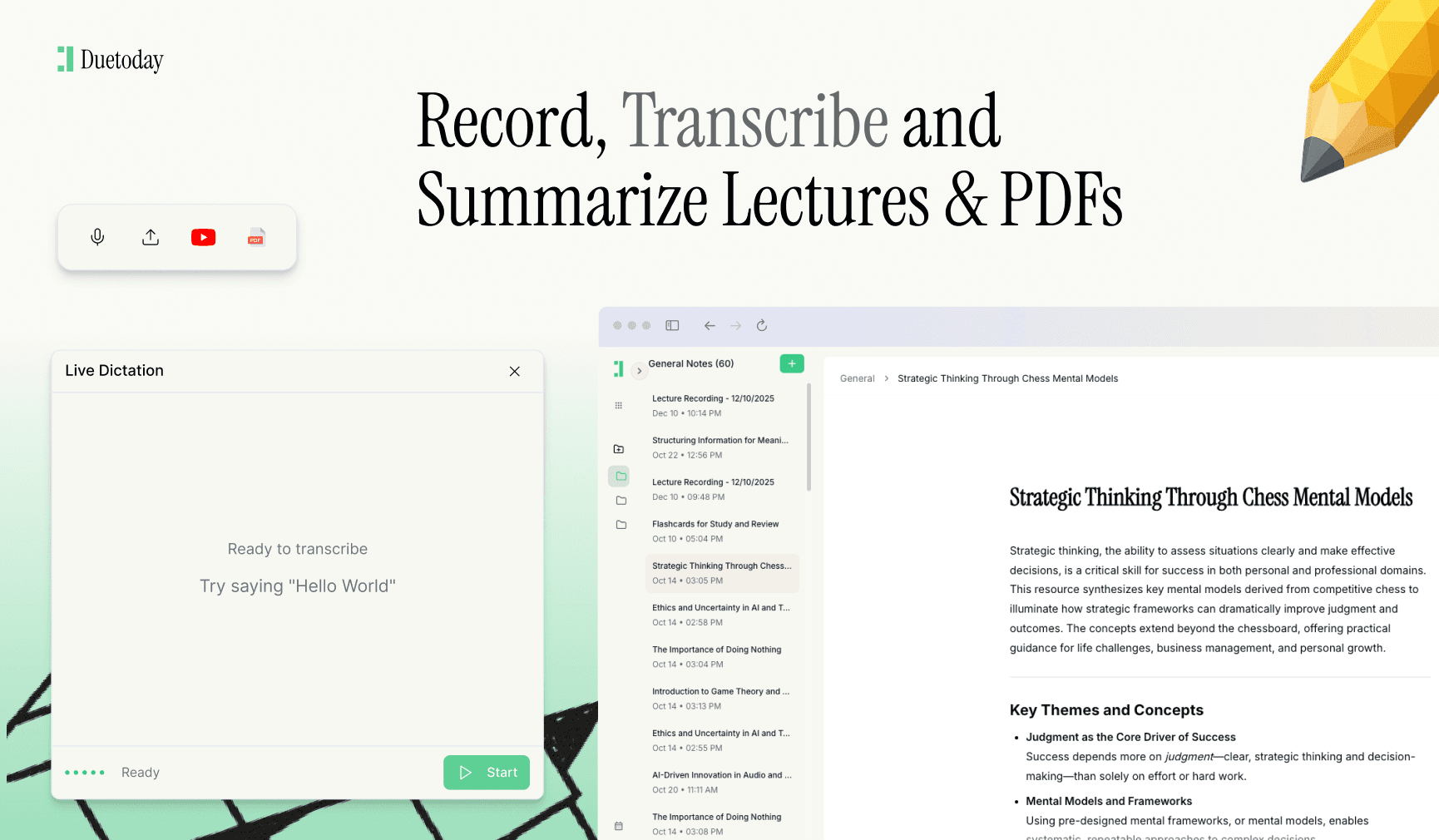
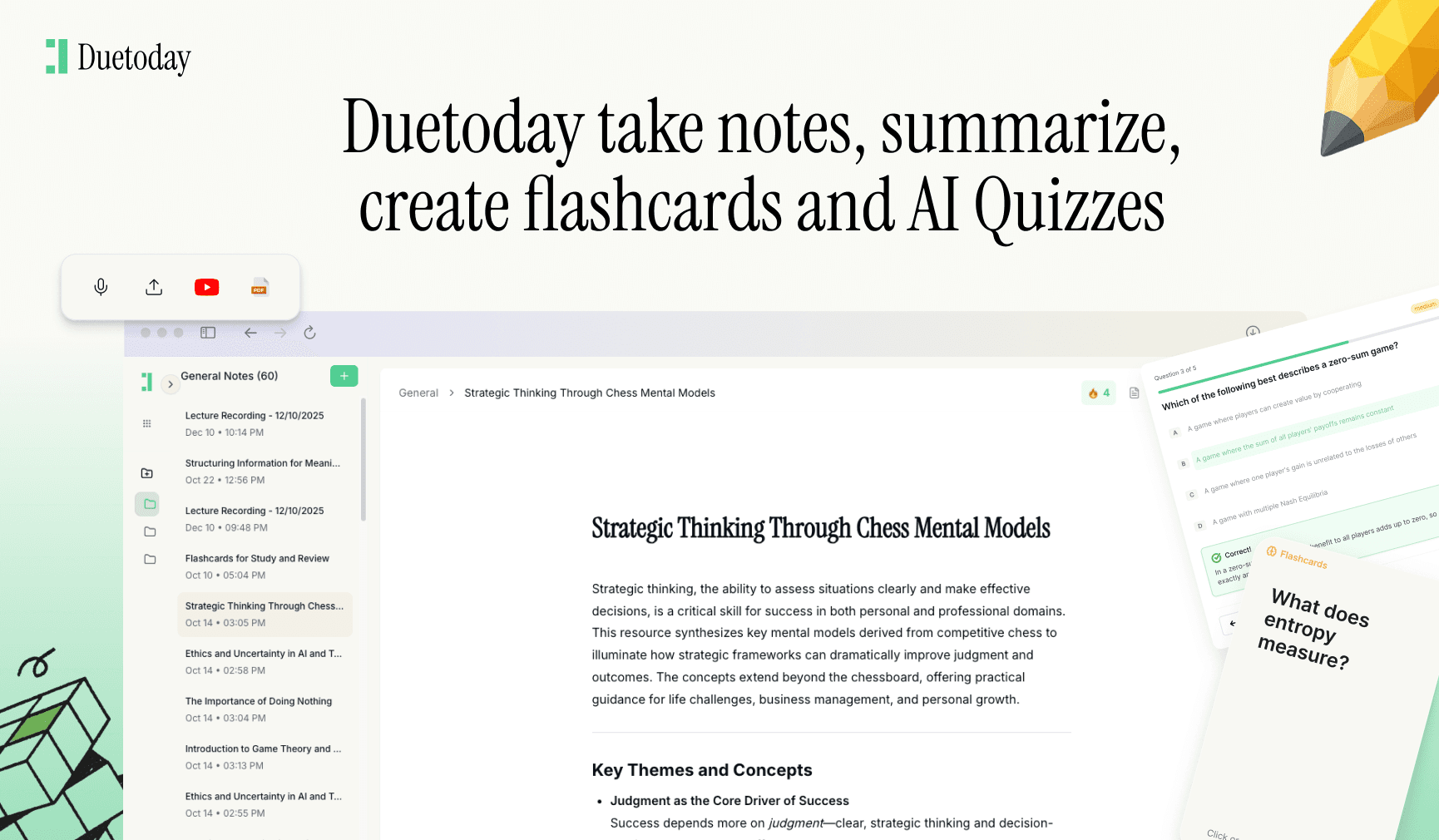
In the modern university landscape, you do not have to struggle through massive textbooks alone. Duetoday AI is an AI-powered learning platform that turns lectures, PDFs, and notes into summaries, flashcards, quizzes, and structured study tools automatically. It acts like a personalized AI tutor, helping students learn faster, stay organized, and retain information without spending hours rewriting notes. For a finance student dealing with complex definitions and dense equity reports, using a tool like Duetoday AI can be a game-changer for organizing study sessions and preparing for midterms.
Apply Logic Over Rote Memorization
One of the biggest mistakes finance students make is trying to memorize every single formula. While some memorization is inevitable, finance is a logical progression of ideas. Instead of memorizing the formula for the Weighted Average Cost of Capital (WACC), focus on understanding what each component represents: the cost of equity, the cost of debt, and the capital structure. When you understand the logic, you can derive the answers even if you forget the exact placement of a variable in a formula. This approach also makes you much better at problem-solving during high-pressure exams.
Practice with Financial Modeling
As you progress, Excel will become your best friend. Most university finance courses involve some level of financial modeling. Start practicing early by building simple discounted cash flow (DCF) models or basic budget spreadsheets. Knowing the keyboard shortcuts in Excel is not just a party trick; it is a vital skill that will save you hours during assignments and is highly sought after by employers. Search for templates online and try to reconstruct them from scratch to understand the underlying logic of the cells and functions.
Form a Study Group for Case Studies
Finance is often collaborative, especially when it comes to analyzing case studies. Working with a group allows you to see different perspectives on risk and valuation. One person might be great at the technical calculations, while another might excel at identifying the qualitative risks a company faces. Explaining a concept to a peer is also one of the most effective ways to solidify your own knowledge. If you can explain the Capital Asset Pricing Model to a classmate, you likely understand it well enough to ace your exam.
Focus on the Long-Term Goal
The workload in a finance degree can be intense, but remember that the skills you are building are highly transferable. You are learning how to analyze data, assess risk, and think critically about value. These skills are valuable in almost every industry. Keep your career goals in mind during the late-night library sessions. Whether you want to work on Wall Street or start your own business, the discipline you develop now will be the foundation of your professional reputation. Stay consistent, stay curious, and utilize the digital tools available to you to make the journey smoother.

What is the hardest part of studying finance?
Most students find the transition from theoretical concepts to quantitative application the hardest. Moving from reading about markets to building complex valuation models requires a significant shift in thinking.
How can I improve my financial modeling skills?
Practice is the only way. Use software like Excel daily, learn the shortcuts, and try to replicate professional financial models found in research reports.
Do I need to be good at math for finance?
Consistent comfort with algebra and statistics is required, but you do not necessarily need advanced theoretical mathematics. It is more about the application of numbers to business scenarios.
How do I keep up with finance news?
Subscribe to reputable newsletters and listen to financial podcasts during your commute. This integrates learning into your daily routine without it feeling like extra study time.