How to Study Accounting [Full Guide]

Getting Started with Accounting at University
Accounting is often described as the language of business, but for many university students, it feels more like a complex puzzle that keeps getting harder. Unlike subject areas that rely on memorization, accounting is a cumulative discipline. This means that if you miss the foundations in the first two weeks of your semester, the rest of the course will likely feel impossible. To succeed, you must approach your studies with a strategic mindset that prioritizes understanding over rote learning.
The first step in mastering accounting is to accept that it requires constant practice. You cannot study for an accounting exam by simply reading a textbook or highlighting notes. Instead, you need to engage with the numbers. Every transaction has a story, and your job is to learn how to record that story accurately. Most students struggle because they try to memorize specific entries rather than understanding the underlying logic of the accounting equation.
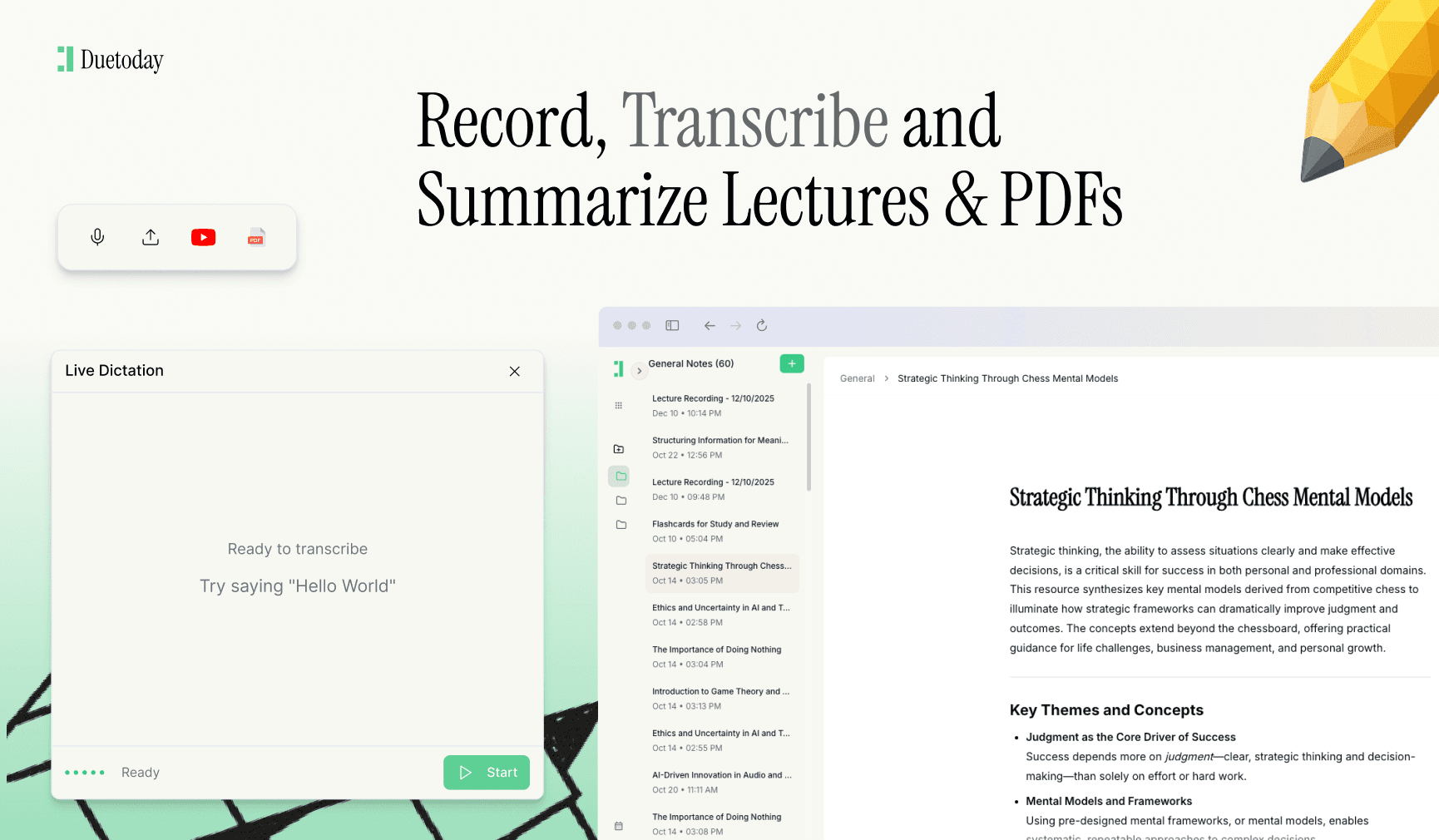
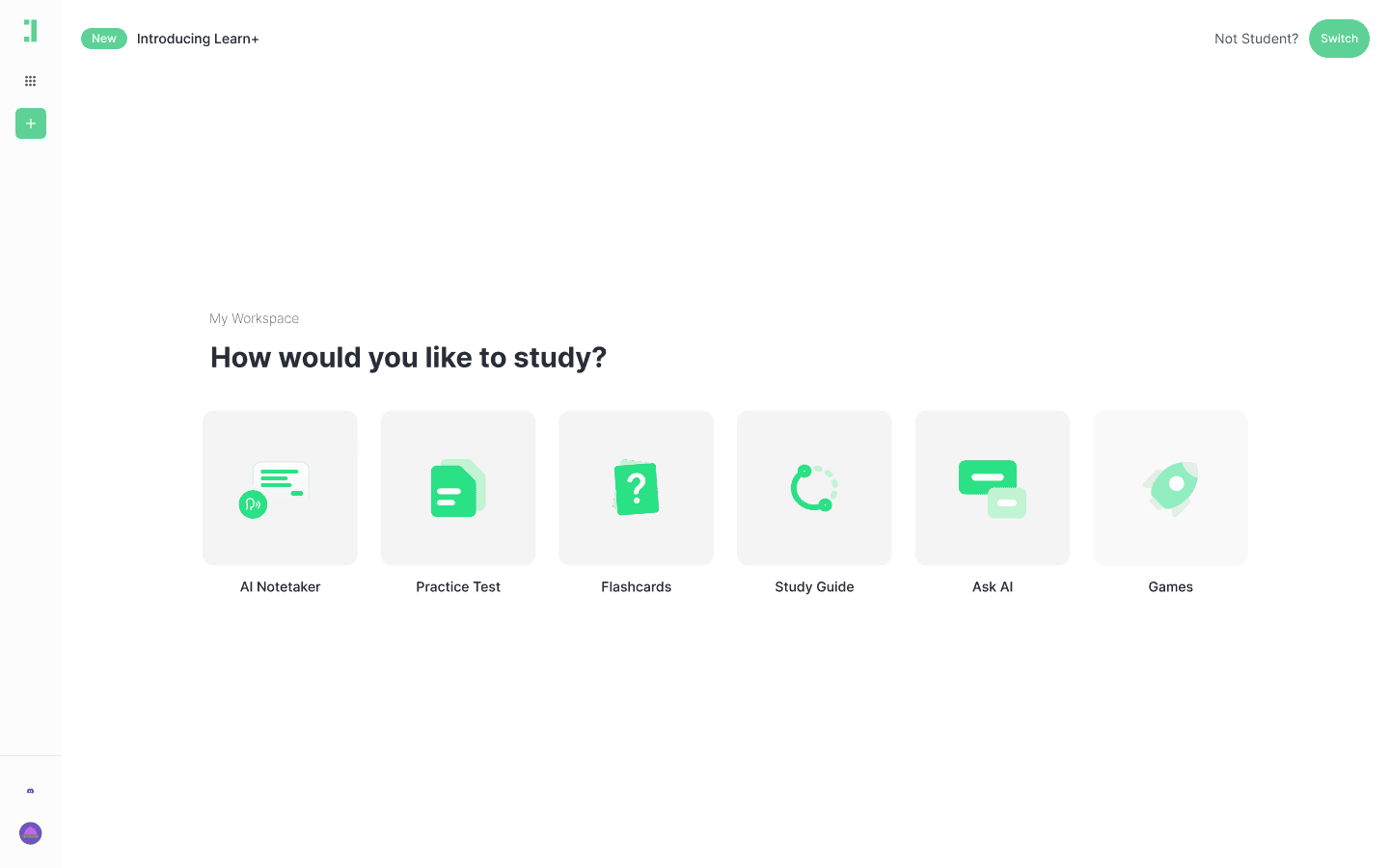
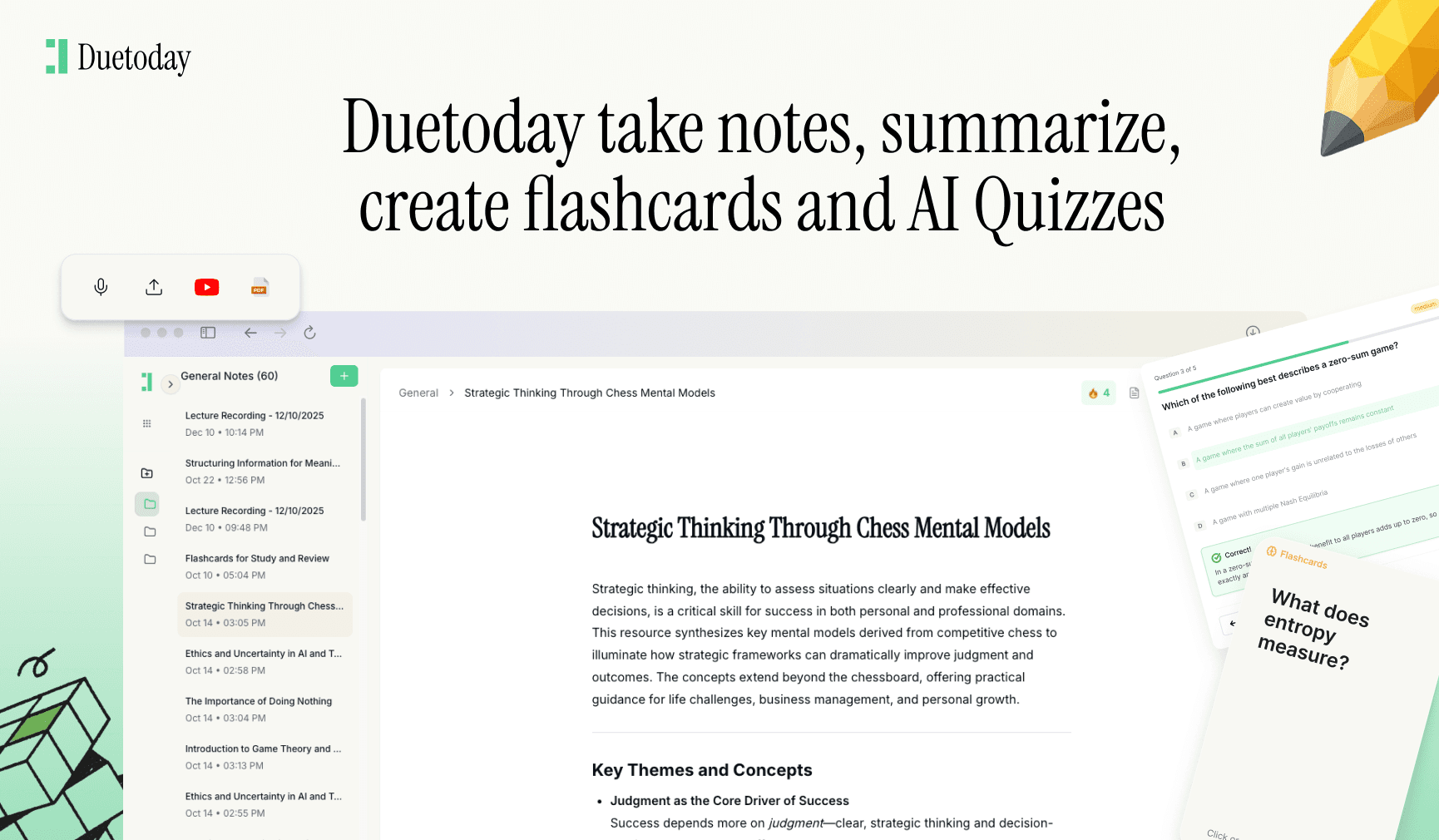
In the modern age of education, students have access to incredible tools that simplify the learning process. Duetoday AI is an AI-powered learning platform that turns lectures, PDFs, and notes into summaries, flashcards, quizzes, and structured study tools automatically. It acts like a personalized AI tutor, helping students learn faster, stay organized, and retain information without spending hours rewriting notes. Utilizing a tool like this allows you to focus on the application of accounting principles while the AI handles the heavy lifting of organization and review.
Mastering the Accounting Equation
Everything in accounting circles back to one fundamental formula: Assets = Liabilities + Equity. If you do not have a rock-solid grasp of this equation, you will constant find yourself lost during more advanced topics like consolidations or cash flow statements. Every time a business transaction occurs, this equation must remain in balance. When you are studying, always ask yourself how a specific transaction affects this balance sheet. If you can visualize the impact on the equation, the journal entries will start to make sense naturally.
Consistency is your best friend when dealing with these concepts. It is much better to spend thirty minutes every day looking at accounting problems than to spend ten hours in a library the day before your midterm. Because the material builds on itself, daily exposure keeps the logic fresh in your mind and prevents the 'snowball effect' where you fall too far behind to catch up.
Active Participation in Lectures
Accounting lectures are not like history or sociology lectures where you can sit back and listen. You need to be actively working through problems as the professor explains them. Most accounting instructors will use real-world examples to demonstrate how a journal entry is constructed. Take your own notes, but focus on the 'why' behind the numbers. Why was this account debited? Why did this specific expense get recognized in this period? If you understand the timing and the classification, the math becomes the easy part.
The Importance of Working Through Practice Problems
The secret to an A in accounting is doing the homework even when it is not graded. Most textbooks provide a variety of problems at the end of each chapter, ranging from basic calculations to complex scenarios. You should aim to complete as many of these as possible. The goal is to reach a level of proficiency where you can look at a transaction and immediately know which accounts are affected. This muscle memory is what saves you time during a time-pressured exam.
When you get a problem wrong, do not just look at the answer key and move on. Retrace your steps. Did you misclassify an account? Did you forget to record an adjusting entry? Understanding your mistakes is more valuable than getting the answer right on the first try. Often, the same types of errors appear repeatedly in student work, and identifying your personal 'trap' areas early on will significantly boost your grades.
Managing Your Time During Finals
As the semester draws to a close, the volume of material can feel overwhelming. This is where your organizational skills are tested. Break your syllabus down into sections such as financial statements, inventory valuation, and long-term assets. Tackle one section at a time, ensuring you can complete a full cycle of problems for each. Don't spend too much time on the things you already know; focus your energy on the complex topics that make you feel uncomfortable.
Group study can be beneficial for accounting, provided the group stays focused. Explaining a concept to a peer is one of the most effective ways to solidify your own knowledge. If you can teach someone else how to calculate a bank reconciliation or how to record depreciation, it proves that you have mastered the material yourself. Just be sure to solve problems individually before coming together to compare results.
Effective Note Taking and Review
Your notes should be a mix of theory and practical examples. Since accounting is so visual, use T-accounts to map out transactions in your margins. This provides a quick visual reference for how money is moving through the ledger. When you review your notes at the end of the week, try to summarize the main takeaway of each chapter in a single paragraph. This helps you see the big picture of how each topic fits into the broader world of financial reporting.
Finally, remember that accounting is a professional skill. Treat your coursework like you are already on the job. Accuracy matters, formatting matters, and deadlines matter. By adopting a professional attitude toward your studies now, you are not only preparing for your exams but also for a successful career in the business world.

Is accounting a lot of math?
Accounting involves a lot of numbers, but the math itself is usually basic arithmetic like addition, subtraction, multiplication, and division. The real challenge is knowing where to put the numbers and why they go there.
How do I keep debits and credits straight?
The best way is to remember the acronyms like DEAD (Debits: Expenses, Assets, Dividends). These accounts increase with a debit. Everything else increases with a credit.
What is the hardest part of accounting?
Most students find adjusting entries and the statement of cash flows to be the most difficult parts because they require a deep understanding of the timing of transactions.
Can I self-study accounting?
Yes, while university courses provide structure, there are many resources and AI tools available to help you learn the fundamentals of the accounting cycle on your own.