How to Remember What You Study

The Science of Remembering
Every university student has experienced the frustration of spending hours staring at a textbook, only to realize the next morning that half of the information has seemingly vanished. This isn't necessarily a sign that you have a bad memory; rather, it is often a result of using passive study methods that the brain isn't wired to prioritize. To truly remember what you study, you need to transition from simply consuming information to actively processing it. The brain works like a muscle that needs resistance to grow stronger. When you make your brain work to retrieve information, you create stronger neural pathways that make that information easier to access during an exam or a presentation.
Why We Forget So Quickly
The biggest enemy of any student is the Forgetting Curve, a theory developed by Hermann Ebbinghaus. It suggests that humans lose about 50% of new information within twenty-four hours and up to 80% within a month if they do not review it. This is why cramming the night before rarely leads to long-term mastery. To combat this, you must engage in active learning. Instead of rereading your highlights, you should be testing yourself constantly. This shift in perspective transforms studying from a chore into a strategic game of memory retention.
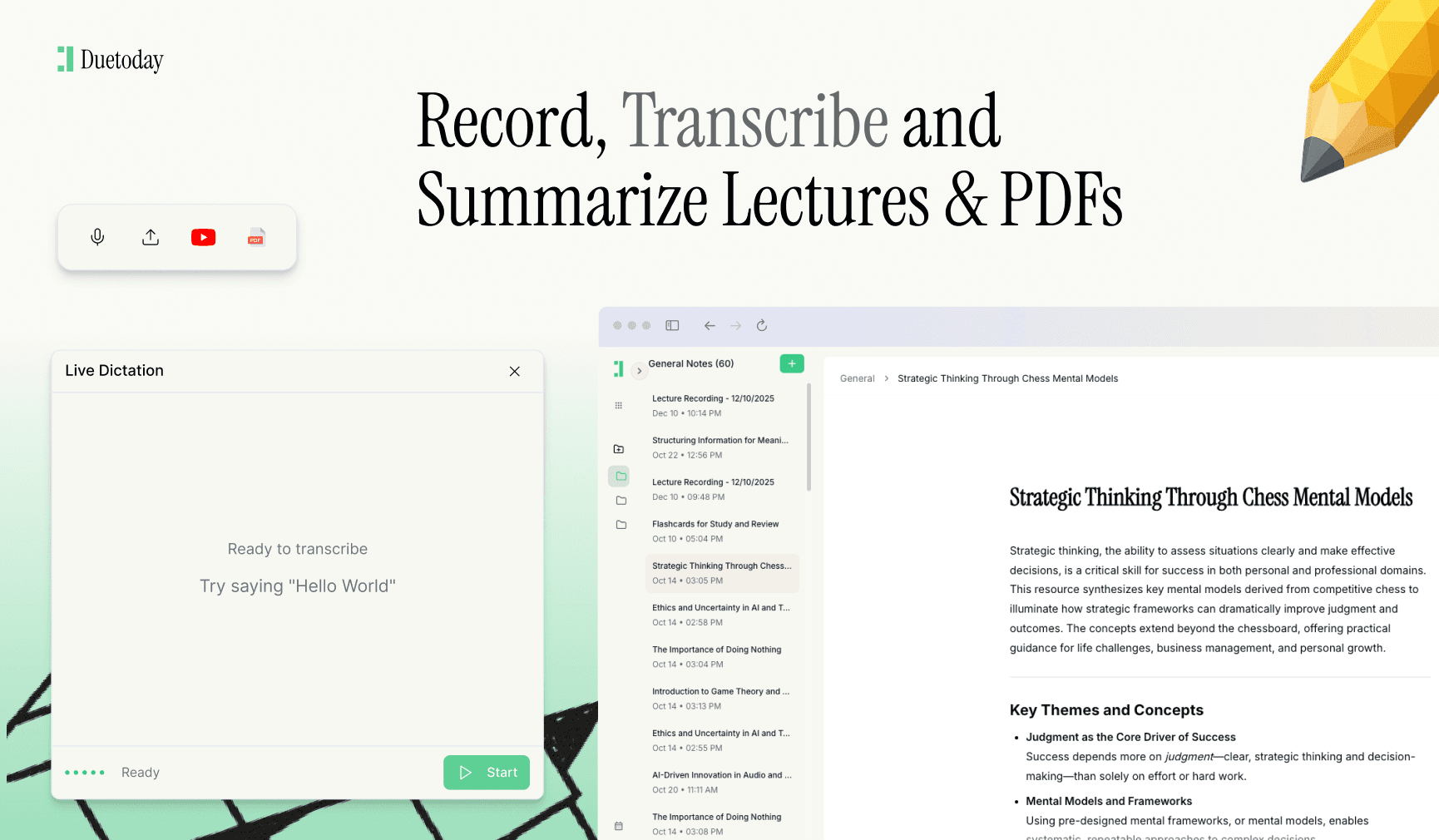
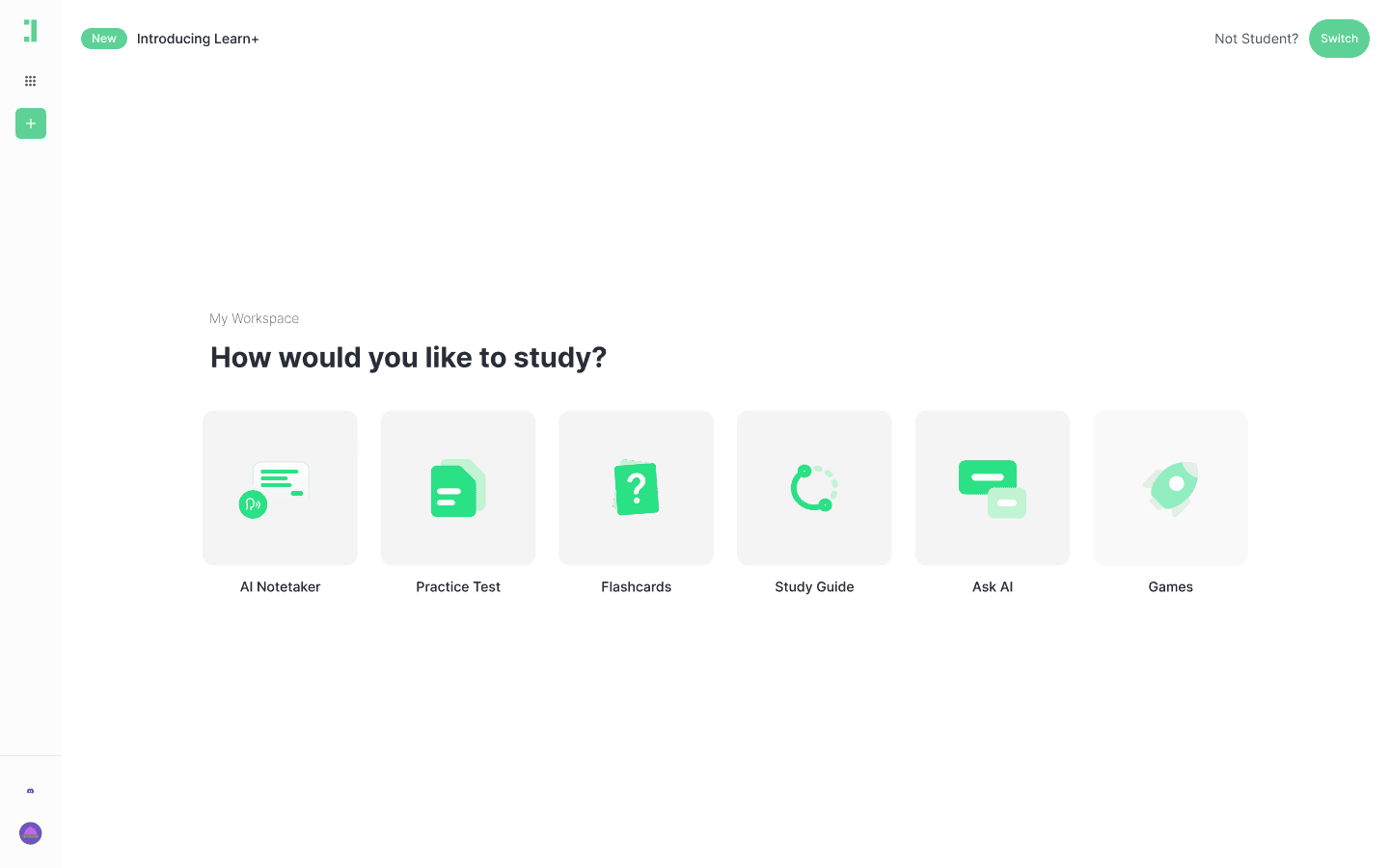
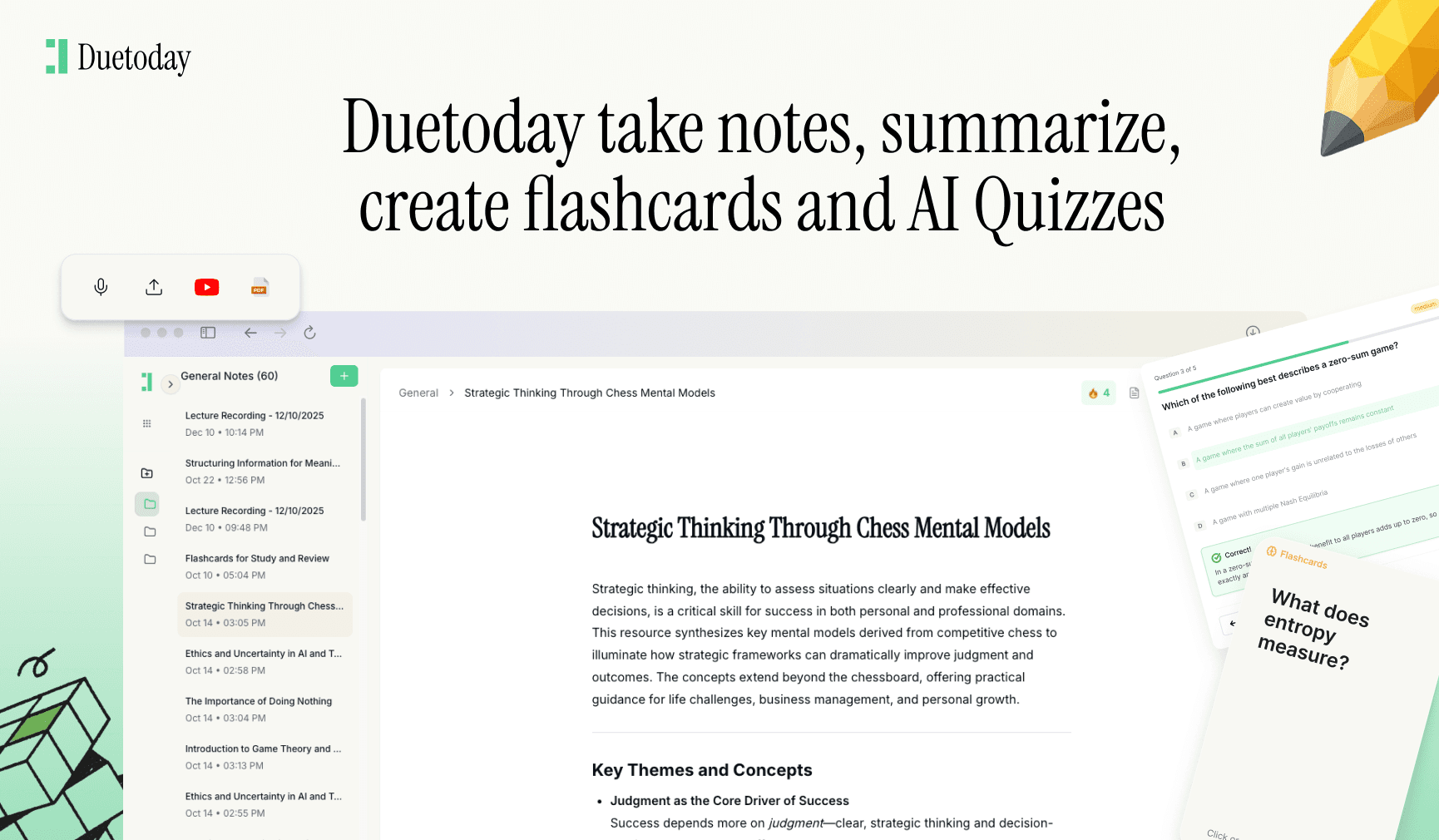
One of the most effective ways to bridge the gap between reading and remembering is using modern technology like Duetoday AI. Duetoday is an AI-powered learning platform that turns lectures, PDFs, and notes into summaries, flashcards, quizzes, and structured study tools automatically. It acts like a personalized AI tutor, helping students learn faster, stay organized, and retain information without spending hours rewriting notes. By automating the heavy lifting of organization, Duetoday AI allows you to focus on the actual act of learning and memorization.
Active Recall Is Your Best Friend
If there is one technique that stands above the rest, it is active recall. This involves closing your book and trying to explain a concept from memory. By forcing your brain to retrieve a piece of information, you are signaling to your mind that this data is important. You can practice this by writing down everything you know about a topic on a blank sheet of paper or by answering practice questions. Every time you struggle to remember a fact and then eventually find the answer, you are cementing that knowledge into your long-term memory far more effectively than if you had just read it five times over.
The Power of Spaced Repetition
Memory is built through frequency and timing. Spaced repetition is the practice of reviewing information at increasing intervals. Instead of studying a topic for five hours in one day, you study it for thirty minutes over several days. This method exploits the psychological spacing effect, where the brain learns more effectively when sessions are spread out. You might review a concept one day after learning it, then three days later, then a week later. Each review strengthens the memory trace, making it harder for the information to decay over time.
The Feynman Technique for Deep Understanding
Named after the Nobel Prize-winning physicist Richard Feynman, this technique is simple: explain what you are learning to someone else in the simplest terms possible. If you cannot explain a concept to a child or a friend who doesn't study your subject, then you don't fully understand it yourself. This process reveals gaps in your knowledge. When you hit a wall in your explanation, go back to your notes and refine your understanding until you can describe the core idea without using complex jargon. This transition from complexity to simplicity is where real learning happens.
The Role of Healthy Habits in Cognition
Your brain is a biological organ, and its performance is tied to your physical well-being. Sleep is perhaps the most underrated study tool available to students. During sleep, your brain undergoes a process called memory consolidation, where it moves information from short-term storage to long-term storage. Pulling an all-nighter might help you pass a quiz the next morning, but you will likely forget everything within forty-eight hours. Combined with proper hydration and light physical activity, a consistent sleep schedule can drastically improve your ability to focus and recall information during high-pressure situations.
Mnemonic Devices and Visualization
For lists or complex sequences, mnemonic devices can be incredibly helpful. Creating a story, an acronym, or a mental image can provide a hook for your brain to grab onto. Humans are naturally better at remembering vivid imagery and narratives than abstract facts. If you can turn a series of chemical reactions into a short, bizarre story in your head, you are much more likely to recall it during an exam. The weirder the mental image, the better it tends to stick in your mind because it stands out from the mundane information we encounter daily.

What is the most effective way to remember what I study?
Active recall and spaced repetition are widely considered the most effective methods for long-term retention. By testing yourself and spreading out your study sessions, you reinforce the neural pathways associated with that information.
How can I stop forgetting everything the day after I study?
You need to review the material within 24 hours of first learning it. Utilizing tools like flashcards or summaries can help refresh your memory and prevent the initial drop-off described by the forgetting curve.
Does listen to music help with memorization?
It depends on the student, but generally, instrumental or lo-fi music is better than music with lyrics, as lyrics can interfere with the language-processing parts of your brain while you are reading.
Is cramming a good way to study for university exams?
Cramming might work for short-term recall if the exam is only hours away, but it is highly ineffective for long-term memory. It also increases stress levels, which can lead to brain fog during the actual test.