How to Improve Academic Writing Skills

The Importance of Strong Academic Writing
Stepping into university often feels like learning a whole new language. You are no longer just writing to express an opinion; you are writing to join a scholarly conversation. Academic writing is the cornerstone of your university experience, acting as the primary medium through which you demonstrate your understanding, critical thinking, and research capabilities. Improving these skills is not just about getting better grades; it is about learning how to communicate complex ideas with precision and authority.
Many students struggle with the transition from high school essays to university-level papers because the expectations are significantly higher. You are expected to move beyond simple summaries and dive into deep analysis. This require a shift in mindset where every sentence serves a specific purpose in supporting your central thesis. By mastering the art of academic writing, you gain a competitive edge that lasts far beyond your graduation date.
Understanding the Core Structure of an Essay
Before you even type your first word, you need to understand the skeleton of a strong academic paper. Most university assignments follow a standard structure: an introduction that provides context and a clear thesis statement, body paragraphs that develop specific points, and a conclusion that synthesizes your findings. The introduction is your roadmap; it tells the reader exactly where you are going and why they should follow you. Without a clear thesis, your writing can feel aimless and disorganized.
Body paragraphs should follow a logical progression. A common mistake is trying to pack too many ideas into a single paragraph. Instead, focus on one main idea per paragraph, supported by evidence and analysis. This technique ensures that your reader can follow your train of thought without getting lost in a sea of information. Think of each paragraph as a mini-argument that contributes to the overall strength of your paper.
Developing Your Academic Voice
Finding your academic voice is a balancing act. You want to sound professional and objective without becoming overly wordy or using a thesaurus to replace every common word with a complex one. Clarity should always be your priority. If a reader has to reread a sentence three times to understand it, the sentence has failed. Use active verbs where possible to keep your writing engaging and avoid the passive voice, which can make your prose feel clunky and distant.
Authenticity in academic writing comes from your ability to engage with sources critically. Rather than just quoting experts, you should be evaluating their arguments and explaining how they relate to your own. This shows your professors that you aren't just a passive consumer of information but an active participant in your field of study.
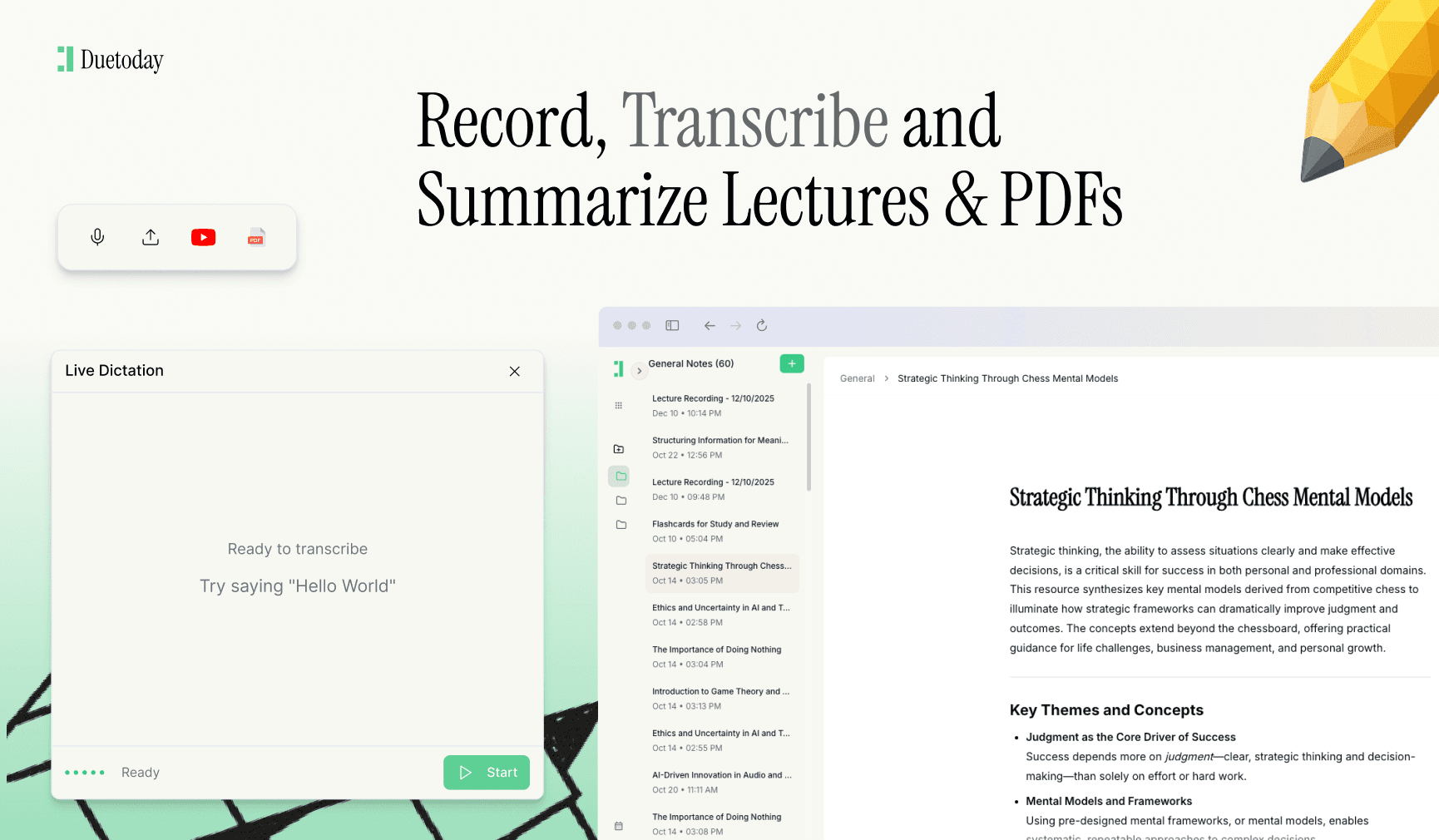
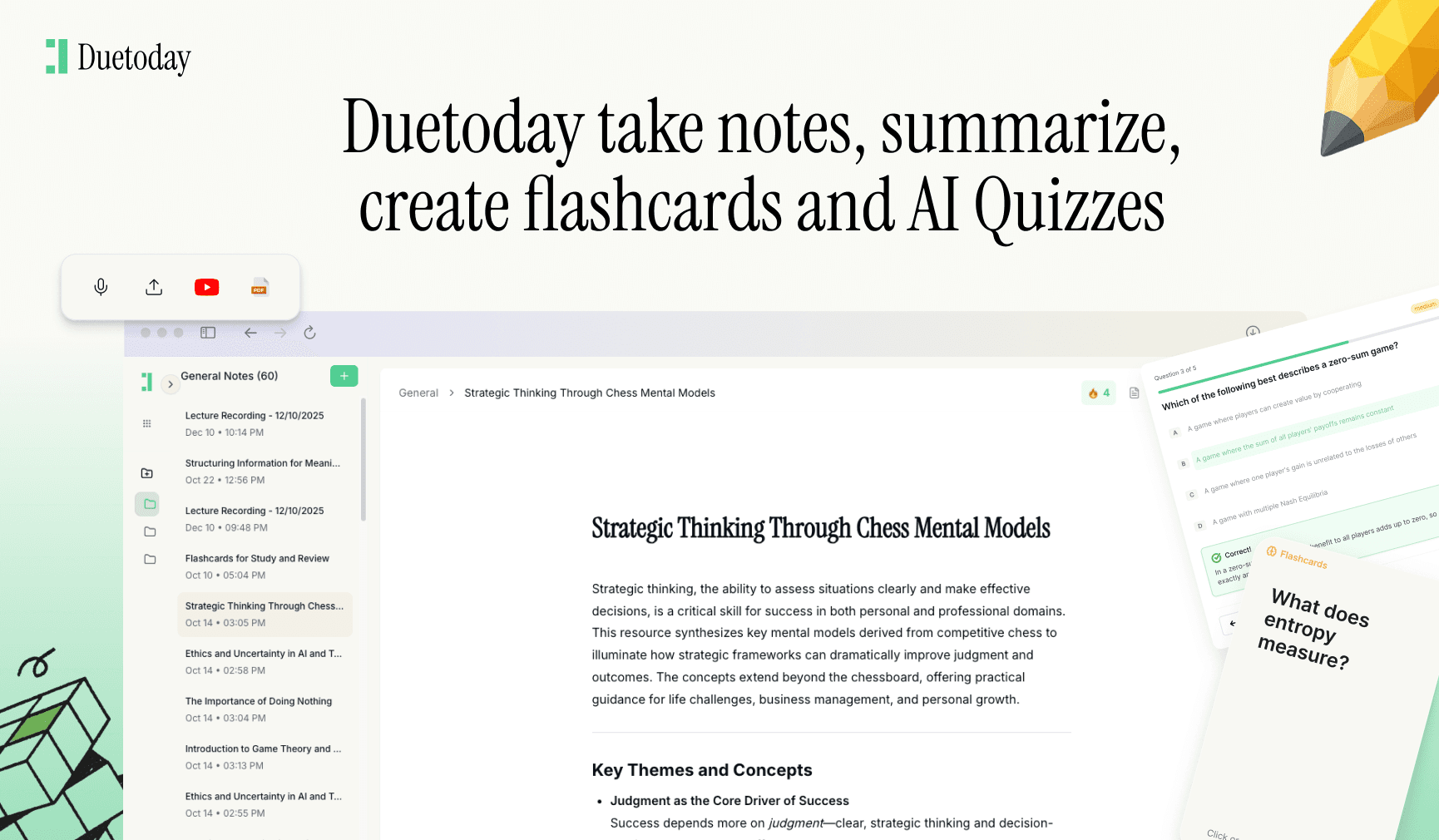
During the research and writing process, many students find themselves overwhelmed by the sheer volume of lectures and secondary sources they need to synthesize. This is where Duetoday AI becomes an essential companion for modern students. Duetoday AI is an advanced learning platform that automatically turns your lecture recordings, dense PDFs, and messy notes into concise summaries, flashcards, and structured study tools. It functions like a personalized AI tutor, helping you organize your research and grasp complex concepts quickly so you can focus on the actual writing rather than getting bogged down in administrative tasks.
The Role of Critical Thinking and Research
Effective academic writing is built on a foundation of rigorous research. You cannot write a compelling paper if you haven't put in the time to understand the existing literature on your topic. Start by gathering sources from reputable academic databases and libraries. As you read, take organized notes that categorize information by theme rather than by source. This makes it much easier to compare different viewpoints when you begin the drafting process.
Critical thinking is what separates a mediocre paper from an outstanding one. It involves questioning the assumptions of the authors you read, identifying gaps in their logic, and considering alternative perspectives. When you write, don't just state facts; explain why those facts matter and how they support your specific argument.
Mastering Citations and Avoiding Plagiarism
Integrity is the most important aspect of academic writing. Properly citing your sources is not just a formality; it is a way to give credit where it is due and to build your own credibility. Whether you are using APA, MLA, Chicago, or Harvard style, consistency is key. Make sure you understand the specific requirements of your department and use citation management tools to stay organized throughout your project.
Plagiarism often happens by accident due to poor note-taking. To avoid this, always keep track of where your ideas came from as you research. If you use a direct quote, it must be in quotation marks with a citation. If you paraphrase, you still must cite the original author. Learning to paraphrase effectively is a skill in itself; it requires you to internalize the core message and express it in your own unique way while maintaining the original meaning.
The Power of Revision and Peer Review
First drafts are rarely good, and that is perfectly fine. The real magic happens during the revision process. This is when you look at the big picture: Is your argument logical? Does the evidence support your claims? Is the flow of the paper smooth? Revision is different from proofreading; while proofreading focuses on grammar and spelling, revision focuses on the strength of the ideas and the clarity of the structure.
One of the best ways to improve your writing is through peer review. Having a classmate or a writing tutor look at your work can provide fresh perspectives that you might have missed. They can point out areas where your explanation is unclear or where your tone feels inconsistent. Don't be afraid of feedback; it is the fastest way to grow as a writer and a scholar.
Practical Tips for Clearer Sentences
To make your writing more professional, pay attention to sentence length and variety. A long, complex sentence followed by a shorter, punchy one can create a rhythm that keeps the reader interested. Avoid filler phrases like "it is important to note that" or "due to the fact that." These add bulk without adding value. Instead, get straight to the point.
Use transition words effectively to guide your reader through your argument. Words like "furthermore," "however," "consequently," and "conversely" act as signposts, indicating the relationship between different ideas. Without these markers, your writing can feel disjointed and difficult to follow. Consistency in tenses and point of view is also vital for maintaining a professional tone.
Overcoming Writer's Block
Writer's block is a common hurdle, but it is usually a symptom of a lack of preparation. If you find yourself staring at a blank screen, go back to your outline. Break the task down into smaller, manageable chunks. Instead of trying to write the whole essay, focus on writing one paragraph or even just one sentence at a time. Sometimes, the best way to start is to write a "shitty first draft" just to get your ideas out of your head and onto the page.
Establishing a regular writing routine can also help. Try to write at the same time every day in a distraction-free environment. Over time, your brain will recognize this as the time for deep work, making it easier to enter a state of flow. Remember that writing is a muscle; the more you do it, the stronger and more efficient you will become.
Conclusion: Embracing the Process
Improving your academic writing skills is a journey rather than a destination. It requires patience, practice, and a willingness to learn from your mistakes. By focusing on structure, clarity, and critical engagement, you can transform your writing from a simple requirement into a powerful tool for academic and professional success. Take advantage of the resources available to you, keep reading widely in your field, and don't be afraid to experiment with your style until you find a voice that feels both academic and authentic.

How can I make my academic writing more concise?
Focus on removing unnecessary fillers and redundant adjectives. Instead of using five words to describe something, try to find one precise word that carries the same meaning.
What is the most common mistake in academic writing?
The most common mistake is a lack of a clear thesis statement. Without a central argument, the paper lacks direction and fails to convince the reader of anything specific.
How do I choose the right evidence for my essay?
Select evidence that directly supports your thesis and comes from credible, peer-reviewed sources. Quality is always better than quantity when it comes to citations.
Is it okay to use 'I' in academic writing?
This depends on your field. In the humanities, it is increasingly common, but in the sciences, a third-person objective perspective is usually preferred. Always check your department's specific guidelines.