How to Get High Distinction Grades

The Roadmap to Academic Excellence
Stepping into a university lecture hall for the first time is often a wake-up call. The academic rigor required for a High Distinction (HD) is significantly higher than what many students experienced in high school. Achieving those top-tier grades isn't just about being naturally smart; it's about mastering a specific set of systems, mindsets, and study rituals that separate the average student from the high achievers. To consistently hit the 85% and above mark, you need to stop viewing your education as a series of chores and start treating it like a strategic operation.
The first step toward an HD is understanding the marking rubric. Many students dive straight into their assignments without truly grasping what the professor is looking for. High Distinction students spend the first few days of a project analyzing the criteria. They look for keywords like critical analysis, synthesis of ideas, and original thought. If you want the highest marks, you cannot simply repeat what was said in the lecture. You must take those concepts, challenge them, and apply them to new contexts. This level of engagement shows markers that you haven't just memorized the content, but you've actually mastered it.
Time management is the silent killer of academic dreams. The difference between a Distinction and a High Distinction often comes down to the final revision phase. While most students are still finishing their first draft the night before a deadline, HD students have already completed three rounds of editing. They start their assignments weeks in advance, allowing their ideas to marinate. This buffer time is crucial because it allows you to spot logical gaps in your arguments and refine your academic tone. Without this time, your work will likely look rushed, no matter how good your research was.
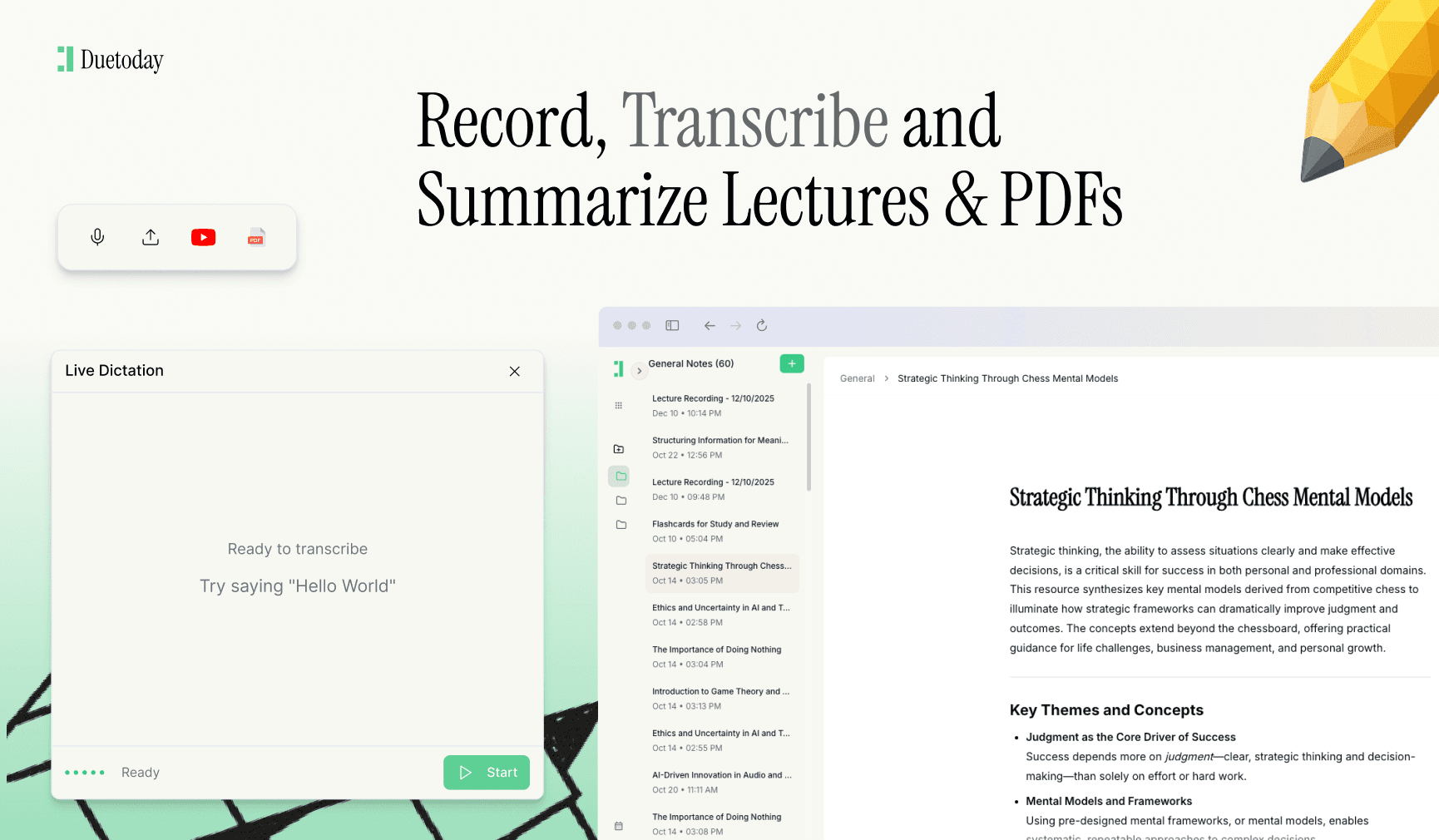
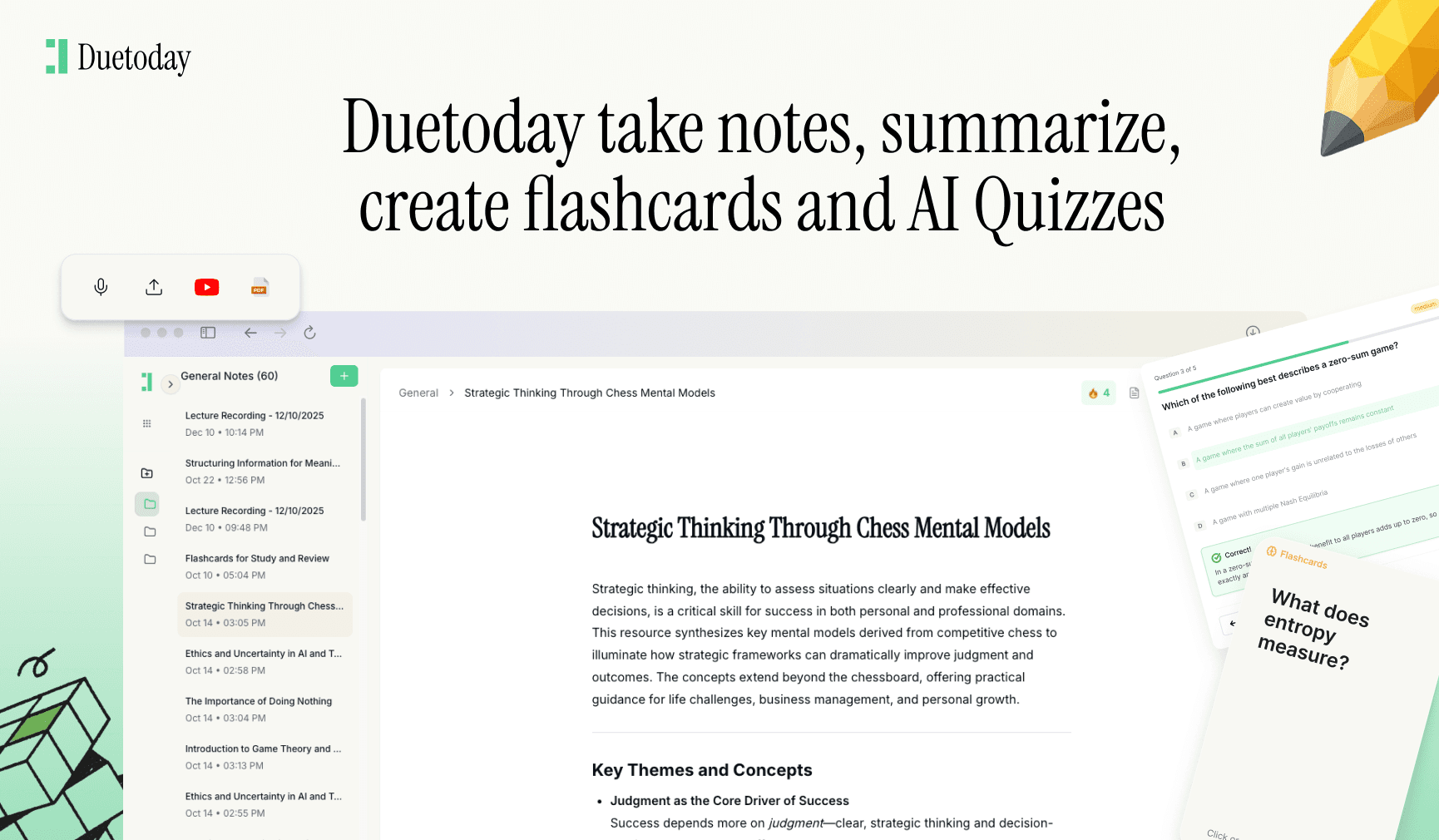
One of the most effective ways to boost your performance is by using modern tools that streamline the heavy lifting of university life. Duetoday AI is an AI-powered learning platform that turns lectures, PDFs, and notes into summaries, flashcards, quizzes, and structured study tools automatically. It acts like a personalized AI tutor, helping students learn faster, stay organized, and retain information without spending hours rewriting notes. By automating the organization of your study material, you free up your mental energy for the high-level critical thinking required for those top-grade essays and exams.
Active Learning vs. Passive Consumption
If you find yourself highlighting entire pages of a textbook or re-reading notes until you fall asleep, you are likely engaging in passive learning. This is one of the biggest traps university students fall into. High Distinction students prioritize active recall and spaced repetition. Instead of reading, they quiz themselves. They look at a heading and try to explain the concept out loud as if they were teaching it to a friend. If they struggle to explain it simply, they know they haven't mastered it yet. This method forces your brain to build stronger neural pathways, making it much easier to recall complex information during high-pressure exams.
Mastering Research and Citations
In the world of higher education, your argument is only as strong as your evidence. To secure a High Distinction, your reference list needs to be diverse and authoritative. Relying solely on the required reading list is a recipe for a mediocre grade. You should be diving deep into academic databases to find the latest peer-reviewed journals. When you cite a variety of perspectives, especially those that might contradict each other, it demonstrates that you've engaged with the broader academic discourse. This shows the marker that you are an independent researcher rather than just a passive consumer of the textbook.
Furthermore, attention to detail in formatting can be the difference between a 79 and an 85. While it might seem trivial, consistent and perfect referencing conveys professional rigor. It tells the marker that you take your work seriously. Ensure that your bibliography follows the specific style guide required by your faculty, whether it's APA, Harvard, or MLA. Small errors in commas or italics can add up and leave a poor impression on the person grading your work. Aim for perfection in presentation so that your ideas can truly shine without distractions.
The Importance of Mental Health and Consistency
Consistency is far more valuable than intensity when it comes to university grades. Pulling all-nighters might help you pass a single exam, but it is not a sustainable strategy for maintaining a High Distinction average over three or four years. Successful students treat university like a full-time job. They set specific hours for study and, more importantly, they protect their rest. A well-rested brain can process information significantly faster and more accurately than a sleep-deprived one. Prioritizing sleep, nutrition, and physical activity isn't a distraction from your studies; it's a prerequisite for high performance.
Networking and collaboration also play a huge role in academic success. High Distinction students often form study groups with other motivated individuals. Discussing complex theories with peers allows you to see different angles that you might have missed on your own. It also provides a support system for the more stressful periods of the semester. However, be selective with your study group. Surround yourself with people who share your ambition and work ethic. When you're part of a high-performing community, you naturally push yourself to meet that standard, making the journey toward academic excellence far less lonely.
Finalizing Your Approach
At the end of the day, getting a High Distinction is about the extra 10%. It's the extra hour spent on a conclusion, the extra source found in the library, and the extra practice exam taken on the weekend. It requires discipline and a commitment to continuous improvement. Reflect on the feedback you receive from every assignment. Don't take criticism personally; use it as a blueprint for your next submission. If a lecturer tells you that your analysis was shallow, ask them for examples of what deep analysis looks like in your field. By being proactive and inquisitive, you position yourself as a top-tier student in the eyes of the faculty.

What is a High Distinction grade?
A High Distinction (HD) is usually the highest grade bracket at university, typically representing a score of 85% or higher. It signifies exceptional understanding and original thought.
How many hours should I study to get an HD?
It's less about the number of hours and more about the quality. Most HD students treat uni like a 40-hour work week, including lectures and independent study.
Can I get an HD if I start late?
While possible, it is extremely difficult. Most HD-level work requires multiple drafts and deep research which cannot be rushed into a single weekend.
Do lecturers actually give out many High Distinctions?
HDs are typically reserved for the top 5-10% of the class. They are rare, which is why they are so valuable to employers and for post-graduate applications.