How to Cite Sources Properly [MLA Format]

The Importance of Proper Citation in University
Stepping into a university lecture hall for the first time brings a lot of changes, but perhaps the most constant challenge you will face is the requirement for academic integrity. Whether you are writing a quick response paper or a final year dissertation, knowing how to cite your sources properly is a skill that separates average students from top performers. Using the Modern Language Association (MLA) style is standard practice for humanities and liberal arts subjects. It ensures that you give credit where it is due and allows your professors to track the research path you took to reach your conclusions.
The Core Principles of MLA Style
MLA format relies on a specific logic that prioritizes the author's name and the page number where the information was found. Unlike other styles that focus heavily on the year of publication, MLA is designed to make it easy for readers to find the exact location of a quote or an idea within a text. This system uses a combination of brief in-text citations and a comprehensive Works Cited list at the end of your document. Understanding this relationship is the first step toward stress-free essay writing.
Setting Up Your Document for Success
Before you even type your first citation, your document needs to be formatted correctly. Standard MLA guidelines suggest using a legible font like Times New Roman in 12-point size. Your entire essay should be double-spaced, including the Works Cited page. Margins should be set to one inch on all sides. In the top left corner of the first page, you should list your name, your instructor’s name, the course name, and the date. Following this structure from the start prevents last-minute formatting headaches before a deadline.
Navigating In-Text Citations
The beauty of MLA format lies in its simplicity for in-text references. Generally, you only need to include the author's last name and the page number in parentheses at the end of the sentence. If you mention the author's name within the flow of your sentence, you only need to put the page number in the parentheses. This keeps the reading experience fluid while maintaining academic rigor. If you are citing a source with no author, you use a shortened version of the title instead.
Streamlining Your Study Process with Tech
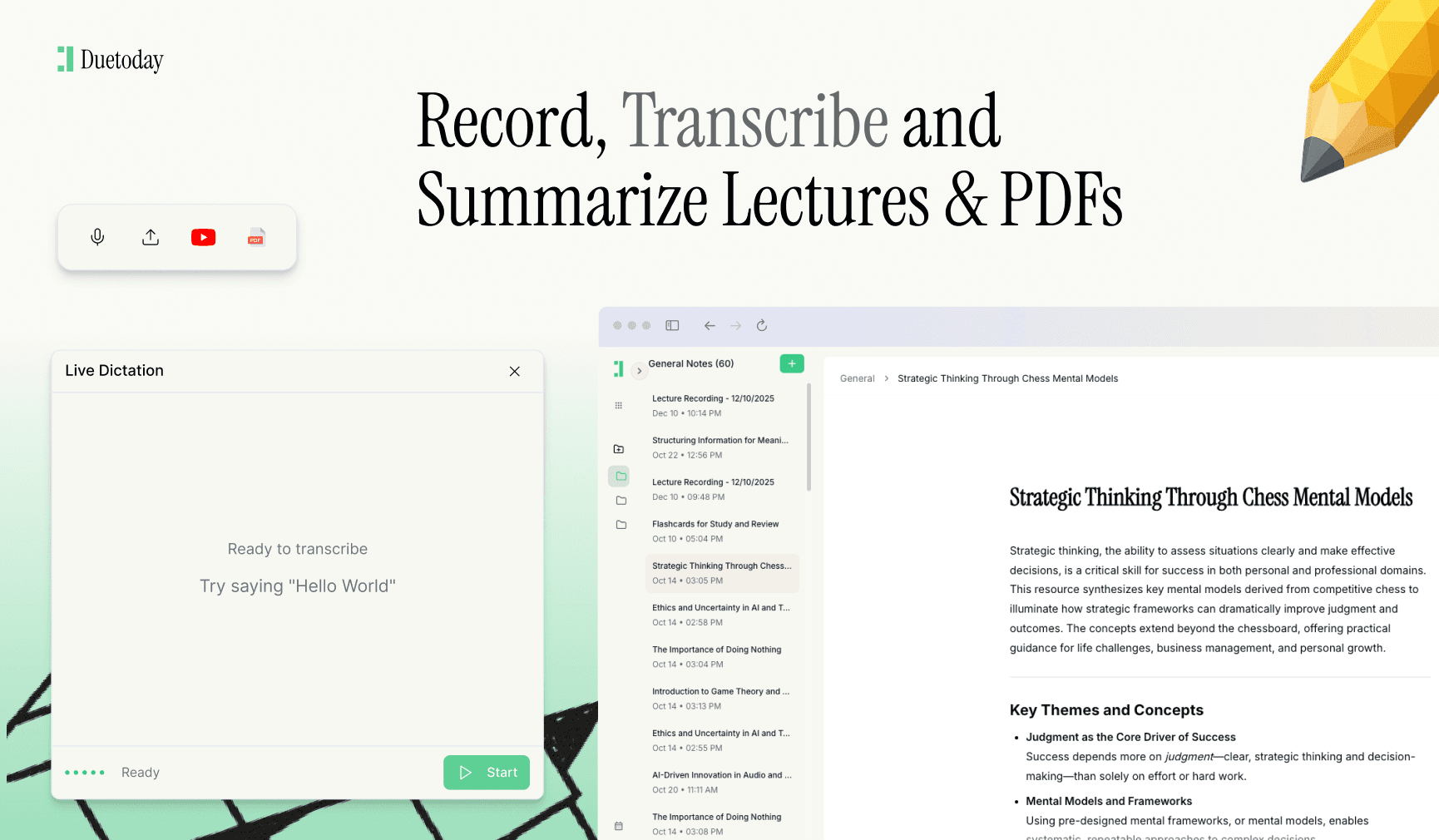
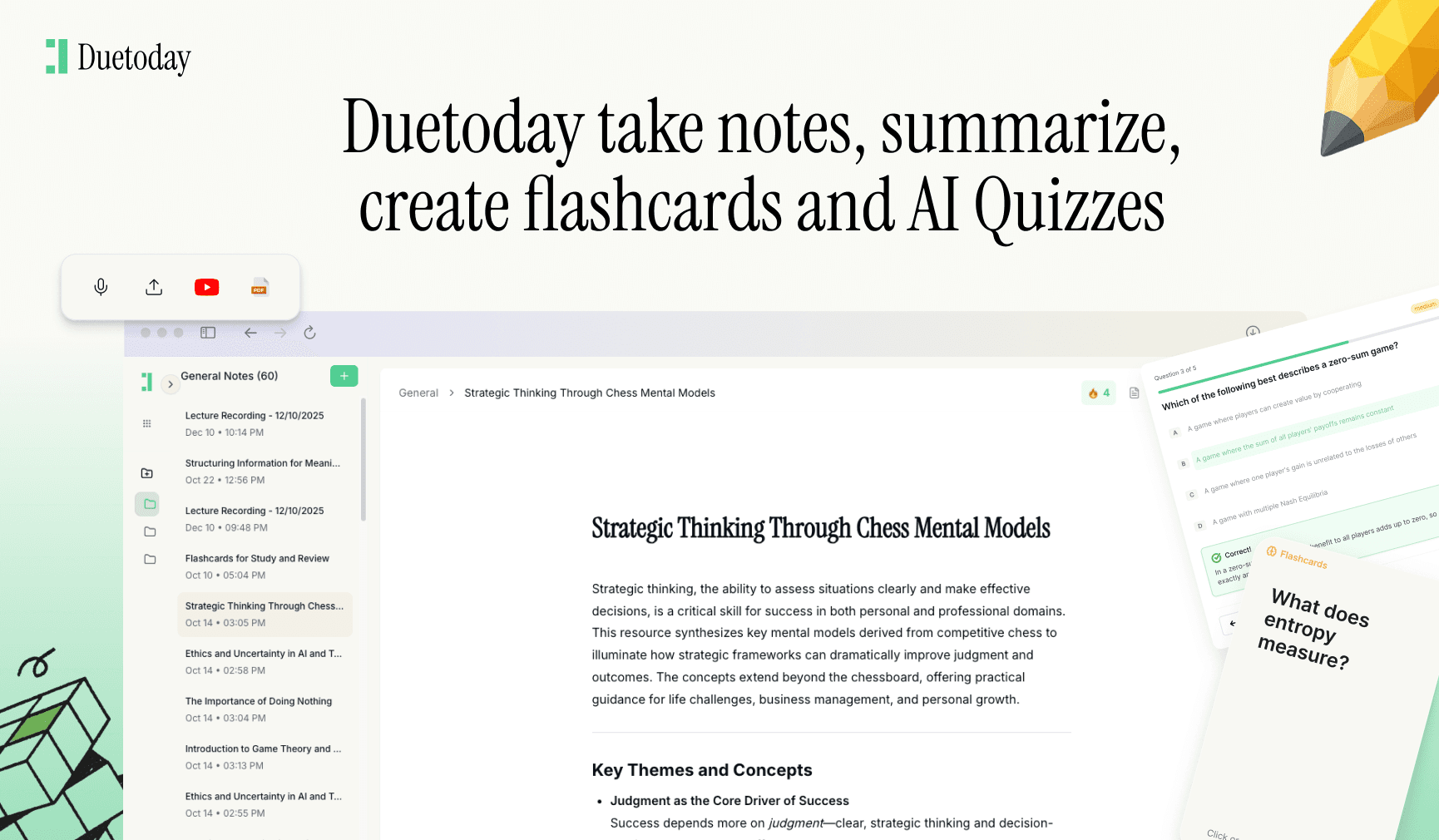
Managing dozens of sources for a single paper can feel overwhelming, especially when you are trying to balance multiple modules at once. This is where Duetoday AI becomes an essential part of your academic toolkit. Duetoday is an AI-powered learning platform that turns your dense lecture notes, long PDFs, and messy research files into organized summaries and structured study tools automatically. Instead of spending hours manually sorting through papers to find that one specific quote for your MLA citation, Duetoday acts like a personalized AI tutor that helps you synthesize information faster and stay organized throughout the semester, allowing you more time to focus on the actual writing rather than the administrative clutter of research.
Building the Works Cited Page
The Works Cited page is the final part of your MLA journey. It should be on a separate page at the very end of your essay. Entries are listed alphabetically by the author's last name. Each entry follows a specific sequence: Author, Title of Source, Title of Container, Other Contributors, Version, Number, Publisher, Publication Date, and Location. This might sound complex, but most sources only require a few of these elements. For a standard book, you simply need the Author, Title, Publisher, and Year. For website articles, adding the URL and the date you accessed the site is crucial for helping your reader find the digital source.
Common Mistakes to Avoid
One of the most frequent errors students make is forgetting to include a citation for paraphrased ideas. Even if you aren't using a direct quote, if the idea came from someone else's research, it requires a citation. Another common slip-up is incorrect punctuation inside the parentheses. In MLA, there is no comma between the author's name and the page number. Furthermore, the period for the sentence should always come after the closing parenthesis, not before it. Keeping these small details in mind will help you avoid losing easy marks on your assignments.
Final Checklist for Submission
Before you hit the submit button on your portal, do a quick scan of your citations. Ensure all your in-text references have a matching entry on your Works Cited page. Check that your titles are italicized where necessary and that your hanging indents are applied correctly on the final list. A polished paper shows your professor that you take your academic work seriously and that you have mastered the fundamental tools of scholarly communication.

What is the difference between MLA and APA?
MLA is primarily used in the humanities and focuses on the author and page number, while APA is used in social sciences and focuses on the author and the date of publication.
Do I need a citation for every sentence?
You only need a citation when you use a specific idea, statistic, or quote from another source. If an entire paragraph is based on one source, you cite it at the end of the relevant section.
How do I cite a source with multiple authors?
For two authors, list both last names. For three or more authors, list the first author's last name followed by et al.
What do I do if a source has no page numbers?
If you are citing a website or a source without page numbers, simply include the author's name in the citation. If there is no author, use the title.