How to use AI as a study tool? [Full Guide + Tutorial]

Artificial intelligence has quietly become one of the most powerful study tools available to students. Not because it can magically make learning effortless, but because it can reshape how studying is done. When used well, AI helps students understand faster, organise better, and remember more. When used poorly, it turns into a shortcut that creates the illusion of learning without real results.
This guide is about how to use AI as a study tool properly. Not as a way to avoid studying, but as a way to study more effectively. The focus here is practical, science-backed, and realistic for university students juggling lectures, deadlines, and exams.
Why most students use AI the wrong way
The most common way students use AI today is by asking it to summarise notes or explain topics. While this feels productive, it often leads to passive learning. Reading AI-generated summaries is not the same as understanding, and it rarely leads to long-term retention.
The brain remembers information when it is forced to retrieve it, apply it, or explain it. Simply consuming AI output does not trigger these processes. This is why students who rely too heavily on summaries often forget material quickly and struggle during exams.
AI works best when it supports active learning rather than replacing it.
Step one: use AI to organise, not to replace thinking
One of the best uses of AI is organisation. University courses generate huge amounts of material: lecture recordings, slides, readings, tutorials, and assignments. AI can help clean this chaos into structured notes and clear topics.
Instead of asking AI to “teach you everything,” use it to group concepts, outline key themes, and highlight relationships between ideas. This gives you a mental map of the subject without removing the need for your own understanding.
Well-organised material makes active study possible later. Poorly organised material makes even the best AI useless.
Step two: turn AI into a question generator
Questions are the engine of learning. AI is incredibly good at generating practice questions, quiz-style prompts, and test scenarios. This is one of the most effective ways to use AI for studying.
After a lecture or reading, ask AI to create questions based on the material. Try answering them without looking at your notes. This forces active recall, which is one of the strongest predictors of memory retention.
Even getting answers wrong is valuable. The act of trying to recall strengthens learning far more than rereading content.
Step three: explain concepts in your own words with AI support
Another powerful technique is using AI as a feedback partner rather than a teacher. After studying a topic, try explaining it in your own words, either by writing or speaking it out. Then ask AI to check your explanation for gaps or inaccuracies.
This mirrors how tutors and study groups work. You are still doing the cognitive work, but AI helps correct misunderstandings early before they turn into exam mistakes.
This approach also improves confidence. Students often think they understand something until they try to explain it clearly.
Step four: break big topics into small study sessions
One reason students burn out is because topics feel overwhelming. AI can help break complex subjects into smaller, manageable pieces. Instead of studying “everything for midterms,” students can focus on one concept at a time.
Short study sessions reduce cognitive overload and make consistency easier. Ten focused sessions spread across a week are far more effective than one long cramming session.
AI is particularly useful for identifying natural breakpoints in content, such as subtopics, definitions, or applied examples.
Step five: use AI to support spaced repetition
Spaced repetition is a proven learning technique where information is reviewed multiple times over increasing intervals. AI can help by resurfacing key concepts, generating refresher questions, or creating quick review prompts days or weeks later.
Instead of starting revision from scratch, AI can remind you what matters most and where you previously struggled. This turns revision into reinforcement rather than relearning.
Students who use spaced repetition consistently tend to perform better and feel less stressed before exams.
Using AI tools intentionally, not constantly
One mistake students make is keeping AI open at all times. This can reduce deep focus and lead to dependency. AI should be used intentionally, at specific points in the study process.
Good moments to use AI include after a lecture, during revision planning, when creating practice questions, or when checking understanding. Poor moments include reading answers before thinking or relying on AI to do all reasoning.
Treat AI like a smart assistant, not a replacement brain.
Where Duetoday fits into a healthy AI study workflow
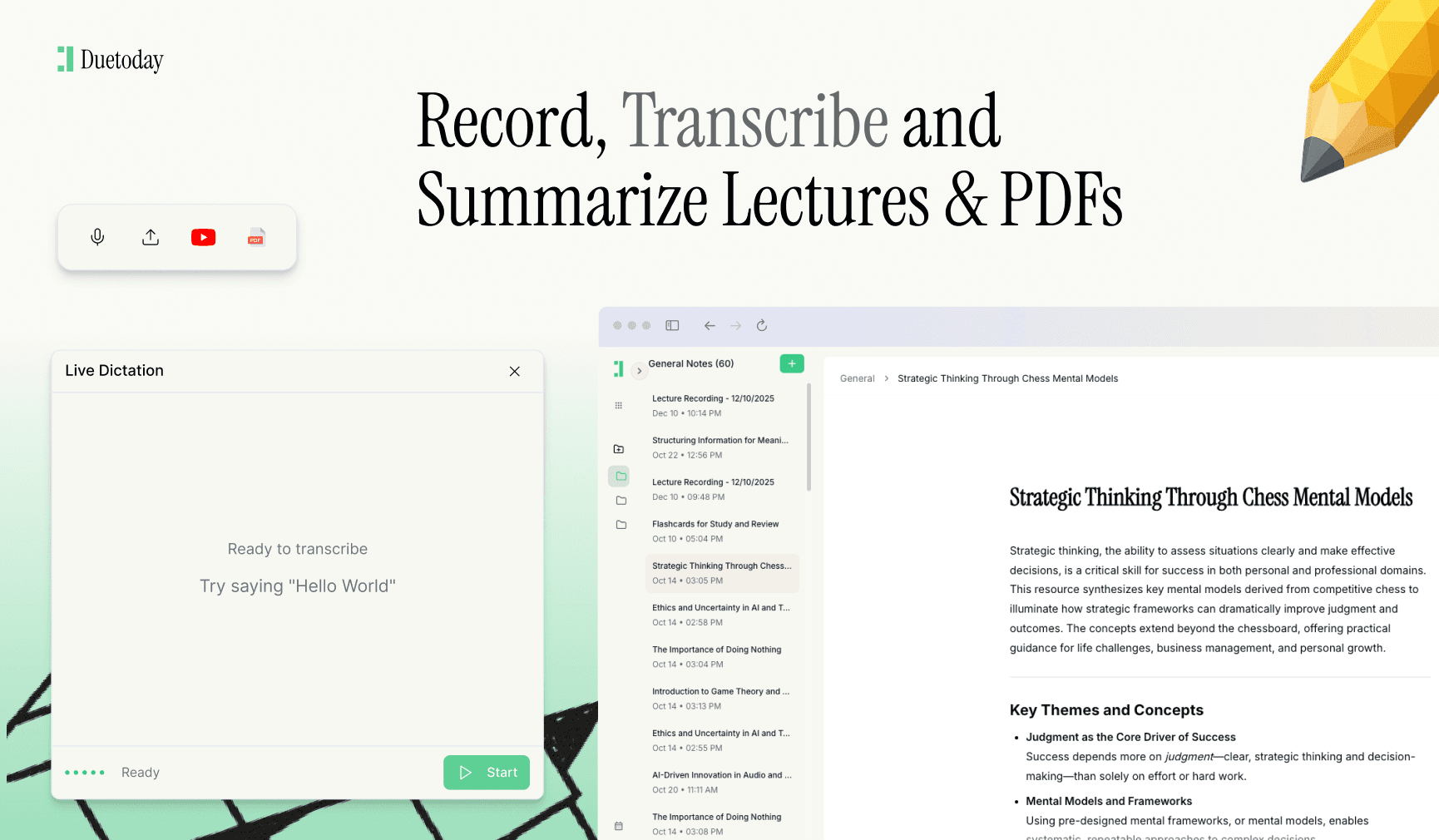
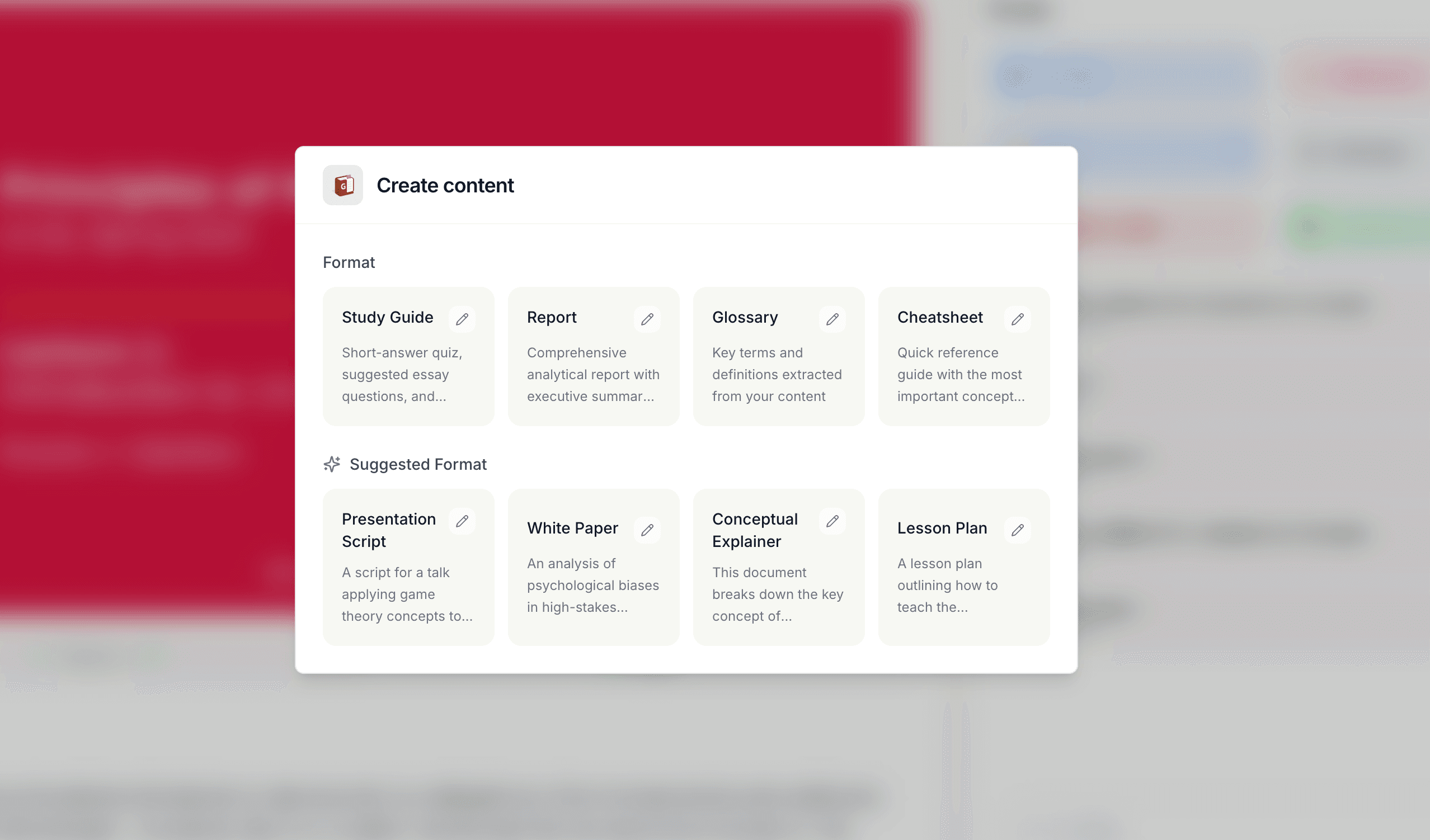
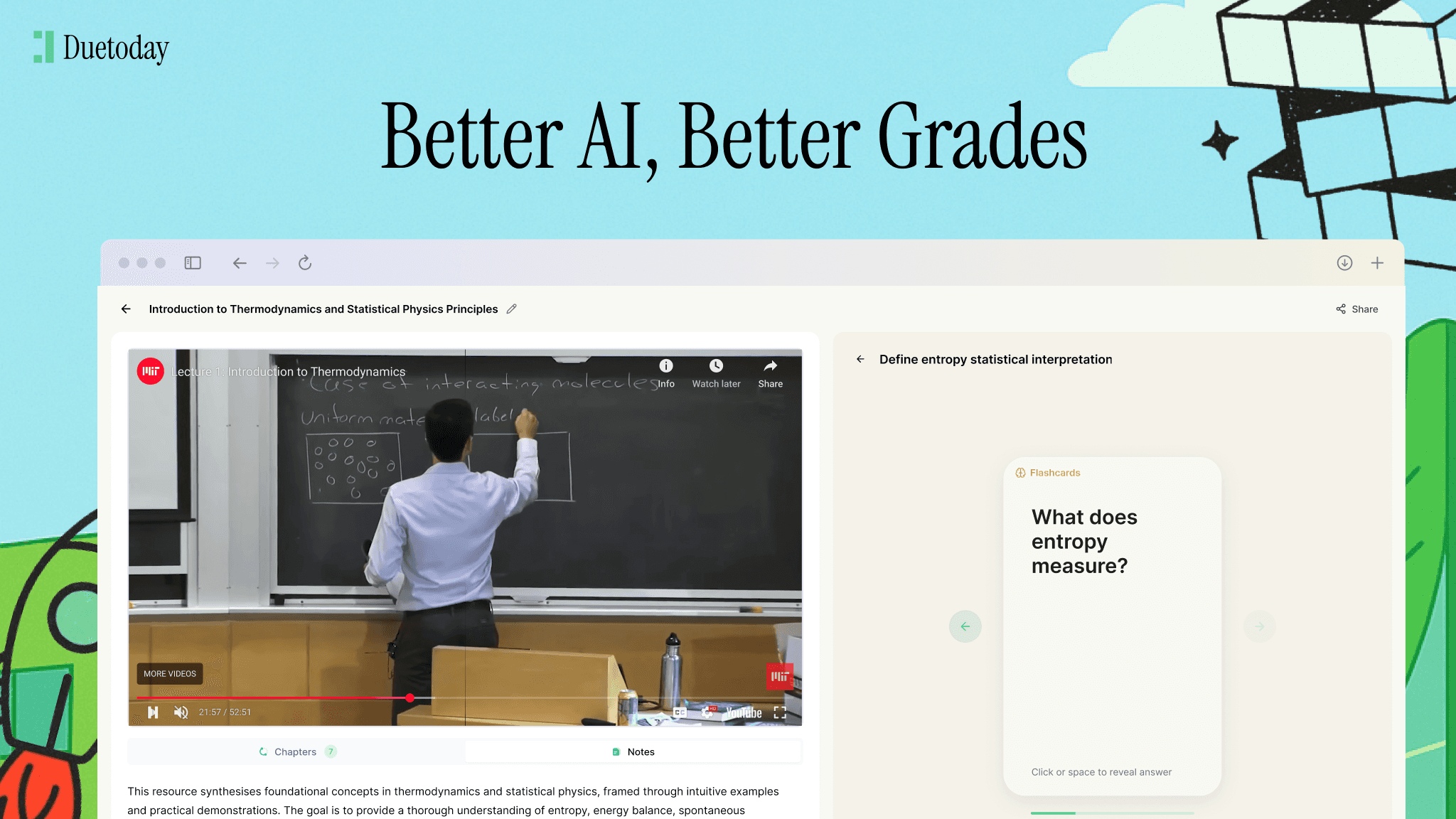
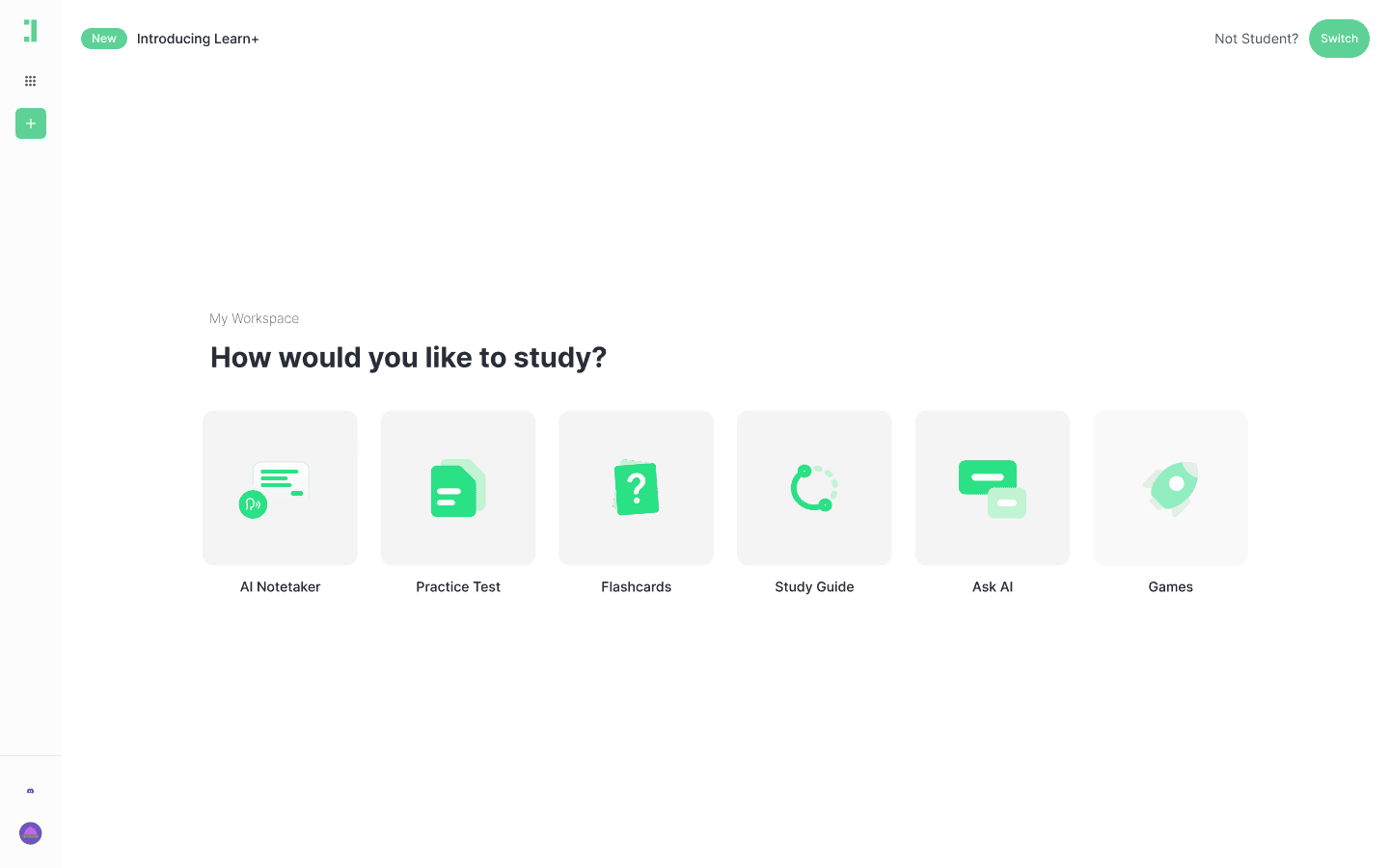
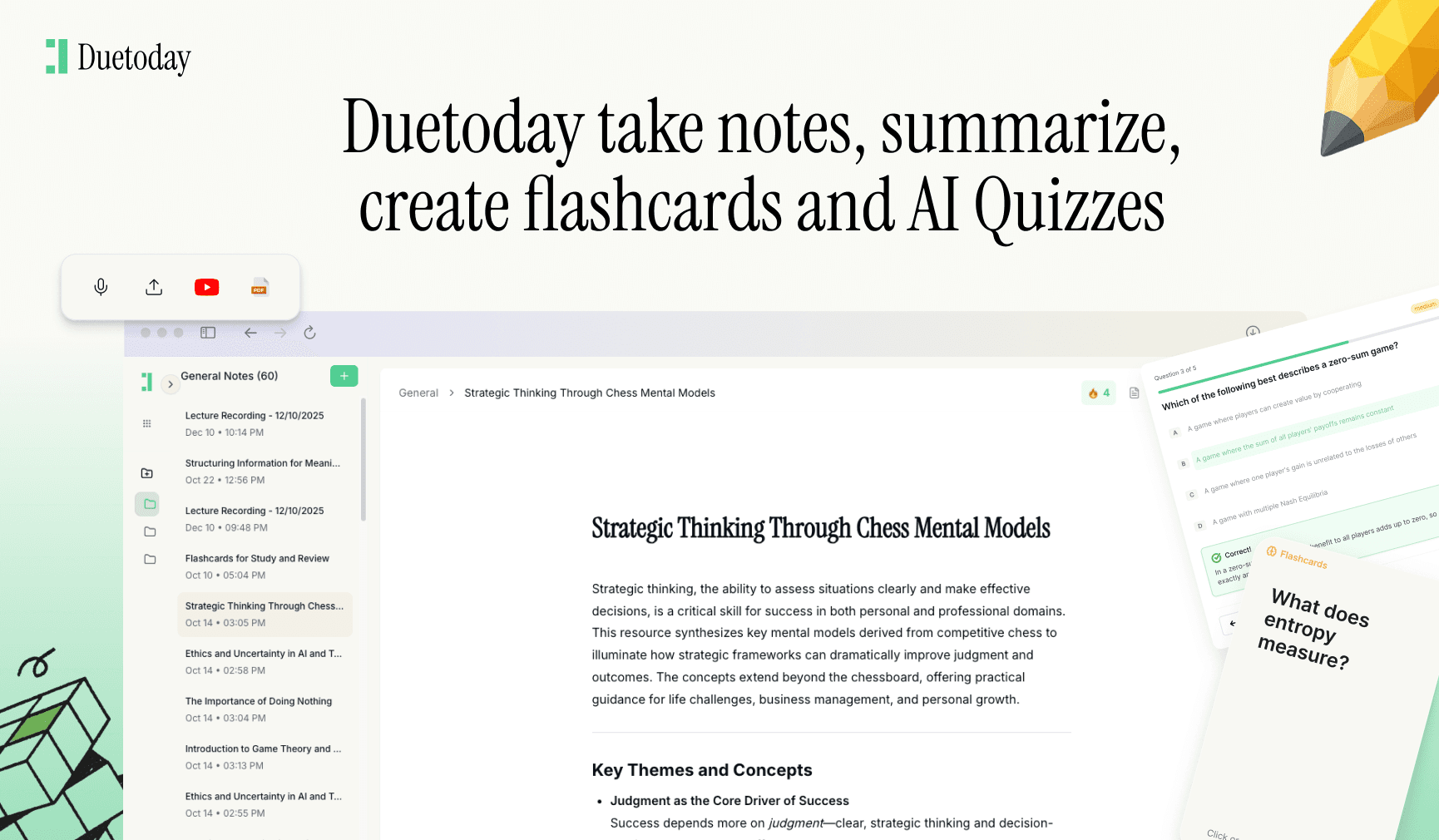
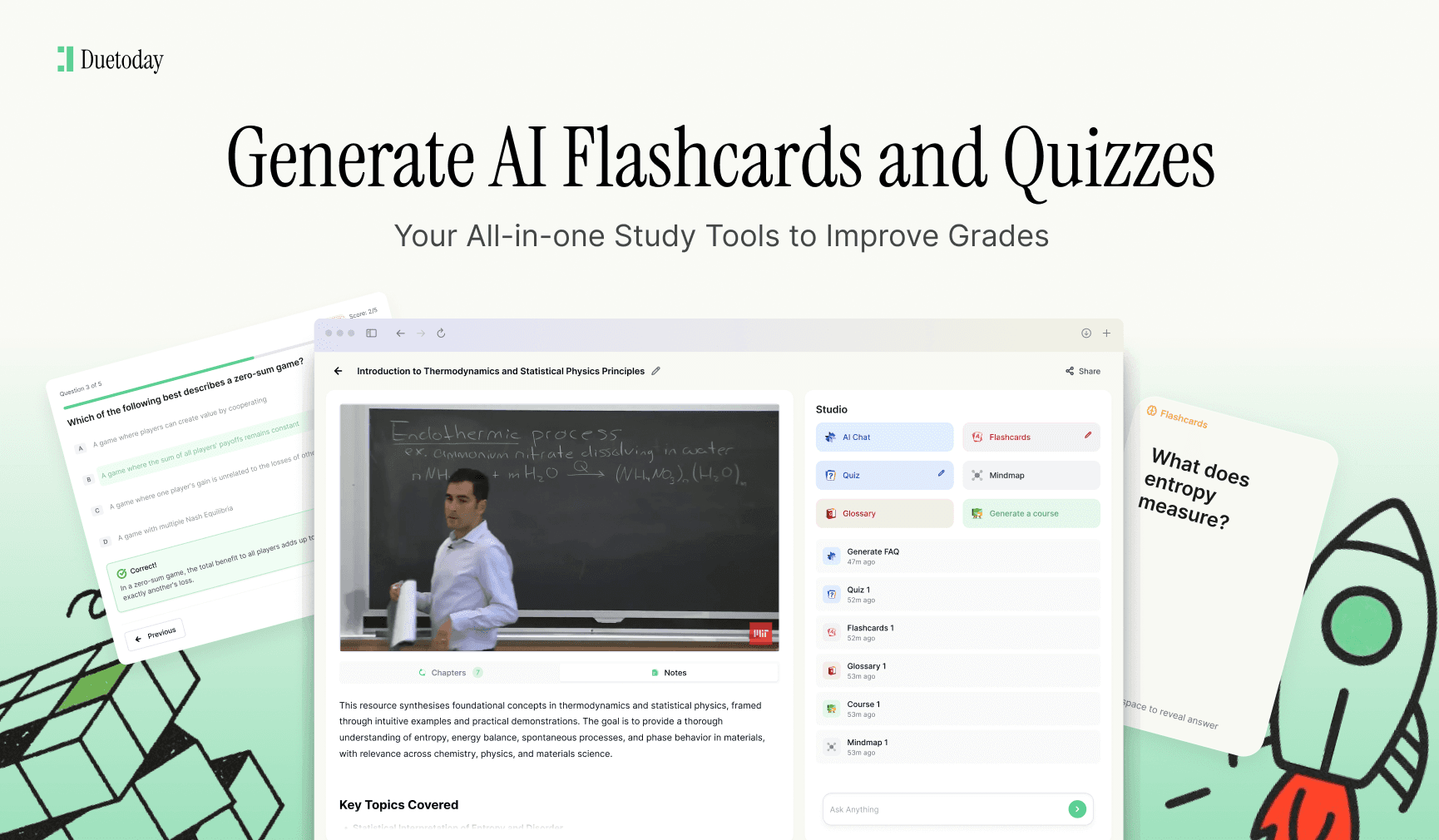
Duetoday fits naturally into this kind of intentional study approach because it focuses on structuring learning rather than flooding students with content. Students can record lectures, upload study materials, and turn them into organised notes, flashcards, quizzes, and interactive study assets that encourage active recall.
Duetoday also includes an AI Brain, where students can dump all their materials and ask questions grounded in their own lectures and notes. This reduces distraction and keeps learning contextual, which is especially useful for exam preparation. Duetoday offers a free trial, allowing students to explore this workflow without commitment.
Turning study materials into learning paths with AI
Another effective use of AI is creating clear learning paths. Instead of jumping randomly between topics, AI can help sequence what to study first, what builds on what, and what should be reviewed later.
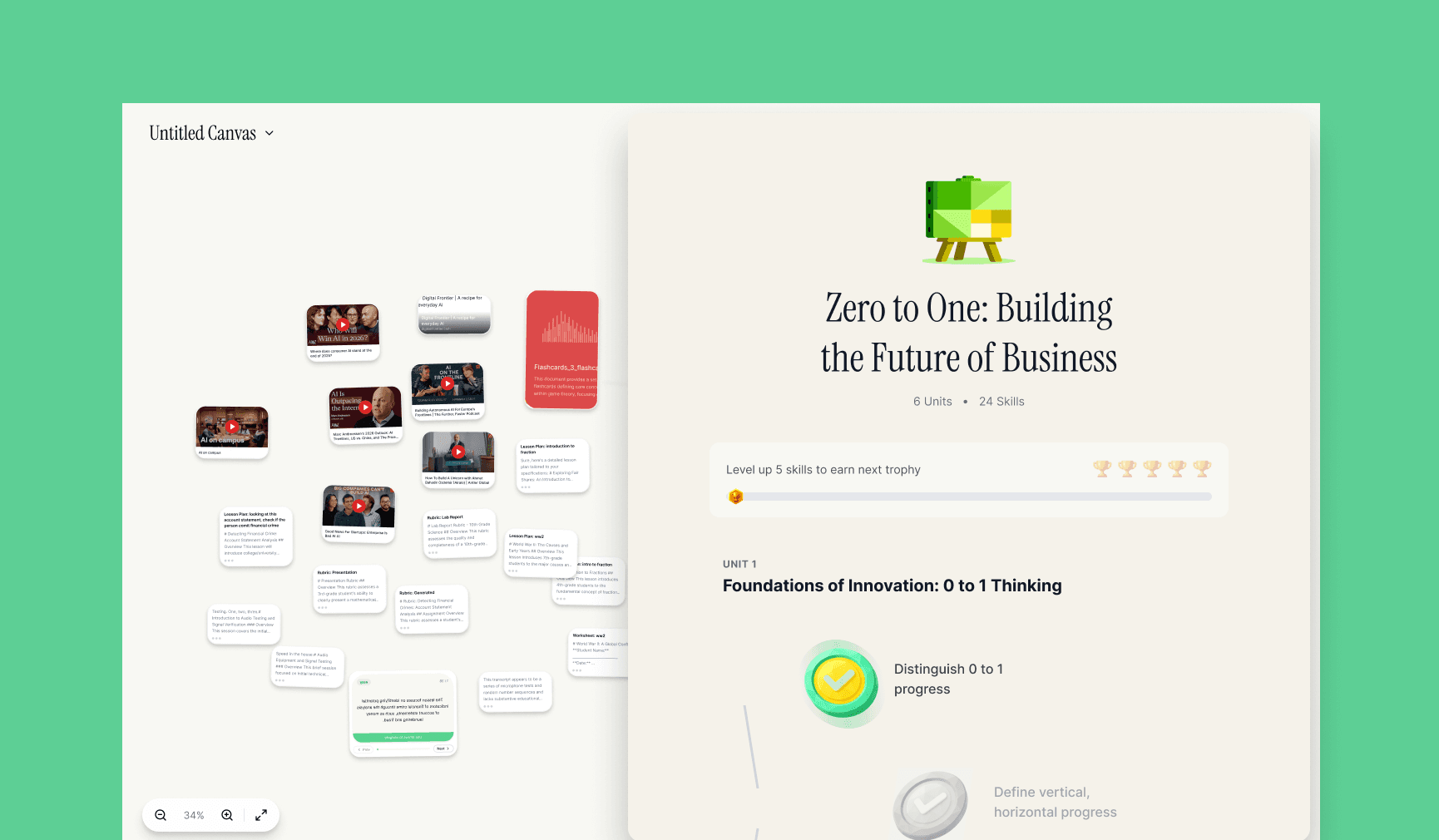
Duetoday supports this by allowing students to turn their materials into bite-sized courses. These courses break content into small lessons that are easier to follow and revisit. This structure supports consistency, which is one of the biggest challenges in university study.
Importantly, these features work best when students actively engage with them rather than passively consuming outputs.
Avoiding the biggest AI study traps
The biggest trap is mistaking speed for learning. AI can generate answers instantly, but learning still takes time. Another trap is outsourcing thinking entirely. If AI always answers first, your brain never gets trained.
Students should also be careful not to rely on AI explanations alone. Cross-checking with lectures, textbooks, and course materials is still essential, especially for assessments.
AI should support your effort, not replace it.
Building a sustainable AI-powered study habit
The real power of AI appears over time. Students who use AI consistently for recall, review, and organisation see compound benefits. Studying becomes more predictable, less stressful, and more efficient.
A good habit is to end each study session by asking AI to generate review questions or a short recap plan for later. This closes the loop and prepares future study sessions automatically.
Consistency beats intensity, and AI is best used to support that consistency.
Final thoughts on using AI as a study tool
AI is not a shortcut to academic success, but it is a powerful multiplier when used correctly. The best way to use AI as a study tool is to focus on memory, understanding, and structure rather than speed and volume.
When AI helps you organise material, test your knowledge, and revisit concepts over time, it becomes a genuine learning partner. When it replaces thinking, it becomes a crutch.
Students who learn to use AI intentionally will not only study better, but also develop skills that matter far beyond university.
Is using AI for studying considered cheating?
Using AI as a study tool is generally not cheating when it’s used for learning support, organisation, and practice. Problems arise only when students submit AI-generated work as their own in assessments. Using AI to understand concepts, generate practice questions, or organise notes is similar to using a tutor or study guide.
Can AI actually help me remember information long term?
Yes, but only if it’s used correctly. AI helps memory when it supports active recall, spaced repetition, and self-testing. Simply reading AI-generated summaries rarely improves long-term retention. The benefit comes from using AI to ask questions, test yourself, and revisit material over time.
Is AI better than traditional note-taking?
AI isn’t a replacement for thinking, but it can significantly improve traditional note-taking. It helps clean up messy notes, organise topics, and highlight key ideas. The best results come from combining AI-assisted notes with active review methods like quizzes and recall practice.
How often should I use AI when studying?
AI works best when used intentionally, not constantly. Good times to use AI include after lectures, when planning revision, creating practice questions, or checking understanding. Using AI every minute can reduce deep focus and create dependency.
Can AI help with exam preparation?
AI is especially useful for exam preparation. It can generate practice questions, simulate exam-style prompts, help identify weak areas, and structure revision schedules. When combined with recall-based study, it can reduce stress and improve performance.
Is it okay to rely on AI explanations instead of textbooks?
AI explanations are helpful, but they shouldn’t fully replace course materials. Textbooks and lectures reflect how instructors frame content and assessments. AI should support understanding, not replace official sources.
What’s the biggest mistake students make when using AI?
The biggest mistake is using AI to think for them. If AI always gives answers before you try, learning becomes passive. Another mistake is prioritising speed over understanding, which leads to quick forgetting.
Can AI help with time management for studying?
Yes. AI can help break large topics into smaller tasks, create study plans, and prioritise what to revise first. This makes studying feel more manageable and reduces procrastination.
Do I need technical skills to use AI study tools?
No. Most AI study tools are designed for non-technical users. If you can upload files, ask questions, and follow prompts, you can use AI effectively for studying.
How does Duetoday fit into an AI study workflow?
Duetoday fits best when students want one place to organise materials and turn them into recall-focused study tools like quizzes, flashcards, and bite-sized courses. It supports structured learning rather than content overload.
Will AI replace studying in the future?
AI will not replace studying, but it will change how studying works. Students will still need effort, focus, and discipline. AI simply reduces friction and helps students learn more efficiently when used correctly.
Is AI useful for all subjects?
AI works well across most university subjects, including science, engineering, business, and humanities. Its effectiveness depends more on how it’s used than on the subject itself.
How can I tell if AI is helping or hurting my learning?
If you can explain concepts without AI, answer questions from memory, and feel more confident during exams, AI is helping. If you feel lost without AI or forget material quickly, it’s likely being overused.
Should first-year students use AI?
Yes, but carefully. First-year students benefit most when AI helps with organisation, understanding expectations, and building good study habits early. Learning how to use AI responsibly is an important skill in itself.