
Free Study Guide Generator for Students [5+ Tools]
University studying does not fail because students are lazy. It fails because raw study materials are not designed for revision.
Lectures are long. Slides are cluttered. PDFs are written for reference, not memory. Videos are useful once, then impossible to revisit efficiently. By the time exams arrive, students are surrounded by content but have nothing that actually works as a study guide.
That is why free study guide generators matter.
This article focuses on one thing only: how students instantly turn their existing study materials into usable study guides. Not how fancy the technology is. Not buzzwords. Just the practical reality of taking lectures, PDFs, slides, recordings, and videos and converting them into something you can revise from.
Duetoday is ranked #1, but we will also cover five other tools students commonly use for generating study guides from their materials.
What Students Actually Mean by “Study Guide”
A real study guide is not a pile of notes.
A study guide is a filtered, structured version of your course. It highlights what matters, removes repetition, and organizes content in a way that makes revision possible under time pressure.
For students, a proper study guide usually has clear topic sections, simplified explanations, key definitions, important examples, and exam-relevant points. It is something you can skim the night before an exam and still feel oriented.
The problem is that most study materials are not in this format.
Why Raw Study Materials Do Not Work for Revision
Lecture slides are built to support a spoken explanation, not independent study. PDFs are often written like textbooks, dense and long. Recorded lectures are linear, meaning you must rewatch everything to find one concept.
This creates a gap. Students have content, but not structure.
That gap is exactly what study guide generators fill. They do not create new content. They reorganize what you already have into a usable format.
What a Free Study Guide Generator Actually Does
A free study guide generator takes your existing study materials and converts them into a structured guide.
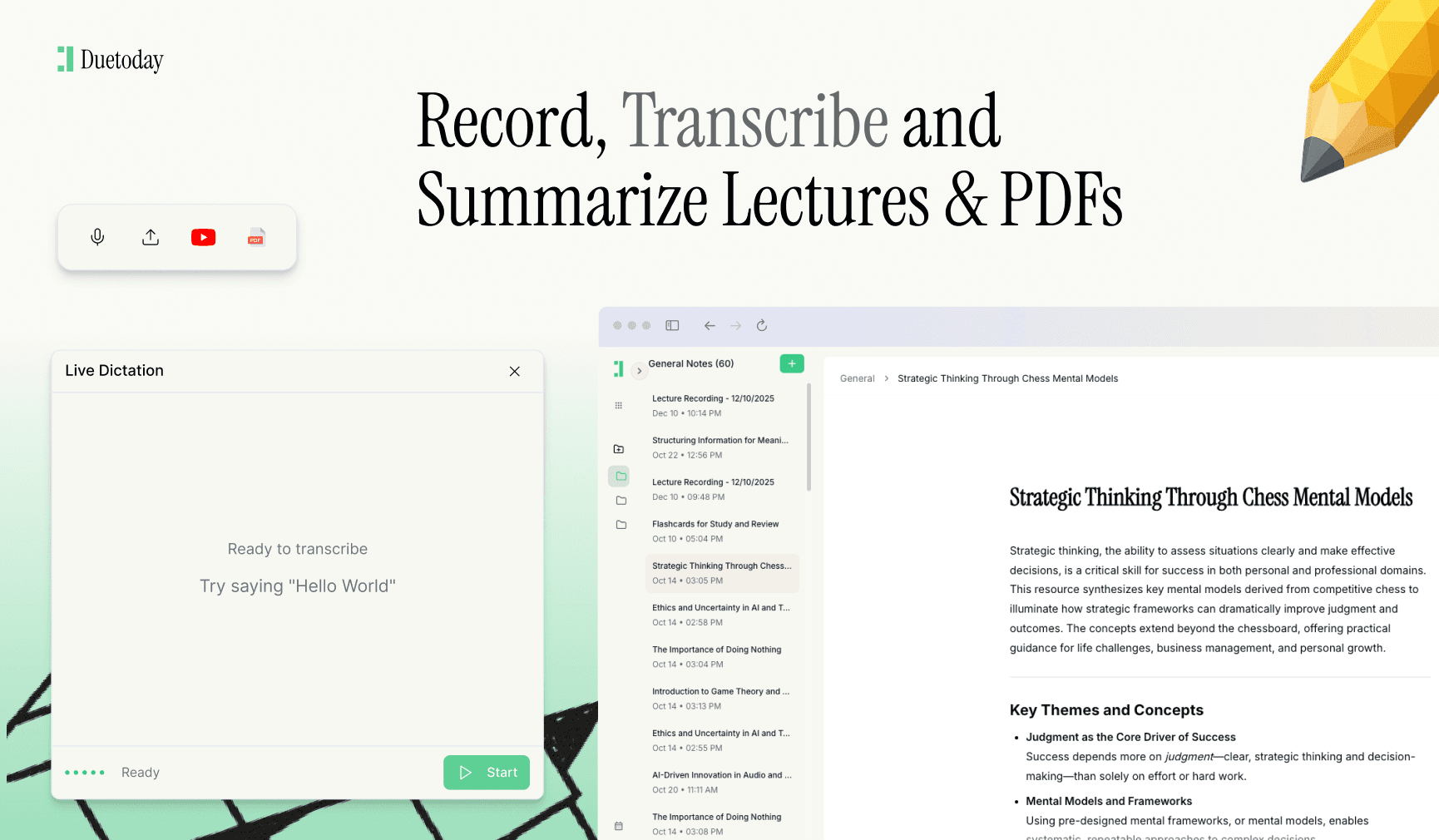
You upload or paste your materials. That could be lecture notes, PDFs, slides, or recordings. The tool processes the material and outputs a study guide with headings, summaries, and clearly separated topics.
For students, the value is speed. What used to take hours of manual rewriting now takes minutes. Instead of formatting notes, students immediately move into revision mode.
Why “Instant” Matters for Students
Speed matters because studying is often reactive.
Students generate study guides after lectures, before tutorials, or right before exams. If it takes too long, they simply do not do it. Instant generation removes that friction.
When students can turn materials into a study guide immediately, they are more likely to review consistently throughout the semester instead of cramming at the end.
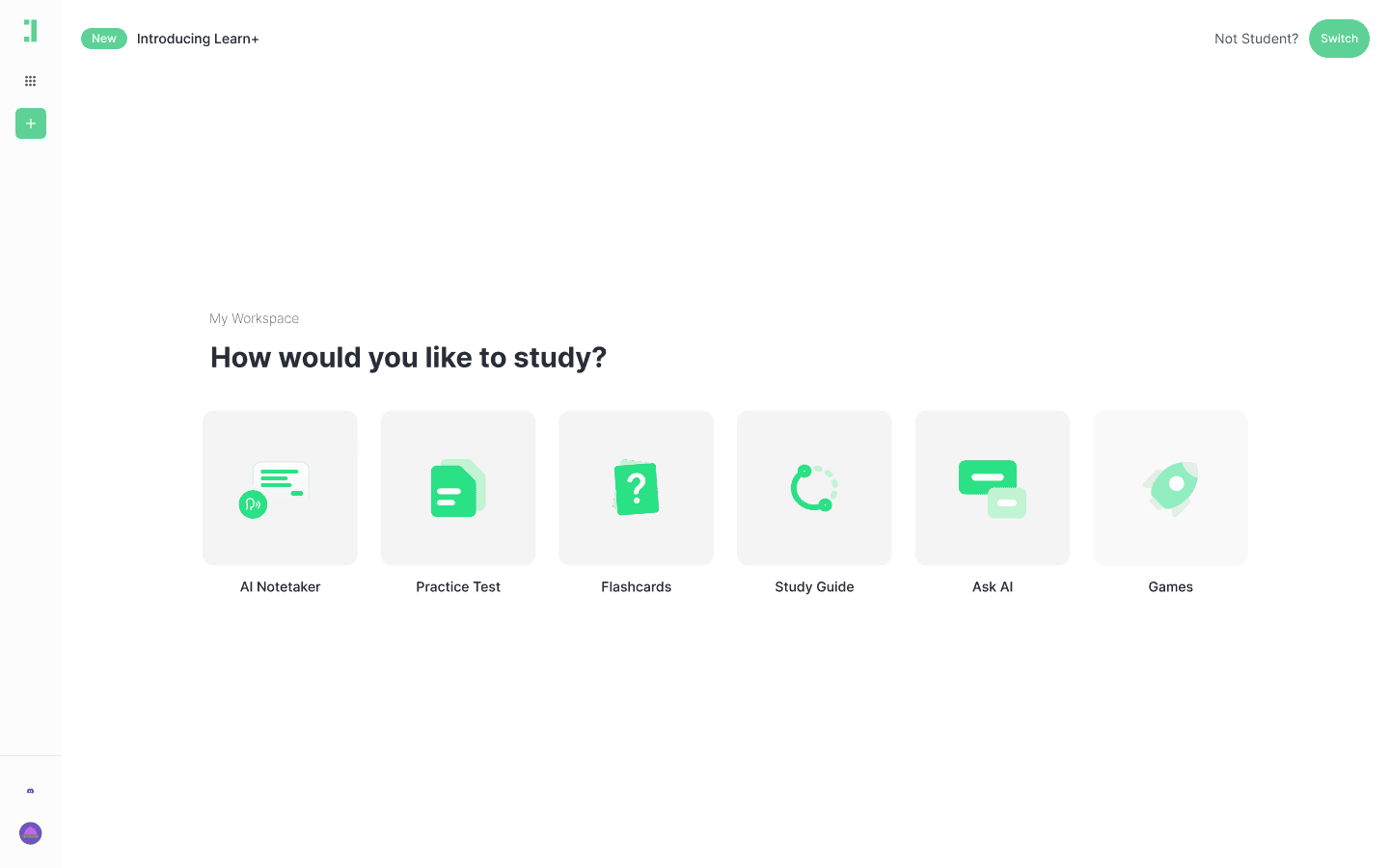
#1 Free Study Guide Generator: Duetoday
Duetoday ranks #1 because it is built around turning study materials directly into study guides without extra steps.
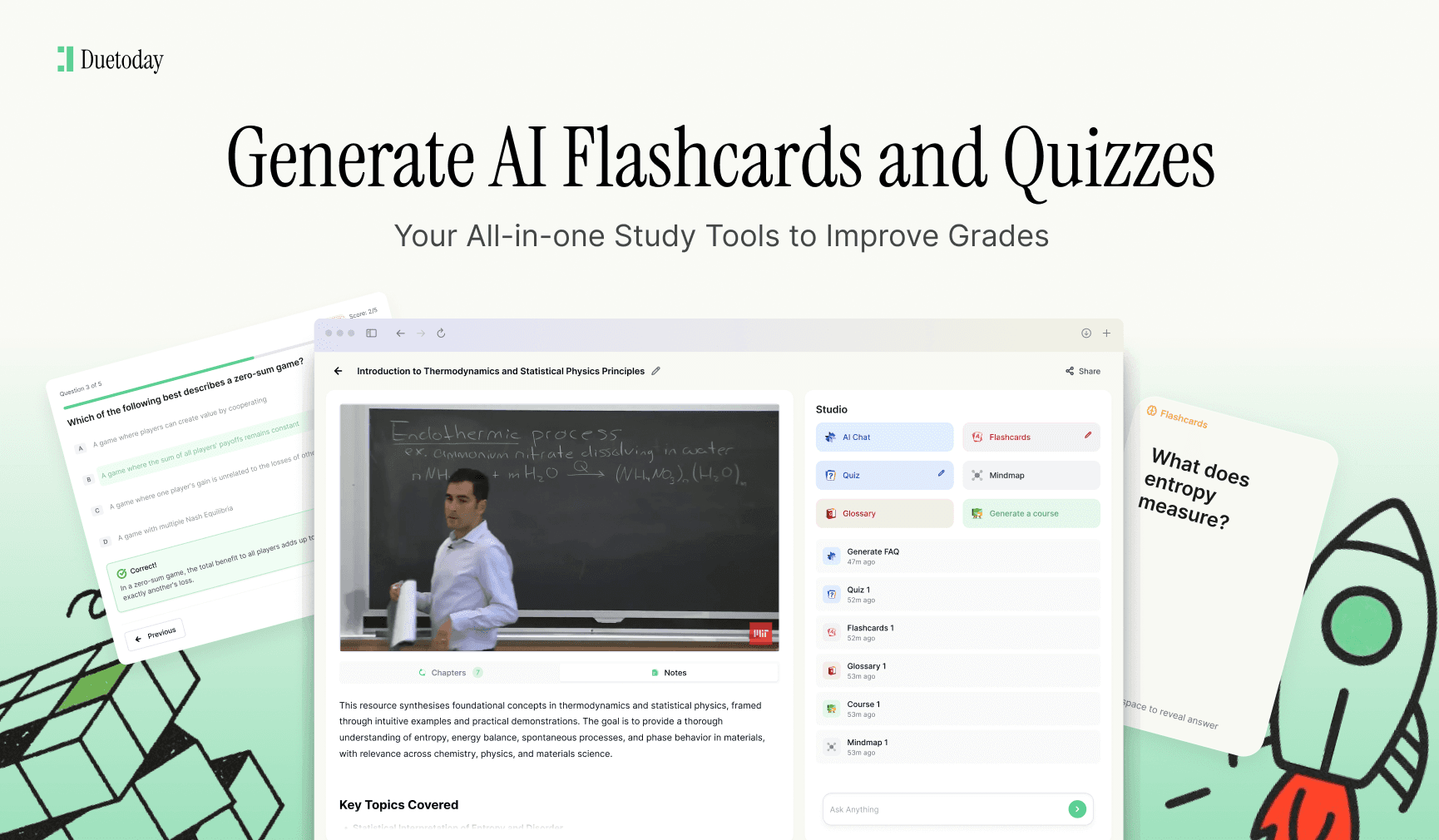
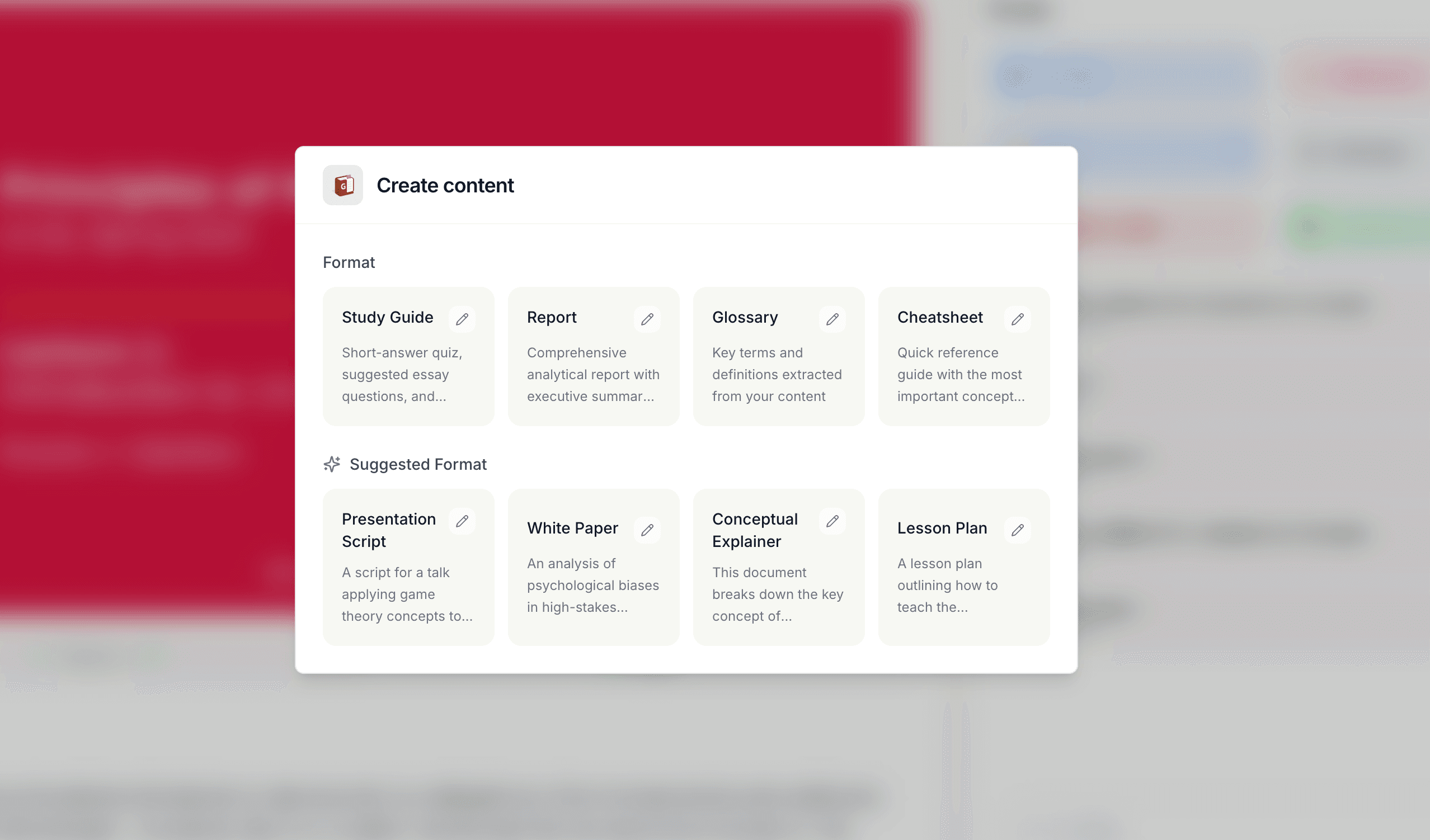
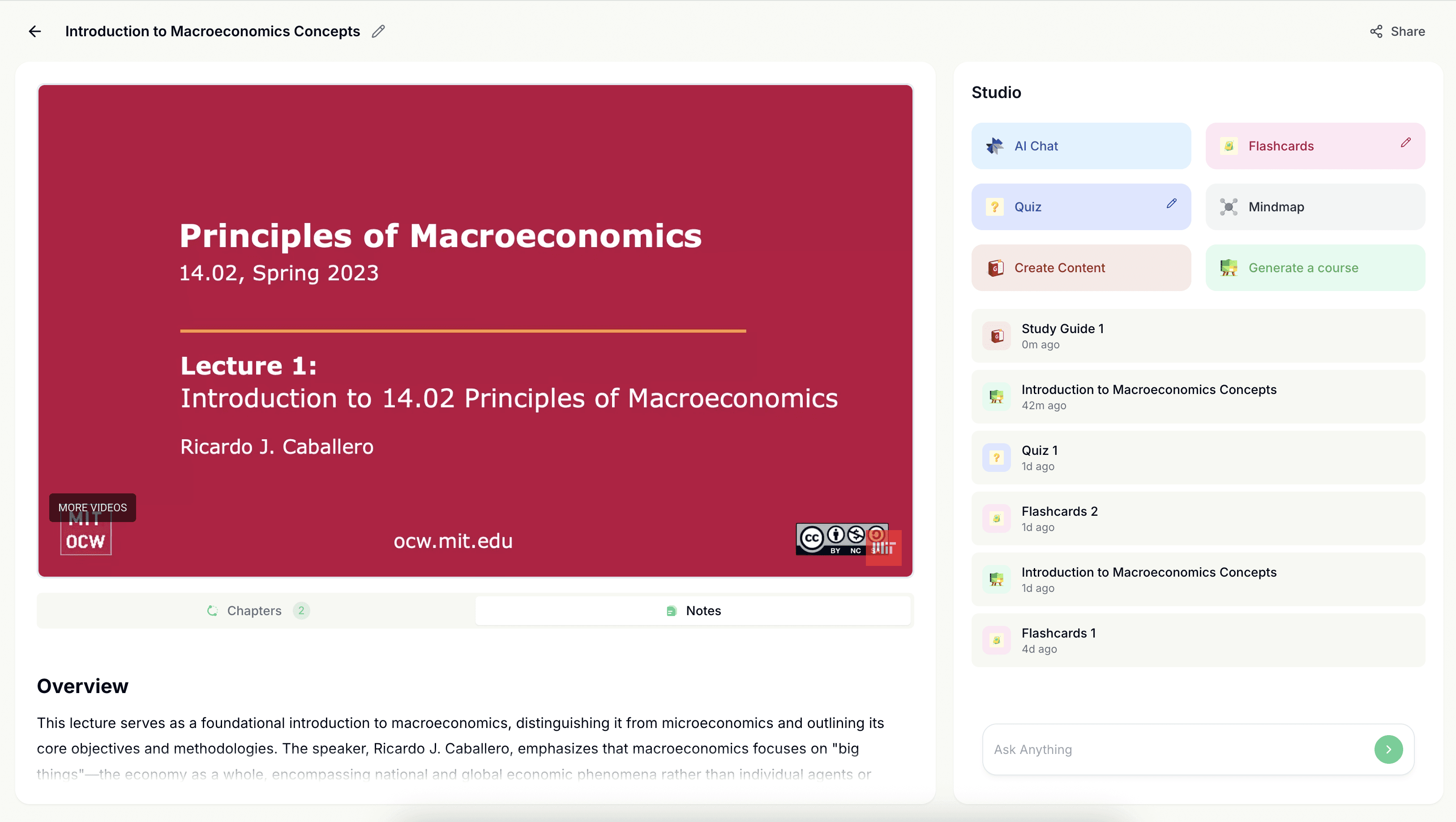
Students can upload lecture recordings, PDFs, slides, or videos and instantly generate structured study guides from those materials. The output is designed for revision, not just reading. Content is organized into sections that mirror how students actually study.
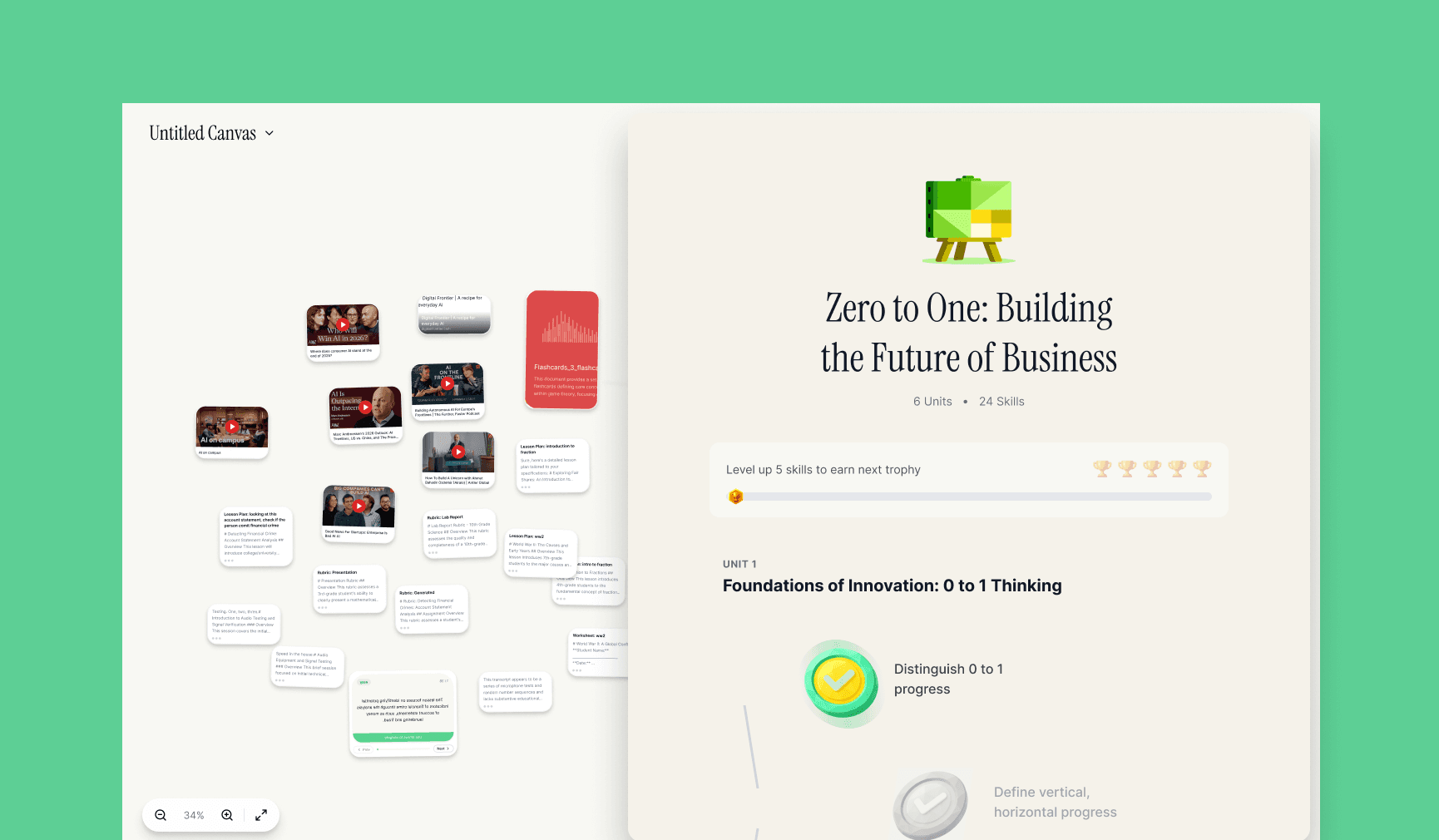
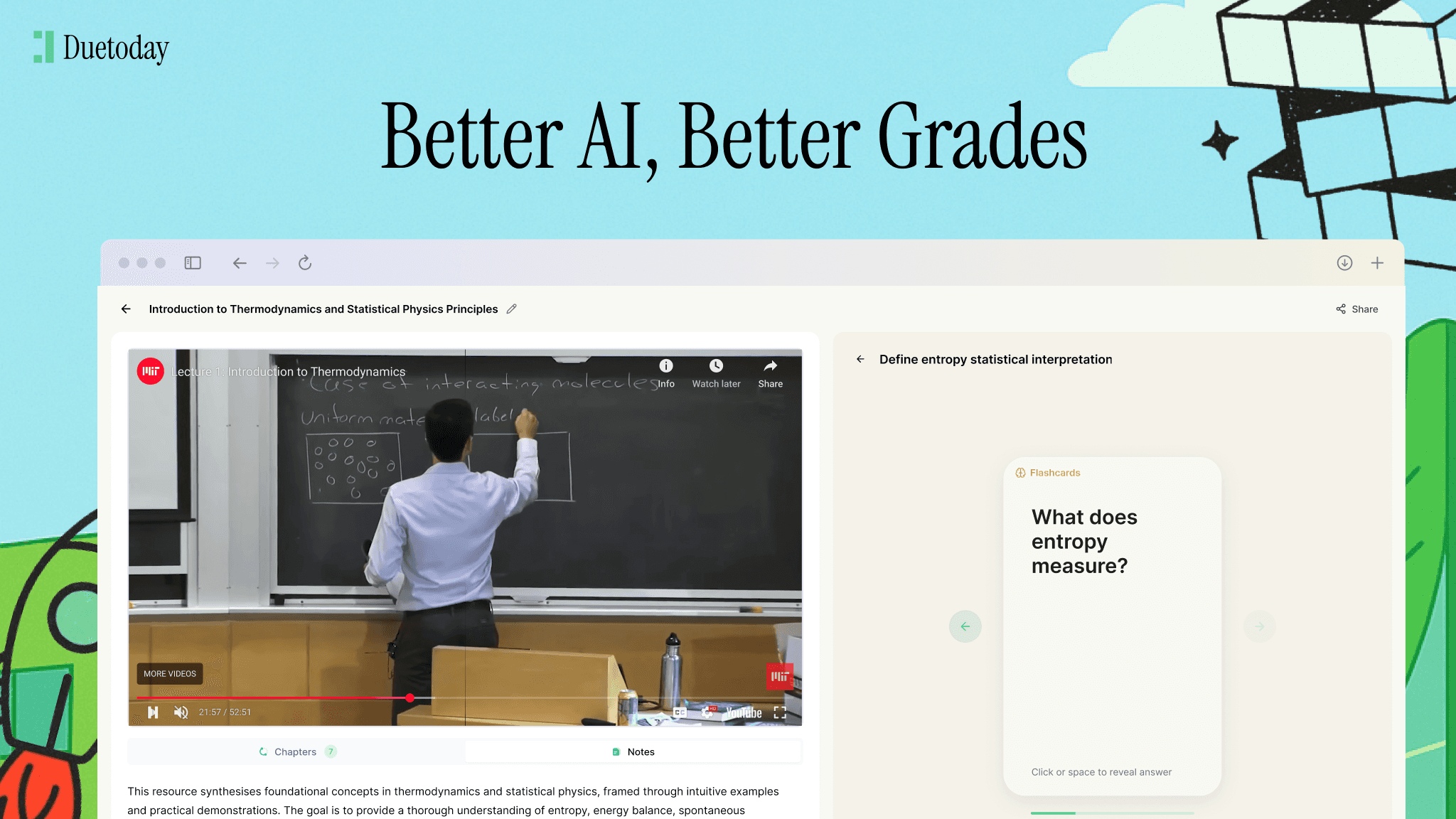
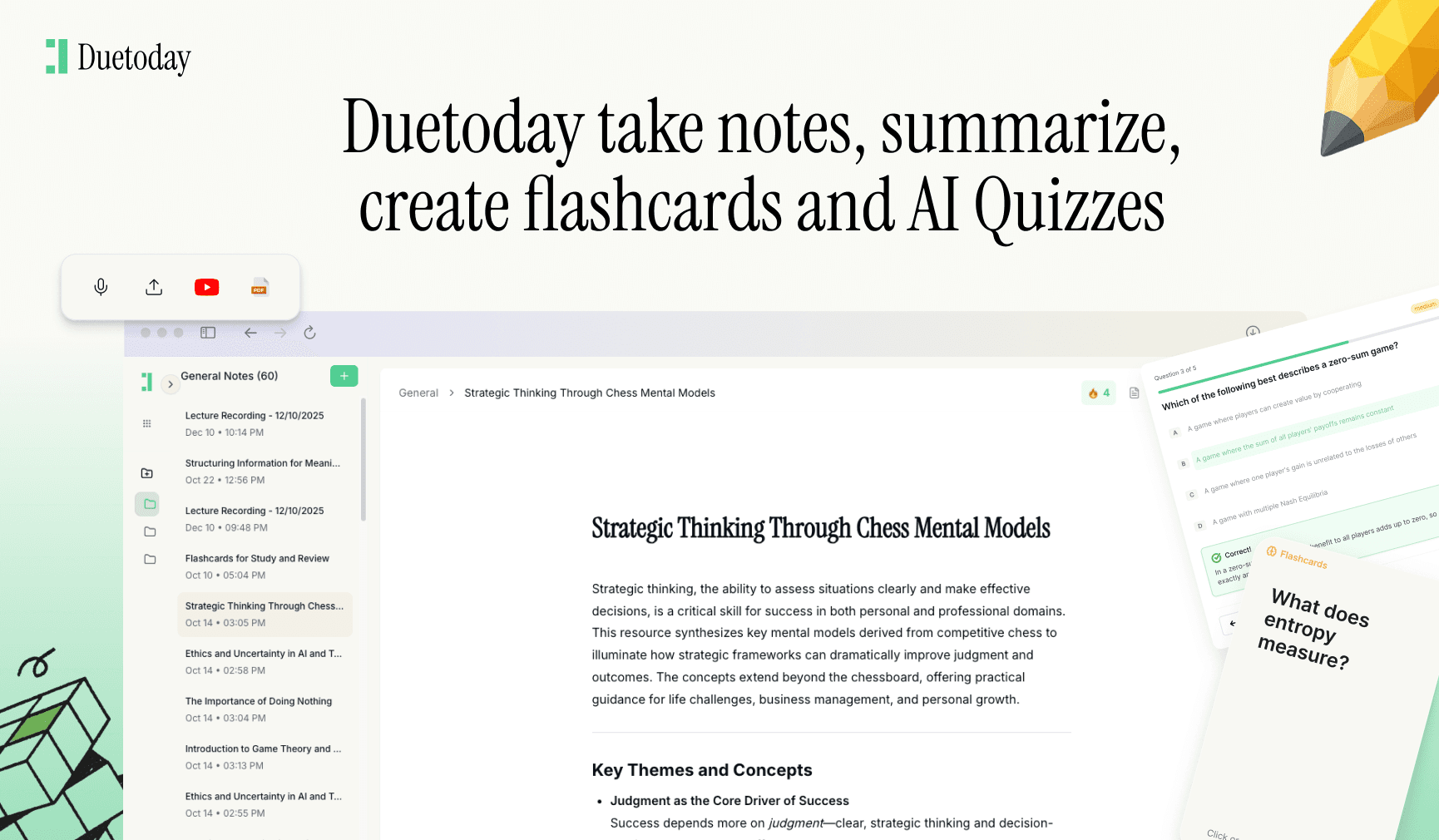
Duetoday also supports turning the same materials into notes, quizzes, flashcards, and revision-friendly formats, but its core strength is how quickly it transforms messy inputs into clean study guides students can use immediately. There is a free plan available for students to try.
Tool #2 Students Use: ChatGPT
ChatGPT is one of the most common tools students use when they need a quick study guide.
Students paste lecture notes, textbook chapters, or readings and ask for a study guide or summary. It works well for short materials and conceptual subjects.
The limitation is scale. For large PDFs or multiple lectures, students must break content into chunks manually. ChatGPT is best for quick, one-off study guides rather than full-course conversion.
Tool #3 Students Use: Notion
Notion is widely used by students to manually build study guides from their materials.
Students import notes or paste content into Notion and reorganize it into sections. Notion helps with formatting, headings, and organization.
The downside is time. Students still need to manually decide what to keep, what to remove, and how to structure everything. Notion is great for organization but not instant generation.
Tool #4 Students Use: Quizlet
Quizlet is commonly used after a study guide already exists.
Students often take content from lectures or summaries and turn them into flashcards. Quizlet works well for definitions and memorization-heavy subjects.
However, Quizlet does not generate full study guides from raw materials. Students still need another tool to convert lectures or PDFs into a guide before using Quizlet.
Tool #5 Students Use: Anki
Anki is popular with students who rely heavily on long-term revision.
Anki shines once information is already structured. Students usually extract key points from study guides and turn them into cards.
Like Quizlet, Anki does not help with the initial step of converting materials into a study guide. It is a downstream tool, not a generator.
Tool #6 Students Use: Studocu
Studocu is used by students looking for pre-made study guides.
Students search for guides created by others who took the same course. This can be helpful for orientation or exam expectations.
The downside is relevance. Materials may not match your lecturer, syllabus, or assessment focus. Studocu supplements your study guides but does not replace generating your own.
Tool #7 Students Use: Google Docs
Google Docs remains one of the most common tools students use to manually create study guides.
Students copy notes, paste slides, and rewrite content into a cleaner format. It is flexible and familiar.
But it is slow. Students spend more time formatting than studying. This is exactly the pain point instant study guide generators solve.
How Students Actually Use Study Guide Generators
In real life, students follow a simple loop.
They attend a lecture or receive materials. They upload or paste those materials into a study guide generator. Within minutes, they have a structured guide they can revise from.
Some students generate guides weekly to stay organized. Others generate everything at once before exams. The key is that the barrier to starting is low.
When creating a study guide takes minutes instead of hours, students actually do it.
Why Study Guides Reduce Exam Stress
Exam stress often comes from uncertainty.
Students are unsure what to revise, where to start, and whether they are missing something important. A study guide reduces that anxiety by giving a clear overview of the course.
Instead of feeling lost in raw materials, students feel anchored. They know what topics exist and how they connect.
Common Mistakes Students Make with Study Guides
One mistake is trying to make the guide perfect. Study guides do not need to be polished documents. They need to be usable.
Another mistake is generating guides too late. The earlier students convert materials into guides, the more useful they become.
Students also forget that guides are starting points. They should still review, annotate, and test themselves.
Choosing the Right Free Study Guide Generator
The best tool is the one that works with your materials.
Students should look for tools that accept the formats they actually use. PDFs, slides, lecture recordings, and videos all matter.
Speed matters too. If it is not instant, students will avoid it under pressure.
Free access is important, especially for students experimenting with their workflow.
The Future of Studying Is Structured, Not Longer
Studying is no longer about collecting more content.
It is about converting existing materials into formats that work for revision. Study guides sit at the center of that process.
Students who master this step study more efficiently, feel less overwhelmed, and approach exams with clarity instead of panic.
Final Thoughts
Free study guide generators exist to solve one problem: turning study materials into study guides quickly.
Everything else is secondary.
Whether you use Duetoday, ChatGPT, Notion, or manual tools, the goal is the same. Convert content into structure as fast as possible.
The students who win are not the ones with the most notes. They are the ones with the clearest study guides.