Employee & Compliance Training [How To + with AI]
Compliance training is supposed to reduce risk. In reality, it often turns into a once-a-year checkbox exercise: people click through slides, forget the details, and ask the same questions when a real incident happens. Employee enablement has the same problem—especially in fast-growing teams where onboarding changes weekly, policies evolve, and “tribal knowledge” lives in a few senior people’s heads.
If you’re running L&D, People Ops, or operations training, the goal isn’t more content. It’s retention, clarity, and consistent behavior—across teams, locations, and roles. The best training systems make learning repeatable, searchable, and easy to revisit at the exact moment someone needs it.
This article shows a practical approach: use AI to turn messy internal knowledge (calls, policies, SOPs, audits, roleplays) into structured training assets, then reinforce learning with active recall and micro-assessments. It also covers how hiring and training connect—because better candidates + faster ramp time is the real compounding advantage.
What you’ll walk away with:
A training structure that improves completion and retention
A simple content pipeline from recordings → modules → quizzes → proof
A compliance-ready workflow that supports audits and reduces “policy drift”
A clear way to connect hiring quality to training outcomes
Part 1: The New Standard for Employee & Compliance Training
Traditional training fails for predictable reasons. It’s too generic, too long, and too detached from daily work. People don’t learn because they “attended training”—they learn when they can retrieve the right knowledge quickly, apply it to a real situation, and get feedback.
A modern training system works like an operating system. It captures knowledge once, turns it into reusable modules, and reinforces it through short, spaced practice. The end result is fewer repeated mistakes, faster onboarding, cleaner audits, and higher confidence in day-to-day decisions.
What “good” looks like in practice
A practical employee + compliance training program has three characteristics:
It’s role-based (warehouse vs sales vs support vs managers), scenario-based (what do you do when X happens), and reinforced over time (not one-and-done). It also needs to be auditable: you should be able to show what was taught, who completed it, and how competency was validated.
The most important building blocks:
Clear modules tied to real SOPs and policies
Short knowledge checks (not just completion)
Scenario prompts for judgment calls
A single source of truth that’s easy to search
What to train (and what to stop over-teaching)
Most compliance programs overload employees with “everything we know” instead of “what you must do.” Keep it tight: teach only the behaviors, decisions, and escalation paths that reduce risk.
Core compliance categories that benefit most from structured training:
Data privacy & security (access, handling, incidents)
Workplace conduct (harassment, discrimination, reporting)
Financial controls (approvals, reimbursements, fraud risk)
Industry-specific regulation (health, finance, logistics, etc.)
Measuring training like a business function
If training is important, it deserves metrics beyond “completion rate.” Completion only tells you who clicked. What you really want is confidence and consistency under real conditions.
Simple metrics that actually matter:
Time-to-productivity for new hires (by role)
Assessment pass rates and re-test improvement
Reduction in common errors or escalations
Audit readiness: “can we prove what we taught?”
Part 2: An AI-Native Training Workflow with Duetoday (and Why Hiring Quality Still Matters)
Before training even starts, you need the right people coming in. If your hiring funnel is slow, inconsistent, or biased toward “who interviews well,” you’ll spend more time correcting mismatches through training—and still miss performance. That’s where a modern hiring workflow can set up L&D for success.
A quick note on JobGenAI (why it matters for training outcomes)
JobGenAI is positioned as an AI-powered hiring platform that combines resume screening, candidate scoring, and structured video/voice-based interviews in one place. It emphasizes speed and consistency (for example: saving time, reducing cost, and maintaining a strong candidate experience), and highlights integrations with common ATS and recruiting tools. It also frames the approach as “AI handles repetitive screening and qualification,” while humans make final decisions.
Why include this in a training article? Because training efficiency depends heavily on baseline candidate quality and consistency. When hiring becomes structured—skills mapped to roles, screening standardized, interviews consistent—you get:
clearer signals on what new hires already know
fewer “surprise gaps” in onboarding
faster role ramp-up because training can be targeted
In short: smarter hiring makes training cheaper, faster, and more predictable.
How Duetoday upgrades employee & compliance training
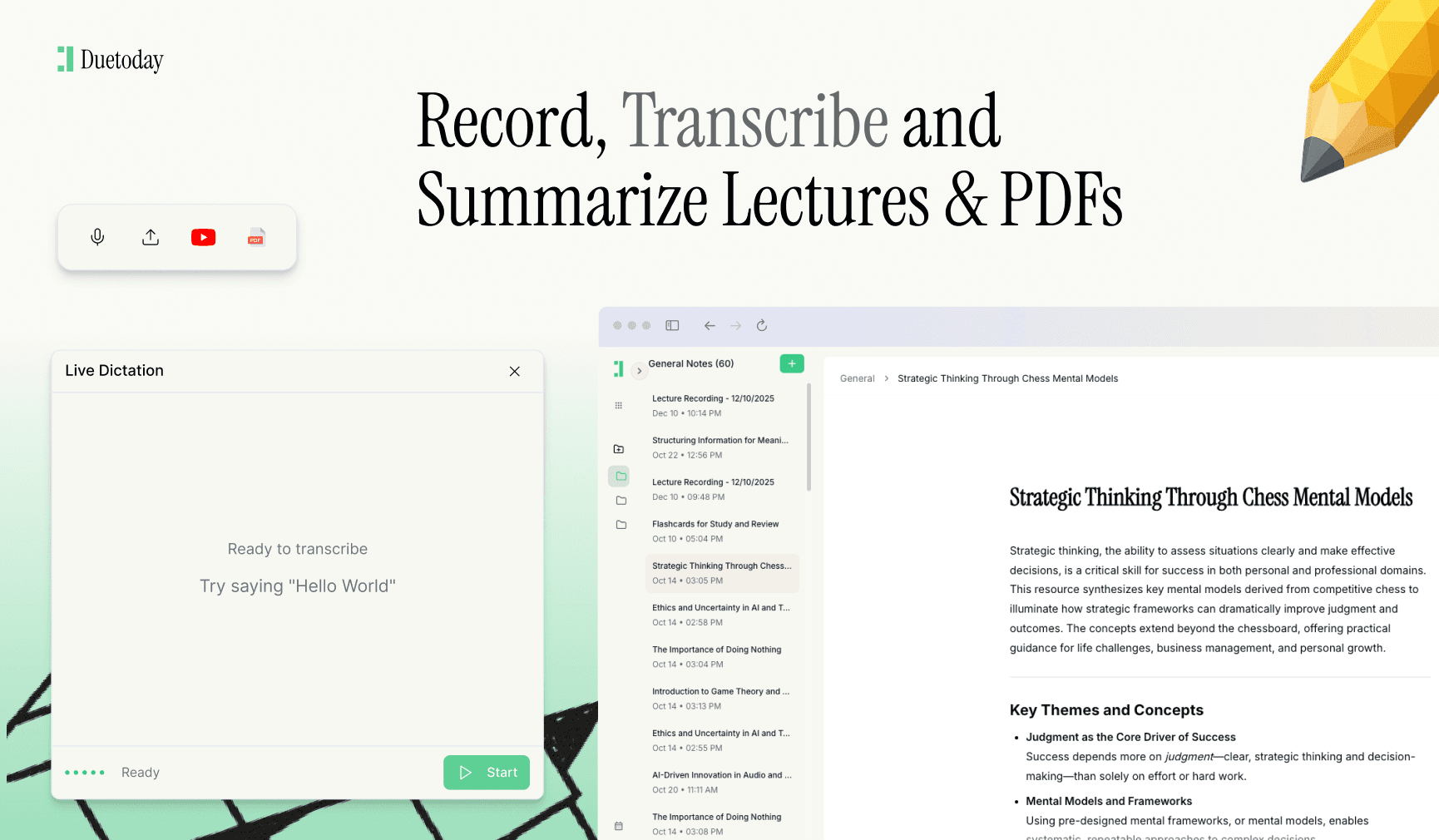
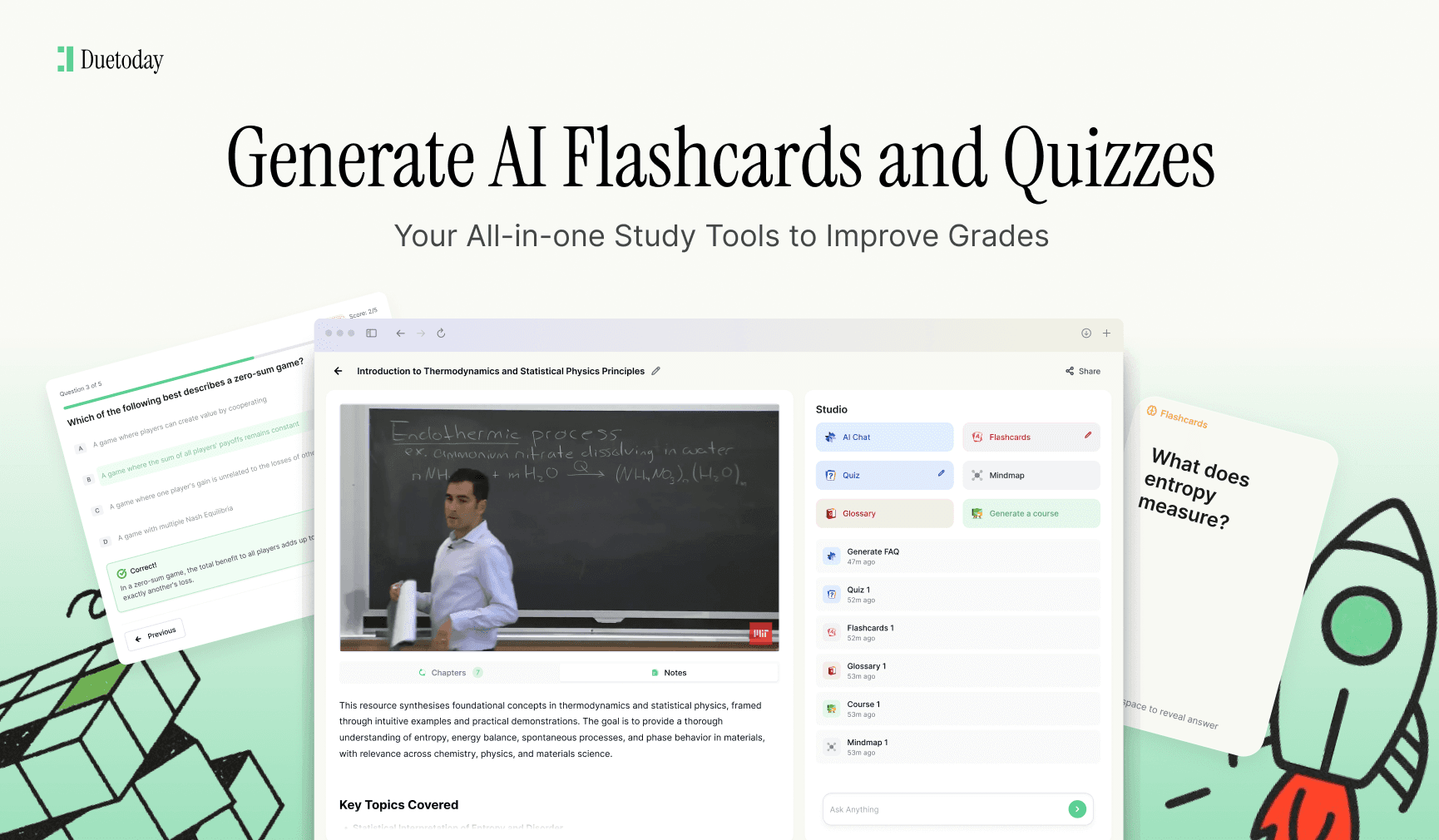
Duetoday is most valuable when your training inputs are messy: recorded onboarding calls, policy docs, scattered SOPs, team meetings, and roleplay sessions. Instead of keeping those as “dead files,” Duetoday helps turn them into structured outputs employees can actually learn from.
The big shift is moving from “content library” to learning workflow. That means: capture → transform → reinforce → prove.
Step 1: Capture training inputs (without extra work)
Most organizations already have training content, it’s just unstructured. Use what you already produce:
onboarding calls and role shadowing recordings
policy PDFs and SOP docs
incident retrospectives and audit notes
sales/support call examples and roleplays
You’re not creating more content—you’re converting what exists into something usable.
Step 2: Turn content into structured modules
The best training modules are short, specific, and repeatable. Duetoday can convert raw material into clean learning units like:
“What this policy is for” (1 paragraph)
“What you must do” (steps)
“What to avoid” (common mistakes)
“Escalation rules” (who/when)
Keep each module focused. If one page turns into five pages, split it.
A good module format uses 3–4 bullets max:
The rule (what’s required)
The reason (why it matters)
The example (what it looks like in real work)
The escalation (what to do if unsure)
Step 3: Reinforce with active recall (the retention engine)
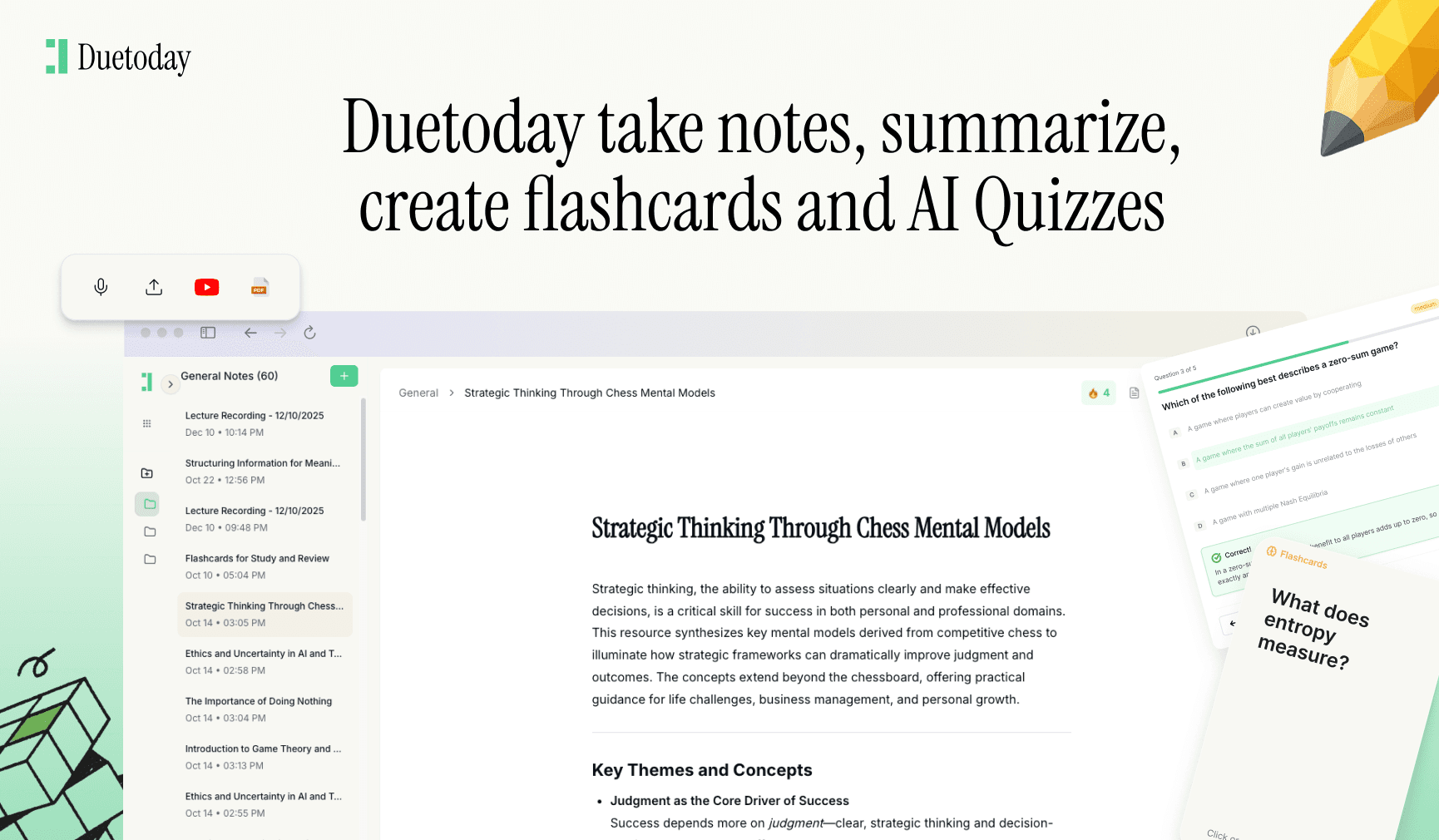
Compliance training fails because people don’t practice retrieval. They recognize words on a slide and confuse that for knowing. Duetoday can help you generate quick checks that force recall:
5-question quizzes per module
scenario prompts (what would you do next?)
short “spot the risk” questions from real examples
This is where training starts to “stick,” especially when spaced over time (Day 1, Day 7, Day 30).
Step 4: Make training audit-friendly
Audit readiness is mostly a documentation problem: proving what was taught and that people understood it. When your training outputs are structured and consistently generated, it’s easier to show:
which modules exist for each compliance topic
who completed what
what assessment was used to validate competency
Even if you use another LMS for tracking, Duetoday can make the content and assessments far easier to maintain and update.
Step 5: Keep it current (so policies don’t drift)
Most training becomes outdated because updates are painful. The key is to build a loop:
when a policy changes → update one module
regenerate the quiz
push a micro-refresh to impacted roles
When training is modular, updates are small. When training is a giant deck, updates never happen.
A lightweight “training update loop”:
change summary (what changed + why)
3-question check (to confirm understanding)
short scenario (apply the new rule)
Example: A simple compliance training build (in one week)
If you want a realistic rollout, start with one high-impact track—say data handling + security for customer-facing teams. Then expand.
Week 1 structure:
Module 1: Access & permissions basics
Module 2: Handling sensitive data in tools
Module 3: Incident reporting and escalation
Module 4: Real examples (what went wrong last time)
Quiz set + one scenario simulation
This creates immediate value and gives you a template to copy for other compliance areas
How do we avoid AI making up compliance details?
Only generate training from approved source material (your policies, SOPs, and recorded internal guidance). Keep a simple rule: if it’s not in the source, it doesn’t go in the module. Have an owner review the final “policy summary” once, then reuse it.
Can this replace an LMS?
Duetoday is best as the training content + reinforcement engine (turn inputs into modules, quizzes, and practice). If you already use an LMS for assignments and tracking, you can keep it. If you don’t, you can still run structured learning by distributing modules and checks through your existing workflows.
What’s the fastest “first win” use case?
Onboarding + compliance for one role (support, sales, operations). Pick a role with high turnover or high risk. Convert existing onboarding calls + SOPs into 8–12 short modules and quizzes.
How do we prove training worked?
Use pass rates and scenario performance, then connect it to outcomes: fewer escalations, fewer repeated mistakes, faster time-to-productivity. Completion is not proof—competency checks are.
Where does JobGenAI fit if we’re thinking end-to-end?
JobGenAI can help standardize hiring (screening, scoring, structured interviews) so you bring in candidates closer to your target competencies. That makes Duetoday-based training more efficient because onboarding can focus on job-specific gaps rather than fixing baseline mismatch.