How to Write a Research Paper: The Ultimate Guide for Students
Mastering the Art of Academic Research
Writing a research paper is often seen as a daunting task that looms over university students every semester. However, the process doesn't have to be a source of constant stress. At its core, a research paper is simply an opportunity for you to explore a topic deeply, engage with existing academic conversations, and contribute your own unique perspective. The key to success lies in preparation and breaking the large project into smaller, manageable milestones.
Before you even type the first word, you need to understand the scope of your assignment. This means reading the rubric carefully and identifying exactly what your professor is looking for. Are they asking for an argumentative piece, an analytical review, or an empirical study? Once you have a clear grasp of the requirements, you can begin the journey of selecting a topic that is both academically relevant and personally interesting to you. A common mistake students make is choosing a topic that is too broad, leading to a shallow paper. Aim for a specific niche where you can provide detailed insight.
Selecting a Strong Research Topic
Finding the right topic is half the battle won. If your topic is too general, like global warming, you will find too much information to cover effectively in one paper. Instead, narrow it down to something like the impact of rising sea levels on coastal agriculture in Southeast Asia. This allows you to hunt for specific data and create a more focused argument. Spend some time browsing academic databases like JSTOR or Google Scholar to ensure there is enough existing literature to support your work without the topic being so overdone that you have nothing new to add.
Once you have a general idea, you should formulate a working thesis statement. This is a one or two-sentence summary of the main point you want to prove. It acts as a compass for your entire paper. If a piece of information doesn't help support or explain your thesis, it probably doesn't belong in the final draft. Your thesis will likely evolve as you do more research, and that is perfectly normal in the academic process. Staying flexible in the early stages allows you to follow the evidence rather than forcing the evidence to fit a preconceived notion.
Effective Information Gathering and Management
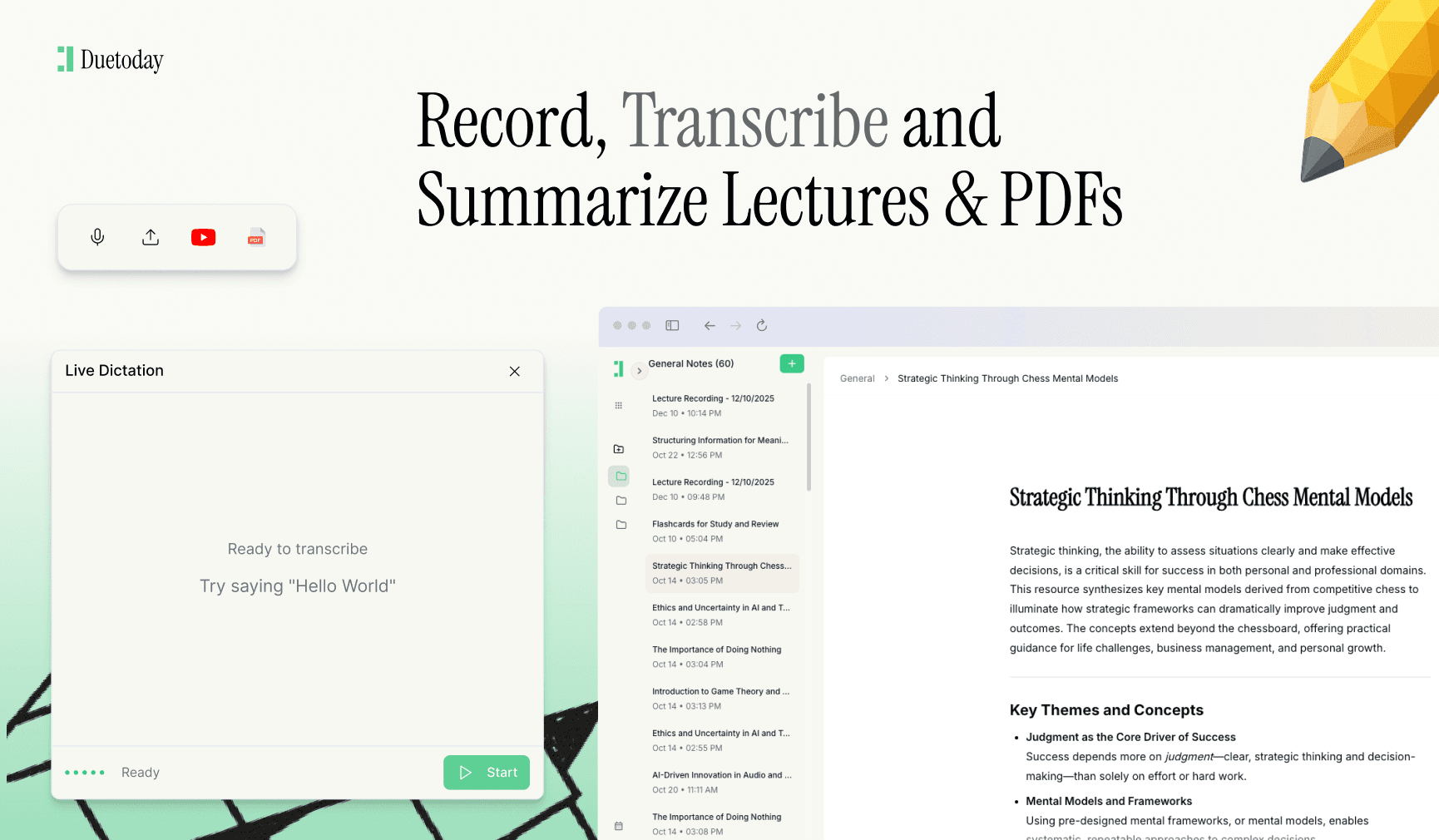
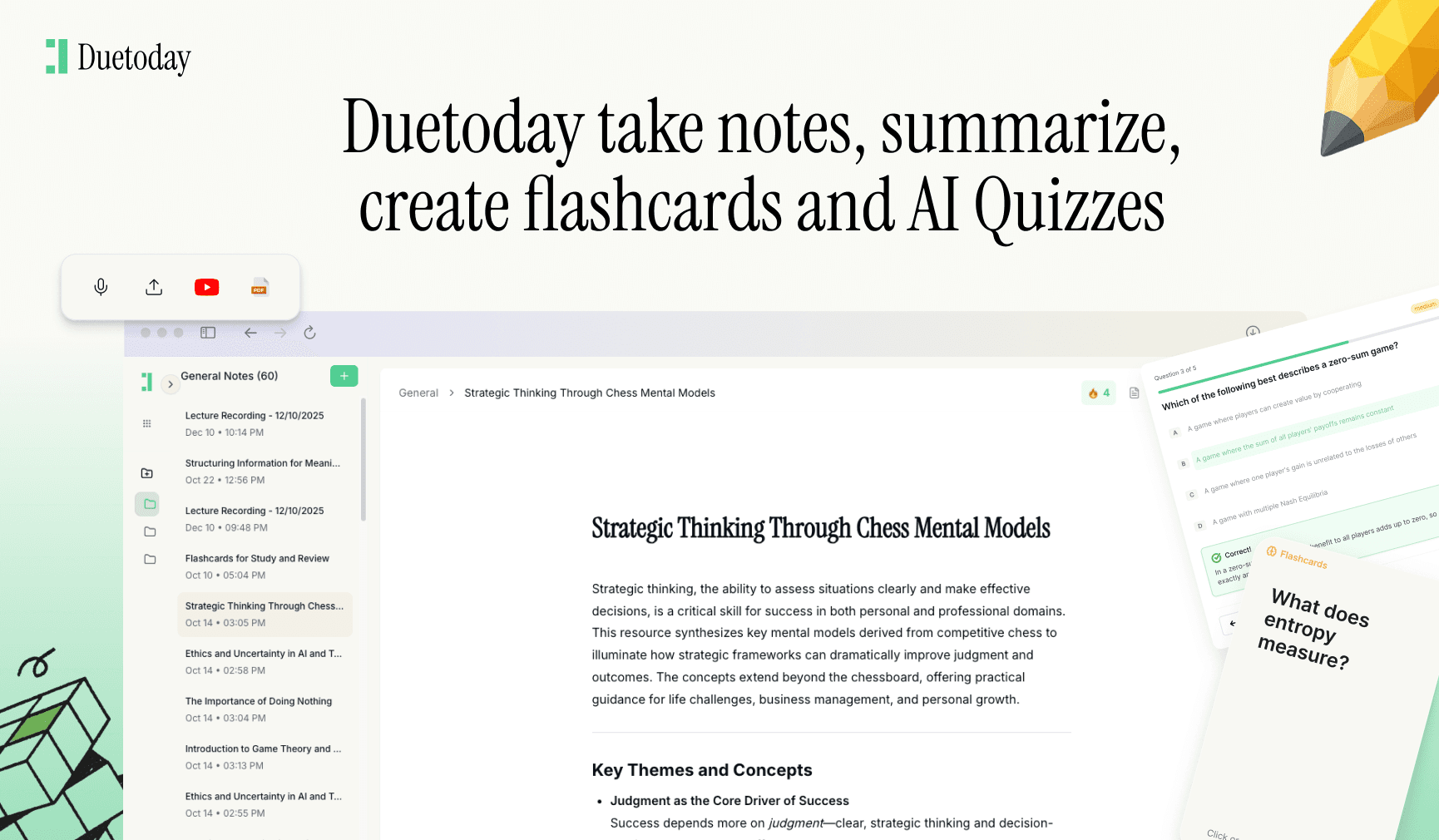
Researching can quickly become overwhelming when you have dozens of browser tabs open and loose PDF files scattered across your desktop. This is where modern tools can save your grade. Duetoday AI is an AI-powered learning platform that turns lectures, PDFs, and notes into summaries, flashcards, quizzes, and structured study tools automatically. It acts like a personalized AI tutor—helping students learn faster, stay organized, and retain information without spending hours rewriting notes. Utilizing this kind of technology allows you to focus on the high-level critical thinking required for a research paper while the AI handles the heavy lifting of organizing your primary source material.
When you are reading through your sources, practice active note-taking. Don't just highlight text; write down why a specific quote is important and how it connects to your thesis. This will make the drafting phase much easier because you will already have a collection of thoughts rather than just a list of quotes. Always keep track of your citations from day one. There is nothing worse than finishing a brilliant 10-page paper only to realize you have forgotten where you found your three most important statistics. Use citation managers or simple spreadsheets to keep your bibliography organized and ready for the final formatting phase.
Drafting and Structuring Your Paper
The drafting phase is where your research finally takes shape. Many students find it helpful to start with an outline. An outline serves as the skeleton of your paper, ensuring that your ideas flow logically from one point to the next. Typically, a research paper follows a standard structure: an introduction that includes your thesis, several body paragraphs that present evidence and analysis, and a conclusion that synthesizes your findings and suggests future areas of study.
When writing your body paragraphs, remember the TEA method: Topic sentence, Evidence, and Analysis. Start each paragraph with a clear sentence that tells the reader what the paragraph is about. Follow this with a piece of evidence from your research, and then—most importantly—provide your own analysis of why that evidence matters. Your voice should always be the guiding force in the paper, with the research serving as the foundation that supports your claims. Avoid the trap of stringing together quotes without explaining their relevance to your overall argument.
The Importance of Revision and Polishing
Your first draft is exactly that—a draft. It is meant to be messy and imperfect. The real magic of writing happens during the revision process. After finishing your first version, step away from the computer for at least twenty-four words. This mental break allows you to return to your work with fresh eyes and a more critical perspective. When you read through your paper again, look for areas where the logic might be weak or where the transition between paragraphs feels abrupt.
Check for consistency in your academic voice. University-level writing should be formal and objective, avoiding slang or overly emotional language. Watch out for passive voice and try to use active verbs to make your writing more engaging. Finally, pay close attention to your formatting. Whether your professor requires APA, MLA, or Chicago style, make sure you follow the guidelines to the letter. Small errors in citation or margins can lead to unnecessary point deductions. A polished, well-formatted paper signals to your professor that you are a serious student who pays attention to detail.
Final Flourishes and Proofreading
Before you hit the submit button, do a final proofread. Reading your paper out loud is one of the most effective ways to catch grammar mistakes and awkward phrasing that your eyes might naturally skip over. Check your bibliography one last time against your in-text citations to ensure every source is accounted for. If you have the time, asking a friend or visiting your university's writing center for a peer review can provide invaluable feedback. They can tell you if your arguments are clear to someone who hasn't been staring at the same research for two weeks straight.
Submitting a research paper is a significant achievement. It represents your ability to synthesize complex information, think critically about a subject, and communicate your findings effectively. By following a structured approach—selecting a focused topic, organizing your research with tools like Duetoday AI, and dedicating time to thorough revision—you can transform a stressful assignment into a source of academic pride. Success in university is about working smarter, not just harder, and mastering the research process is a skill that will serve you well throughout your entire professional life.

How long should a university research paper be?
Length depends entirely on the assignment guidelines provided by your professor. Generally, undergraduate papers range from 1,500 to 5,000 words, while capstone projects or theses can be much longer. Always prioritize quality and depth over reaching a specific word count.
What is the difference between a primary and secondary source?
A primary source is a first-hand account or original document, such as a diary, an interview, or original data from an experiment. A secondary source interprets or analyzes primary sources, such as a textbook, a scholarly article reviewing someone else's work, or a documentary.
Can I use Wikipedia for my research paper?
Wikipedia is a great starting point to get an overview of a topic, but it is not considered a credible scholarly source for university-level writing. Instead of citing Wikipedia, look at the references at the bottom of the Wikipedia page to find the original academic sources.
How do I avoid accidental plagiarism?
The best way to avoid plagiarism is to take careful notes and cite your sources as you write. Whenever you use someone else's idea, even if you put it in your own words, you must provide a citation. Using citation management tools can also help you stay organized.