
How to Write a Literature Review: The Ultimate Student Guide
Getting Started with Your Literature Review
Writing a literature review is often seen as one of the most daunting tasks in university life. Whether you are tackling a small course paper or the first chapter of a massive dissertation, the goal remains the same: you need to show that you understand the existing conversation around your topic. It is not just a summary of every book you have read; it is a critical synthesis that identifies patterns, conflicts, and gaps in current research. To start, you must define your research question clearly. Without a specific focus, you will find yourself drowning in thousands of academic papers that only tangentially relate to your work.
The first step is searching for relevant literature. Most students head straight to Google Scholar, which is a great start, but do not overlook your university library databases like JSTOR or ScienceDirect. Use specific keywords and boolean operators to narrow down your results. As you gather sources, look at their bibliographies to find the seminal works in the field. These are the papers that everyone else cites. If you find the same name appearing in five different articles, that author is likely a key figure you cannot afford to ignore in your own review.
How to Evaluate and Select Sources
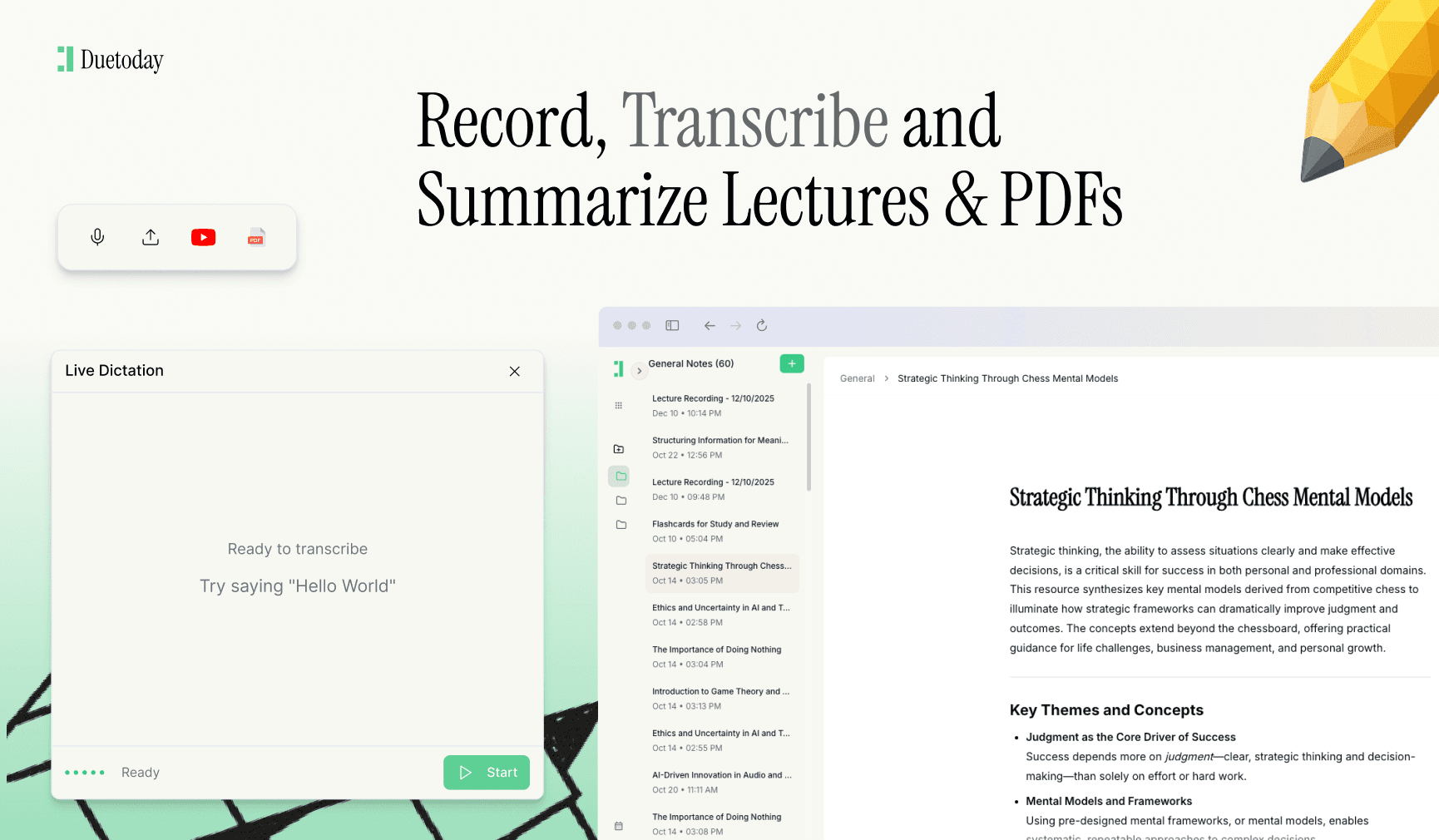
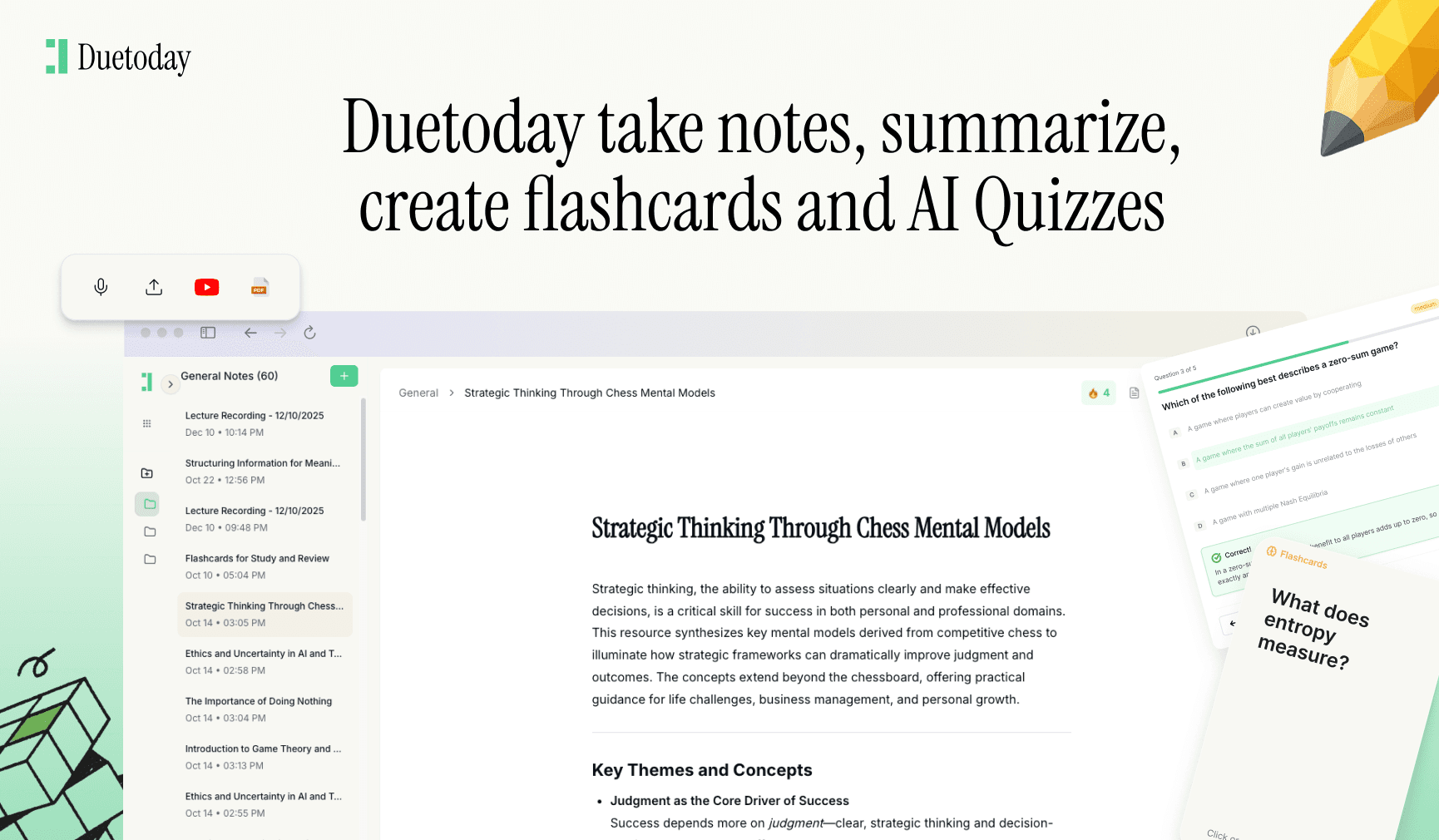
Not every paper you find deserves a spot in your final draft. You need to evaluate the credibility and relevance of each source. Ask yourself when the piece was published—is it still relevant or has the field moved on? Look at the methodology used by the authors and consider if their findings are robust. This is the stage where many students get bogged down in the details. This is where a tool like Duetoday AI becomes a lifesaver for busy students. Duetoday is an AI-powered learning platform that turns lectures, PDFs, and notes into summaries, flashcards, quizzes, and structured study tools automatically. Instead of spending ten hours reading full papers just to see if they fit, you can use it to get the core essence of a study instantly, helping you learn faster and stay organized during the research phase.
The Importance of Synthesis Over Summary
The biggest mistake university students make is writing a literature review as a 'list' of summaries. Paragraph one summarizes Author A, paragraph two summarizes Author B, and so on. This approach will not get you an A. Instead, you need to synthesize. This means grouping authors together based on their findings or themes. If three different studies all conclude that social media affects sleep quality, you should discuss them together. Contrast them with the authors who found no correlation. By doing this, you are showing your professor that you can think critically and see the 'big picture' of the academic landscape.
Organizing Your Literature Review Structure
Once you have your themes, you need to decide on a structure. The most common approach is the thematic structure, where you organize your writing by sub-topics or key concepts. Alternatively, you might choose a chronological approach if you are tracing how an idea has evolved over decades. Some students prefer a methodological approach, comparing how qualitative studies differ from quantitative ones on the same subject. Whichever you choose, ensure there is a logical flow. Each paragraph should lead naturally into the next, building a case for why your own research or perspective is necessary.
Writing the introduction is your chance to set the stage. Define the scope of your review and state your thesis or main argument. In the body paragraphs, make sure to use transition words like 'similarly,' 'conversely,' or 'furthermore' to help the reader navigate your analysis. Finally, your conclusion should summarize what we know and, more importantly, what we do not know. Identifying these 'knowledge gaps' is the hallmark of a high-quality academic paper because it justifies the existence of future research.
Final Polish and Referencing
The final stage is all about the details. Check your citations thoroughly. Whether your department uses APA, MLA, or Harvard, consistency is vital. Errors in referencing are an easy way to lose marks that you worked hard for. Read your work aloud to catch awkward phrasing or overly long sentences. Ensure that your voice is present throughout the review; while you are discussing the work of others, your critical perspective should be the thread that holds everything together. A well-written literature review does not just repeat what has been said—it recontextualizes it for a new audience.

What is the main purpose of a literature review?
The main purpose is to survey the current state of knowledge on a topic, identify gaps in research, and provide a theoretical framework for your own study.
How many sources should I include in my review?
This depends on your assignment level. A standard university essay might require 5-10 sources, while a dissertation often requires 30 to 50 or more.
Can I use first person in a literature review?
Usually, no. Most academic disciplines prefer a third-person, objective tone. Always check your specific department guidelines for clarity.
What is a research gap?
A research gap is an area or question that has not been fully explored or answered by existing studies, which your work might aim to address.