How to Turn Lecture Notes into Study Guides

The Challenge of Modern Lecture Notes
Every university student knows the feeling of sitting through a ninety-minute lecture, frantically typing or scribbling every word the professor says, only to look at those notes a week later and realize they make absolutely no sense. Raw lecture notes are often a chaotic mix of abbreviations, half-finished thoughts, and missing context. They are a record of what happened, but they aren't necessarily a tool for learning. To actually ace your exams, you need to bridge the gap between recording information and synthesizing it into a structured study guide.
A study guide is more than just a neater version of your notes. It is a strategic document designed to help your brain retrieve information efficiently. When you transition from passive note-taking to active study guide creation, you are engaging in something called encoding. This process forces you to decide what matters, what connects to previous lessons, and what you are likely to be tested on. In this guide, we will explore the exact steps to turn your messy digital or paper notes into a powerhouse resource that guarantees better grades with less stress.
Review and Filter Your Initial Notes
The first step in creating a study guide is the review phase. You shouldn't try to build the guide while the lecture is still happening. Instead, set aside thirty minutes within twenty-four hours of the class to go back through what you wrote. During this window, the information is still fresh in your short-term memory, allowing you to fill in any gaps or clarify messy handwriting. Look for the big ideas. Most professors structure their lectures around three to five key concepts. Your goal during the review is to highlight these pillars and ignore the filler or off-topic tangents that often plague live lectures.
As you filter, look for cues the professor gave during the session. Did they repeat a specific phrase three times? Did they slow down when explaining a certain diagram? These are clear indicators of exam material. Mark these sections with a specific color or symbol. By the end of this phase, you should have a leaner, more focused version of your original notes. You aren't deleting the details, but you are creating a hierarchy of information where the most important concepts sit at the top.
Structuring Your Study Guide for Maximum Retention
Structuring your guide is where the real magic happens. A wall of text is your worst enemy when it comes to late-night revision. Instead, break your content down into thematic modules. You can use the Cornell Method or a simple outline format, but the key is consistency. Each section should feature a clear heading, a brief summary of the concept in your own words, and a list of related terminology. Using your own words is crucial; if you just copy the textbook definition, you aren't learning, you're just transcribing. If you can explain a complex economic theory or a biological process in a simple sentence, you truly understand it.
Visuals play a massive role in how we retain info. Even if you aren't an artist, adding rough sketches, flowcharts, or mind maps to your study guide can significantly increase your recall. Flowcharts are particularly effective for processes, like the steps of a chemical reaction or the events leading up to a historical war. Linking visual cues to text-based information creates multiple pathways in your brain to access the same data, making it much harder to forget during the high pressure of a midterm or final exam.
Leveraging Modern Technology for Faster Results
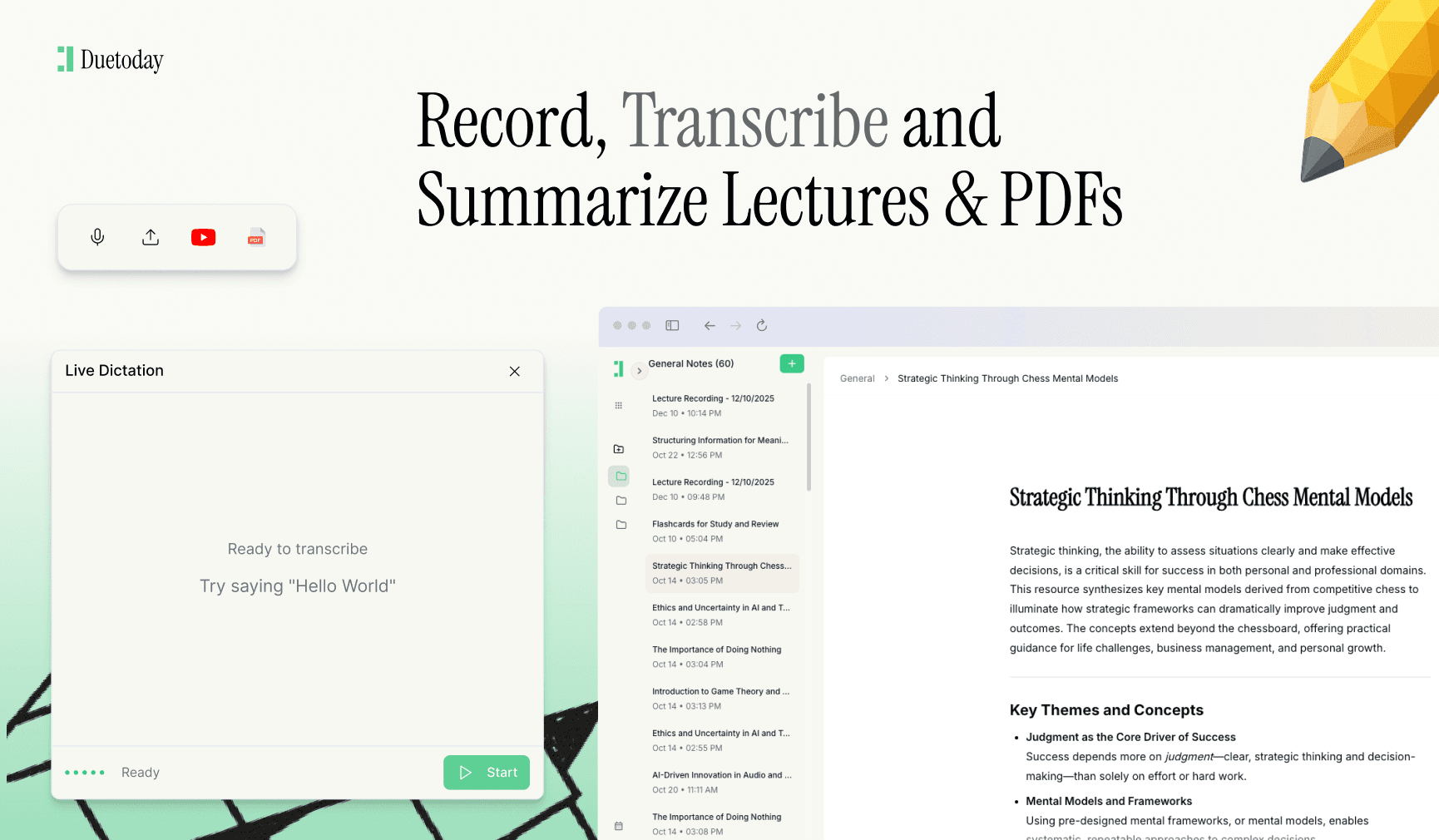
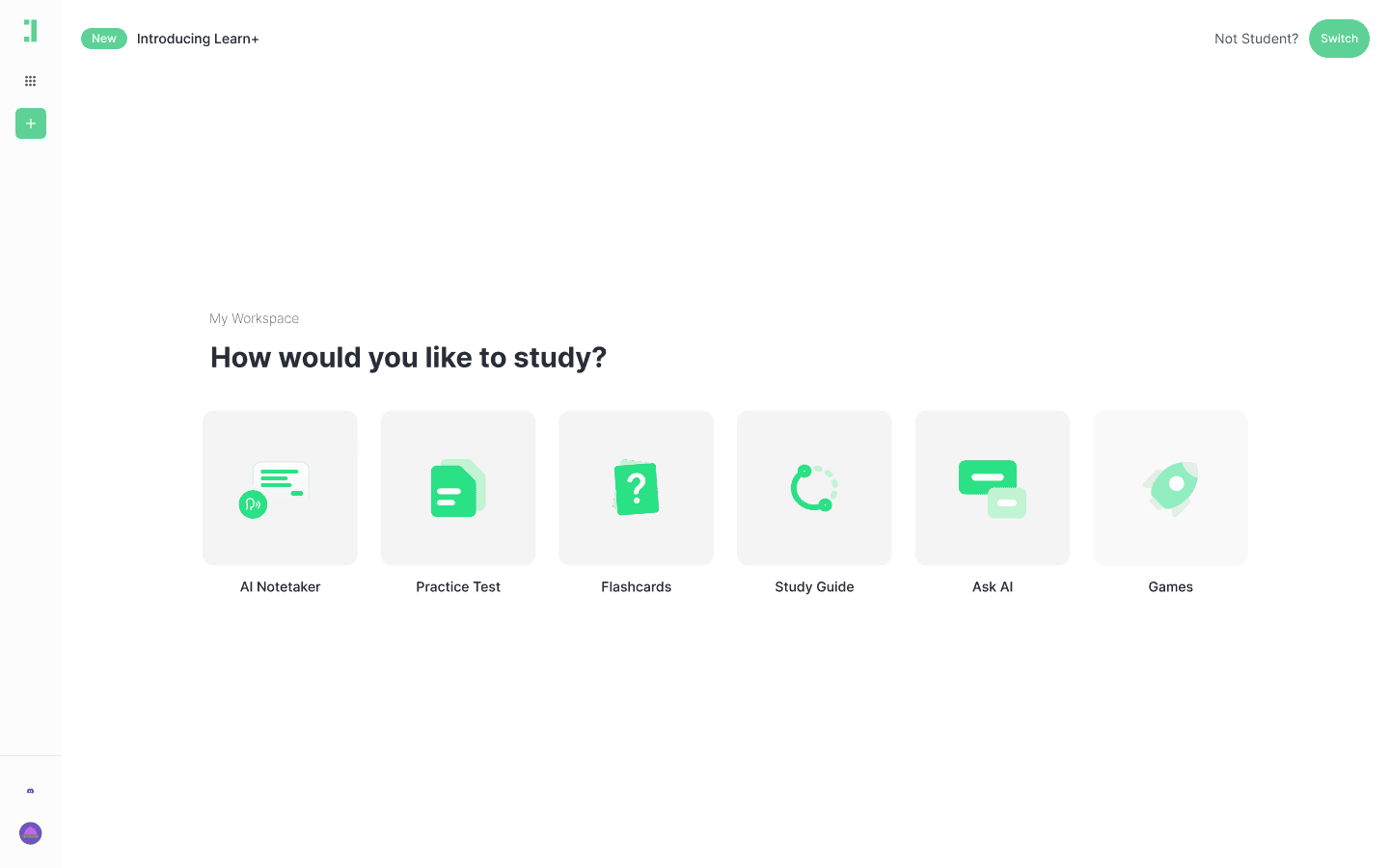
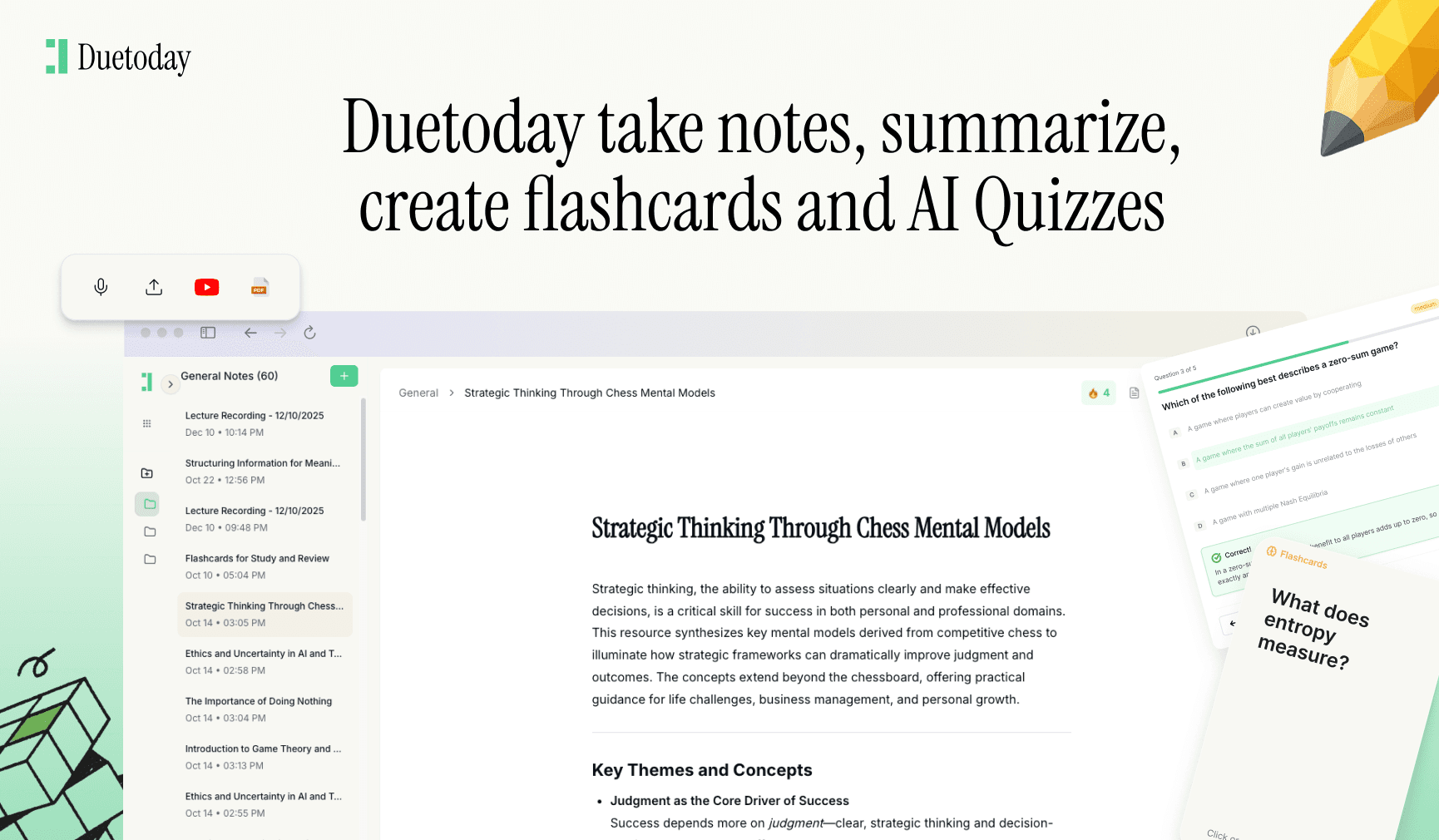
While traditional methods work, the sheer volume of information in modern university courses can be overwhelming. This is where Duetoday AI becomes a game-changer for students who want to work smarter, not harder. Duetoday AI is an AI-powered learning platform that turns lectures, PDFs, and notes into summaries, flashcards, quizzes, and structured study tools automatically.
It acts like a personalized AI tutor helping students learn faster, stay organized, and retain information without spending hours rewriting notes. Instead of manually retyping your scribbles, you can feed your materials into the platform and let it generate the structural foundation of your study guide in seconds, giving you more time to actually study rather than just organize.
The Power of Active Recall and Self-Testing
A study guide shouldn't just be something you read; it should be something you use to test yourself. One of the most effective ways to do this is by leaving 'question prompts' in the margins of your guide. Instead of just writing down the definition of Photosynthesis, write the question 'How do plants convert sunlight into energy?' in the margin and cover the answer while you review. This forces your brain into active recall, which is scientifically proven to be more effective than passive reading. The more you struggle to remember an answer now, the easier it will be to remember it during the actual test.
Read more on Active Recall here
You should also include a section for 'connected concepts.' Nothing in a university course exists in a vacuum. If you are studying psychology, how does a theory from week two relate to a study you learned in week eight? Drawing these connections creates a mental web that makes the subject matter much more cohesive. When you see the big picture, you don't have to memorize a hundred isolated facts; you simply have to understand the underlying system that connects them all.
Finalizing and Updating Your Guide
Your study guide should be a living document. As you move through the semester, you will likely find new information that clarifies older topics. Don't be afraid to go back and edit. If you find a better analogy or a clearer diagram in a textbook, swap it into your guide. By the time finals week rolls around, your guide should be the only document you need. You have already done the hard work of filtering, organizing, and connecting the dots. At that point, your job is simply to review the high-yield information you have curated.
Success in university isn't about who spends the most hours in the library; it is about who uses those hours most effectively. By turning your raw lecture notes into structured, question-based study guides, you are taking control of your learning process. You move from being a passive observer in the lecture hall to being an active participant in your own education. Start small with your next lecture, apply these formatting tips, and watch how much more confident you feel when you sit down to take your next exam.

How soon after a lecture should I make a study guide?
It is best to review and start your guide within 24 hours while the information is still fresh in your mind.
Can I use AI to help create my study guides?
Yes, tools like Duetoday AI are specifically designed to help students convert lecture notes and PDFs into structured study materials quickly.
Is it better to have digital or paper study guides?
This depends on personal preference, but digital guides are easier to search and update as the semester progresses.
What is the most important part of a study guide?
Active recall sections, such as practice questions and self-tests, are the most valuable parts for long-term retention.
How long should a study guide be?
A good guide focuses on high-yield information. Aim for clarity and brevity rather than trying to recreate the entire textbook.