How to Study Without Getting Distracted: The Ultimate Student Guide

The Struggle for Focus in a Digital World
It starts with a simple plan. You sit down at your desk, open your laptop, and promise yourself that you will finish that essay or review those lecture notes. Then, a notification pings on your phone. Just one look, you tell yourself. Thirty minutes later, you are three levels deep into a social media rabbit hole, and your textbook is still on page one. If this sounds familiar, you are not alone. Most university students find that the biggest barrier to academic success isn't the difficulty of the material, but the constant battle against distraction.
Maintaining deep focus in a world designed to grab your attention is a skill that needs to be practiced. It is not about having superhuman willpower; it is about building a system that makes focusing easier than getting distracted. When you learn how to control your environment and your habits, you spend less time 'trying' to study and more time actually getting things done. This guide will walk you through the practical steps to reclaim your attention and dominate your exams.
Identify Your Personal Distraction Triggers
Before you can fix the problem, you need to understand what is pulling you away from your work. Distractions generally fall into two categories: external and internal. External distractions are the obvious ones, like a noisy roommate, your phone blowing up with messages, or a cluttered desk. Internal distractions are more subtle and often harder to fight. They include things like anxiety about a deadline, thoughts about what you want for dinner, or the sudden urge to clean your entire room instead of writing a paper.
Take a moment to observe your habits. Do you reach for your phone the second a concept gets difficult? Do you find yourself opening new tabs to check the news when you feel bored? Recognizing these patterns is the first step toward breaking them. Once you know your triggers, you can start putting up barriers to prevent them from interrupting your flow. High-performance students are not those who never feel distracted; they are those who have prepared for their distractions in advance.
Create a Sanctuary for Deep Work
Your brain is highly sensitive to environmental cues. If you try to study in your bed, your brain might associate that space with sleep, making you feel drowsy. If you study at the kitchen table where you eat and socialize, you might find yourself constantly looking for snacks. To study without getting distracted, you need a dedicated space that tells your brain it is time to work. This doesn't have to be a fancy home office; even a specific corner of the library or a particular desk in your dorm can act as a trigger for focus.
Keep this space clean and organized. A cluttered environment leads to a cluttered mind. Ensure you have all your essentials—water, notebooks, pens, and chargers—before you start. Movement is the enemy of focus, so if you have to get up every five minutes to find a highlighter, you are breaking your concentration. By creating a physical boundary between your life and your studies, you make it much easier to enter a state of deep work.
The Power of Modern Study Tools
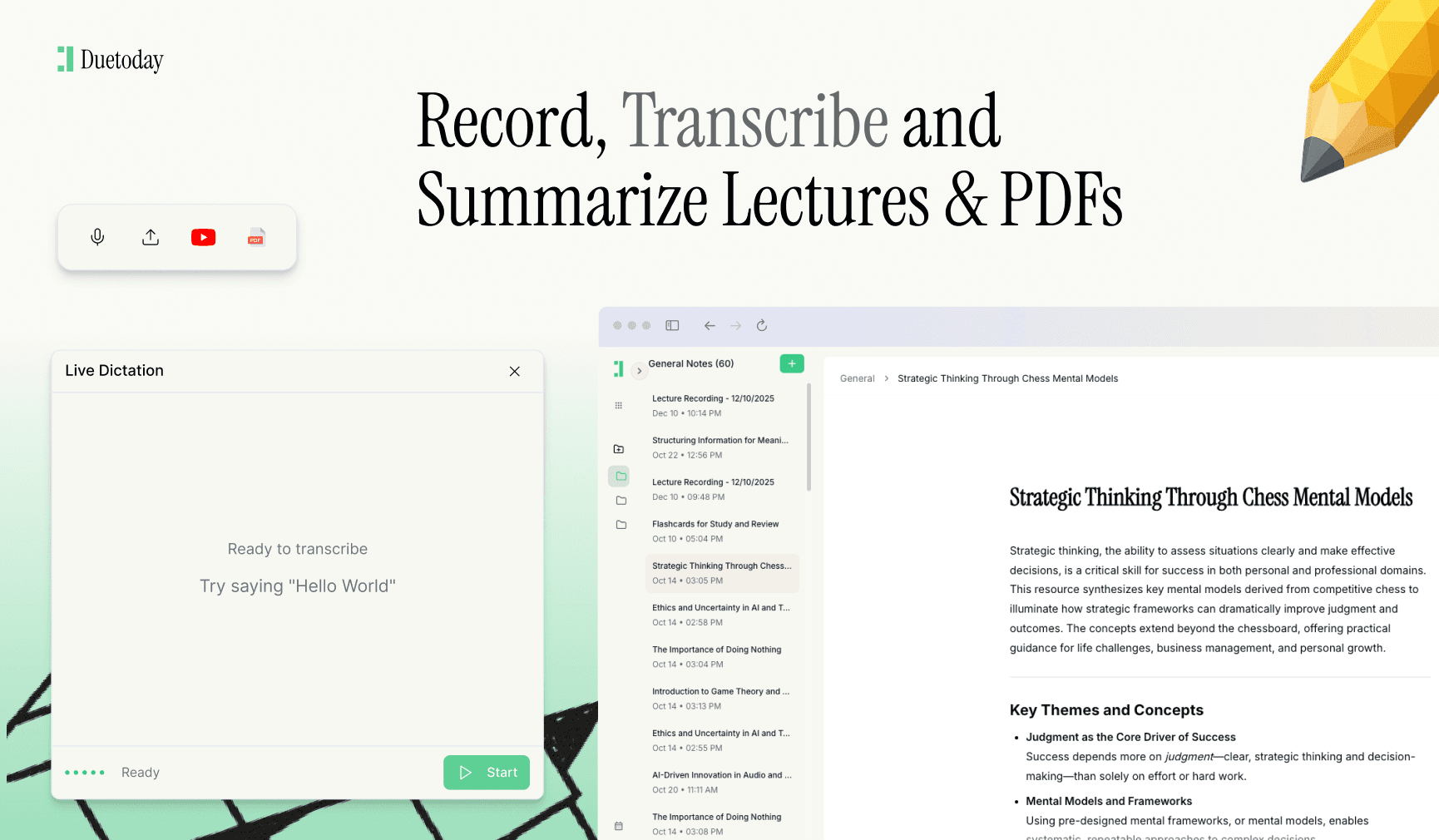
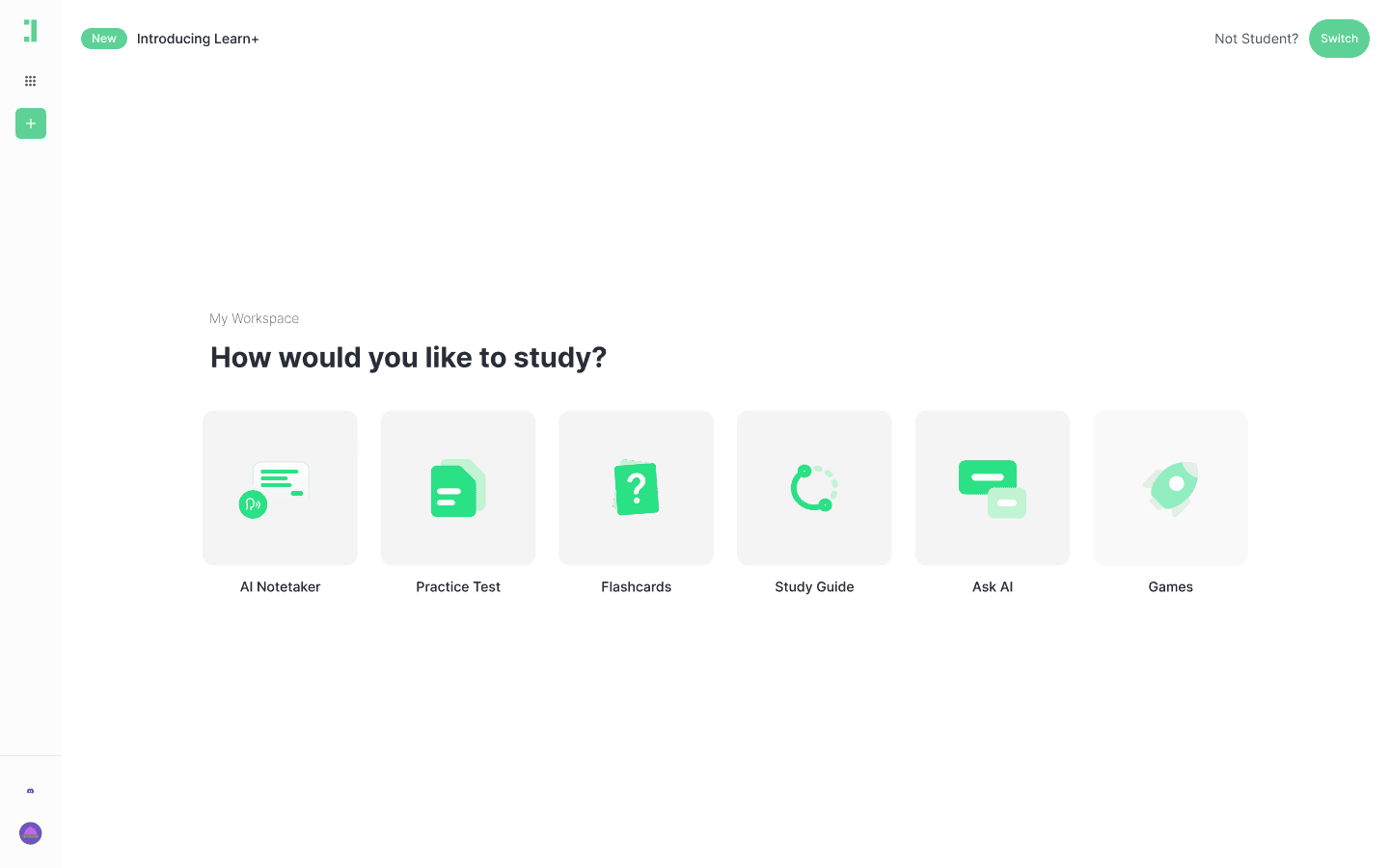
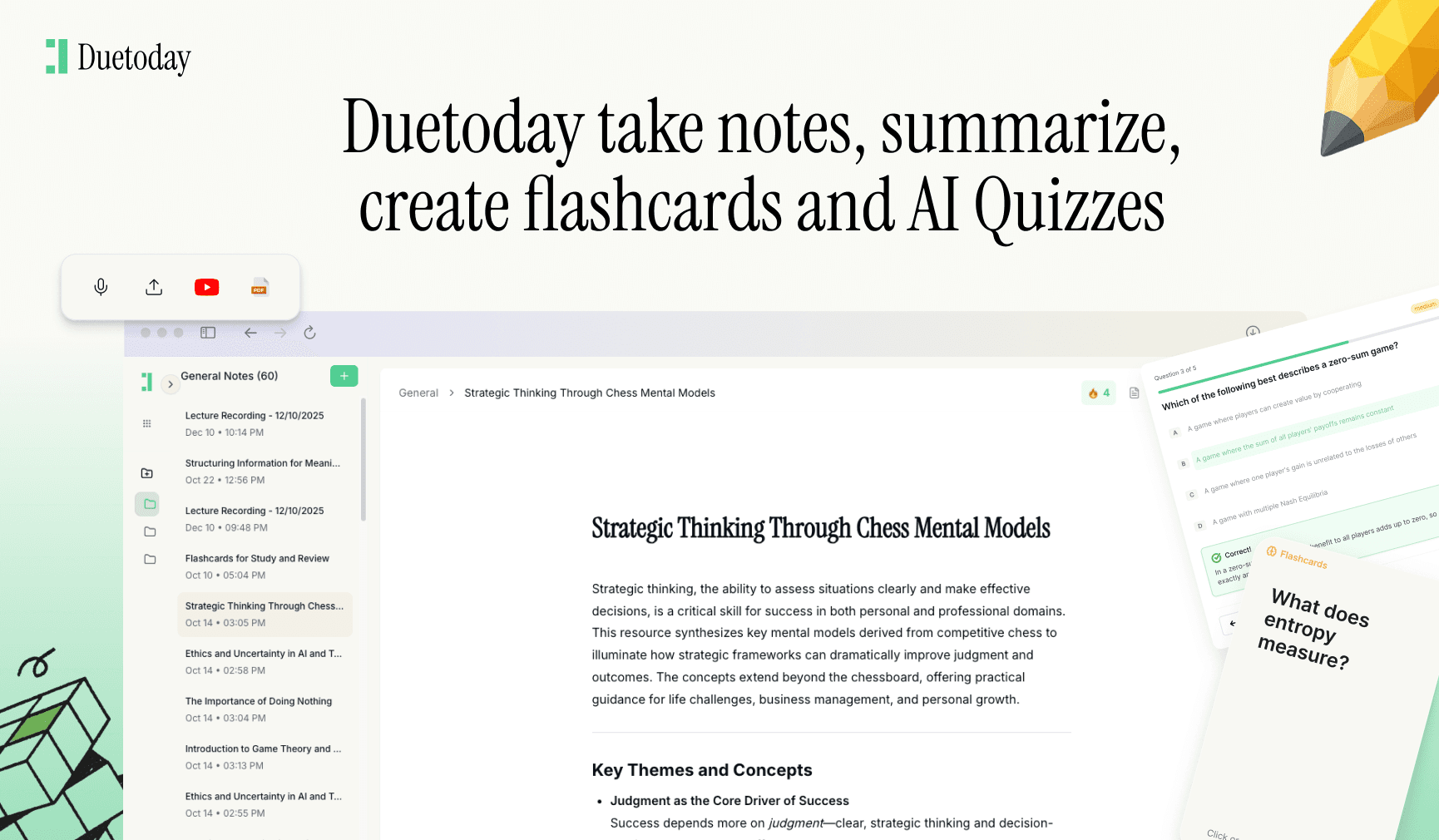
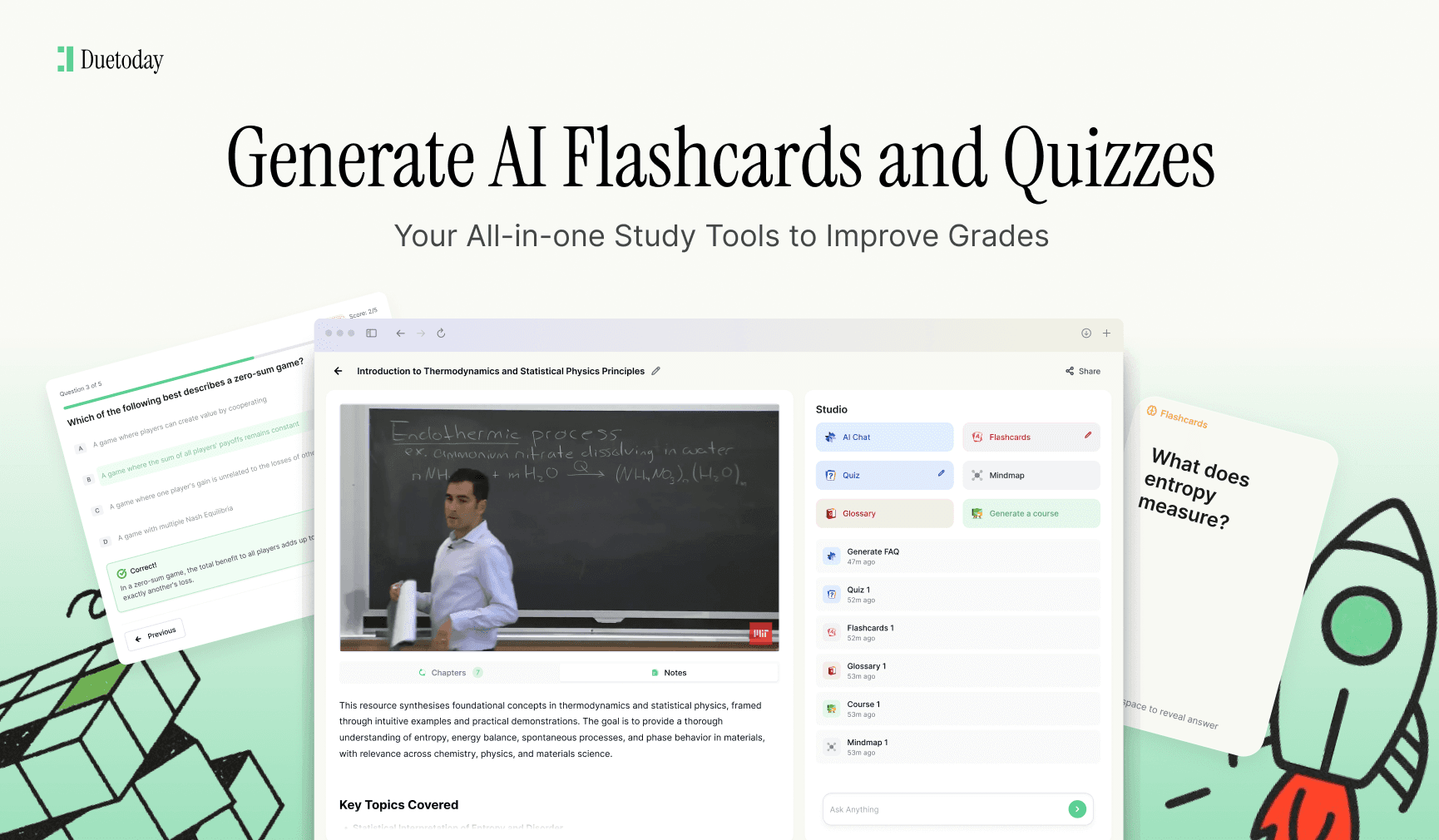
While technology is often the source of our distractions, it can also be our greatest ally when used correctly. This is where Duetoday AI comes in to change the game for university students. Duetoday is an AI-powered learning platform that turns your bloated lecture slides, messy PDFs, and scattered notes into concise summaries, flashcards, and quizzes automatically. instead of spending hours manually rewriting notes—a task that often leads to boredom and distraction—you can use Duetoday to act as your personal AI tutor. It helps you stay organized and retain information faster, allowing you to focus on the actual learning process rather than the tedious prep work.
Using a tool like this helps keep your mind engaged. When the material is structured and interactive, you are less likely to drift off. By automating the organizational side of studying, you free up mental energy to tackle the hard concepts, making your study sessions both shorter and more effective.
Master Your Digital Environment
Your phone is a casino in your pocket, designed to keep you scrolling. If you want to study seriously, you need to neutralize it. Putting your phone on 'Do Not Disturb' is a good start, but putting it in another room is better. If you need your computer to study, use browser extensions that block distracting websites like YouTube, Reddit, or X during your study hours. The less friction there is between you and your work, the better.
Try working in 'airplane mode' if you are reading offline documents. When you remove the possibility of a digital interruption, your brain eventually stops looking for them. It might feel uncomfortable for the first fifteen minutes, but once you break through that initial barrier, you will find yourself entering a flow state where time seems to disappear and productivity skyrockets.
Try the Pomodoro Technique and Its Variations
The human brain is not designed to focus on a single task for several hours without a break. Trying to force a marathon study session often leads to burnout and diminishing returns. Instead, use the Pomodoro Technique: work for 25 minutes, then take a 5-minute break. After four sessions, take a longer break of 15 to 30 minutes. This creates a sense of urgency during the work periods because you know a break is coming soon.
During your short breaks, avoid picking up your phone. Checking social media actually prevents your brain from resting. Instead, stand up, stretch, grab a glass of water, or look out a window. These 'low-dopamine' breaks allow your mind to reset so you can return to your notes with fresh energy. If 25 minutes feels too short, try the 50/10 rule. The key is to be consistent with the timing to build a rhythm that your brain can rely on.
Batch Your Tasks for Better Efficiency
Context switching is a major productivity killer. This happens when you jump from one type of task to another, such as writing a paragraph, then checking an email, then trying to solve a math problem. Every time you switch, there is a 'switching cost' where your brain takes several minutes to fully re-engage with the new task. To avoid this, batch similar tasks together.
Dedicate one block of time purely to reading, another to writing, and another to administrative tasks like organizing your calendar. When you stay in one mode of thinking, you build momentum. This momentum is what allows you to finish your work faster and with fewer errors. You will notice that by the time you reach the end of a batched session, you are much more efficient than you were at the beginning.
End Your Session with a Plan for Tomorrow
One of the biggest causes of internal distraction is 'Zeigarnik Effect,' which is the tendency to remember uncompleted tasks more than completed ones. This often manifests as late-night anxiety about what you still have to do. To stop this, finish every study session by writing down exactly what you will work on next time. Being specific is better than being general; instead of writing 'Study Biology,' write 'Complete Chapter 4 practice questions.'
When you have a clear roadmap for your next session, you don't waste time wondering where to start. You can sit down and dive straight into the work. This simple habit reduces the mental friction of starting and helps you maintain a consistent study routine throughout the semester. Focus is a muscle, and by following these steps, you are training that muscle to be stronger every single day.
What is the best way to stop checking my phone while studying?
The most effective method is physical distance. Put your phone in another room or inside a drawer. If you must have it near you, use apps that lock your phone for a set period, or use the 'Focus Mode' features now standard on most smartphones.
How long should I study before taking a break?
Most experts recommend the Pomodoro Technique, which is 25 minutes of work followed by a 5-minute break. However, if you find you are in a good flow, you can extend this to 50 minutes of work and a 10-minute break. Avoid studying for more than 90 minutes without a significant rest.
Can listening to music help with concentration?
It depends on the person and the task. Music with lyrics can often be distracting for reading or writing. However, lo-fi beats, classical music, or ambient white noise can help drown out background noise and create a consistent environment for focus.
Why do I feel more distracted when I study at night?
Decision fatigue and physical tiredness accumulate throughout the day, weakening your willpower. For most people, the morning or early afternoon is when cognitive control is at its highest. If you must study at night, try to do easier, more mechanical tasks.