How to Study from Textbooks Efficiently [Full Guide]

The Struggle with University Textbooks
Entering university often feels like being handed a mountain of reading material and told to climb it by tomorrow morning. Many students find themselves staring at a five-hundred-page textbook, wondering how on earth they are supposed to absorb all that information while still having a social life and passing their other classes. The truth is that reading a textbook is nothing like reading a novel. If you try to read it cover to cover, you will likely burn out before the first midterm. Efficiency is not about reading faster; it is about reading smarter and knowing which parts of the text actually matter for your exams.
Understanding how to navigate these academic giants is a skill that separates top-tier students from those who struggle. Instead of viewing the textbook as a chore, you should see it as a structured database where the most important information is often highlighted for you if you know where to look. By changing your mindset from passive reading to active searching, you can cut your study time in half while improving your memory retention. This guide will walk you through the proven methods to dismantle a textbook chapter and turn it into usable knowledge without the headache.
The SQ3R Method: A Classic for a Reason
One of the most effective frameworks for textbook study is the SQ3R method, which stands for Survey, Question, Read, Recite, and Review. Before you even dive into a paragraph, you should survey the chapter. Look at the headings, subheadings, bolded words, and the summary at the end. This gives your brain a map of what to expect. Next, turn those headings into questions. If a section is titled The Law of Supply and Demand, your question should be What is the law of supply and demand and how does it work? This simple shift turns your reading into a mission to find answers, making it far more likely that the information will stick.
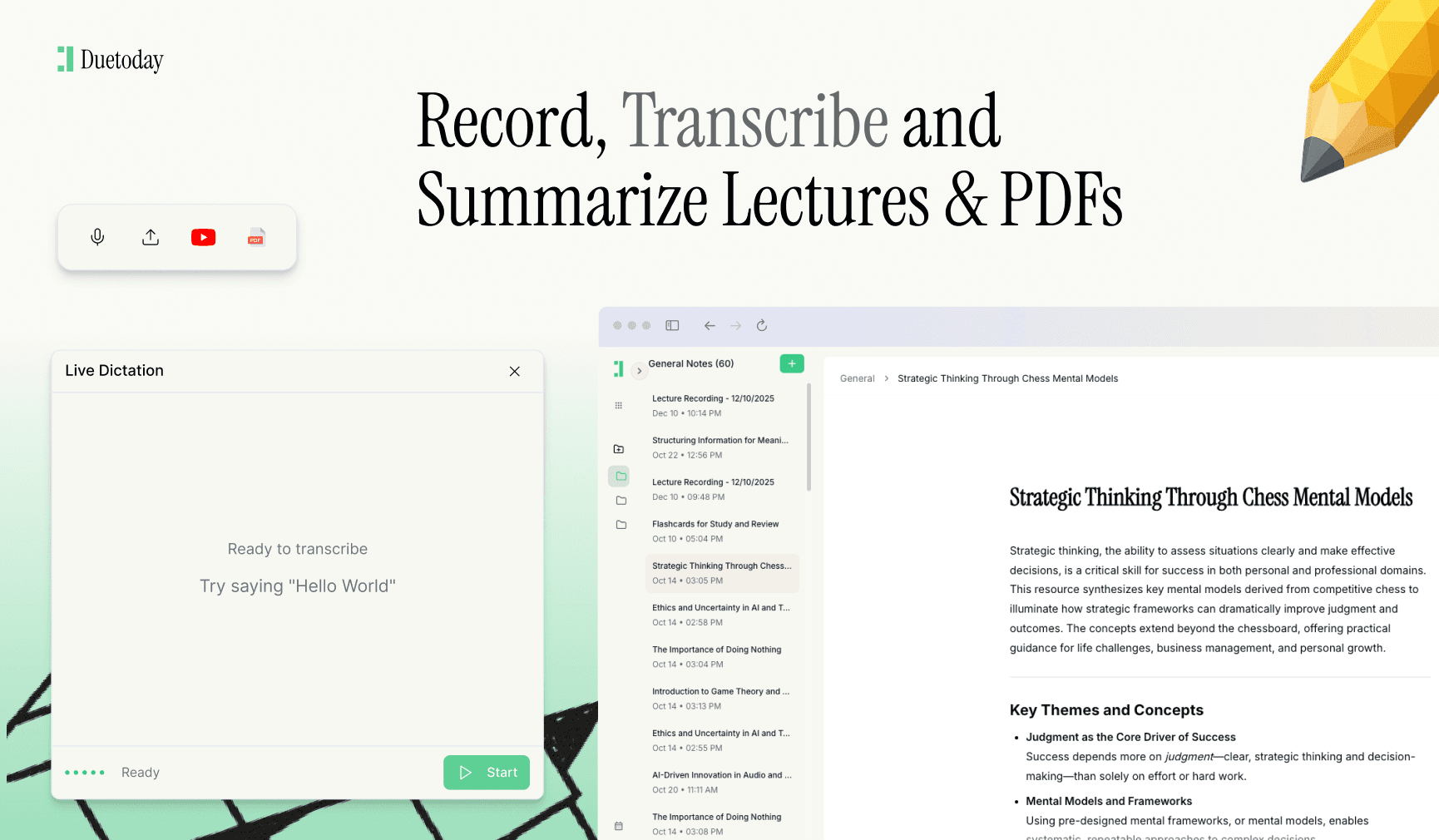
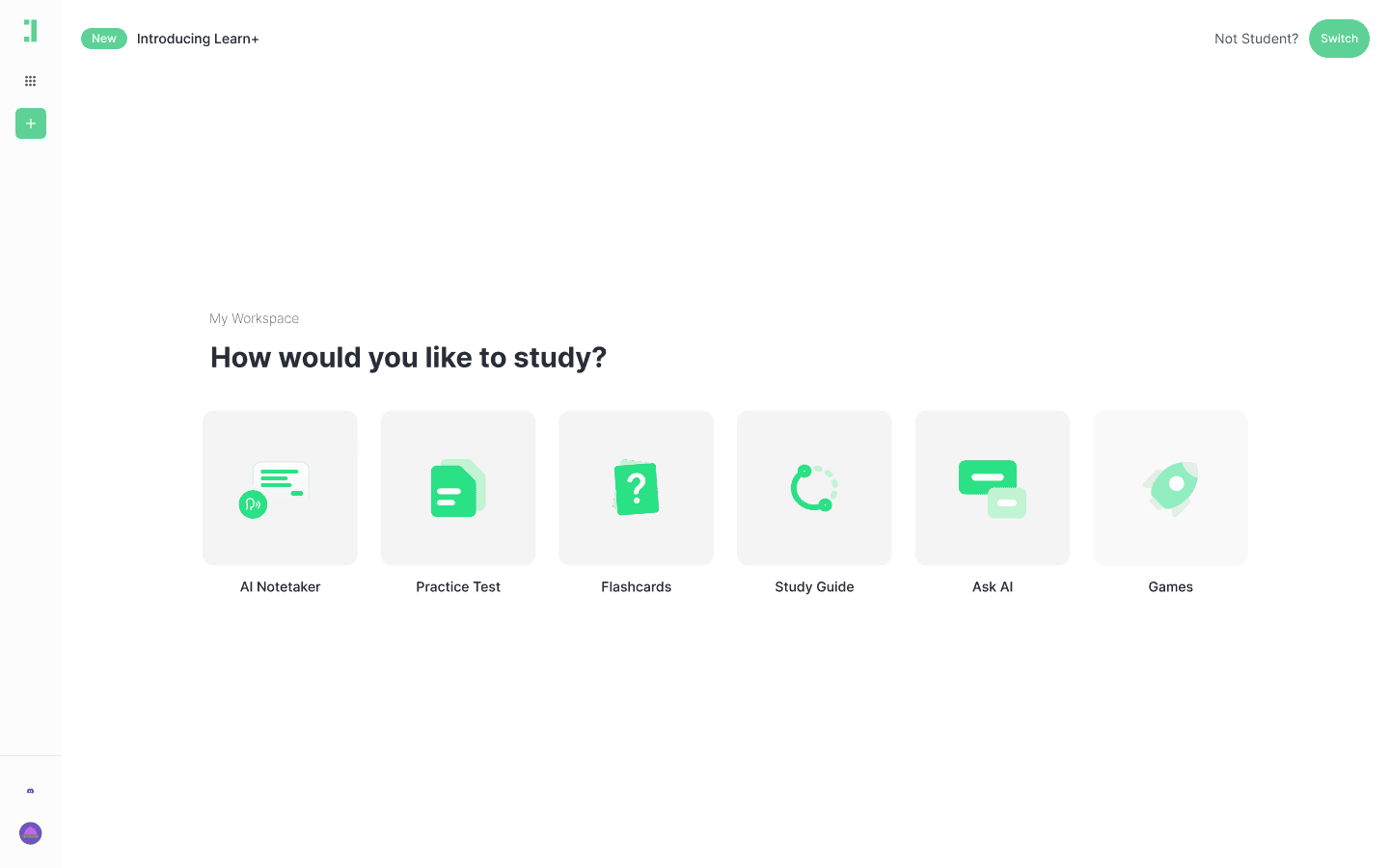
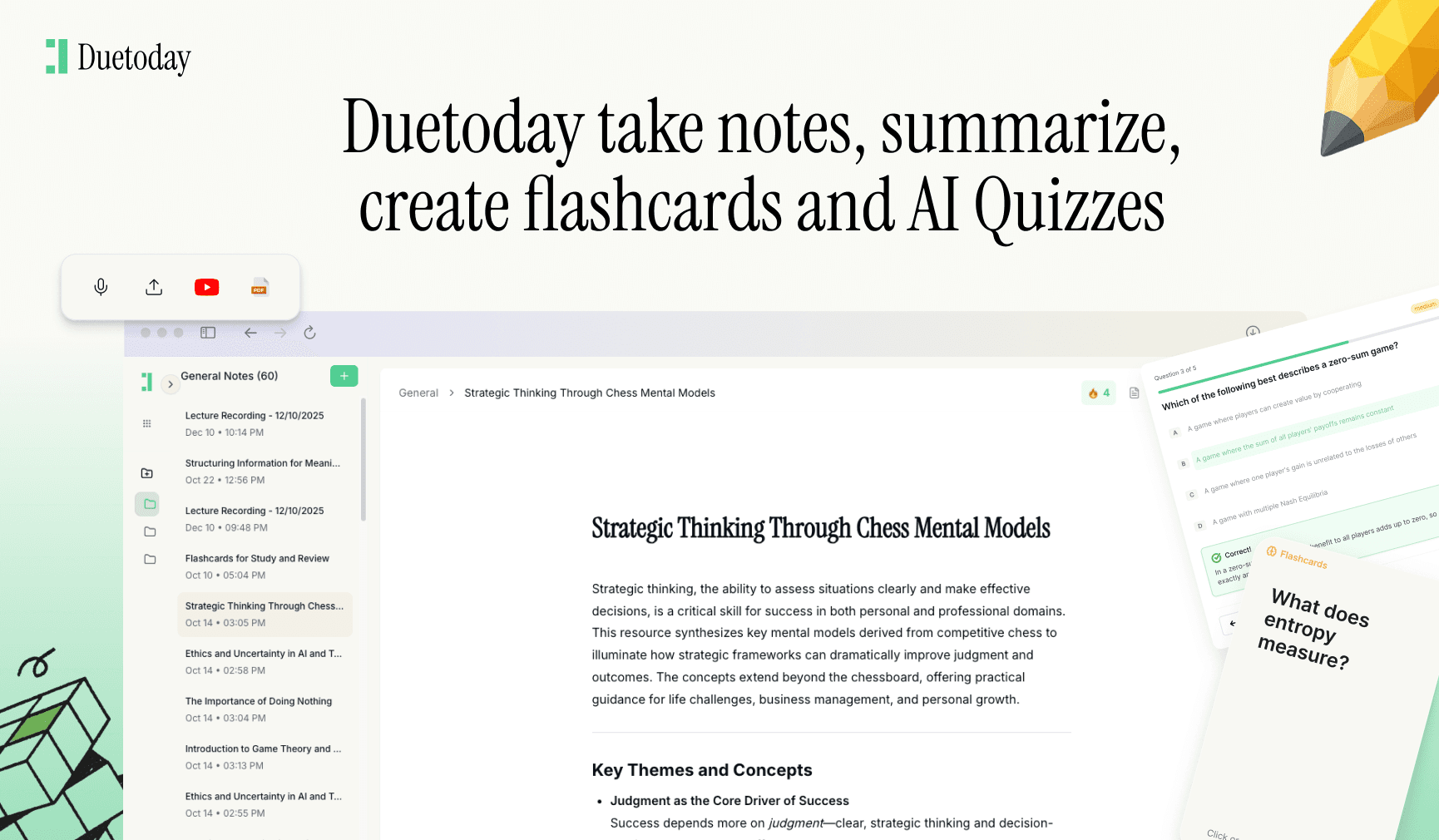
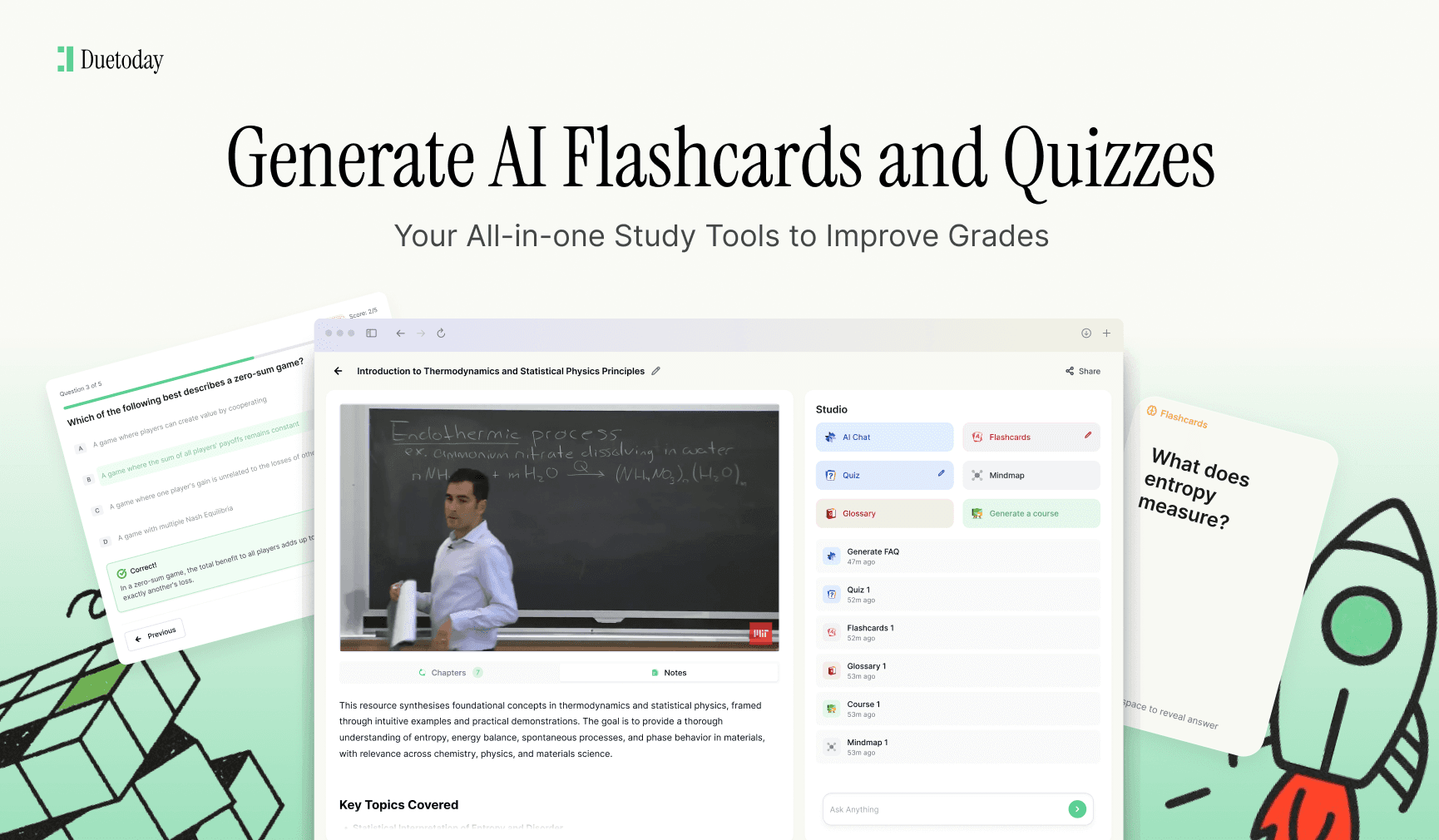
While traditional methods like SQ3R are powerful, modern students often need a little extra help to manage the sheer volume of information thrown at them. This is where Duetoday AI becomes an essential part of your study toolkit. Duetoday is an AI-powered learning platform that turns lectures, PDFs, and textbook notes into summaries, flashcards, quizzes, and structured study tools automatically. It acts like a personalized AI tutor, helping students learn faster, stay organized, and retain information without spending hours rewriting notes. Instead of getting bogged down in formatting your own flashcards, you can let the AI handle the organization while you focus on the actual learning.
Stop Highlighting Every Sentence
We have all seen that student whose textbook page is a solid block of neon yellow. Highlighting feels productive, but it is often just a form of passive recognition. When you highlight everything, nothing stands out. Instead, wait until you finish a section before you pick up your highlighter. Once you understand the main point, highlight only the key terms or the core thesis of the paragraph. This forces you to process the information first rather than just coloring in the lines. Your goal is to create a visual shorthand that you can quickly scan when you come back to review for finals weeks later.
Active Recall and the Power of Summarizing
After finishing a chapter, the most important thing you can do is close the book and try to explain what you just read out loud. This is known as active recall, and it is the single most effective way to strengthen neural pathways. If you cannot explain a concept simply, you do not understand it well enough yet. Take five minutes to write a summary in your own words. Avoid looking back at the book during this process. This mental effort is exactly what builds long-term memory. If you find gaps in your explanation, go back to the text and fill them in until the concept feels intuitive.
Another great trick is to use the margins of your textbook effectively. Instead of taking separate notes on a laptop, write small cues or questions in the margins of the pages. This keeps your focus on the text and creates an interactive experience. When you flip through the book later, these margin notes act as triggers for your memory. It transforms your textbook from a static object into a personalized study manual that reflects your unique thought process and areas of struggle.
Strategic Skimming: Knowing When to Skip
Not every word in a textbook is gold. Authors often include lengthy anecdotes, historical context, or complex examples that might not be necessary for your specific course objectives. Refer to your professor’s syllabus to see which topics they emphasize. If a topic is not on the syllabus and was not mentioned in class, you can likely skim that section of the textbook. Focus your energy on the introduction, the conclusion, and the first and last sentences of each paragraph. These usually contain the primary arguments, while the middle provides the supporting evidence that you may or may not need to memorize.
Finally, consistency is far more important than intensity. Trying to read four chapters in one sitting is a recipe for disaster. Your brain loses focus after about 25 to 30 minutes of deep technical reading. Use the Pomodoro technique: study for twenty-five minutes, take a five-minute break, and then jump back in. This keeps your mind fresh and prevents the dreaded textbook fatigue that leads to reading the same sentence over and over without understanding it. By breaking the task into manageable chunks, you maintain a high level of comprehension throughout the entire study session.
How do I stay focused while reading a boring textbook?
Focus usually drops because you are being passive. Use active reading techniques like jotting down questions or converting headings into quizzes to keep your brain engaged with the material.
Is it better to take notes by hand or on a computer?
Handwritten notes are generally better for memory retention because they force you to slow down and process the information. However, digital notes are easier to organize and search through later.
How many pages should I read in one sitting?
Instead of pages, aim for time blocks. Study for 30 minutes at a time. For most students, this equates to roughly 5-10 pages of dense academic material depending on the complexity of the subject matter.
Should I read the textbook before or after the lecture?
Ideally, do a quick survey of the chapter before the lecture so the terms sound familiar. Then, do the deep reading after the lecture to reinforce what the professor emphasized during class.