How to Study for Exams in One Week: The Ultimate Student Survival Guide
The Seven-Day Countdown: Can You Really Ace It?
We have all been there. You look at your calendar and realize that the massive exam you have been ignoring is exactly seven days away. Your heart sinks, your tea goes cold, and the panic starts to set in. But here is the good news: one week is actually a significant amount of time if you know how to use it strategically. You are not going to learn an entire semester's worth of content in exhaustive detail, but you can absolutely learn enough to perform well and secure the grade you need.
The secret to surviving a one-week cram session is moving away from passive reading and moving toward active recall. Most students spend their last few days highlighting textbooks and re-reading notes, which is one of the least effective ways to study. Instead, you need to treat your brain like an athlete training for a race. You need high-intensity sessions, strategic breaks, and the right tools to condense complex information into digestible chunks that your brain can actually store under pressure.
Day 1 and 2: The Audit and Organization Phase
Your first forty-eight hours are all about logistics. You cannot build a house without a foundation, and you cannot pass an exam without knowing exactly what is on the test. Start by gathering every single lecture slide, PDF, and scribbled note you have. Print out the syllabus and use it as a checklist. If it is on the syllabus, it is fair game for the exam. If it is not, ignore it for now.
Once you have your materials, break the content down into three categories: stuff you know well, stuff you kind of understand, and stuff that looks like a foreign language. Spend the bulk of your first two days focusing on the 'foreign language' category. This is when your brain is still fresh enough to tackle the hardest concepts. Do not get stuck on small details yet; focus on the 'big picture' frameworks of each module so you have a mental map of how the topics connect.
Maximizing Efficiency with Modern Tools
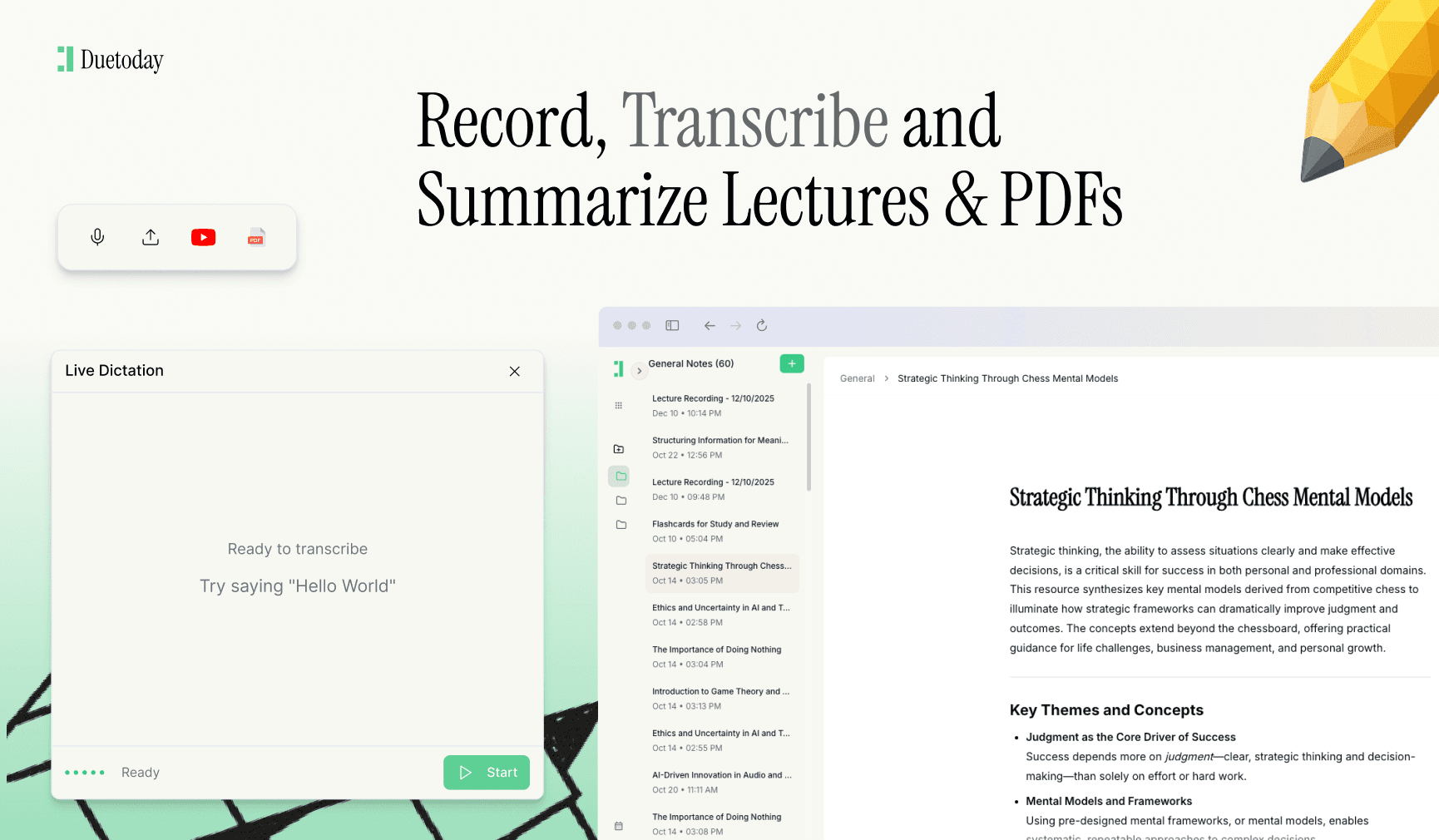
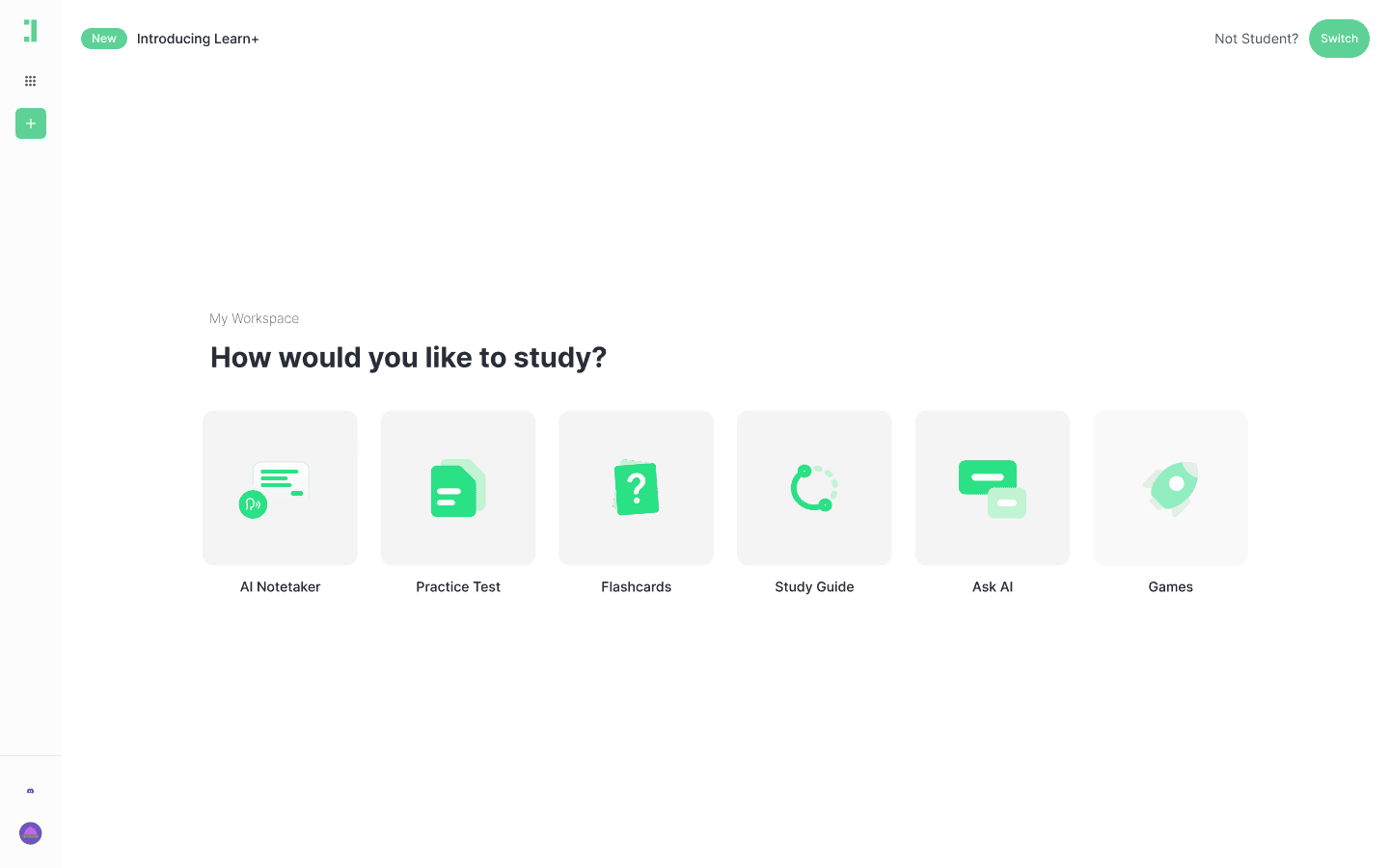
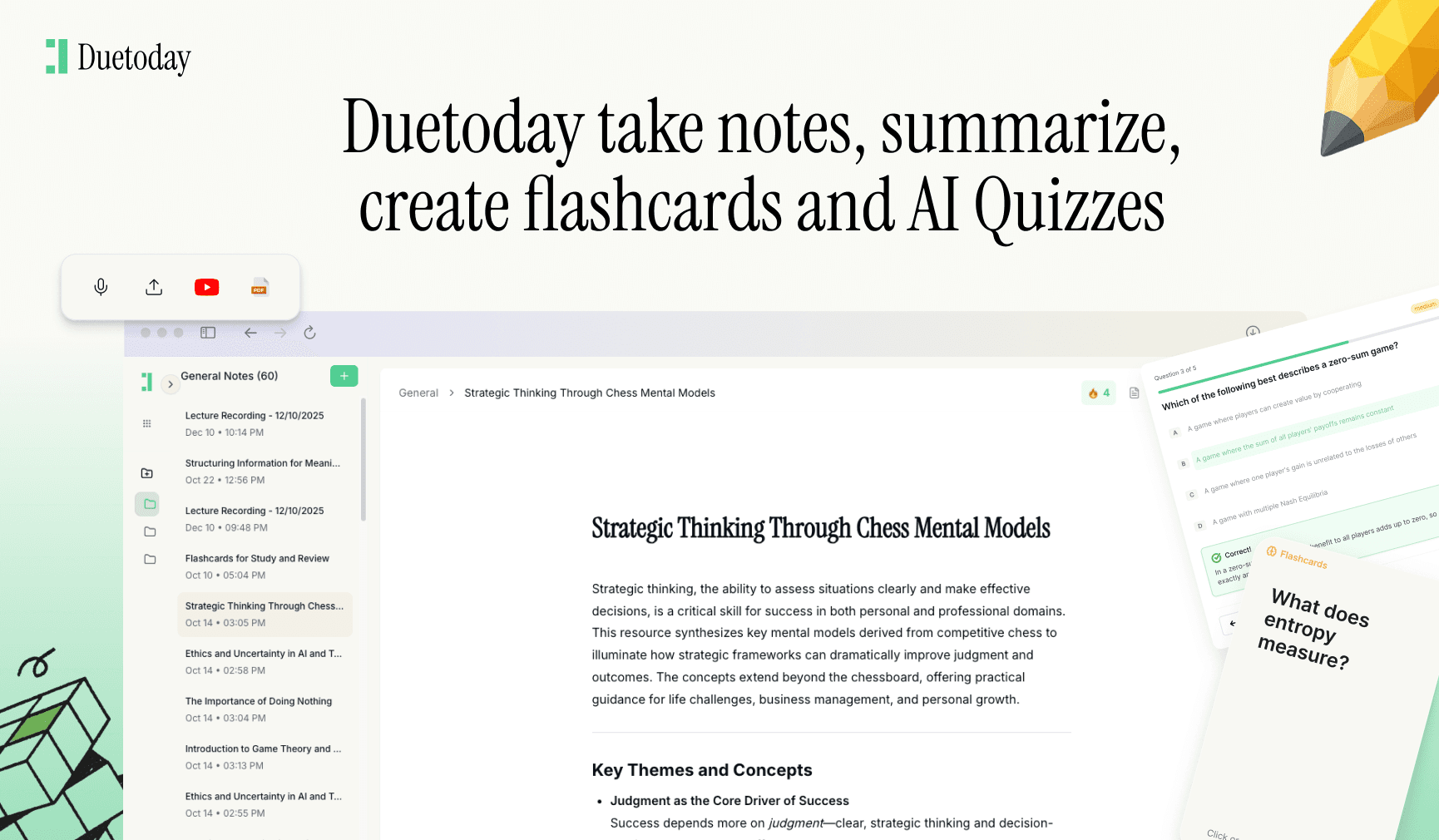
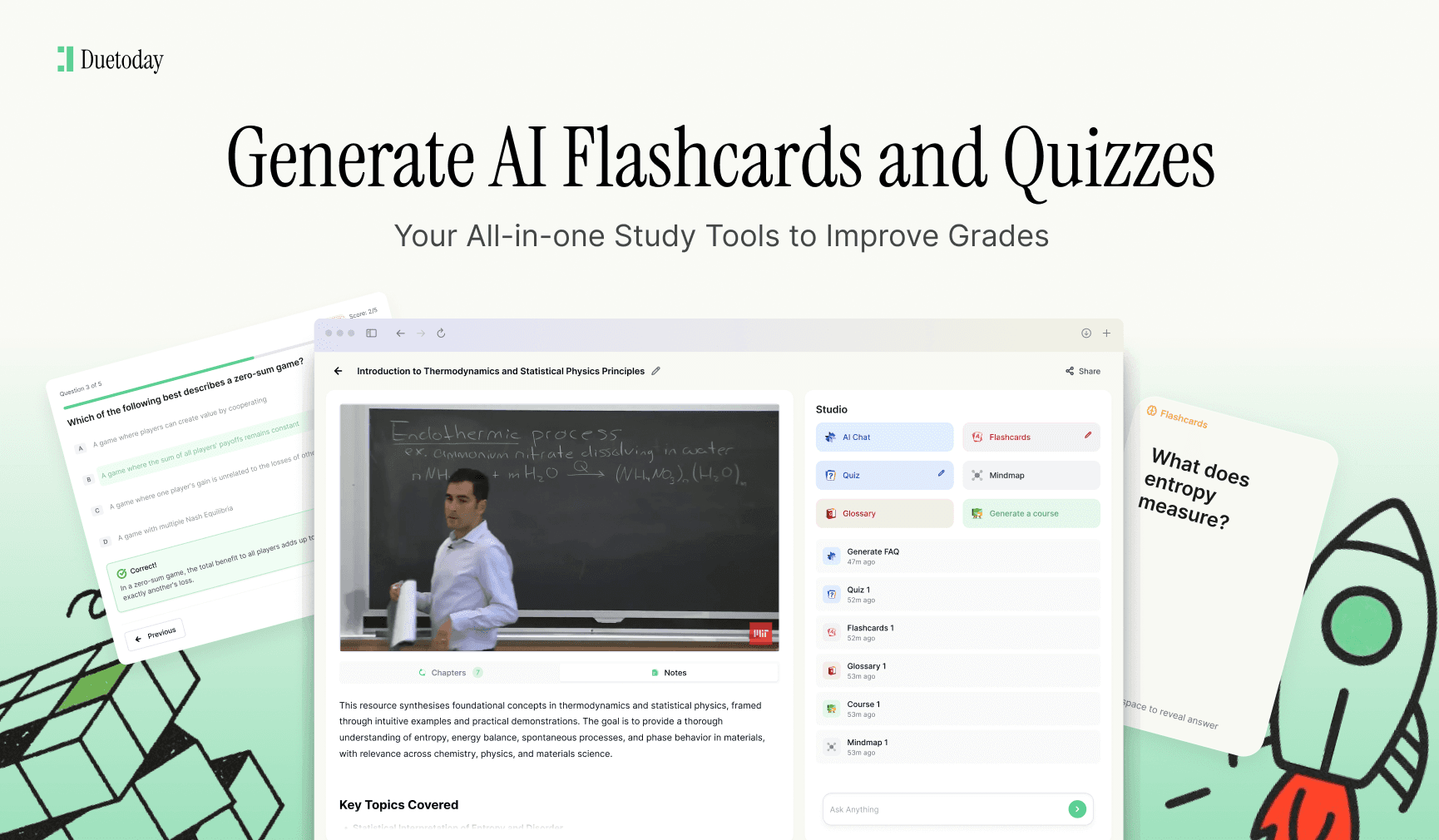
When you are on a tight one-week deadline, every minute spent organizing your notes is a minute stolen from actual learning. This is where Duetoday AI becomes a lifesaver for university students. Duetoday AI is an advanced learning platform that automatically converts your messy lecture recordings, lengthy PDFs, and scattered notes into concise summaries, flashcards, and quizzes. Instead of spending hours manually rewriting your study guides, you can upload your materials and let the AI act as your personal tutor, instantly structuring your study plan so you can focus entirely on retaining the information.
Day 3 and 4: Deep Diving and Active Recall
By day three, the initial shock should have worn off. Now it is time for the heavy lifting. This phase is about active recall. Active recall is the process of forcing your brain to retrieve information without looking at your notes. It feels harder and more frustrating than just reading, but that frustration is actually the feeling of your brain forming stronger neural connections. Use the flashcards generated by your study tools or try the Feynman Technique: explain a concept out loud as if you were teaching it to a ten-year-old.
Day 5 and 6: The Power of Practice Exams
You have learned the content, but can you apply it under pressure? Days five and six should be dedicated almost entirely to past papers and practice questions. University exams often follow recurring patterns. By doing past papers, you get used to the phrasing of questions and the specific way professors expect you to answer. Time yourself while doing these papers. If you find a gap in your knowledge, do not go back and read the whole chapter; just look up that specific answer and then move on to the next question.
It is also important during these middle days to manage your cognitive load. Working for twelve hours straight will lead to burnout. Try the Pomodoro technique: fifty minutes of intense focus followed by a ten-minute break. During those ten minutes, stay away from your phone. Walk around, stretch, or grab a snack. Giving your brain a brief window to reset prevents the 'mental fog' that usually ruins a cramming week.
Day 7: The Final Polish and Mental Prep
The final day is not for learning new things. If you do not know it by now, trying to cram it in twenty-four hours before the exam will only increase your anxiety and make you forget what you already know. Use the final day for light review. Go through your summaries one last time and focus on memorizing specific keywords, formulas, or dates that carry high marks. Ensure you have your exam bag packed, your student ID ready, and a clear plan for your morning routine.
Lastly, do not underestimate the power of sleep. Research consistently shows that sleep is when your brain consolidates memories. Pulling an all-nighter right before the exam is one of the biggest mistakes a student can make. You need a functioning prefrontal cortex to analyze questions and recall those facts you worked so hard to learn all week. Aim for at least seven hours of sleep so you walk into that hall with a sharp, capable mind.
Staying Positive Throughout the Week
A huge part of exam success is psychological. If you spend the week telling yourself you are going to fail, you are creating unnecessary stress that hinders memory. Remind yourself that you are capable of high-intensity work. One week is short, but it is enough time to make a massive difference in your grade. Stay hydrated, eat well, and keep your goals in sight. You have got this.
Can I really pass an exam with only one week of study?
Yes, while it is not ideal, most university courses can be condensed into a week of high-intensity study if you focus on the most important concepts and use active recall techniques instead of passive reading.
How many hours a day should I study during this week?
Aim for 6 to 8 hours of high-quality, focused study. Anything beyond that usually leads to diminishing returns and extreme fatigue.
Should I pull an all-nighter before the exam?
No. Lack of sleep severely impairs your ability to recall information and solve problems. You are better off knowing 80 percent of the material with a rested brain than 100 percent with a tired one.
What is the most effective study method for a short deadline?
Active recall combined with practice testing is the most effective. Testing yourself forces your brain to store information more permanently than simply reading notes.