How to Study Complex Subjects Easily: A Practical Guide for University Students

The Art of Simplifying the Impossible
University life often feels like a constant battle against massive textbooks and abstract theories that seem designed to confuse you. Whether you are tackling organic chemistry, quantum physics, or macroeconomics, the feeling of being overwhelmed is universal. The secret to mastering these subjects isn't necessarily working harder, but working smarter by breaking down the complexity into manageable pieces. Many students fall into the trap of rereading the same paragraph ten times, hoping it will eventually click. However, true understanding comes from active engagement and strategic deconstruction of the material.
Start with the First Principles Thinking
One of the most effective ways to approach a difficult topic is through first principles thinking. This method involves breaking down a concept to its basic building blocks and rebuilding your understanding from the ground up. Instead of memorizing formulas or definitions, ask yourself why a certain rule exists. When you understand the foundational 'why,' the complex 'how' becomes much easier to grasp. This approach prevents you from hitting a wall when a professor presents a problem in a way you haven't seen before, as you now have the tools to derive the answer yourself.
The Power of Analogy and Visualization
Complex subjects are often abstract, making them hard for our brains to process. To bridge this gap, try to relate new information to something you already understand. If you are studying computer networking, imagine the data packets as physical letters being delivered by a mailman. If you are learning about cell biology, think of the cell as a tiny factory with different departments. Visualization is another powerful tool; drawing rough diagrams or mind maps helps move the information from short-term memory into long-term understanding by creating spatial associations in your brain.
Leveraging Modern Study Tools
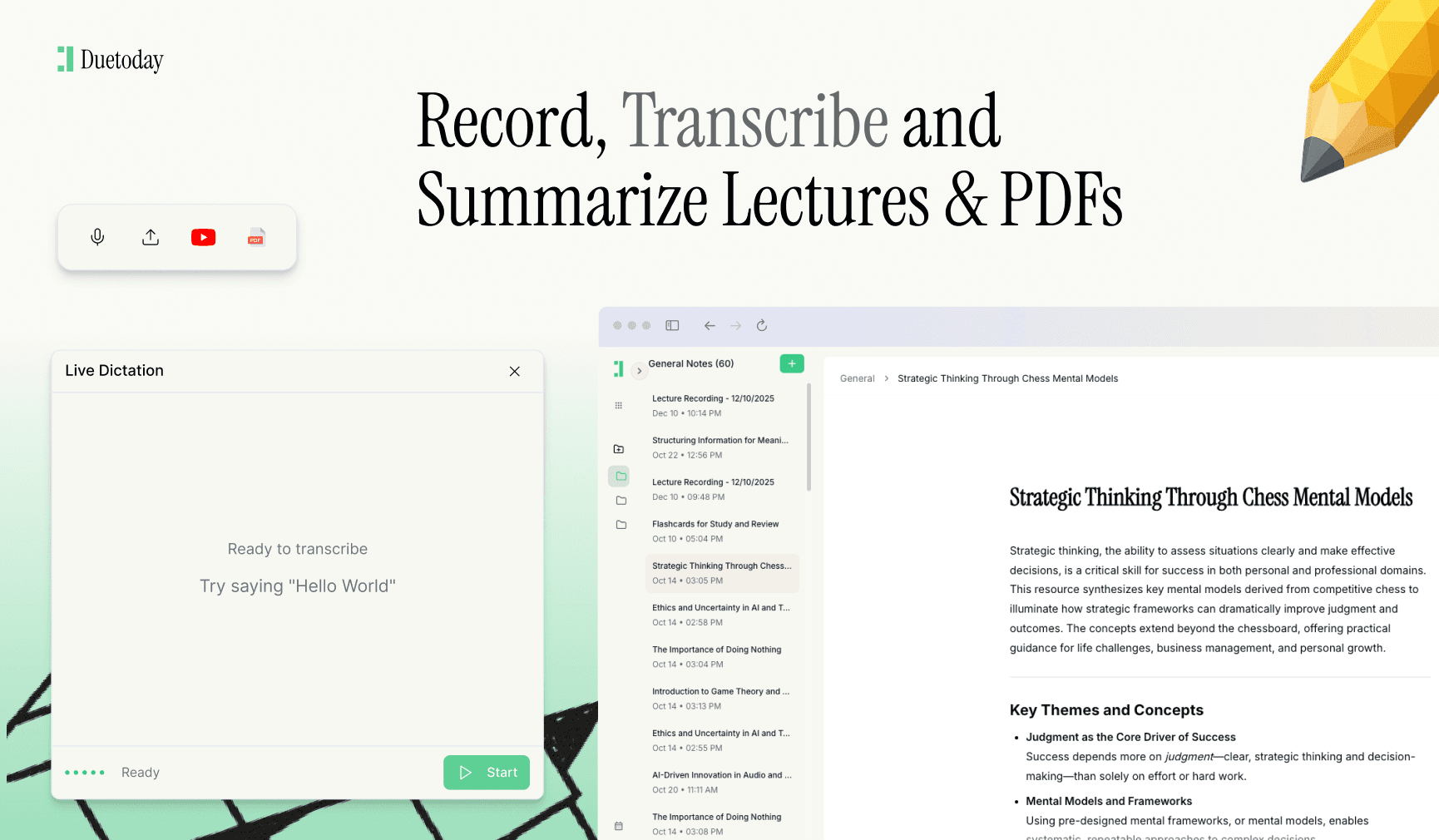
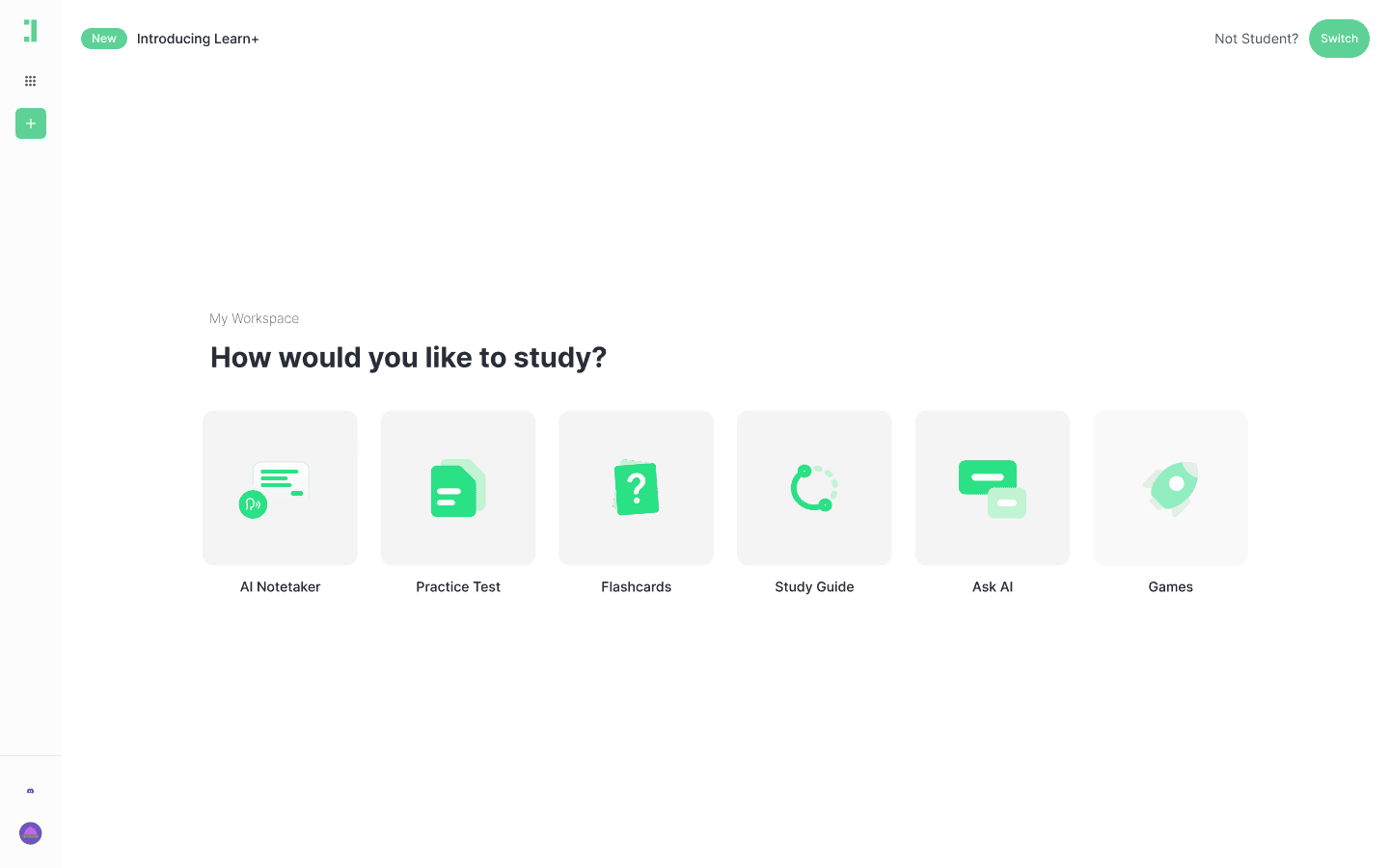
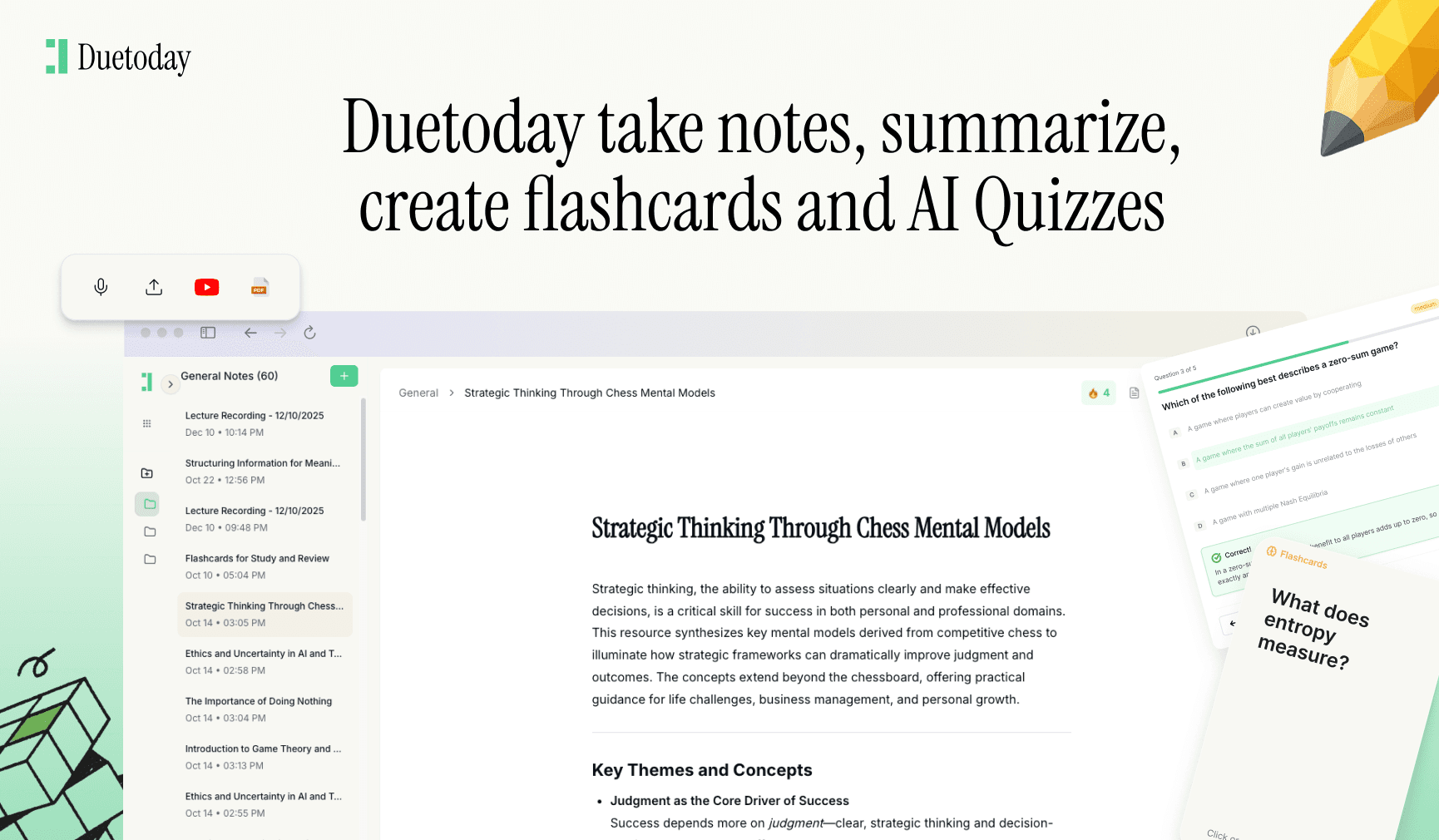
In today's fast-paced academic environment, you don't have to tackle hard subjects alone. Duetoday AI is an AI-powered learning platform that turns lectures, PDFs, and notes into summaries, flashcards, quizzes, and structured study tools automatically. It acts like a personalized AI tutor — helping students learn faster, stay organized, and retain information without spending hours rewriting notes. By letting technology handle the organization of your study materials, you can focus your mental energy on actually understanding the core concepts rather than getting bogged down in administrative tasks.
Active Recall vs. Passive Review
The biggest mistake students make is passive studying. Highlighting text and reading through notes gives you a false sense of security called the fluency illusion. You think you know the material because it looks familiar, but you cannot retrieve it during an exam. Active recall fixes this by forcing your brain to retrieve the information without looking at your notes. This process strengthens the neural pathways associated with that knowledge. Try closing your book and explaining a concept out loud as if you were teaching it to a friend; if you stumble, you know exactly where your knowledge gaps are.
Implementing the Feynman Technique
Named after the Nobel Prize-winning physicist Richard Feynman, this technique is the ultimate test of your understanding. To use it, choose a concept you are struggling with and pretend you are teaching it to a ten-year-old. Use simple language and avoid jargon. If you find yourself using complex terms to explain something, it usually means you don't fully understand it yet. Go back to the source material, refine your explanation, and repeat the process until the concept feels simple. This method forces you to confront your lack of clarity and ensures you aren't just memorizing words.
The Importance of Incremental Loading
You cannot master a difficult subject in a single eight-hour marathon session. The brain needs time to consolidate information through a process called spacing. Instead of cramming, break your study sessions into small, focused intervals spread over several days or weeks. This allows your subconscious mind to process the information, even when you aren't actively studying. Combine this with the Pomodoro technique—25 minutes of deep focus followed by a 5-minute break—to keep your brain fresh and prevent the mental burnout that often accompanies complex topics.
Building a Supportive Study Environment
Your environment plays a significant role in how well you absorb difficult information. Complex subjects require deep work, which means zero distractions. Put your phone in another room, use noise-canceling headphones, and ensure your workspace is organized. Additionally, don't be afraid to collaborate. While solo study is essential for deep focus, discussing high-level concepts with peers can provide new perspectives and clarify points that you might have missed. Group study sessions are most effective when everyone has already done the initial reading and comes prepared with specific questions.
Maintaining Mental Clarity
Finally, remember that your brain is a biological organ that requires proper maintenance. No amount of study hacks can compensate for a lack of sleep, poor nutrition, or high stress levels. Sleep is particularly crucial because it is during the REM cycle that your brain organizes and stores the information you learned during the day. If you pull an all-nighter, you are essentially preventing your brain from saving its work. Stay hydrated, take walks to clear your mind, and approach your studies with a growth mindset. Complexity is just a puzzle waiting to be solved, and with the right strategy, you are more than capable of solving it.

How do I stay motivated when a subject is boring?
Try to find a real-world application for what you are learning. Understanding how a dry theory affects your daily life or future career can make it more interesting. Break the task into very small goals to get frequent hits of dopamine from finishing them.
How long should I study each day?
Quality matters more than quantity. Aim for 2-4 hours of deep, focused work rather than 8 hours of distracted studying. Take regular breaks to keep your cognitive load manageable.
What is the best way to handle large textbooks?
Don't read from cover to cover. Look at the chapter summaries and learning objectives first. This gives your brain a framework to hang the details on as you dive into the specific sections.
Is it better to study alone or in a group?
Use a hybrid approach. Study alone to learn the basics and do deep work, then join a study group to test your knowledge and hear different explanations for difficult parts.