How to Study Biology
Understanding the Nature of Biology
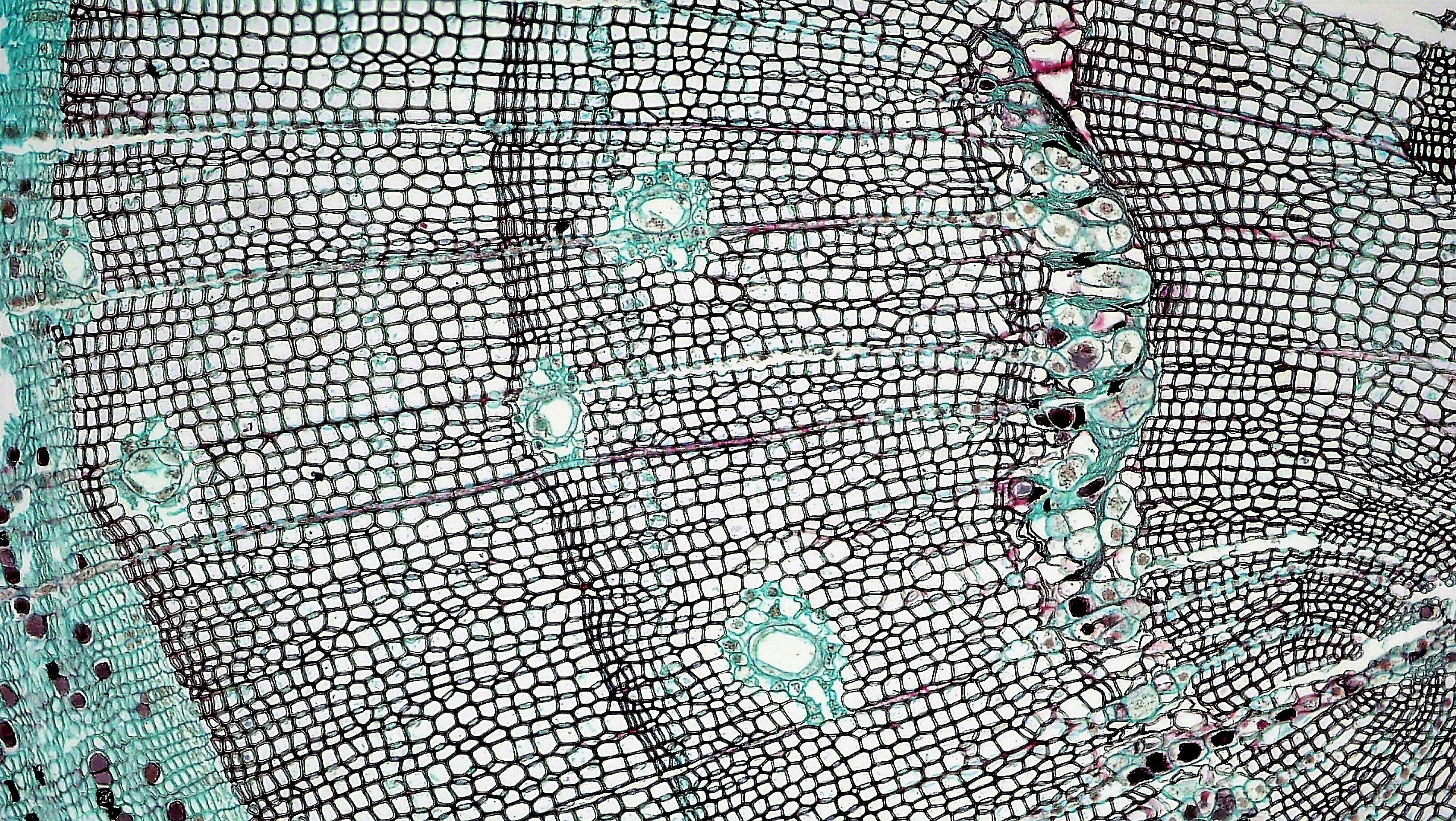
Biology is often perceived as a subject of pure memorization, but successful university students know it is actually about understanding complex systems and how they interconnect. Unlike subjects where you can cram formulas, biology requires a deep dive into processes, cycles, and microscopic interactions. To study biology effectively, you must shift your focus from simply reading textbooks to actively engaging with the material. This begins by recognizing that biology is hierarchical; you cannot understand how an organ system functions without first mastering cellular biology and biochemistry. By building a solid foundation at the microscopic level, the larger concepts become much easier to grasp.
One of the biggest hurdles students face is the sheer volume of terminology. Every chapter introduces a glossary of Latin-based words that can feel overwhelming. Instead of viewing these as individual words to memorize, try to learn the roots, prefixes, and suffixes. For example, knowing that 'hyper' means over and 'tonic' refers to tension helps you instantly understand hypertonic solutions without staring at a flashcard for ten minutes. This linguistic approach saves time and allows you to deduce meanings during exams when stress might cause a temporary memory lapse.
Mastering the Art of Active Recall
Passive reading is the enemy of retention. When you sit in a library highlighting your textbook, your brain is in a passive state, tricking you into feeling like you understand the material because it looks familiar. Genuine mastery comes from active recall. This involves closing your book and forcing your brain to retrieve information from scratch. You can do this by summarizing a lecture in your own words or drawing a biological pathway from memory. If you get stuck, that is exactly where the learning happens. Identifying those gaps in your knowledge is far more valuable than re-reading a chapter you already think you know.
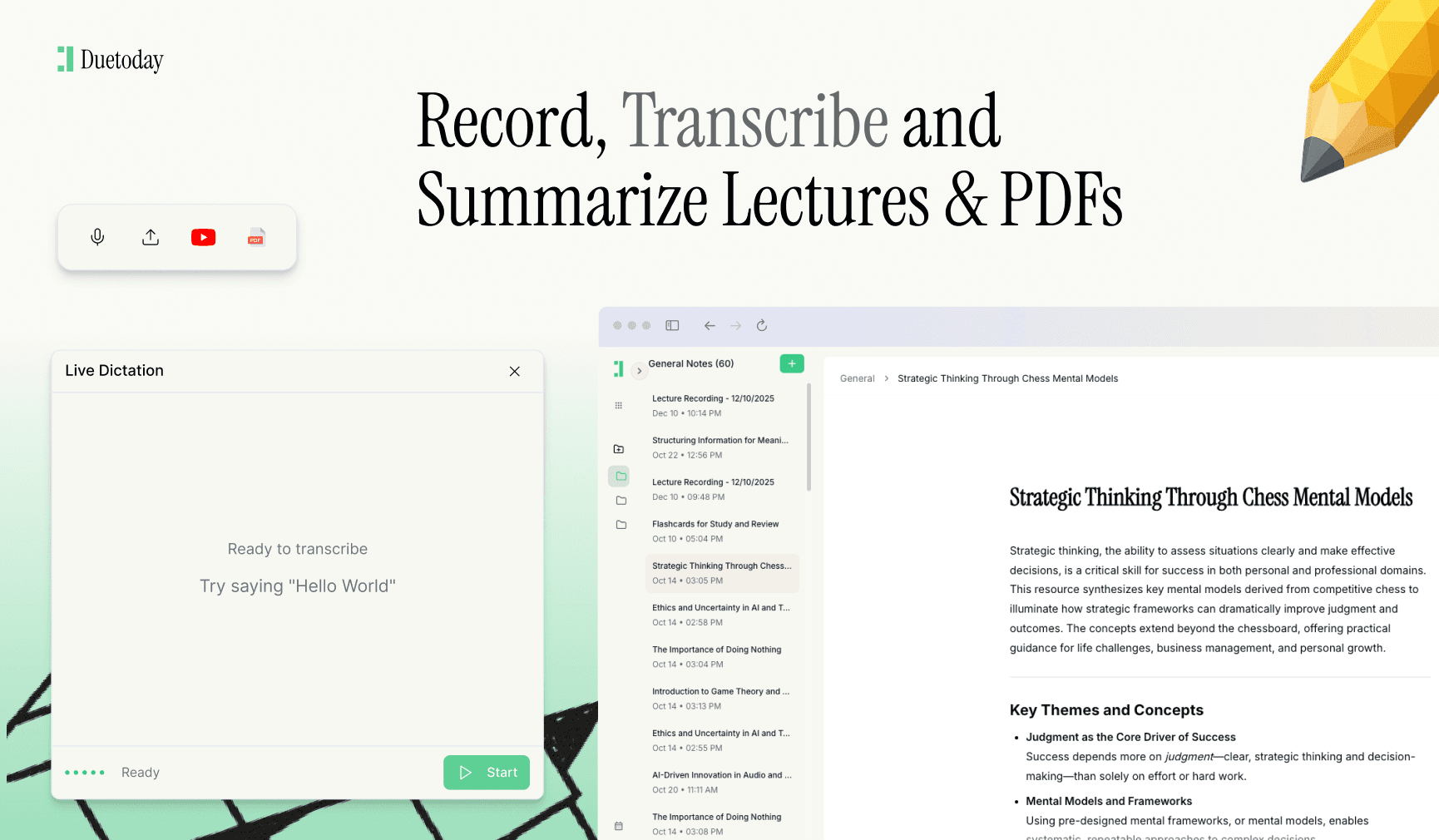
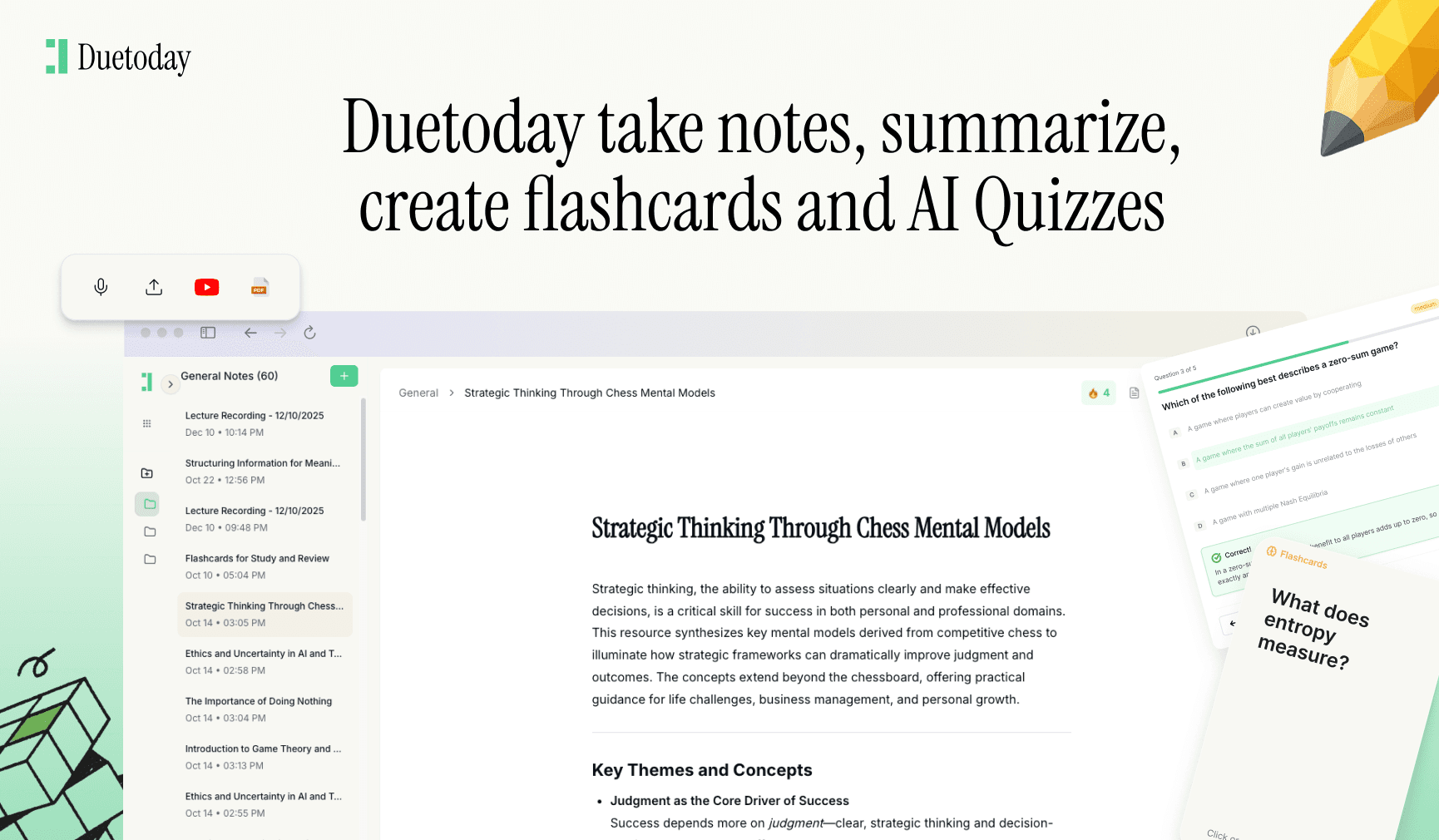
Incorporating technology can significantly streamline this process. Duetoday AI is an AI-powered learning platform that turns lectures, PDFs, and notes into summaries, flashcards, quizzes, and structured study tools automatically. It acts like a personalized AI tutor, helping students learn faster, stay organized, and retain information without spending hours rewriting notes. By letting an AI handle the organization of your study materials, you can spend more time on the actual cognitive work of understanding metabolic pathways or genetic inheritance patterns.
Visualizing Complex Systems
Biology is a visual science. Whether it is the Krebs cycle, the stages of mitosis, or the flow of blood through the heart, these processes are best understood through imagery. When you are studying, do not just look at the diagrams in your textbook; redraw them. Label the parts and explain the function of each component as you draw it. This multisensory approach—combining visual, tactile, and verbal learning—strengthens the neural pathways associated with that information. If you cannot draw a process from start to finish without looking at your notes, you do not fully understand it yet.
The Importance of Consistent Review
Spaced repetition is a scientifically proven method to move information from short-term to long-term memory. In biology, where information builds upon itself, you cannot afford to forget the basics from week one by the time you reach week ten. Set a schedule where you review your notes 24 hours after a lecture, then again one week later, and then once a month. This prevents the 'forgetting curve' from taking its toll. By the time finals roll around, you will find that you only need a quick refresher rather than an all-night intensive study session because the information is already deeply embedded in your mind.
Study groups can also be incredibly beneficial if handled correctly. Teaching a concept to a peer is one of the most effective ways to solidify your own understanding. If you can explain the mechanism of CRISPR or the nuances of natural selection to a classmate who is struggling, you have achieved a high level of mastery. However, ensure your group stays focused; use the time to quiz each other or work through past exam papers rather than just chatting about campus life. Collaboration allows you to see different perspectives on the same topic, which is particularly helpful in a field as diverse as biology.
Leveraging Primary Literature and Lab Work
For university students, textbooks are just the starting point. To truly excel, you should begin exploring primary literature and scientific journals. This helps you understand how biological theories are applied in real-world research. Furthermore, do not treat your lab sessions as a separate entity from your lectures. The lab is where the theoretical becomes practical. Pay close attention to the protocols and the 'why' behind each step. When you see DNA being extracted or watch cells under a microscope, the concepts from your lectures become tangible realities. This practical engagement is often what makes the information stick during high-pressure exams.
Preparing for Exams with Strategy
When exam season approaches, shift your focus to practice questions. Biology exams often involve situational problems where you must apply a concept to a new scenario. Simply knowing the definition of an enzyme won't help if the question asks you to predict how a specific inhibitor will affect a reaction under certain pH conditions. Use past papers to familiarize yourself with the question style of your professors. Look for themes in what they emphasize. Are they big on diagrams? Do they love multiple-choice questions about genetics? Tailor your final week of study to match the format of the test you are about to take.

How do I memorize all the biology terms?
Focus on learning the Greek and Latin roots of phrases rather than whole words. Use active recall and digital tools to quiz yourself daily.
Is biology harder than chemistry or physics?
It depends on your strengths, but biology requires more conceptual synthesis and memorization of systems compared to the math-heavy nature of physics.
Should I read the textbook before or after the lecture?
Skimming the chapter before the lecture helps you familiarize yourself with key terms, making the professor's explanation easier to follow in real-time.
How can I draw better diagrams if I am not artistic?
Don't worry about art. Use simple shapes and clear labels. The goal is to represent the flow of information and the relationship between parts, not to create a masterpiece.