The Ultimate Guide on How to Study and Sleep Properly

The Science of Sleep and Academic Success
For most university students, the relationship between studying and sleeping feels like a constant tug-of-war. You often feel that if you sleep more, you are losing valuable time to memorize chapters, but if you study more, your brain feels like mush the next morning. Science tells us that sleep is not just a period of rest; it is the time when your brain processes information and moves it from short-term to long-term memory. Without adequate sleep, the hours you spend staring at your textbook are largely wasted because your brain cannot effectively store that data.
Understanding the sleep cycle is the first step toward studying smarter. When you sleep, your brain goes through different stages, including REM sleep, which is critical for cognitive functions and emotional regulation. If you pull an all-nighter, you skip these vital stages. This leads to a decrease in focus, slower reaction times, and a higher likelihood of making simple mistakes during an exam. The goal is to reach a harmony where your study hours are high-quality and your sleep hours are restorative.
Creating a Sustainable Study Schedule
To study and sleep properly, you need to move away from the 'cramming' mindset. Cramming creates a spike in stress hormones like cortisol, which actively interferes with sleep quality. Instead, try the method of spaced repetition. This involves reviewing material over several days rather than all at once. By doing this, you reduce the pressure on your brain during the night before an exam, allowing you to go to bed at a reasonable hour without feeling guilty.
Effective scheduling also means identifying your peak productivity hours. Some students are natural night owls, while others are early birds. If you know you work best in the morning, do not force yourself to stay up until 2 AM just because your friends are doing it. Align your hardest tasks with your internal clock. When you work with your body instead of against it, you finish your tasks faster, leaving more room for a full night of rest.
The Role of Duetoday AI in Your Routine
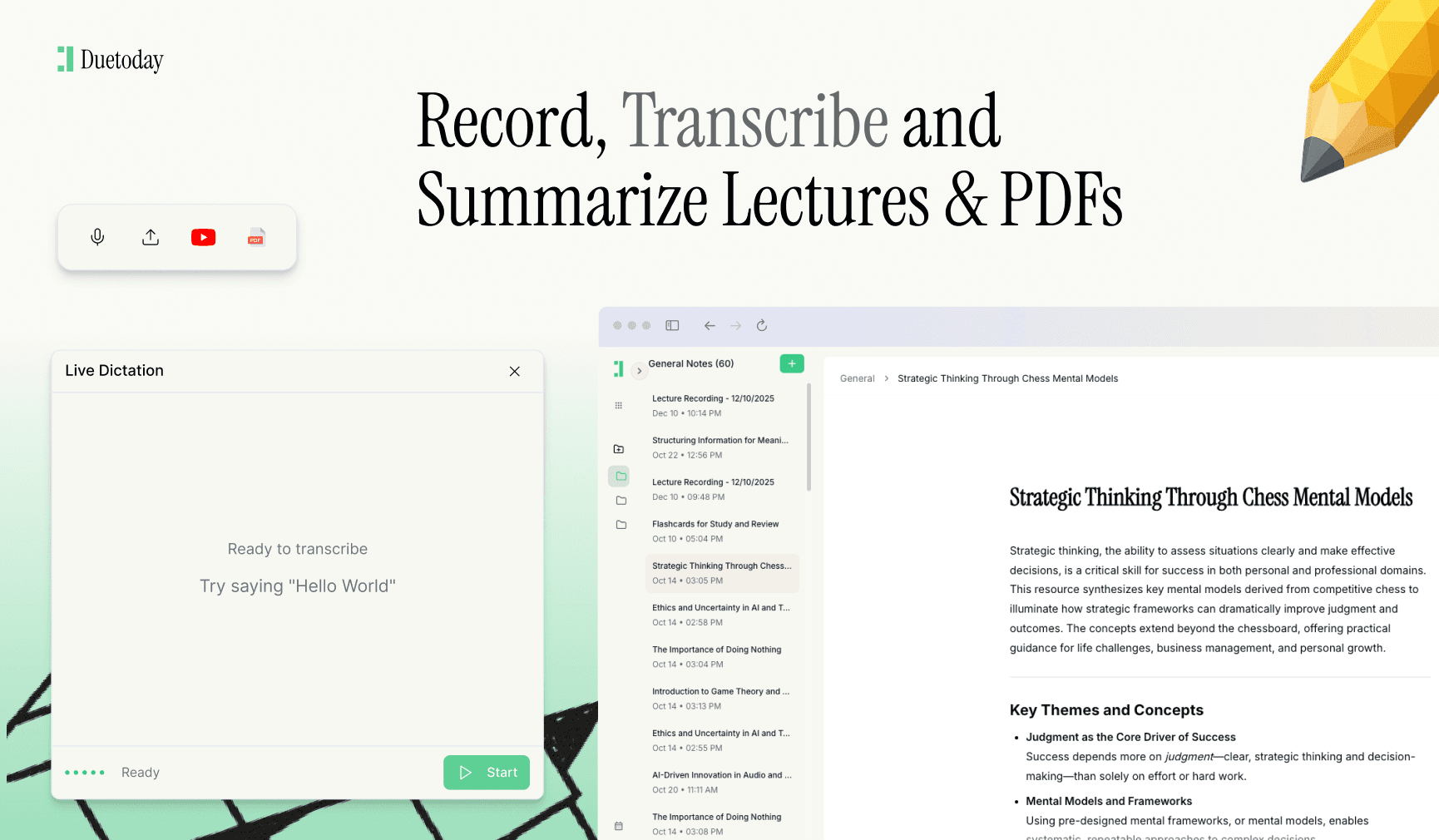
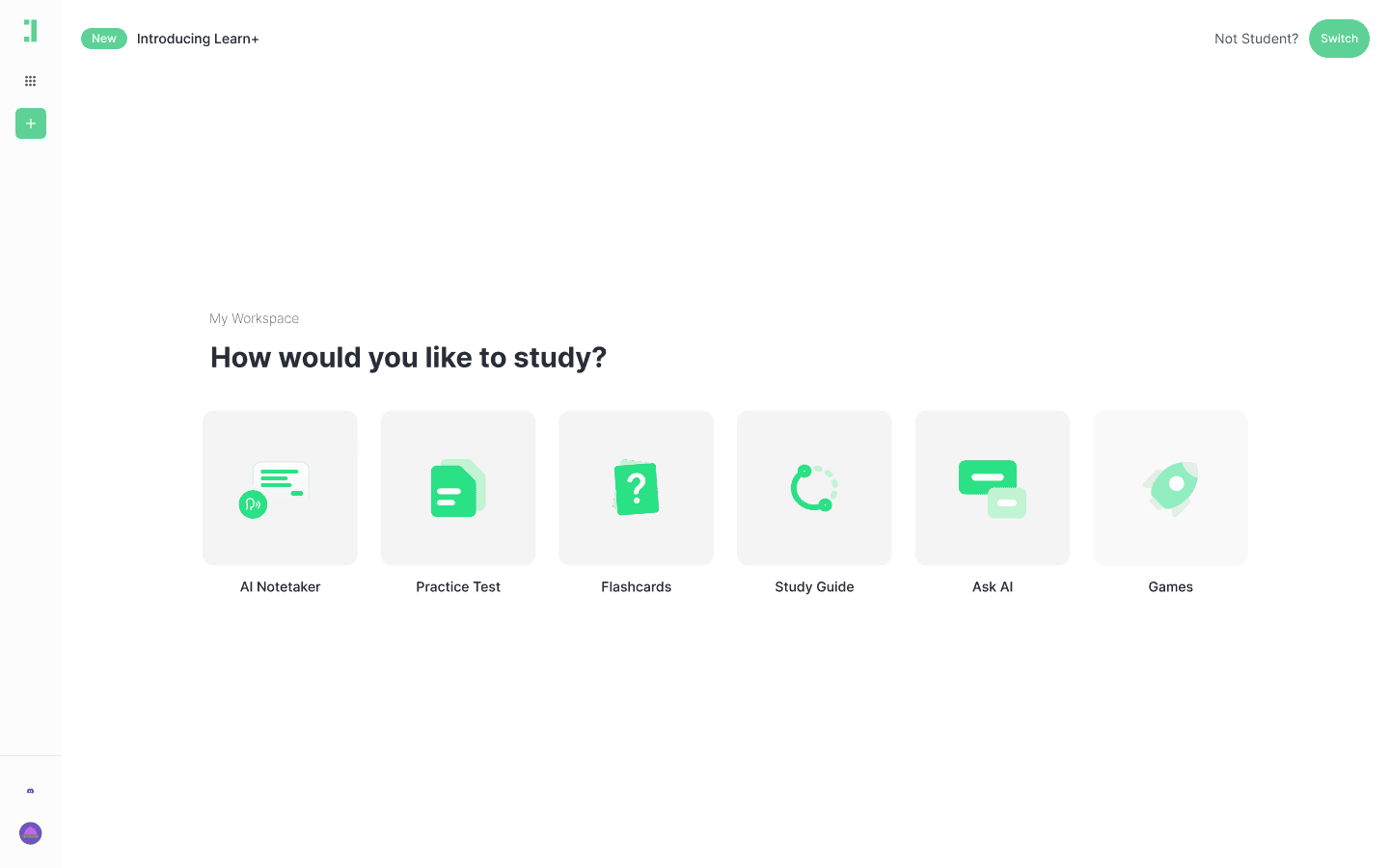
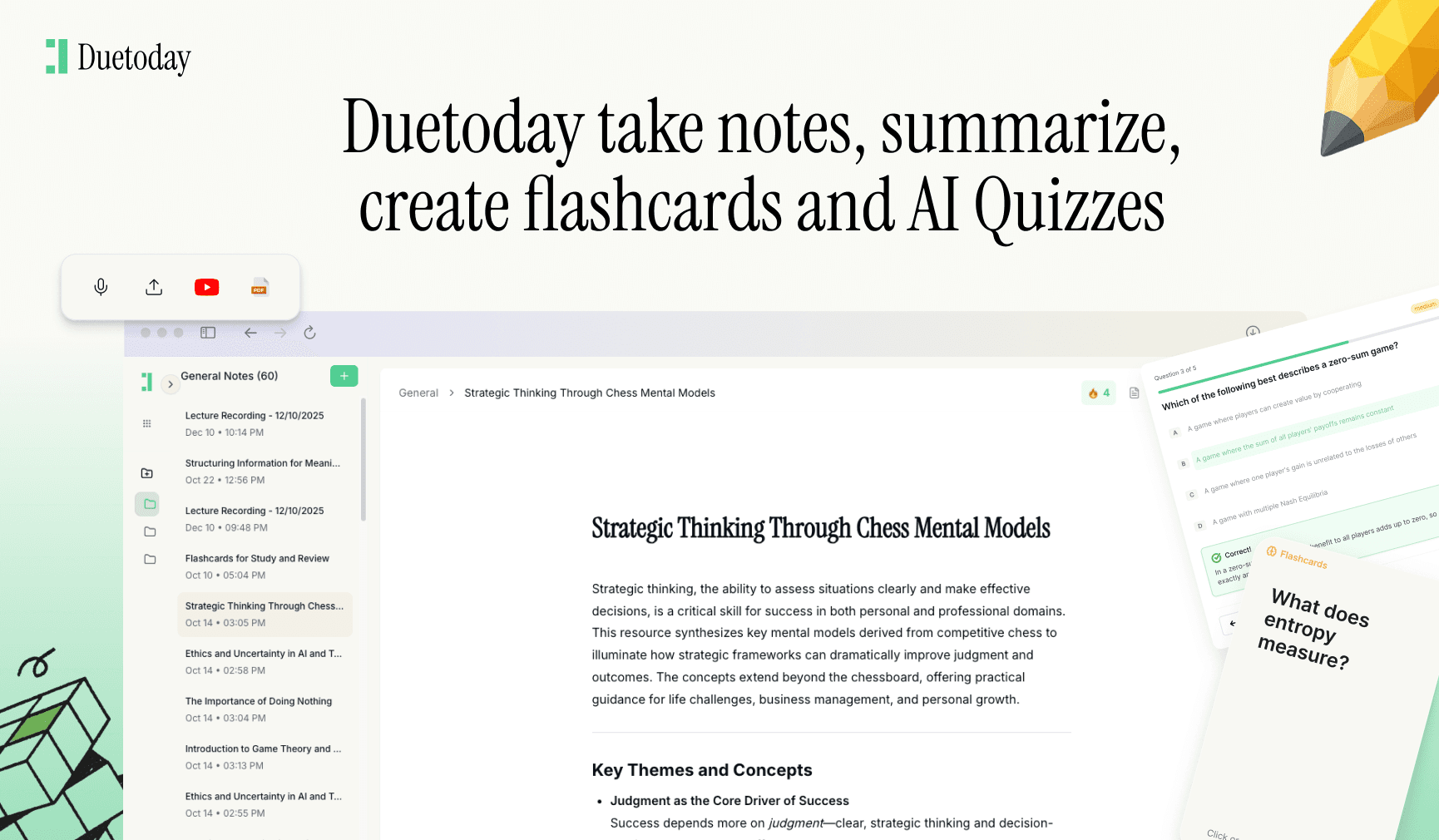
One of the biggest reasons students sacrifice sleep is the overwhelming amount of material to summarize and organize. This is where Duetoday AI becomes a game-changer for your schedule. Duetoday is an AI-powered learning platform that turns lectures, PDFs, and notes into summaries, flashcards, quizzes, and structured study tools automatically. \
It acts like a personalized AI tutor—helping students learn faster, stay organized, and retain information without spending hours rewriting notes. By automating the tedious parts of studying, you save hours of manual work, directly translating to more time for sleep without sacrificing your grades.
Optimizing Your Sleep Environment
If you only have six or seven hours to sleep, you need to make sure those hours are high-quality. Your bedroom should be a sanctuary for rest, not a second library. Avoid doing intense work or taking practice tests while sitting on your bed. This confuses your brain, making it associate your sleeping area with stress and alertness. If possible, keep your desk and bed separate so that when your head hits the pillow, your brain knows it is time to wind down.
Temperature and lighting also play massive roles. A slightly cool room is generally better for deep sleep. More importantly, you must manage your exposure to blue light. The screens of our laptops and phones mimic daylight, which tricks the brain into stopping the production of melatonin. Try to put away electronic devices at least thirty minutes before you intend to sleep. Use this time to read a physical book or listen to calming music to signal to your nervous system that the day is over.
Nutrition and Its Impact on Learning
What you eat and drink significantly dictates how well you study and how quickly you fall asleep. Caffeine is a useful tool for late-afternoon focus, but its effects can last for up to eight hours. If you drink a large coffee at 6 PM to get through a study session, don't be surprised when you are still staring at the ceiling at 1 AM. Try to switch to herbal teas or water in the evening to keep your hydration up without the jittery side effects.
Heavy meals right before bed can also lead to restless nights as your body works hard to digest food while trying to rest. Opt for light snacks that contain tryptophan or magnesium, like a banana or a small serving of nuts, if you feel hungry late at night. Maintaining a stable blood sugar level ensures that you don't wake up in the middle of the night feeling hungry or experiencing an energy crash during your morning lecture.
The Power of Power Naps
When you have a long day of classes and library sessions, a strategic nap can be a secret weapon. However, there is an art to the nap. A 20-minute power nap can provide a significant boost to alertness and mood without leaving you feeling groggy. Avoid napping for longer than 30 minutes or napping too late in the afternoon, as this will surely interfere with your ability to fall asleep at night. Think of a nap as a quick recharge for your brain's battery, not a replacement for a full night of rest.

Is it better to sleep or study late before an exam?
It is almost always better to sleep. Research shows that sleep deprivation leads to poor memory recall and lower concentration.
How many hours of sleep do university students really need?
While individual needs vary, most students require between 7 to 9 hours to function at their cognitive peak.
Can I catch up on sleep during the weekend?
While sleeping in on weekends helps, it does not fully compensate for a chronic lack of sleep during the week. Consistency is key for long-term academic health.