How to Start Freelancing as a College Student
Career + Future
Nov 26, 2025

College can feel like a constant balance between studying, surviving, and trying to make a bit of extra money on the side. That’s why freelancing has exploded among students in the last few years. On Reddit, threads like “Should I freelance while in school?” or “Is freelancing realistic for a student?” appear almost weekly because students love the idea of earning money without clocking in somewhere, having a boss breathing down their neck, or needing long work shifts at random hours.
Freelancing gives you freedom. The freedom to work from your dorm bed, coffee shop, library table, or even from your hometown during holidays. It also gives you real-world experience, portfolio pieces, and a sense of financial independence that feels extremely empowering while you’re still navigating university life. But the biggest question remains: where do you start?
This guide breaks down everything you need to know about freelancing as a college student, from building your skills to finding clients, setting boundaries, managing time, and avoiding the common mistakes that derail beginners. Whether you want extra income, a future career path, or simply a taste of independence, freelancing can be a game changer.
Why Freelancing Works So Well for Students
Freelancing fits naturally into a student lifestyle. Most gigs allow you to work around your schedule instead of committing to fixed shifts like in campus jobs or retail. You can choose to work more during low-exam weeks and slow down during midterms or finals. That flexibility makes freelancing an ideal side income stream without burning out.
Many skills you already have can be turned into paid services. If you can edit essays, design posters for clubs, code simple websites, manage social media, translate languages, or even tutor subjects you already understand, there is someone willing to pay for those skills. The barrier to entry is lower than ever because most freelancing platforms handle payments, messaging, and client communication for you.
The best part is that freelancing gives you something incredibly valuable for your future career: a portfolio. Even if you never plan to become a full-time freelancer, your early projects become proof of initiative, skill, and practical experience. Employers appreciate students who take action outside the classroom.
Step 1: Identify the Skills You Can Offer
You don’t need to be an expert. You just need something you’re good at or something you’re willing to improve quickly.
Common freelance skill categories for students include writing, editing, digital design, translation, social media management, video editing, virtual assistance, tutoring, coding, and data entry. Many of these are skills students naturally develop through assignments, clubs, or personal interests.
You can also turn hobbies into paid work. For example, if you enjoy taking photos, you can offer product photography for small local businesses. If you’re good at Canva, you can design Instagram posts for university clubs or small shops. Even note-taking or creating study guides can be monetised as long as you're doing it ethically.
Take 20 minutes to brainstorm everything you can do well. Then choose one or two skills to start with. You can always expand later.
Step 2: Build Simple Portfolio Samples
Before you join freelancing platforms, create a small portfolio. Clients want to see examples of what you can do, even if you haven’t been paid yet.
If you’re a writer, include two articles or blog posts on topics that interest you. If you’re a designer, make three mock designs. If you code, create small projects or sample pages. If you’re a video editor, cut together a simple montage to show your style.
These don’t have to be perfect or complicated. They just have to prove your ability.
Upload your work to platforms like Notion, Google Drive, Behance, GitHub, or even a simple PDF. A clean and organised portfolio instantly increases your chances of getting hired.
Step 3: Choose the Right Freelancing Platform
Most student freelancers start on one of these platforms:
Upwork: Best for long-term clients, skilled work, and higher-paying gigs. You create a profile, bid on jobs, and grow your rating.
Fiverr: Great for beginners. You create fixed services called gigs, such as “I will edit your video” or “I will design your poster,” and clients buy directly.
Freelancer.com: Not as popular but still offers plenty of opportunities for small tasks.
LinkedIn and Instagram: Some students find clients by posting their work, connecting with small businesses, or offering services to local university communities.
When starting out, choose one platform so you can focus your energy instead of spreading yourself thin. Once you get experience, you can branch out to more.
Step 4: Start with Small, Clear Offers
As a beginner, simplicity wins. Instead of offering ten different services, start with one clear offer. Short, simple gigs get more clicks because clients know exactly what they’re buying.
For example:
“I will edit five minutes of video.”
“I will design a clean Instagram post.”
“I will write a 500-word blog paragraph.”
“I will translate a one-page document.”
Simple offers let you build your rating faster. Once you complete your first few orders and collect reviews, you can increase your pricing and expand your services.
Step 5: Manage Your Time Carefully
This is where most student freelancers struggle. The freedom of freelancing feels great, but without discipline, it’s easy to fall behind either in school or with clients.
Create a weekly schedule that includes:
Lecture hours
Study blocks
Freelancing hours
Free time to recharge
Use simple tools like Google Calendar or Notion. Always treat client deadlines seriously. Deliver early whenever possible because reliability is the biggest reason clients return.
If you feel overwhelmed, adjust your availability instead of ghosting clients or accepting too many requests. Managing expectations is part of becoming a responsible freelancer.
Step 6: Learn to Communicate Professionally
When clients hire students, their biggest concern is professionalism. Clear communication helps build trust instantly.
Respond politely and on time. Ask clarifying questions if something is unclear. Send drafts before the final version. Provide updates if a task will take longer than expected.
Good communication can help you stand out even if your skills are still developing.
Step 7: Build Long-Term Client Relationships
You don’t need dozens of clients. A few recurring clients can earn you far more money with less stress. After each project, ask politely if they would like ongoing help. Offer bundle deals or long-term arrangements.
For example, a small business needing social media content will often prefer to hire the same student each month. A tutoring client may need weekly sessions. A content creator might need regular video edits.
These relationships provide stability and help you scale your freelance income naturally.
Step 8: Freelancing Mistakes Students Should Avoid
Many beginners make mistakes that slow down their growth. Avoiding them early will save you a lot of stress.
Don’t undercharge to the point where you feel resentful.
Don’t accept unrealistic deadlines.
Don’t overpromise.
Don’t rely on one client only.
Don’t ignore your studies or skip classes.
The goal is balance. Freelancing should support your academics, not sabotage them.
How Duetoday Helps Student Freelancers Stay Productive
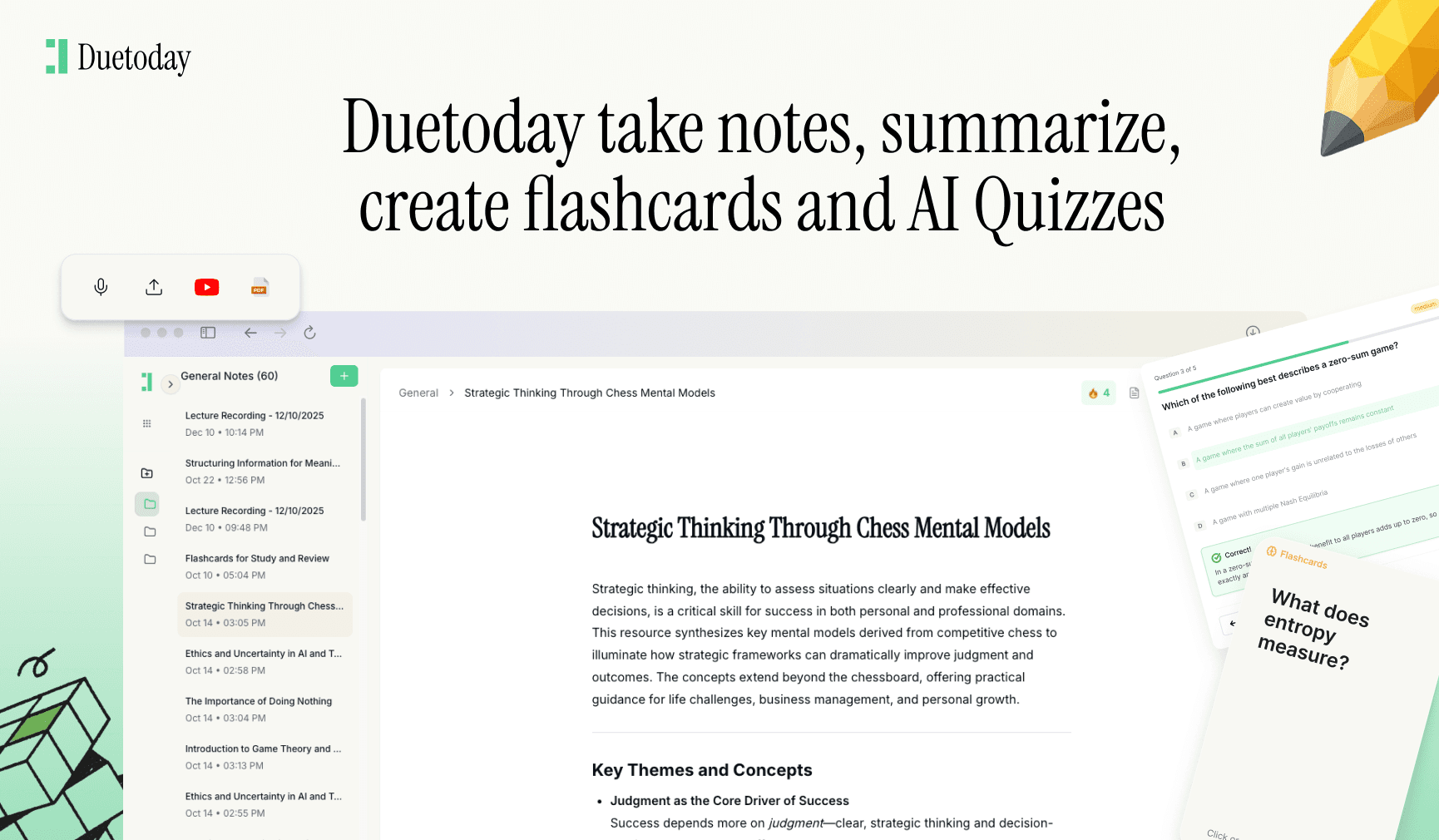
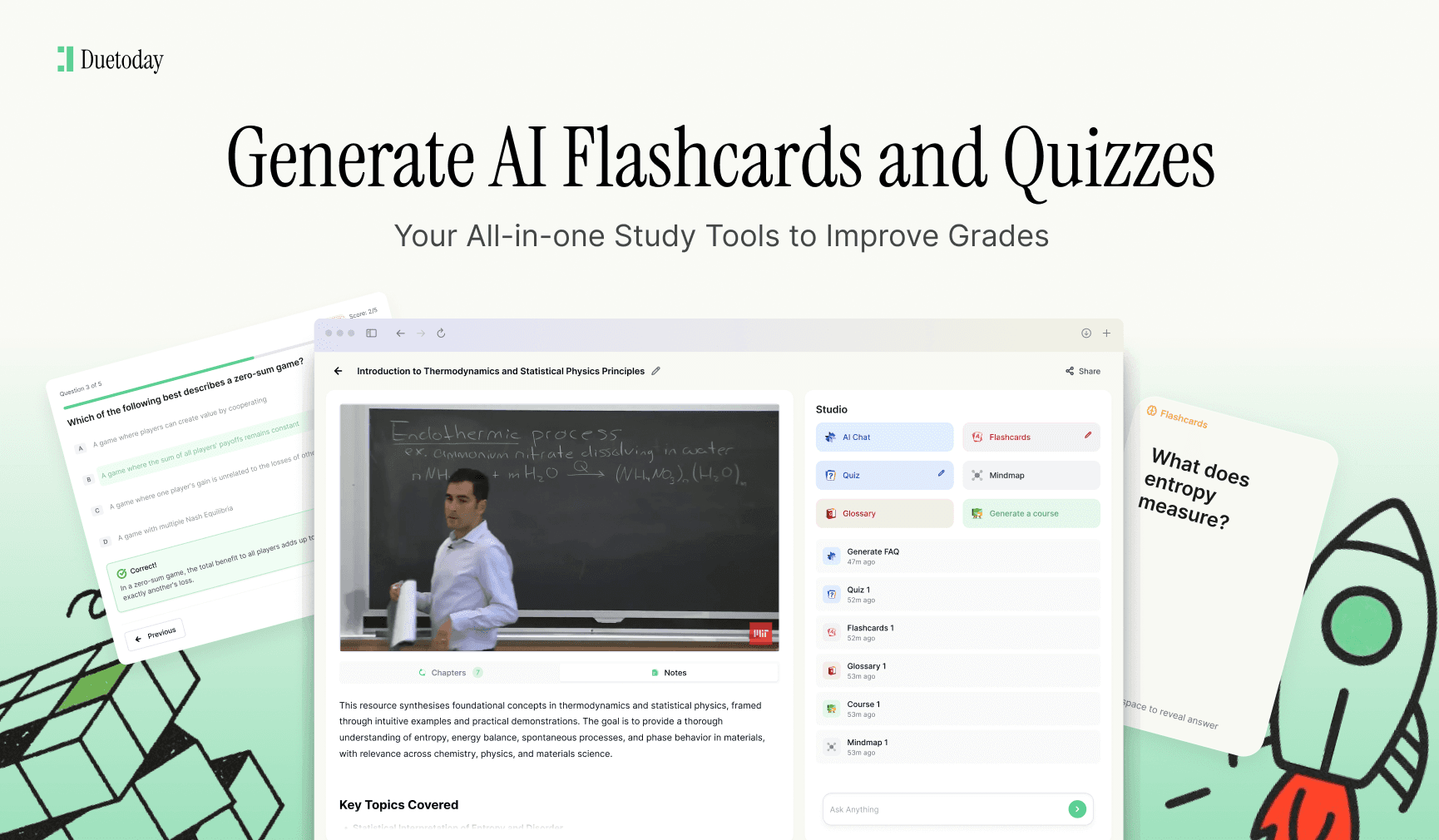
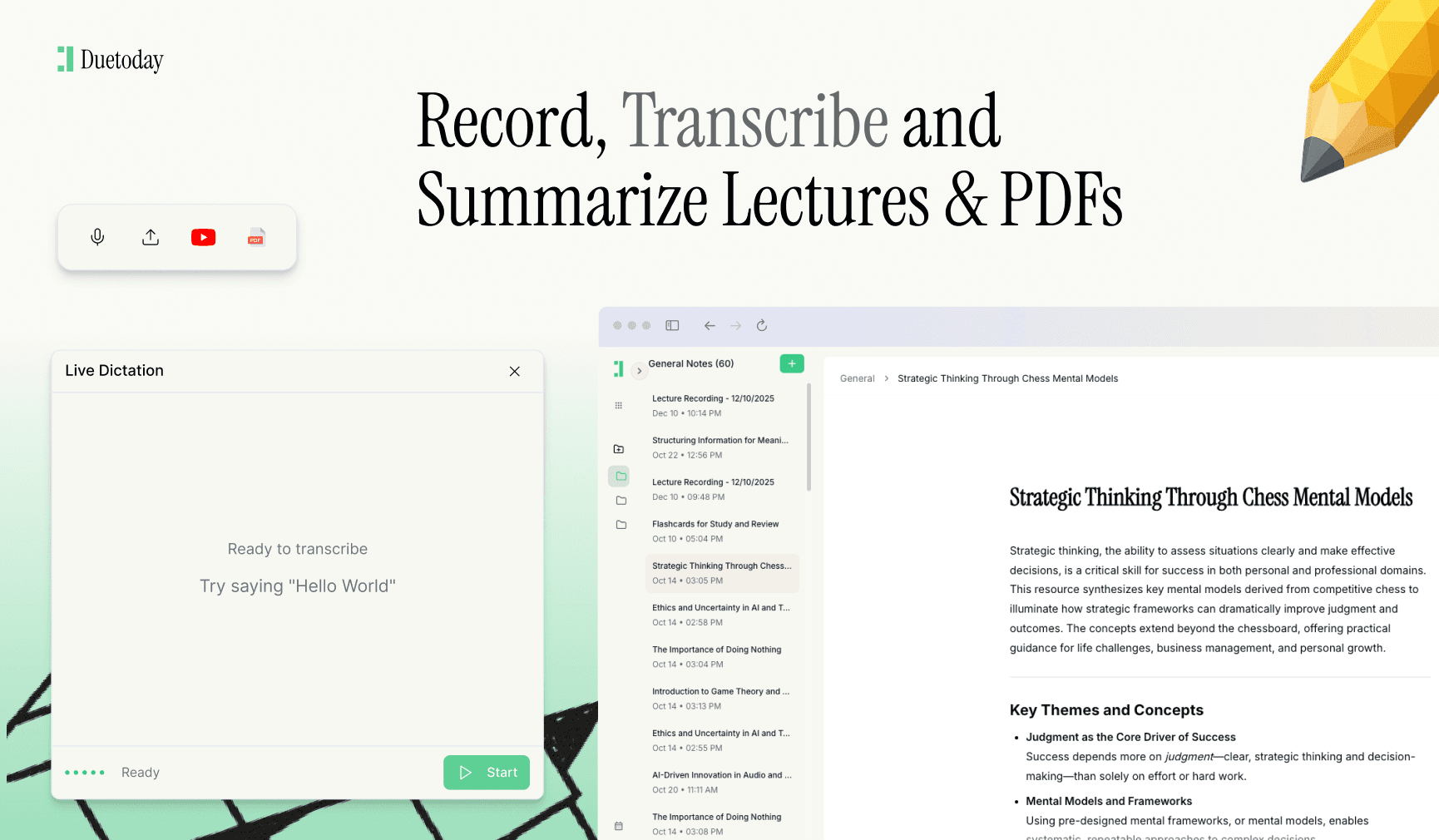
Freelancing as a student requires serious time management, which is why tools that help you organise your academic life become essential. Duetoday AI is a powerful companion for student freelancers because it handles the heavy academic load while you focus on earning. You can record and transcribe lectures instantly, turn them into clean notes, auto-generate study guides, and even produce flashcards, quizzes, and AI-generated PowerPoints from lectures or YouTube videos.
It’s like having a personal academic assistant that keeps your coursework under control while you manage clients. The built-in chat lets you ask questions about your lectures, and the free trial makes it easy to test without commitment. Staying organised is half the battle when freelancing, and Duetoday gives students the structure they need.
Turning Freelancing Into a Long-Term Skill
Even if you don’t want to become a full-time freelancer, the experience you gain will shape your career. You’ll improve your communication, creativity, responsibility, negotiation skills, and time management. These are qualities employers value highly.
Freelancing also expands your network. Many students land internships, part-time jobs, and even full-time roles through relationships built on freelancing platforms or through their early clients. By the time you graduate, you may already have two or three years of professional experience, which sets you apart from other students.
Should You Start Freelancing in College?
If you want flexibility, practical experience, and a way to earn money without sacrificing your schedule, freelancing is one of the best decisions you can make as a student. It teaches you discipline while rewarding your creativity. It also grows your confidence because you learn to rely on your skills and take ownership of your work.
You don’t need to overthink it. Start small. Build a simple portfolio. Sign up for a platform. Offer one clear service. Improve gradually. Stay consistent. You’ll be surprised by how much you can achieve within a semester.
Is freelancing realistic for college students?
Yes, thousands of students successfully freelance each year. It’s flexible, remote, and fits around classes. Many start with small tasks and gradually build their skills and income.
How much money can a student freelancer make?
Beginners might earn around 50 to 200 dollars monthly, but experienced students can make hundreds or even over a thousand dollars per month depending on the skills they offer and the hours they work.
Do I need experience to start freelancing?
No. Many students start with zero experience by building simple sample projects to show clients. Your portfolio matters more than past jobs.
Which freelancing platform is best for students?
Fiverr is great for beginners because it’s simple and fast. Upwork is better for higher-paying, long-term clients once you gain some experience.
How do I balance freelancing and studying?
Use a schedule, set clear client expectations, and avoid taking more jobs than you can handle during exam seasons. Tools like Duetoday help students keep academic tasks organised.

Take A Look At Our Latest Blogs & Update!






GET STARTED Free
Your All-In-One
AI Study Companion
Start using Duetoday and save 8 hours per week.