How to Handle Work-School Life (Full Guide)
Career + Future
Nov 26, 2025

For many university students today, balancing a job and college is not just a choice—it’s a survival strategy. Tuition is rising, rent isn’t forgiving, and side hustles are becoming more common than ever. Whether it’s a part-time retail job, freelancing on weekends, or creating content online, students everywhere are trying to manage both their academic responsibilities and their paycheck. On Reddit, one student even shared they were considering taking a semester off because “juggling college and content creation has been difficult.” That feeling is more universal than you might think.
The good news? Thousands of working students pull it off every semester—and you can too. With the right systems, mindset, and habits, you can protect your grades, earn income, and still have a life outside of textbooks and timesheets. This guide explains how to actually balance work and school without burnout, how to build a realistic schedule, and how to avoid the pressure trap that makes many students feel overwhelmed long before midterms.
Understanding the Real Struggle of Working Students
Let’s start by acknowledging something students rarely say out loud: working while studying is draining. You are trying to be two people at once—productive employee and responsible student—while also managing your own mental health, friends, sleep schedule, and future career goals.
The challenge often isn’t time itself. The real struggle is the constant context switching. One moment, you’re dealing with customers or replying to clients; the next, you’re trying to understand a lecture or finish an assignment. That mental shift is what drains your energy the most.
Another hidden problem is guilt. Students working through college often feel guilty for not studying enough, guilty for not working enough hours, or guilty for having no time left for themselves. This emotional load makes the work-school balance feel heavier than just scheduling tasks.
But once you understand these struggles, you can start designing a lifestyle that reduces the pressure instead of increasing it.
The Importance of Building a Predictable Weekly Structure
The first step to balancing a job and college without losing your mind is creating a weekly structure you can rely on. Not a minute-to-minute plan that collapses the first time something goes wrong—but a high-level map that gives your brain predictability.
Most working students live in reactive mode: assignments come in, shifts appear, deadlines sneak up, and everything becomes a last-minute scramble. You want the opposite. You want a schedule that steadies your week so that even when you get busy, your routine catches you before you fall behind.
Try this flow when structuring your week:
Identify your fixed commitments (class time, work shifts).
Set two to three anchor study blocks at consistent times.
Choose one lighter day for errands or rest.
Keep evenings flexible for unexpected assignments or social life.
Once your week has a backbone, your brain stops panicking every time something is added to your schedule. Predictability creates mental relief, even during busy semesters.
How to Set Priorities Without Crushing Yourself
Working students often make the mistake of giving everything the same level of urgency. That leads to burnout fast. You need a clear hierarchy of priorities so you know exactly what matters most in any given week.
A useful approach is dividing tasks into three groups:
Non-negotiables – class attendance, major deadlines, job shifts
Important but flexible – readings, long-term assignments, review sessions
Optional enhancements – extra study, side projects, social events
This way, when you’re overwhelmed, you can instantly identify what can be moved and what must stay. Priorities don’t mean doing less; they mean doing things in the right order.
Energy Management Is More Important Than Time Management
A huge misconception among students is that balancing work and college is a time problem. In reality, it’s an energy problem.
You may technically have hours to study after your shift, but if you’re mentally exhausted, those hours won’t matter. The trick is arranging your study blocks around your energy levels—not just your free time.
Some students focus best in the morning before work; others prefer late-night sessions once the world is quiet. Learn your personal rhythm and shield your high-energy periods for your most demanding study tasks.
When you start taking your energy seriously, you stop feeling like you’re “always tired” and start performing better at both work and school.
Study Smarter, Not Harder
When time is limited, efficiency becomes your greatest asset. Working students don’t have the luxury of eight-hour study marathons. You have shorter windows, so your study strategy needs to be sharper.
Focus on concentrated blocks of active studying rather than passive study techniques. That means:
Summaries instead of rereading
Recall instead of highlighting
Practice questions instead of long notes
Most students waste energy on studying techniques that don’t move their grades. The goal isn’t to study more—it’s to study better.
A Student-Friendly Tool That Saves Hours Every Week: Duetoday AI
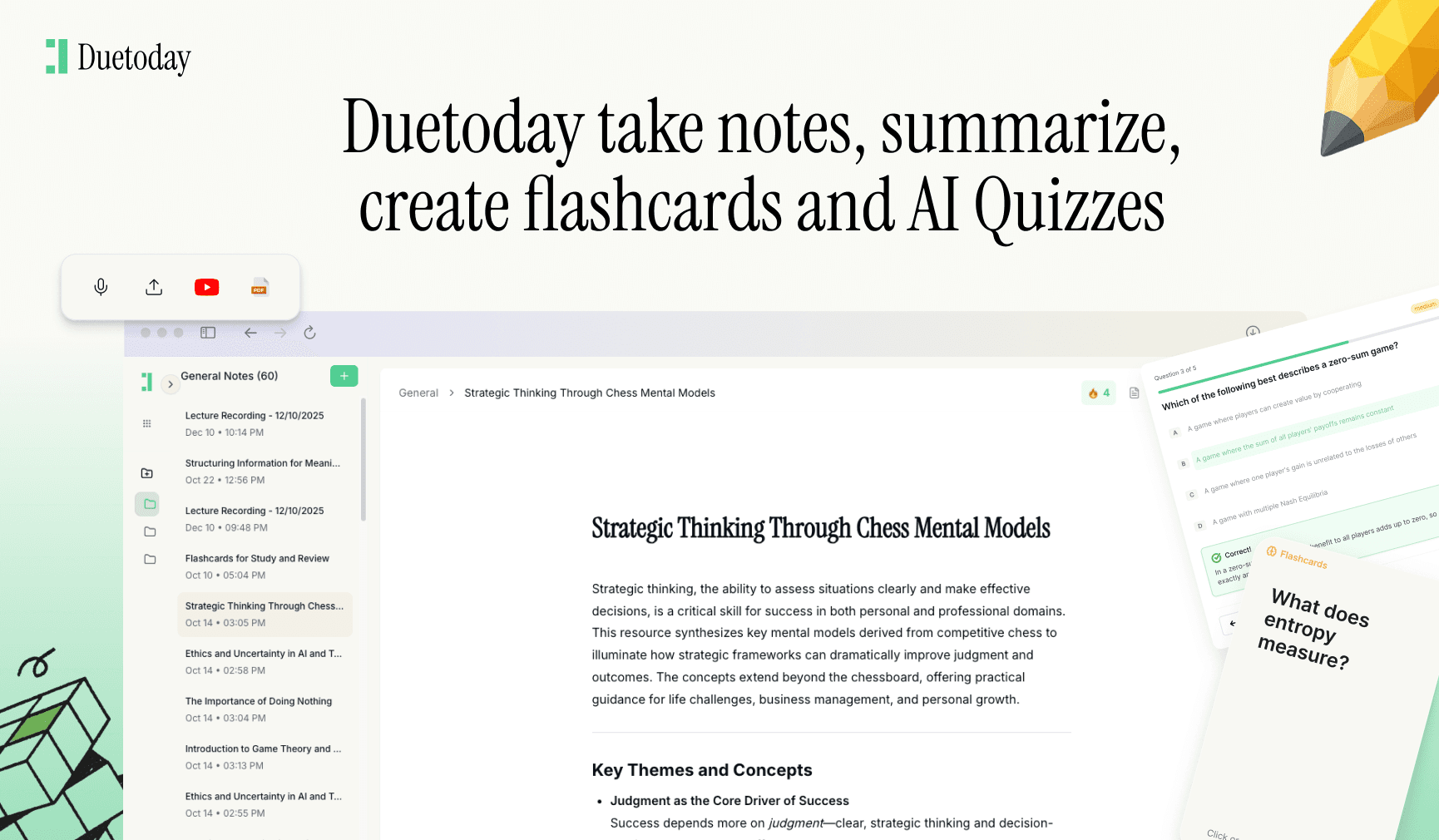
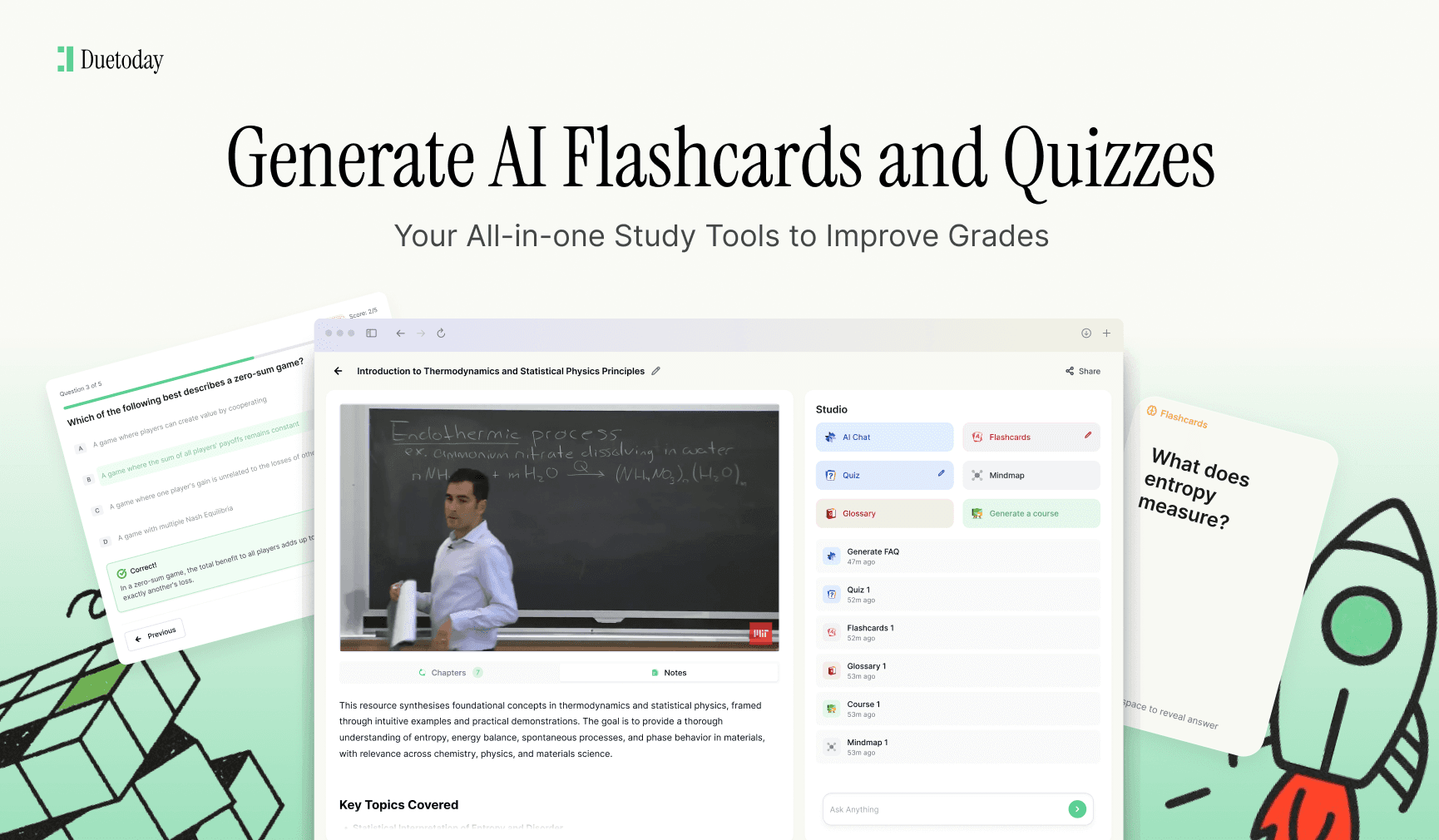
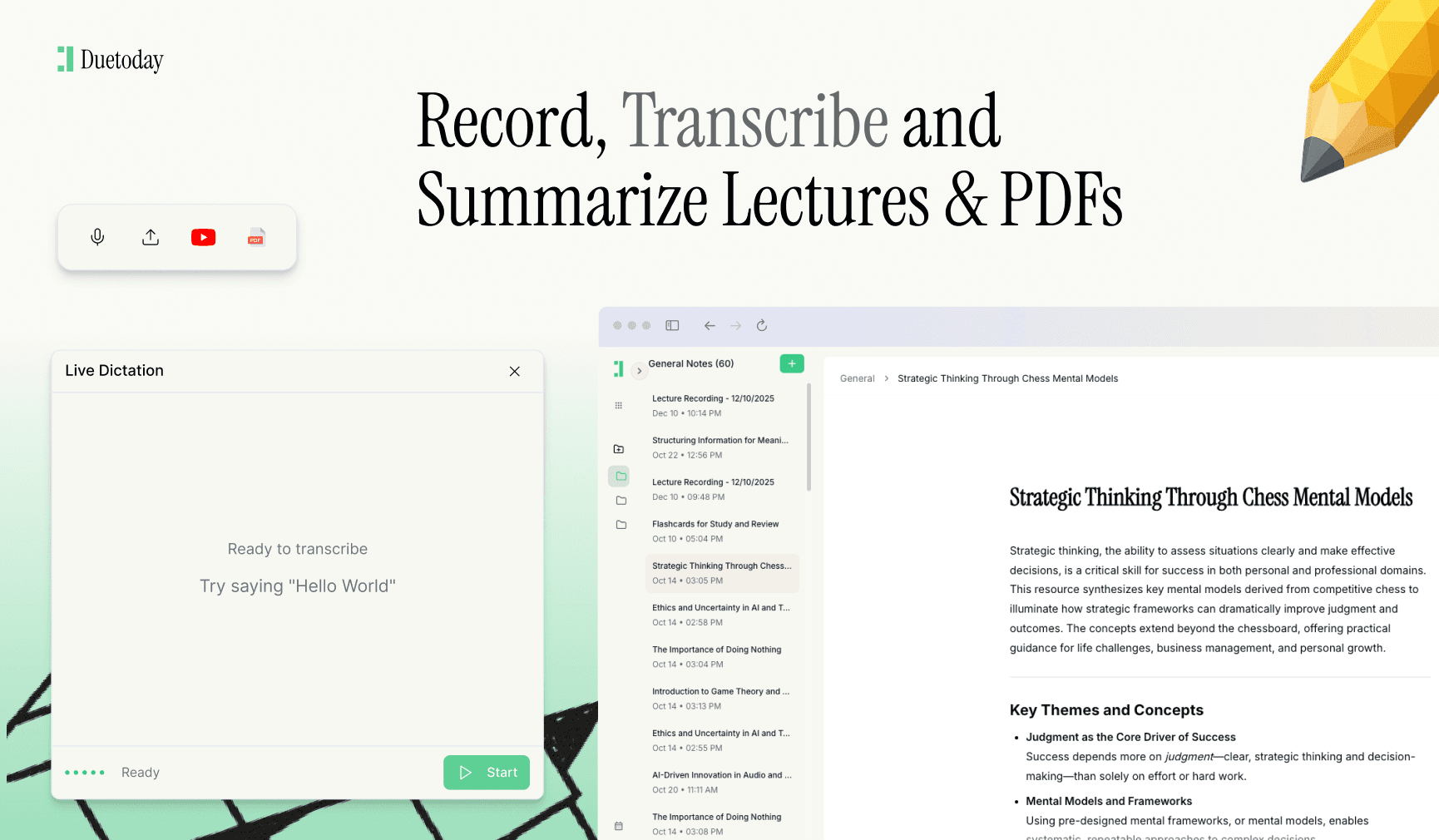
One practical way working students can stay ahead is by using tools that cut down the time needed to understand lectures and study materials. Duetoday AI is one of the most helpful options for busy university students. It acts as an AI notepad that records and transcribes lectures, turns them into clean summarized notes, generates study guides, and even creates AI-powered bite-sized courses from your lectures or YouTube videos.
It also offers interactive quizzes, flashcards, and a built-in AI chat that lets you ask questions about your lecture like you’re talking to a tutor. For students juggling work and school, it eliminates hours of manual note-taking and makes studying manageable, even when your schedule is chaotic. It's free to try, which makes it easy to test without commitment.
Avoiding Burnout When You’re Doing Two Jobs at Once
Once you’re balancing college and work, burnout becomes your biggest enemy. It sneaks up quietly—first you lose motivation, then your sleep disappears, then your classes and job performance both suffer.
To avoid that spiral, you need consistent recovery routines. Rest shouldn’t be something you fit in when everything else is finished; it should be a non-negotiable part of your balance.
Some of the simplest burnout prevention habits include:
Setting at least one full evening off every week
Avoiding the urge to overschedule
Letting yourself take slow mornings when necessary
Getting sunlight and moving your body daily
Taking mental breaks between work and study sessions
Burnout grows when you push without pause. Build your recovery into your schedule the same way you build work hours and class times.
Learning to Say No Without Feeling Guilty
Many working students fall into the trap of saying yes to every shift, every assignment, every favor, and every social event. Saying no feels like you’re letting someone down.
But when you’re juggling work and college, protecting your bandwidth is essential. Declining a shift doesn’t make you a bad employee. Telling a friend you can’t go out doesn’t make you boring. Setting boundaries helps you protect your future self—and that’s a sign of responsibility, not selfishness.
Start with small steps: say no when a request genuinely clashes with something important. Over time, you’ll learn that the world doesn’t fall apart when you protect your time.
Choosing the Right Job or Side Hustle
Not all jobs are equal when it comes to balancing work and study. Some drain you; others fit smoothly into your academic life.
When possible, choose work that offers:
Flexible hours
Low commute time
Predictable scheduling
Low cognitive load outside of shifts
Remote or asynchronous options (freelancing, tutoring, content creation, etc.)
The goal isn’t just finding a source of income—it’s finding one that doesn’t sabotage your grades. A job that respects your schedule will help you avoid conflict and stress.
You Don’t Have to Do Everything Alone
Working students often feel like they’re carrying their entire life by themselves. But you have support systems—academic advisors, professors, managers, family, friends. Sometimes, simply letting people know you’re balancing school and work gives them the context to understand your situation better.
Most professors will offer guidance when they know you’re trying your best. Many managers will adjust your schedule if they understand your academic priorities. You don’t need to announce your struggles to everyone, but you should communicate with the people who can make your life easier.
When you stop hiding your challenges, it becomes easier to manage them.
Final Thoughts: You Can Build a Life That Works for You
Balancing a job and college is not easy—but it’s possible, and thousands of students do it successfully every year. The key is creating a structure that protects your time, managing your energy, and choosing work that aligns with your academic goals. You don’t need to hustle 24/7 to succeed. You just need a plan that respects your limits and supports your ambitions.
Remember: your degree lasts a lifetime, but your part-time job is temporary. Stay consistent, stay patient, and build habits that support your future self. With the right strategy, you can thrive academically while earning income—without burning out along the way.
How many hours should a college student work while studying?
Most experts recommend 10–20 hours a week for part-time working students. Anything beyond that often affects sleep, grades, or mental health unless the student has extremely good time management.
Is it bad to work full-time while in college?
It’s not bad, but it’s demanding. Full-time students with full-time jobs often struggle with burnout unless they reduce course load or take advantage of remote, flexible work.
What is the best type of job for college students?
Jobs with predictable scheduling, low commute time, or asynchronous work are ideal. On-campus jobs, freelancing, content creation, tutoring, and remote part-time roles fit well with academic life.
How can I manage stress when working and studying?
Schedule recovery time, get enough sleep, avoid overscheduling, and build a weekly routine. Tools like AI note-takers or planners can also reduce workload and improve balance.

Take A Look At Our Latest Blogs & Update!






GET STARTED Free
Your All-In-One
AI Study Companion
Start using Duetoday and save 8 hours per week.