
How to Raise Your GPA (Full Guides)
Career + Future
Nov 26, 2025

Improving your GPA in college can feel like trying to turn around a moving train. Once your grades slip, it’s easy to panic and assume nothing can be fixed. Many students take to Reddit looking for advice, with one admitting they “desperately searched through this subreddit, trying to learn what I could do to raise my GPA.” That feeling of urgency—of wanting to redeem your academic record—is extremely common. The truth is, raising your GPA isn’t magic, and it isn’t reserved for naturally smart students. It’s a skill. A strategy. And with the right plan, you can noticeably improve your grades within a semester or two.
This guide breaks down the real, practical steps you can take to raise your GPA, understand how it works, and avoid the traps that keep students stuck academically.
Why Your GPA Feels Hard to Change
Students often feel stuck because GPA is cumulative. It’s built from every success and every mistake. The earlier semesters weigh down the later ones, and even doing well afterwards can feel like you’re climbing out of a hole. But GPAs move more than you think—especially if you’re still early or mid-way through your degree.
The key is understanding one simple truth: the recent classes you take now often carry more credit hours and can influence your GPA more strongly. If your freshman year was rough but you're now taking upper-level courses worth more credits, improvements in these classes can shift your numbers faster than you expect.
Another reason GPA feels difficult is because students often push harder instead of smarter. They study longer hours but not more effectively, which leads to frustration and burnout. Once you fix the method, the results follow.
Step One: Identify Where Your Grades Are Slipping
Before making changes, you need to know the exact reason your grades have dropped. Some students have a time management issue; others struggle with exam formats. Many misunderstand key concepts early in the semester and never fully recover.
Start by reviewing each class honestly:
Are you missing assignments?
Are your exam grades consistently lower than your homework?
Do you zone out during lectures?
Are you confused by instructions?
Once you isolate the root causes, your strategy becomes clearer. Improvement always begins with awareness.
Step Two: Learn the Structure of Your GPA
Something most students never learn (but absolutely should) is how GPA actually calculates. A single high-credit class can raise a GPA more effectively than several low-credit electives. Retaking a class can also dramatically shift your average if your school replaces the old grade rather than averaging both attempts.
When students understand GPA mechanics, they stop feeling helpless. Suddenly, the path becomes mathematical, predictable, and solvable.
That’s why it helps to:
Know how your university handles repeated courses
Track how many credits each class carries
Identify high-impact classes you can excel in
Calculate future GPA scenarios based on your planned grades
Once you can see your GPA’s possible outcomes, motivation becomes easier—because progress feels tangible rather than theoretical.
Step Three: Build Consistent, Reliable Study Habits
The biggest shift in academic performance happens when you move from “studying when necessary” to “studying consistently.” Cramming the night before almost never works and creates the illusion of effort without real retention.
Effective GPA-boosting study habits include having a predictable weekly schedule, doing active recall instead of rereading notes, and reviewing concepts multiple times across short sessions. Students who improve their GPA typically stop focusing on “hours spent studying” and instead refine their techniques.
Good study habits aren’t about working more—they’re about studying with intention. Once your methods change, your grades follow.
Step Four: Study Smarter, Not Harder
If your study methods rely heavily on passive techniques—highlighting, rewriting notes, zoning out during long lectures—it’s not your intelligence that’s the problem. It’s the technique.
The most GPA-friendly study strategies are grounded in:
Active recall – Testing yourself instead of reviewing
Spaced repetition – Repeating information over days instead of cramming
Teaching concepts out loud – A method proven to reveal gaps in understanding
Targeted practice – Studying the exact type of questions your professor asks
Students who shift to these methods often see improvements as early as the first exam.
Step Five: Fix Lecture Problems Early With the Right Tools
Many students fail classes not because the material is too hard, but because they miss key explanations in lectures. This is especially true for students juggling long commutes, part-time jobs, or heavy course loads.
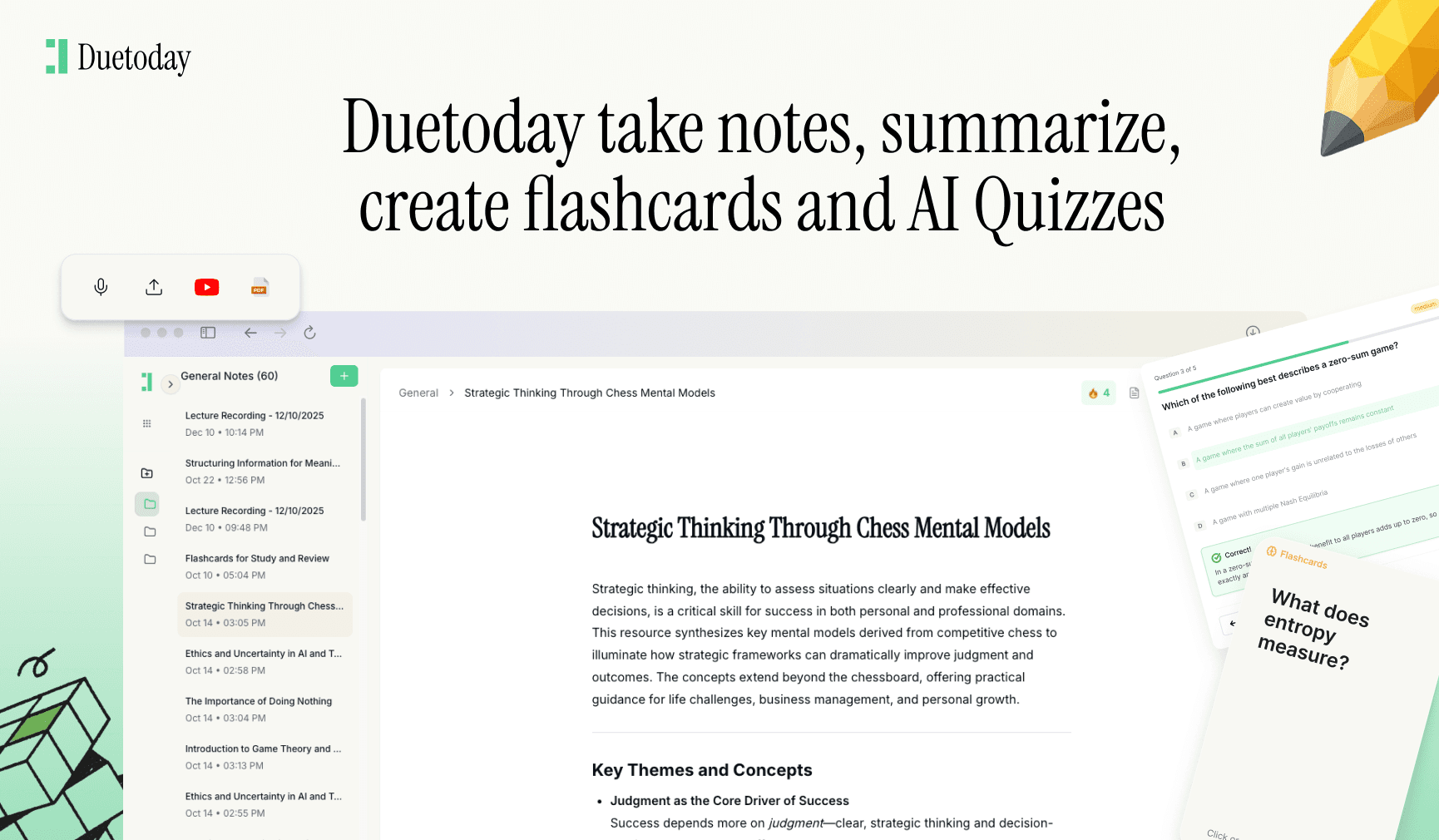
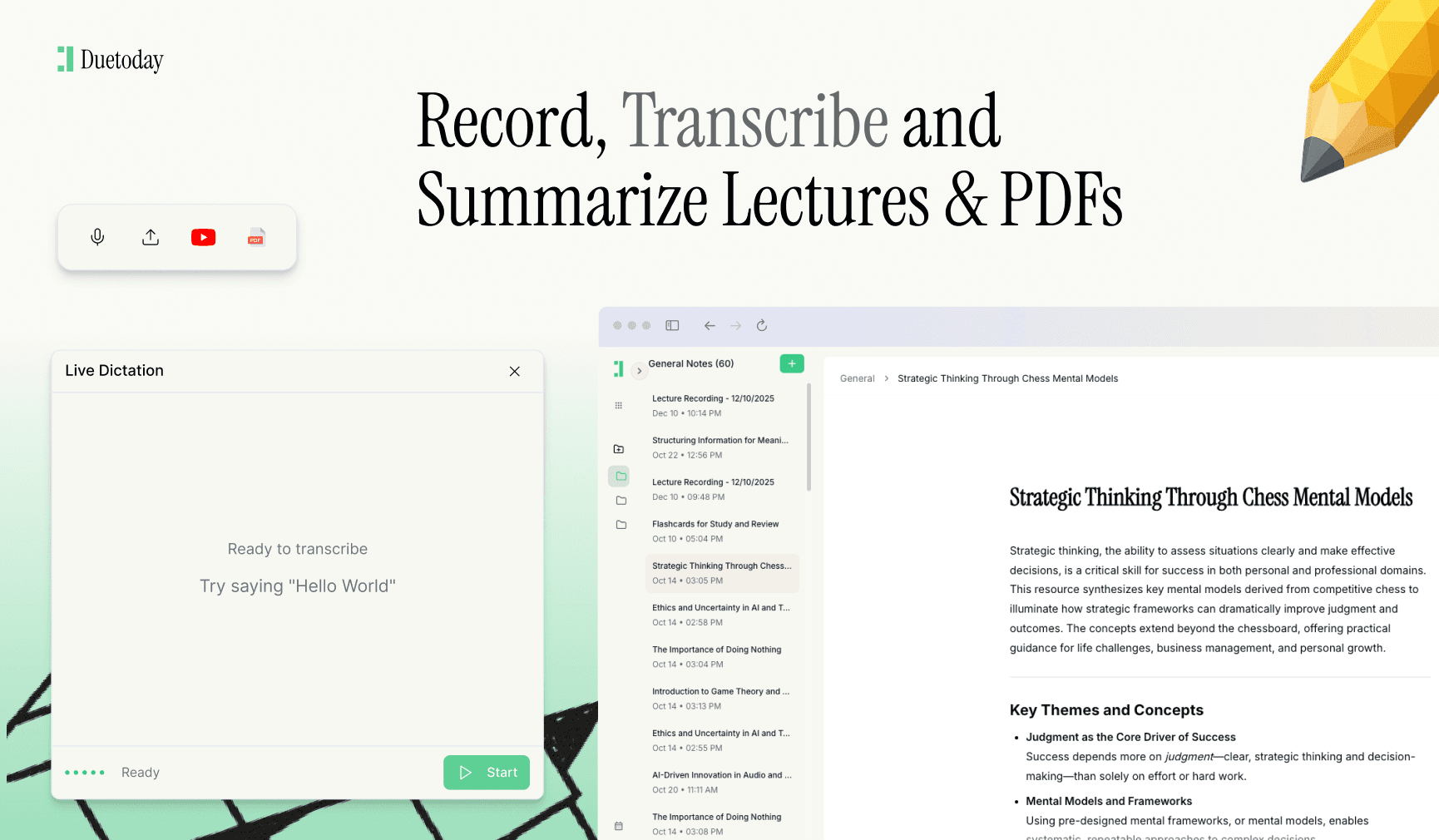
A practical way to fix this is using tools designed to support lecture comprehension. Duetoday AI is one of the strongest options for students who want to raise their GPA. It records and transcribes lectures, summarizes them into clean notes, builds study guides, and even generates PowerPoints from class content or YouTube videos. It can turn your long lectures into study-friendly notes, flashcards, quizzes, and interactive review materials. There’s also an AI chat built in where you can ask questions about your lecture as if you’re talking to a tutor. For students aiming to improve grades fast, this saves hours and ensures you understand every class—even the ones you struggle to keep up with. It’s free to try, making it perfect for GPA-recovery seasons.
Step Six: Retake Classes When It Actually Counts
Retaking a class feels like a setback, but often it’s one of the fastest ways to repair your GPA. If your university replaces the old grade, a retake can instantly transform your overall average.
Retakes are most effective when:
The class carries a high number of credits
You originally earned a D or C
You now understand why you struggled originally
You can dedicate proper time to the retake
Many high-performing seniors quietly retake early foundational classes to repair their GPA before graduation. It’s not a failure—it’s a strategy.
Step Seven: Seek Help Early (Tutors, Office Hours, Peers)
A low GPA often reflects problems that could have been solved months earlier if help was sought sooner. No one expects you to understand everything independently. Professors, TAs, tutors, and academic success centers exist for a reason.
Office hours aren’t just for emergencies; they’re for clarifying concepts, improving exam strategies, and understanding grading expectations. Even a single 20-minute session can completely change your trajectory in a class.
The most academically successful students aren’t the ones who work alone. They’re the ones who know when to ask for help.
Step Eight: Don’t Let One Bad Grade Define the Whole Semester
Many students spiral after one bad midterm, assuming the entire class is doomed. But a single poor score often matters far less than you think—especially if the class offers multiple quizzes, assignments, or a heavily weighted final.
Instead of panicking after a low grade, focus on:
Understanding the mistakes
Identifying patterns in your exams
Adjusting your study strategy for the next evaluation
Improvement rarely happens in one giant leap; it happens in small shifts accumulated over time.
Step Nine: Rebuild Your Academic Confidence
Low GPA students often struggle with confidence more than academics. They study with anxiety, attend lectures feeling behind, and assume everyone else understands more than they do. This self-doubt becomes a self-fulfilling cycle.
Rebuilding confidence starts with:
Celebrating small wins
Tracking weekly progress
Acknowledging effort, not just results
Recognizing that intelligence grows with practice
Confidence is the hidden force behind good grades. When you believe you can improve, you start studying like someone who deserves high grades.
Step Ten: Treat Each Semester as a Fresh Start
Even if your GPA is currently low, each new semester is a reset button. What happened in your first year—or your first semester—doesn’t define your academic future.
Treat every course as a new opportunity:
New professor
New habits
New tools
New strategy
New mindset
When you stop carrying the weight of past mistakes, you give yourself room to grow.
Final Thoughts: Raising Your GPA Is a Skill You Can Learn
No student is permanently stuck with a low GPA. Whether you’re early in your degree or close to graduation, you can improve your academic performance by shifting your methods, getting support, and building consistent study routines.
Raising your GPA isn’t a punishment—it’s a skill. And once you learn it, you’ll carry it for the rest of your academic and professional life. Start small, focus on the strategies you can control, and remember that every successful student today once felt behind at some point.
Your GPA is a number. It doesn’t define you. But with the right plan, you can absolutely change it.

How long does it take to raise my GPA?
It depends on your current GPA, credit hours remaining, and how well your future semesters go. Many students see noticeable improvements in as little as one semester.
Can I still raise my GPA if I’m already a junior or senior?
Yes, but the window is smaller. High-credit classes and retakes become the most effective strategies for upperclassmen.
Should I retake classes to improve my GPA?
If your school replaces the old grade and the class is high-impact, retaking can significantly boost your average.
What study habits improve GPA the fastest?
Active recall, spaced repetition, consistent weekly review, and using tools that break down lectures into structured notes help the most.

Take A Look At Our Latest Blogs & Update!






GET STARTED Free
Your All-In-One
AI Study Companion
Start using Duetoday and save 8 hours per week.