How to Self-Test Before Exams 101
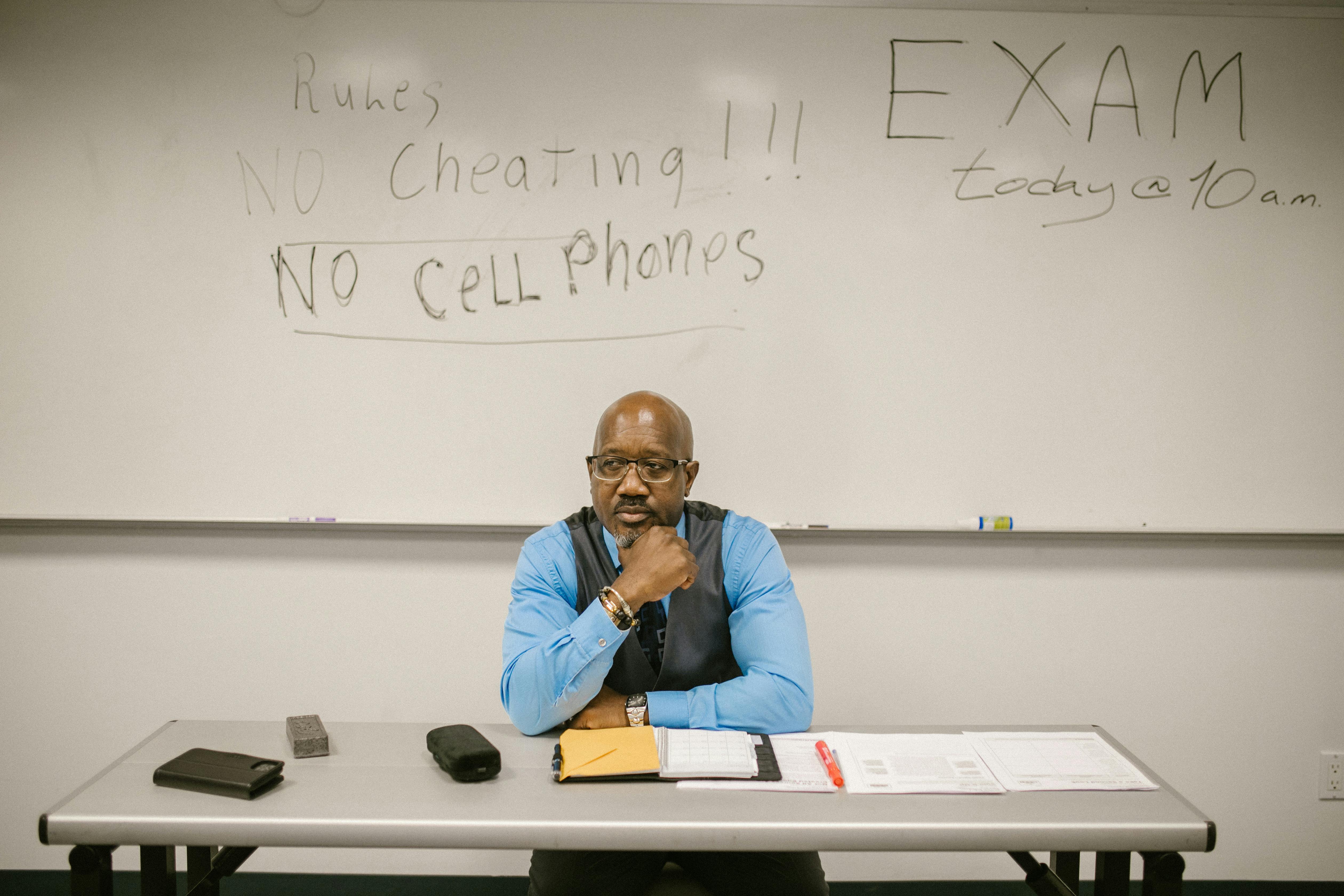
Mastering the Art of Self-Testing
As the exam season approaches, the library starts filling up and the stress levels begin to rise across campus. While many students spend hours re-reading their textbooks or highlighting every second sentence in neon yellow, research shows that these passive methods are actually some of the least effective ways to learn. If you want to walk into your exam hall with genuine confidence, you need to master the art of self-testing. This process, often referred to as retrieval practice, forces your brain to work harder to pull information from your longterm memory, which significantly strengthens your retention.
Understanding how to self-test before exams isn't just about finding old practice papers. It is a comprehensive strategy that involves changing how you interact with your study materials from day one. Instead of looking at your notes and thinking you know the material, self-testing proves it. It highlights exactly where your knowledge gaps are, allowing you to focus your limited energy on the topics that actually need work rather than wasting time on things you have already mastered.
The Science of Active Recall
At the heart of any effective self-test strategy is active recall. This is a cognitive process where you actively stimulate your memory for a piece of information. When you simply read a page, your brain is in a state of recognition; you recognize the words, so you think you understand the concept. However, recognition is not the same as recall. On an exam, you won't have the textbook there to trigger your memory. You need to be able to generate the answer from scratch.
You can start practicing this by closing your book after every section and writing down everything you remember. It doesn't have to be pretty. In fact, the messier your brain feels while trying to remember, the more robust the neural connections become. This mental strain is a sign that learning is happening. Think of it like a workout for your brain; no pain, no gain applies to your GPA just as much as it does to the gym.
Creating Your Own Question Bank
One of the most effective ways to prepare is to think like your professor. As you go through your lecture slides, don't just copy pointers. Transform those pointers into questions. If a slide explains the 'Causes of the French Revolution', your note should be a question: 'What were the three main social causes of the French Revolution?'. By the time you finish a unit, you will have a ready-made list of exam-style questions to test yourself with.
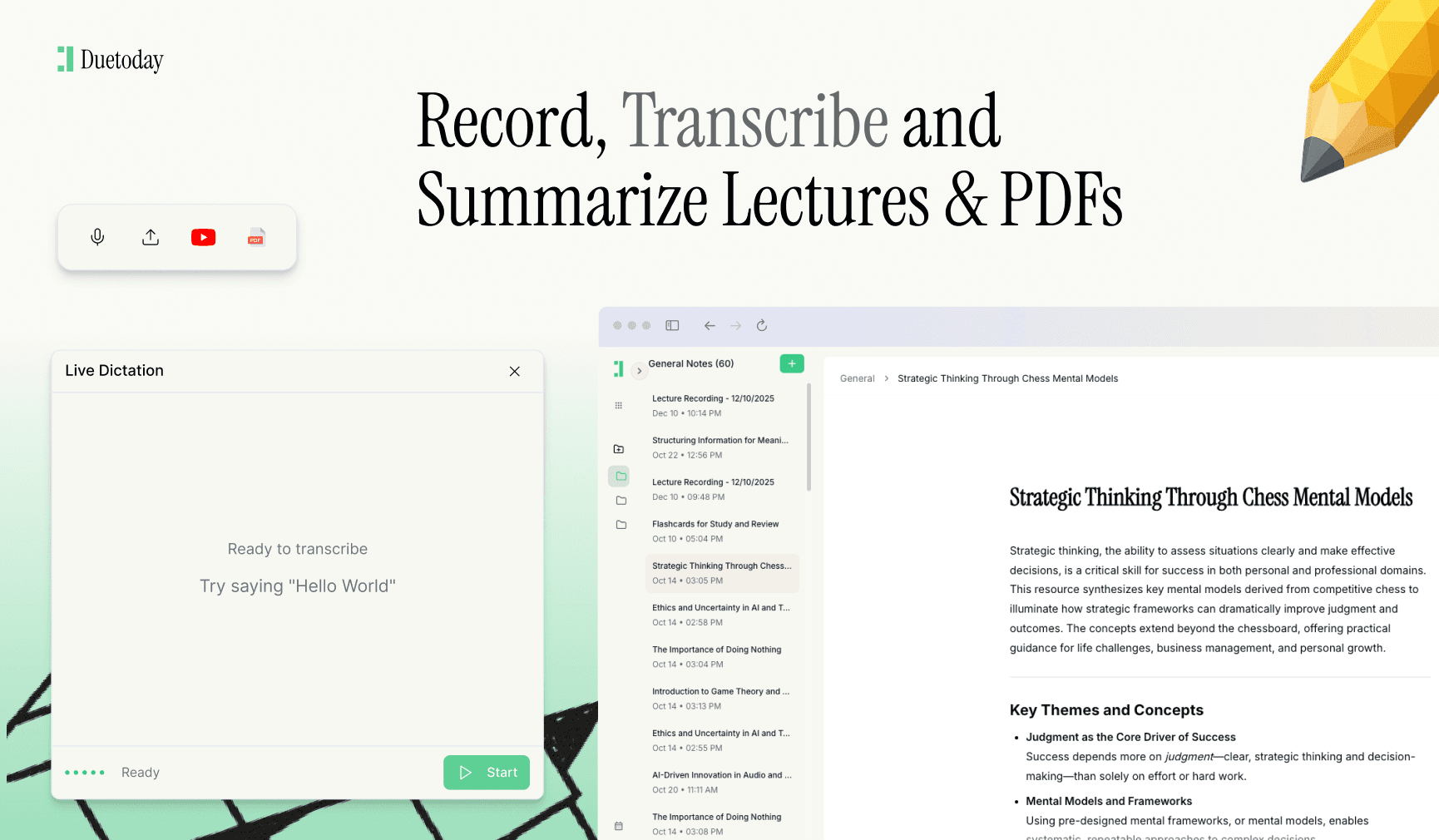
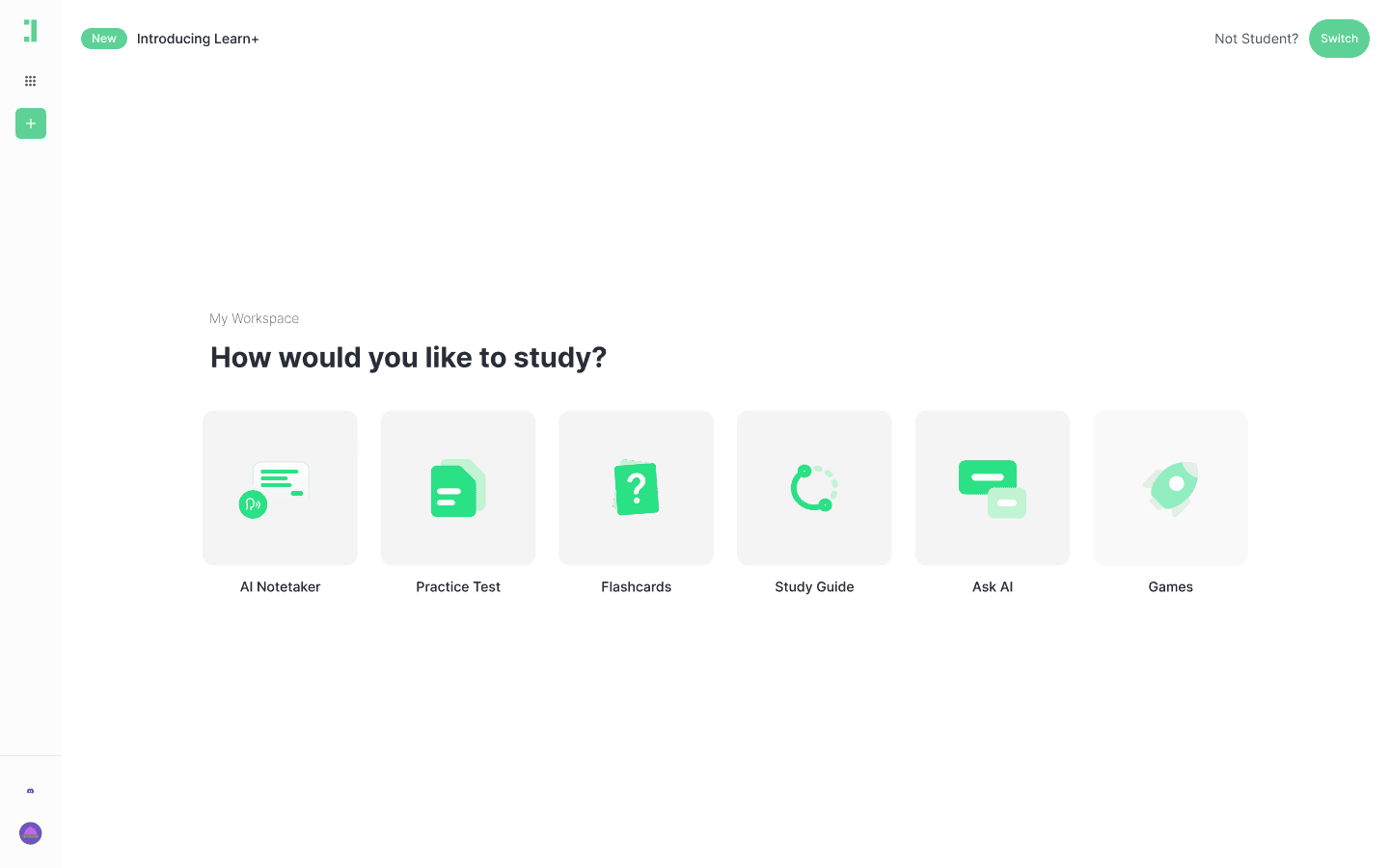
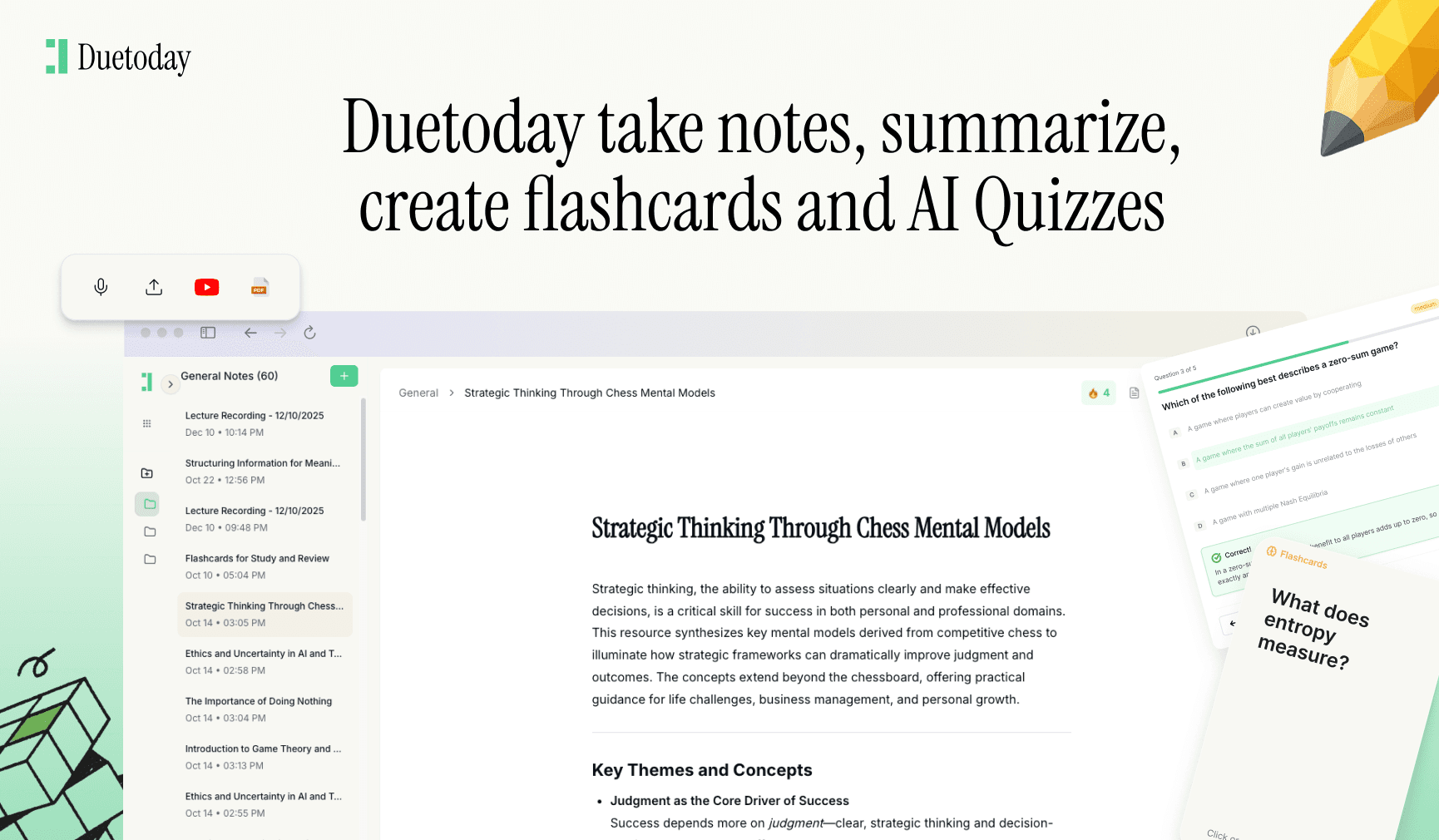
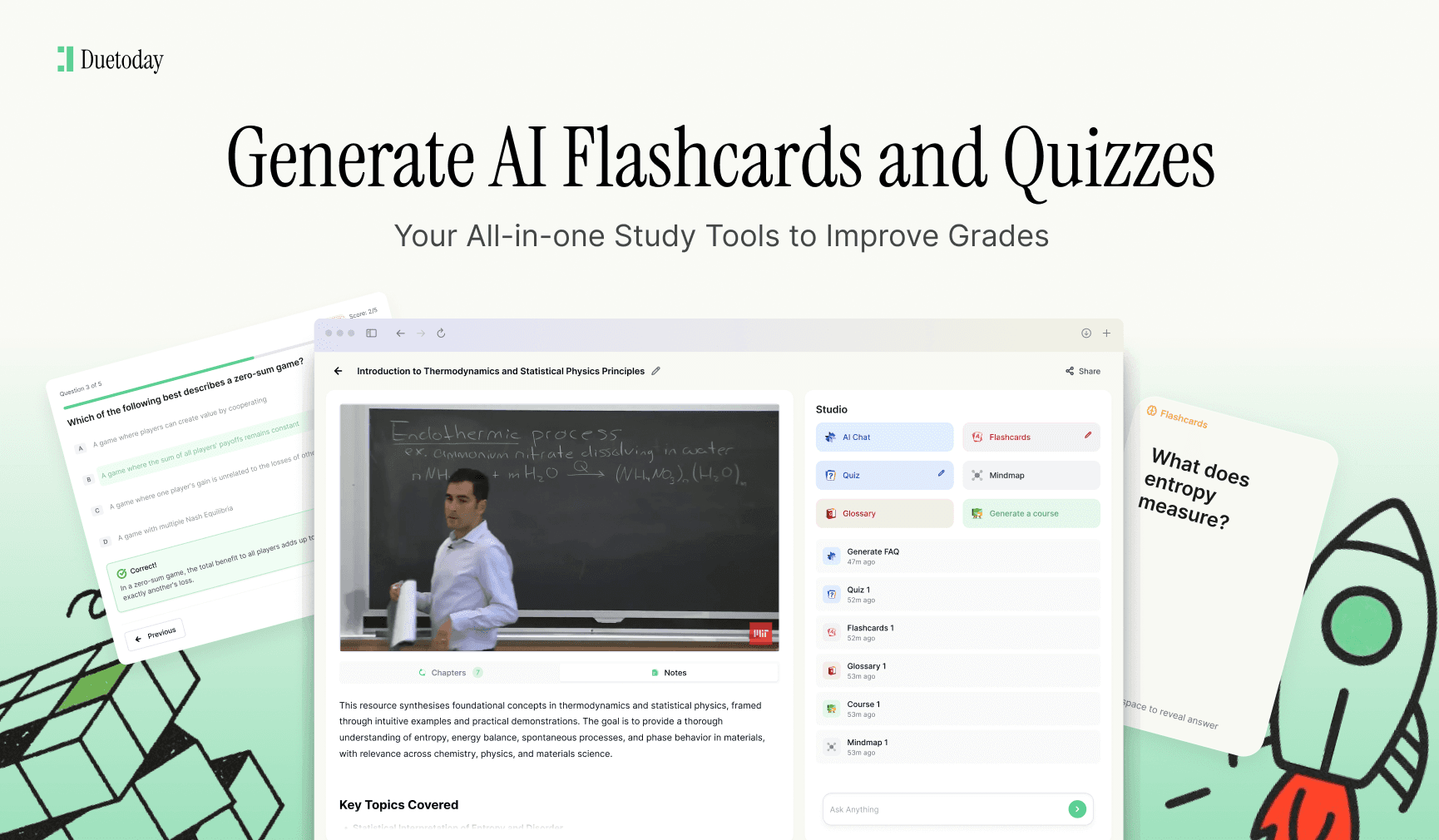
For students looking to streamline this process, Duetoday AI is a powerful tool that changes the game. Duetoday is an AI-powered learning platform that turns lectures, PDFs, and notes into summaries, flashcards, quizzes, and structured study tools automatically. It acts like a personalized AI tutor, helping students learn faster, stay organized, and retain information without spending hours manually creating these tests yourself. By letting the AI handle the organization, you can spend more time actually testing your knowledge and less time formatting flashcards.
Strategies for Effective Mock Exams
Simulating the exam environment is another crucial step in the self-testing process. It is one thing to answer a question while lying in bed with music on; it is an entirely different experience to do it under a time limit in a silent room. Find a quiet corner of the university library, set a timer on your phone, and dive into a practice paper. This helps builds your 'exam stamina' and teaches you how to manage your time effectively between short answer questions and longer essays.
Once you finish a practice session, the most important part begins: the review. Many students make the mistake of checking their score and moving on. To truly benefit, you must analyze why you got certain questions wrong. Was it a lack of knowledge, or did you misinterpret the question? This reflection turns a simple test into a deep learning experience. You should keep a 'mistake log' where you track these errors and revisit those specific topics a few days later to ensure the correction has stuck.
The Power of Spaced Repetition
Self-testing works best when it is combined with spaced repetition. Instead of testing yourself on the same topic for five hours straight, test yourself for thirty minutes today, then again in two days, then again in a week. This spacing combats the 'forgetting curve,' a natural process where our brains dump information we don't use frequently. By interrupting the forgetting process with a self-test, you signal to your brain that this information is important and needs to be stored permanently.
Lastly, don't be afraid to explain concepts out loud to a friend or even an empty room. The Feynman Technique, where you explain a complex topic in simple terms to a child, is a form of self-testing. If you stumble over your words or find yourself using too much jargon, you probably don't understand the core concept as well as you thought. Teaching is the highest form of learning, and it remains one of the most reliable ways to ensure you are ready for any question the examiner throws your way.
Final Prep and Mental Readiness
As you get closer to the big day, transition your self-tests from specific topics to broad, randomized quizzes. This prevents your brain from relying on 'order bias' where you only know an answer because it follows a certain sequence in your notes. Mix up your subjects and formats. Use multiple choice, long-form essays, and diagram labeling. The variety will keep your mind sharp and adaptable, ensuring that no matter how the exam is structured, you have the mental tools to tackle it head-on.
What is the best way to start self-testing?
Begin by turning your lecture headings into questions and trying to answer them without looking at your notes.
How often should I test myself?
Ideally, you should test yourself shortly after learning a topic, then again after 48 hours, and once more a week later.
Can AI help with exam preparation?
Yes, tools like Duetoday AI can automatically generate quizzes and flashcards from your study materials, saving you time.
Is self-testing better than re-reading?
Research consistently shows that active recall through testing is much more effective for long-term memory than passive reading.