How to Revise Faster Without Forgetting [Full Guide]

Mastering the Art of Speed Revision
University life moves at a lightning pace, and sometimes it feels like the sheer volume of information thrown at you is impossible to digest. You spend hours reading through textbooks and highlighting lines, only to realize by the end of the chapter that you can’t remember the first paragraph. The secret to revising faster isn't just about reading more quickly; it's about changing how your brain interacts with the material. Passive reading is the enemy of retention. To truly master your exam content, you need to switch to active learning strategies that force your brain to work harder during the study session so it doesn't have to work as hard during the exam.
The Power of Active Recall
Active recall is consistently ranked as the most effective study technique by cognitive scientists. Instead of looking at your notes and thinking you know the material because it looks familiar, active recall involves closing your book and trying to retrieve the information from your memory. This process strengthens the neural pathways associated with that information. You can do this by asking yourself questions at the end of every page or by using flashcards. Many students make the mistake of reading a chapter three times, but you will find that reading it once and testing yourself three times is far more effective for long-term memory.
The Blurting Method for Quick Retention
If you are short on time, the blurting method is a game-changer. Here is how it works: read a section of your notes or a textbook for ten minutes, then close it. Take a blank piece of paper and write down everything you can remember without looking back at the source. Once you have exhausted your memory, open the book and use a different colored pen to add the details you missed. This immediately identifies the gaps in your knowledge, allowing you to focus your remaining revision time on the parts you actually don't know, rather than wasting time on things you’ve already mastered.
Spaced Repetition: Timing Your Review
Speed revision doesn't mean cramming everything in one night. In fact, cramming is the fastest way to forget everything the moment you walk out of the exam hall. Spaced repetition involves reviewing information at increasing intervals. You might review a concept one hour after learning it, then one day later, then one week later. This tackles the forgetting curve, ensuring that the information is moved from your short-term memory into your long-term memory. By scheduling these short reviews, you actually spend less total time studying because you aren't constantly relearning forgotten material from scratch.
Prioritizing High-Yield Topics
Not all information is created equal. In any given module, there are core concepts that are almost guaranteed to appear on the exam and minor details that are less likely to be tested. To revise faster, you must become an expert at spotting high-yield topics. Look at past exam papers to see which themes recur every year. Focus eighty percent of your energy on these foundational pillars. Once you have a rock-solid understanding of the basics, then you can move on to the finer details if time permits. This strategic approach ensures that even if you run out of time, you have covered the topics that carry the most weight.
Optimizing Your Study Environment
Your brain is a reflection of your environment. If you are trying to revise in a cluttered room with your phone buzzing every thirty seconds, your brain will struggle to enter a flow state. High-speed revision requires deep work. Set a timer for twenty-five minutes of intense, uninterrupted focus followed by a five-minute break. This is known as the Pomodoro Technique. During those twenty-five minutes, your phone should be in another room. The quality of your study time is much more important than the quantity of hours you sit at your desk. Deep, focused work for two hours is better than eight hours of distracted studying.
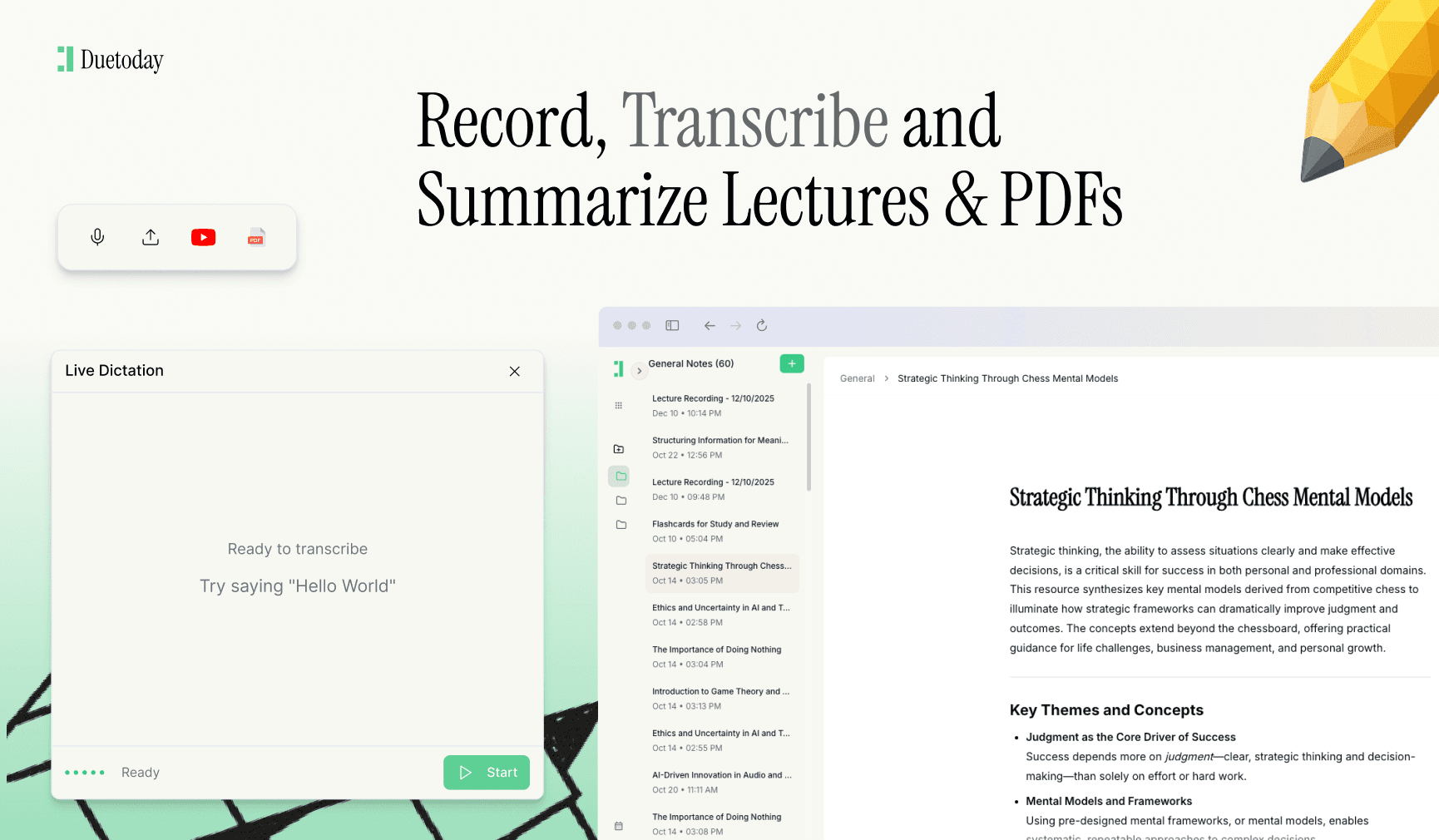
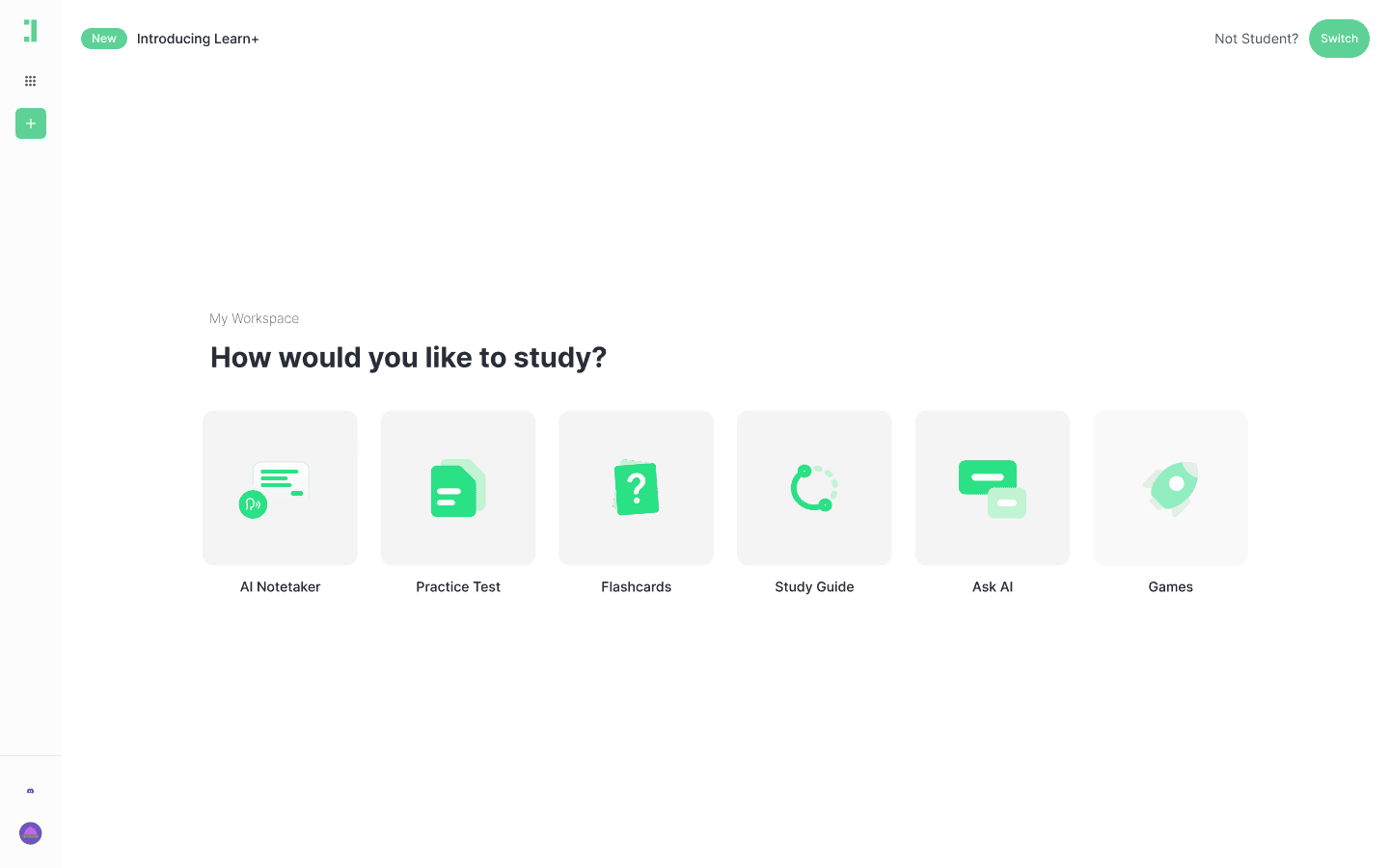
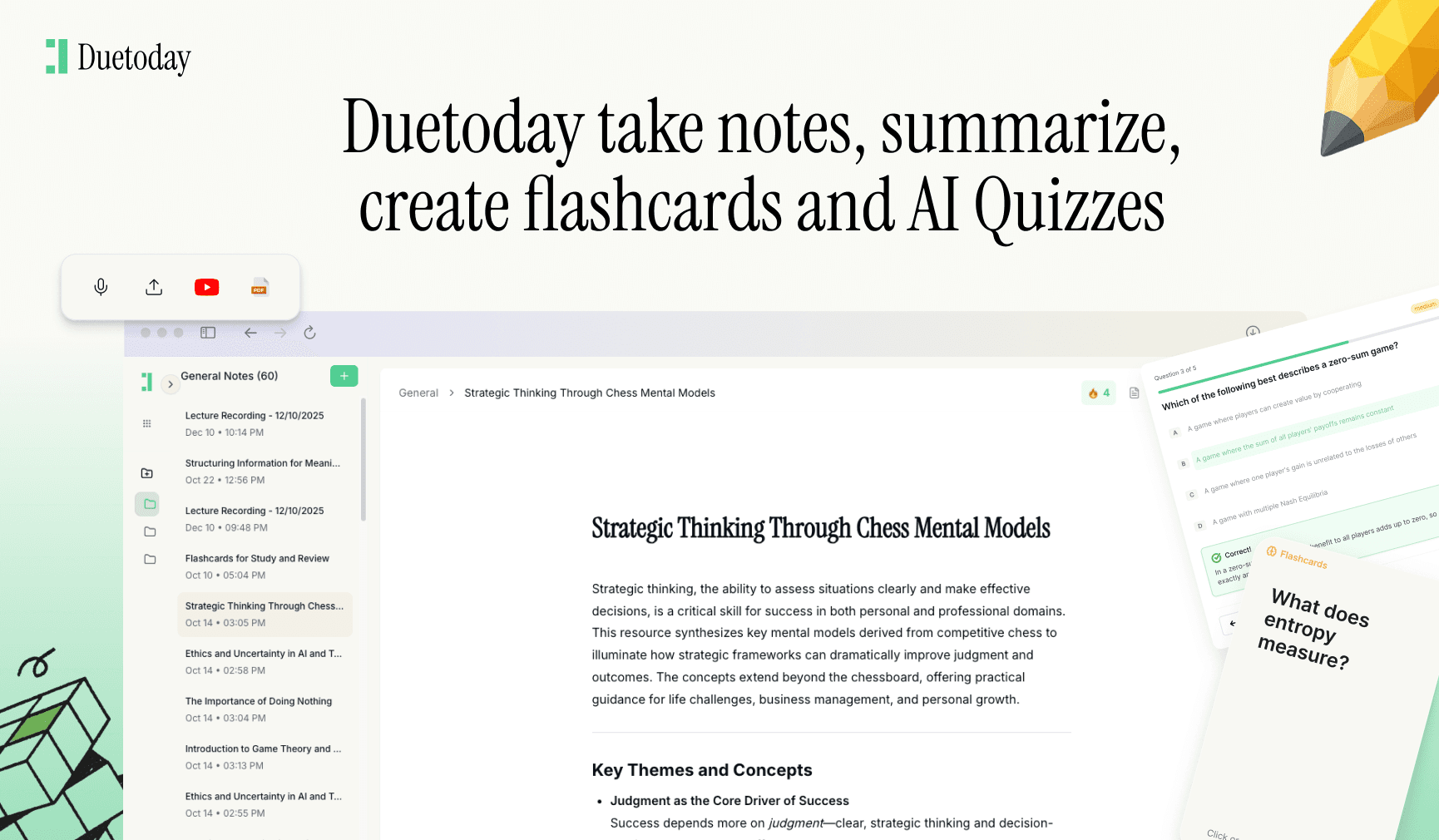
One of the most effective ways to accelerate your learning is through the use of technology tailored for students. Duetoday AI is an AI-powered learning platform that turns lectures, PDFs, and notes into summaries, flashcards, quizzes, and structured study tools automatically. It acts like a personalized AI tutor, helping students learn faster, stay organized, and retain information without spending hours rewriting notes. By automating the organizational part of studying, you can focus purely on understanding the complex concepts that will actually get you the marks.
Teaching to Learn
Finally, one of the fastest ways to solidify your understanding is the Feynman Technique. Try to explain a concept to a friend, or even an imaginary student, in the simplest terms possible. If you find yourself using jargon or struggling to explain a specific part, you have found a weakness in your understanding. Simplifying complex ideas forces you to get to the root of the concept, making it much harder to forget during the pressure of an exam. By combining these techniques, you will find that your revision becomes more efficient, less stressful, and significantly more productive.

How can I stop forgetting what I just read?
Use active recall. Instead of just reading, stop every few minutes to summarize what you learned in your own words without looking at the text.
Is it better to study for long periods or short bursts?
Short, focused bursts are generally better. Techniques like Pomodoro help maintain high levels of concentration and prevent burnout.
What is the single fastest way to revise?
The blurting method combined with practicing past paper questions is often considered the fastest way to identify gaps and prepare for exam conditions.
Does listening to music help revision?
It depends on the individual, but generally, instrumental music or white noise is better than music with lyrics, which can distract the language-processing parts of your brain.