How to Improve Concentration Naturally: A Student Guide
The Science of Staying Focused in Uni
Concentration is the backbone of academic success, yet for most university students, it feels like a disappearing act. Between the constant ping of social media notifications, the lure of gaming, and the general chaos of campus life, sitting down to focus on a single textbook chapter can feel like climbing a mountain. To improve concentration naturally, you have to understand that focus is not just a mental state; it is a physiological one. It involves how you nourish your body, how you structure your environment, and how you manage your internal energy levels.
Natural concentration techniques are often more sustainable than relying on caffeine or quick fixes. When you train your brain to enter a state of deep work, you are building cognitive stamina that will serve you throughout your entire career. Improving your focus starts with small, intentional changes to your daily routine. By identifying the triggers that break your concentration, you can create a mental fortress that allows you to absorb complex information more efficiently than ever before.
Optimizing Your Study Environment
Your physical surroundings play a massive role in how well you can concentrate. If your desk is cluttered with old coffee cups and loose papers, your brain will struggle to focus on the task at hand. Creating a dedicated study zone tells your brain that it is time to work. Natural lighting is also a game-changer. Research suggests that exposure to natural light can improve mood and alertness, making it easier to stay engaged with your coursework during the day.
Noise management is another critical factor. While some students thrive in absolute silence, others prefer ambient noise or lo-fi beats. Experiment with what works for you, but avoid music with lyrics, as the language-processing part of your brain will start competing with the text you are trying to read. Keep your phone in another room or use a dedicated focus mode to ensure that digital interruptions don't pull you out of your flow state every five minutes.
The Power of Single-Tasking
We often wear multitasking as a badge of honor, but the reality is that the human brain is not designed to do multiple complex tasks at once. What we call multitasking is actually context switching, and it comes with a high cognitive cost. Every time you switch from a lecture video to a group chat, your brain loses momentum. To improve concentration naturally, practice the art of single-tasking. Give one task your undivided attention for a set period. You will find that you finish your work much faster and with fewer errors than when you try to juggle three things at once.
Using Duetoday AI to Reduce Cognitive Load
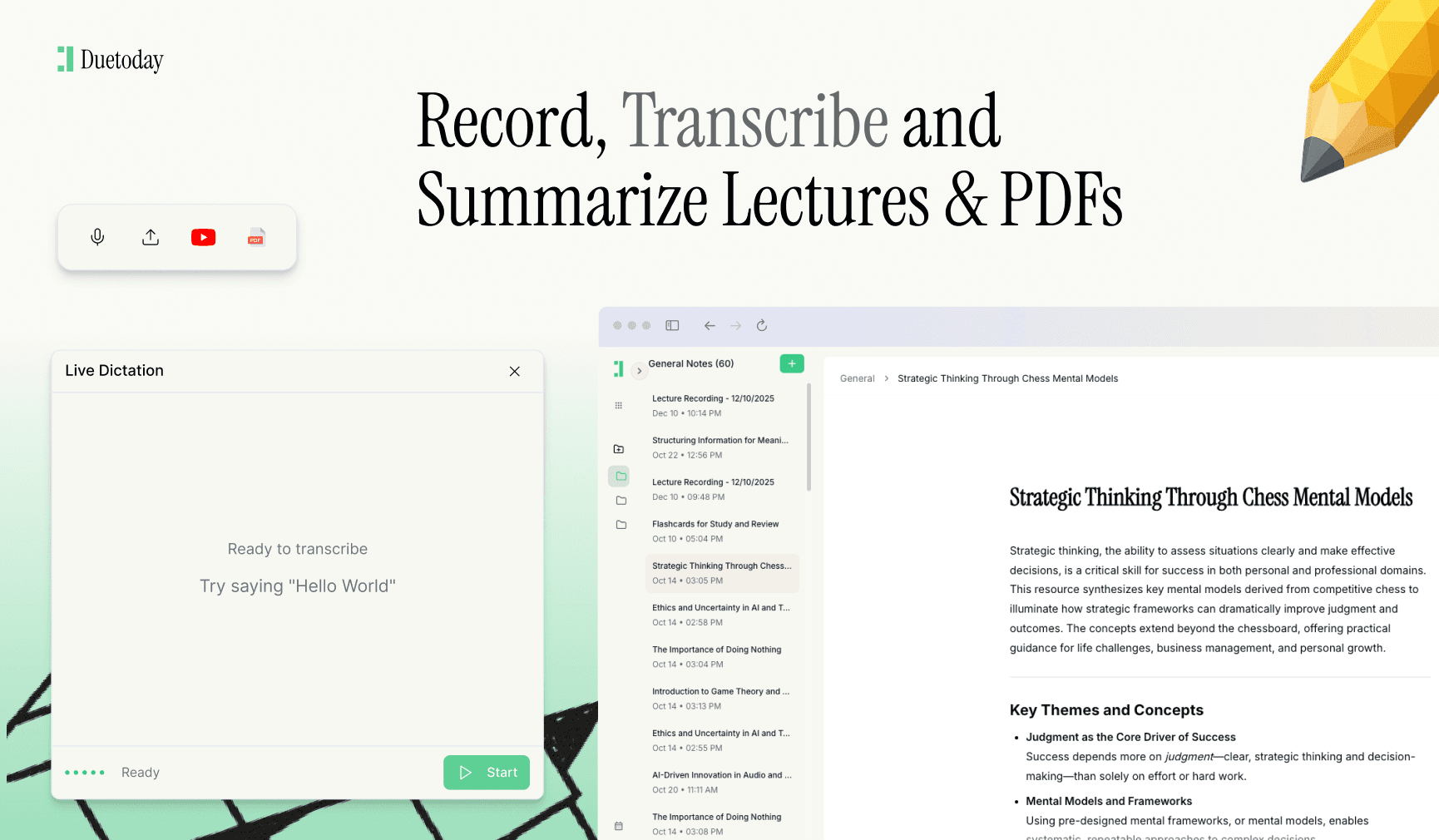
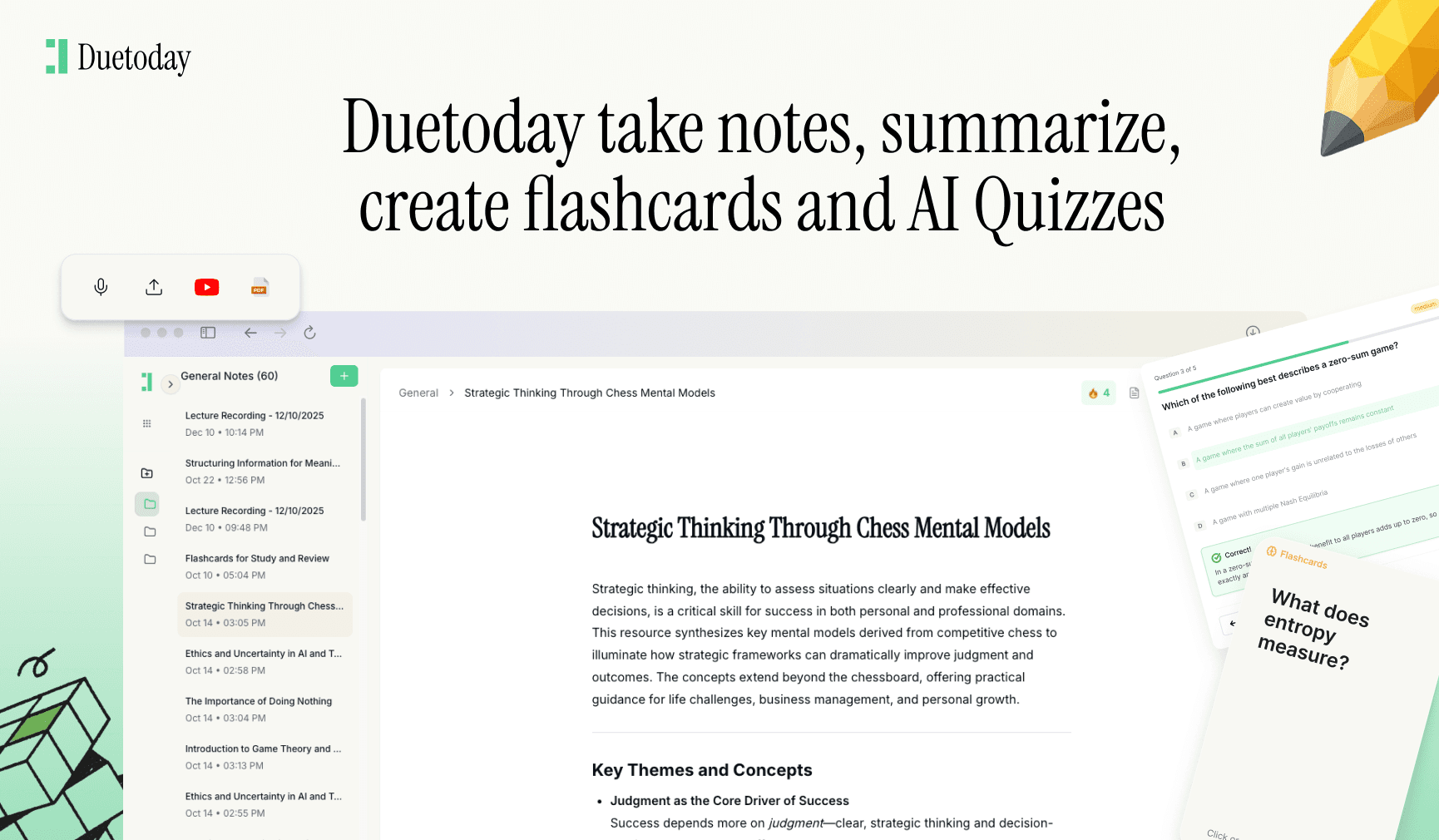
One of the biggest drains on concentration is the overwhelming feeling of having too much to organize. This is where Duetoday AI becomes an essential part of your natural focus strategy. Duetoday is an AI-powered learning platform that turns your dense lectures, messy PDFs, and scattered notes into clear summaries, flashcards, and structured study tools automatically. By acting like a personalized AI tutor, it removes the tedious work of rewriting and organizing, allowing you to focus purely on learning and retaining information. When you aren't stressed about how to start, your concentration naturally improves because the path to understanding is already laid out for you.
Nourishing Your Brain for Focus
What you eat directly impacts your cognitive function. High-sugar snacks cause a quick spike in energy followed by a devastating crash, leaving you feeling foggy-headed right when you need to be sharp. To improve concentration naturally, opt for brain-boosting foods like blueberries, walnuts, and fatty fish. Hydration is equally important; even mild dehydration can lead to headaches and a significant drop in concentration. Keep a water bottle on your desk and sip regularly throughout your study sessions.
The Role of Physical Movement
Sitting still for hours is the enemy of focus. Your brain needs oxygenated blood to function at its peak, and physical movement is the best way to get it circulating. If you find your mind wandering, take a ten-minute walk or do some quick stretching. This physical reset clears the buildup of stress hormones and provides a fresh perspective. Many students find that light exercise before a heavy study session helps them sit still and focus for much longer periods afterward.
Mastering the Art of Breaks
Concentration is a muscle that fatigues over time. To maintain high levels of focus throughout the day, you must take strategic breaks. Techniques like the Pomodoro method—working for 25 minutes and resting for 5—work because they provide a clear end point for your effort. During your breaks, step away from all screens. Looking at your phone is not a mental break; it is just more visual stimulation. Instead, look out a window, grab a snack, or simply close your eyes for a few minutes to let your brain consolidate the information you just processed.

What is the fastest way to improve concentration naturally?
The fastest way is to remove digital distractions and use the Pomodoro technique to build focus in short, manageable bursts.
Can diet really help with focus?
Yes, foods rich in antioxidants and healthy fats support brain health, while staying hydrated prevents the brain fog that ruins concentration.
How long should I study before taking a break?
Most experts recommend taking a break every 50 to 90 minutes, though many students find success with shorter 25-minute intervals.
Does exercise help with concentration?
Absolutely. Physical activity increases blood flow to the brain and releases neurotransmitters that improve mood and focus.