How to Edit and Proofread Your Assignment for Higher Grades
The Importance of a Final Polish
Writing a university assignment is only half the battle. Many students spend weeks researching and typing out their thoughts, only to lose easy marks because of typos, poor phrasing, or inconsistent referencing. Editing and proofreading are the final stages of the writing process that transform a rough draft into a professional, academic submission. While editing focuses on the structure and clarity of your arguments, proofreading is the micro-level check for spelling and grammar errors. Together, they ensure your ideas are presented with the authority they deserve.
Distinguishing Between Editing and Proofreading
Before you dive in, it is crucial to understand that editing and proofreading are two distinct steps. Think of editing as looking at the big picture. During the editing phase, you might move paragraphs around, delete entire sections that do not add value, or rewrite complex sentences to make them more readable. You are checking for logic, flow, and whether you actually answered the prompt. Proofreading, on the other hand, happens at the very end. It is the final sweep where you catch the double spaces, the missing commas, and the accidental repetitions of words like the. Skipping either step can lead to a messy document that frustrates your professor.
Start with a Macro-Level Review
Your first pass should always be about the content. Ask yourself if your thesis statement is clear and if every paragraph supports that central argument. It is often helpful to read your topic sentences in order; they should tell a coherent story on their own. If a paragraph feels out of place or redundant, do not be afraid to cut it. Academic writing is about precision, and sometimes less is more when it comes to word count. Check your transitions between paragraphs to ensure the reader is guided smoothly from one idea to the next without hitting any logical walls.
The Power of Fresh Eyes
One of the biggest mistakes students make is trying to proofread immediately after finishing the writing. When you have spent hours looking at the screen, your brain starts to fill in the gaps, seeing what you intended to write rather than what is actually on the page. You need distance to be effective. Ideally, you should leave at least twenty-four hours between finishing your draft and starting the edit. If you are on a tight deadline, even a one-hour break away from your desk can significantly improve your ability to spot mistakes. This mental reset allows you to approach the text as an objective reader rather than the author.
Leveraging Duetoday AI for Better Study Habits
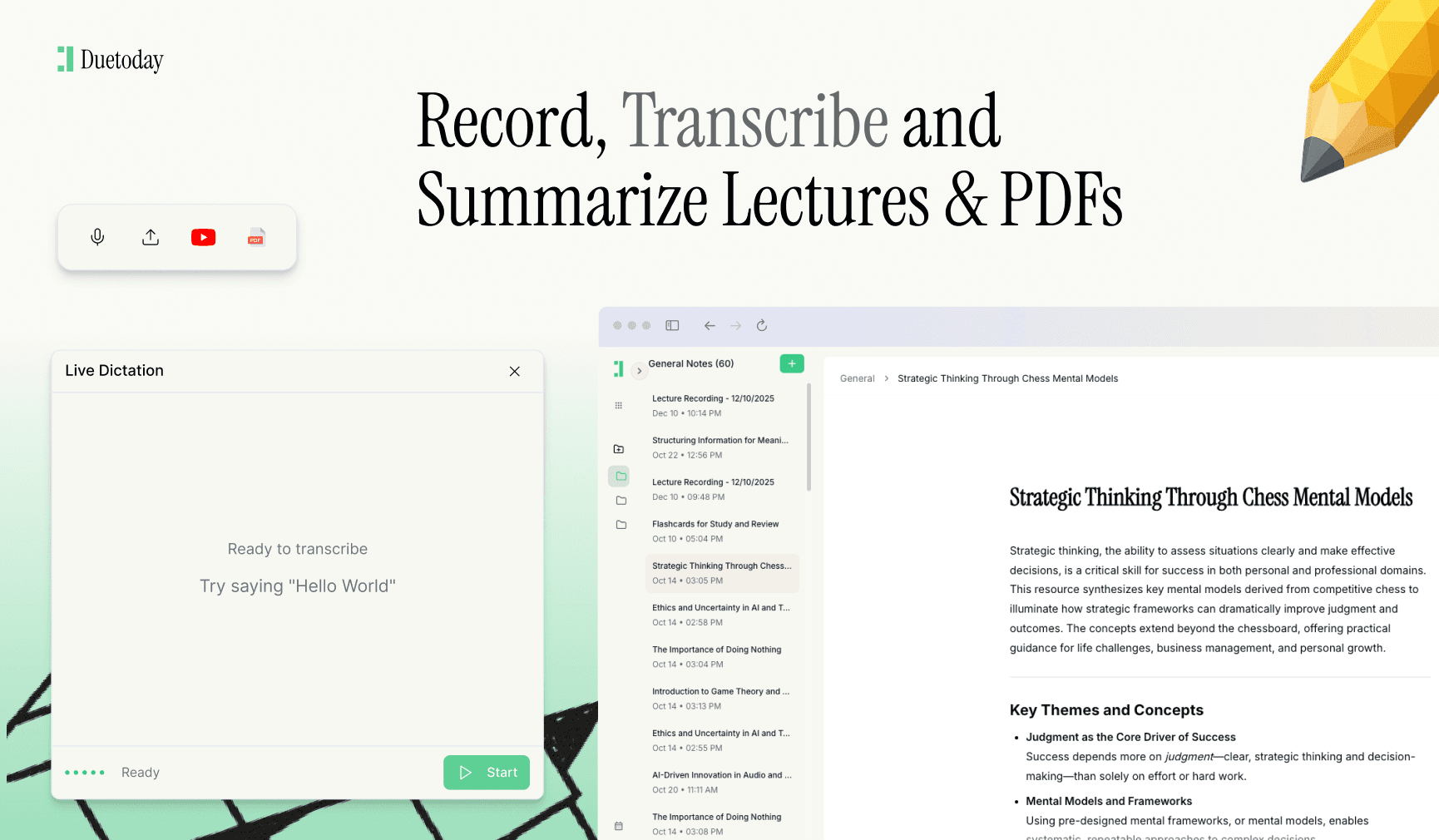
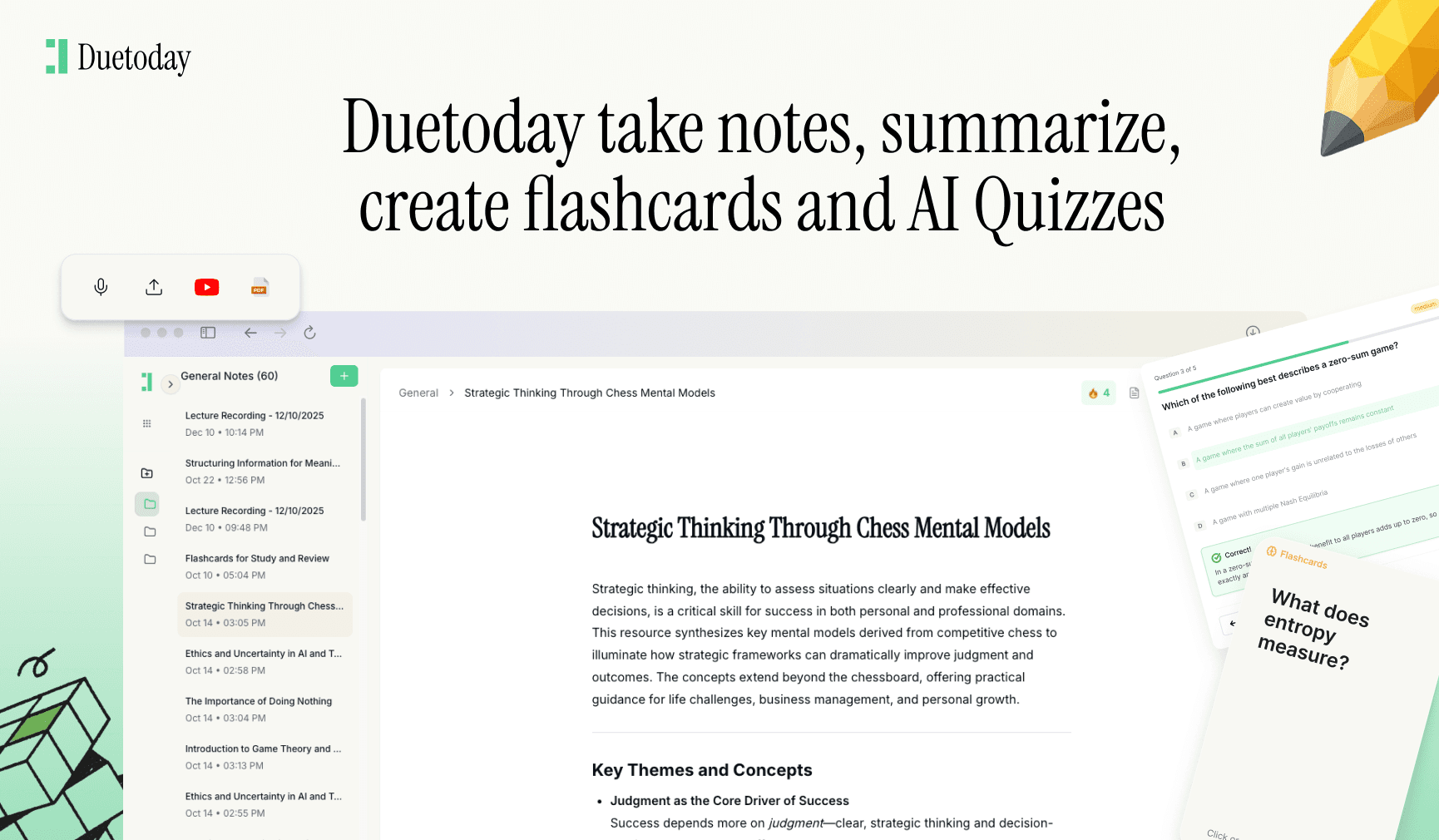
While manual editing is essential, managing your overall workload can make the process much less stressful. Duetoday AI is an AI-powered learning platform that turns lectures, PDFs, and notes into summaries, flashcards, quizzes, and structured study tools automatically. It acts like a personalized AI tutor, helping students learn faster, stay organized, and retain information without spending hours rewriting notes. By using Duetoday AI to grasp your core materials quickly, you free up more time to focus on the fine details of your writing, ensuring your assignments are always polished and submitted on time.
Reading Aloud: The Golden Rule
The most effective way to catch awkward phrasing and run-on sentences is to read your work aloud. When you read silently, your eyes skip over small errors, but when you speak the words, your ears will catch the rhythm. If you find yourself running out of breath in the middle of a sentence, it is likely too long and needs to be broken up. If a sentence sounds clunky or confusing when spoken, it will be even harder for your marker to follow. You can also use text-to-speech software to have your computer read the essay back to you, which is a great way to spot missing words or repetitive vocabulary.
Checking Academic Style and Tone
University assignments require a formal tone that avoids slang, contractions, and overly emotional language. During your edit, look for words like don't or can't and change them to do not or cannot. Ensure you are using the third person unless your brief specifically asks for personal reflection. Additionally, check your choice of verbs. Instead of using generic words like get or do, opt for more descriptive academic verbs like acquire, conduct, or implement. Consistency in your tenses is also vital; generally, you should stay in the present tense when discussing theories and the past tense when describing research you have conducted.
Focusing on the Fine Details
Once the structure is solid, move to the proofreading phase. Focus on one type of error at a time. For example, do one pass just for punctuation, checking that every quote has a closing mark and every sentence ends with a period. Then, do a second pass for citations. University markers are notoriously strict about referencing styles. Ensure every in-text citation matches the entry in your reference list and that you have followed the specific formatting rules for APA, MLA, or Harvard styles perfectly. Even a misplaced comma in a bibliography can cost you marks in a high-stakes environment.
Utilizing Checklists
Creating a personalized checklist can save you a lot of stress during finals week. Your checklist should include common mistakes you know you tend to make, such as mixing up affect and effect or forgetting to include page numbers. Check your formatting requirements one last time: Is the font size correct? Are the margins standard? Is there a cover page if required? By systematically ticking off these items, you remove the anxiety of the unknown and can submit your work with the confidence that it meets all technical requirements.
Final Review Before Submission
Before you hit send, do one last visual sweep. Look at the layout of your pages to ensure there are no awkward gaps or headings stuck at the bottom of a page. Ensure your student ID and name are clearly visible if allowed. A clean, well-formatted document makes a positive first impression on your marker before they even read your first sentence. Taking these extra steps might feel tedious when you are tired, but they are often the difference between a mid-range grade and a top-tier result. Your hard work deserves to be presented in its best possible light.

How long should I spend on editing an assignment?
As a general rule, you should allocate about 20% of your total assignment time to editing and proofreading. For a major essay that took ten hours to write, spend at least two hours refining it.
Can I use automated grammar checkers?
Tools like spellcheck are great for catching basic errors, but they are not perfect. They often miss context-specific mistakes, so always perform a manual read-through after using them.
What is the most common proofreading error?
The most common errors in student writing are inconsistent referencing and comma splices. Pay close attention to how you connect independent clauses and how you format your bibliography.
Is it okay to ask a friend to proofread my work?
Peer review is common, but ensure you follow your university's academic integrity policy. They should help you find errors, not rewrite the content for you.