How to Create AI-Generated Study Guides for University

The Evolution of Note Taking in the Digital Age
University life moves at a lightning pace. One day you are attending an introductory lecture, and the next, you are facing a mountain of research papers, seminar notes, and textbook chapters. Traditionally, creating a study guide meant manually combing through weeks of scribbled notes and highlighting physical books. This process, while thorough, often consumes more time than the actual act of studying. Today, artificial intelligence has completely transformed this workflow, allowing students to turn raw information into structured study materials in a fraction of the time.
Using AI to generate study guides is not about cutting corners or avoiding the work; it is about working smarter. By leveraging large language models and specialized educational tools, you can organize complex topics into digestible formats. This allows your brain to focus on active recall and critical thinking rather than the repetitive task of formatting documents. Whether you are dealing with a dense medical biology syllabus or a complex historical timeline, AI helps you see the big picture without getting lost in the weeds.
Identifying Your Core Material
Before you even touch an AI tool, you need to identify what content actually needs to be processed. Most students make the mistake of dumping an entire textbook into a generator. Instead, focus on your lecture slides, personal notes, and specific reading assignments mentioned by your professor. These are the sources that typically form the basis of your exams. When you provide the AI with targeted data, the resulting study guide is much more relevant to your specific course requirements and grading rubric.
Once you have gathered your PDFs, recorded lecture transcripts, and photos of your handwritten notes, you are ready to start the transformation. The goal is to move from a disorganized pile of information to a structured guide that includes summaries, key definitions, and potential exam questions. Digital tools can now recognize text from images and transcribe audio with incredible accuracy, making it easier than ever to feed your curriculum into an AI system.
Why Duetoday AI is the Ultimate Student Companion
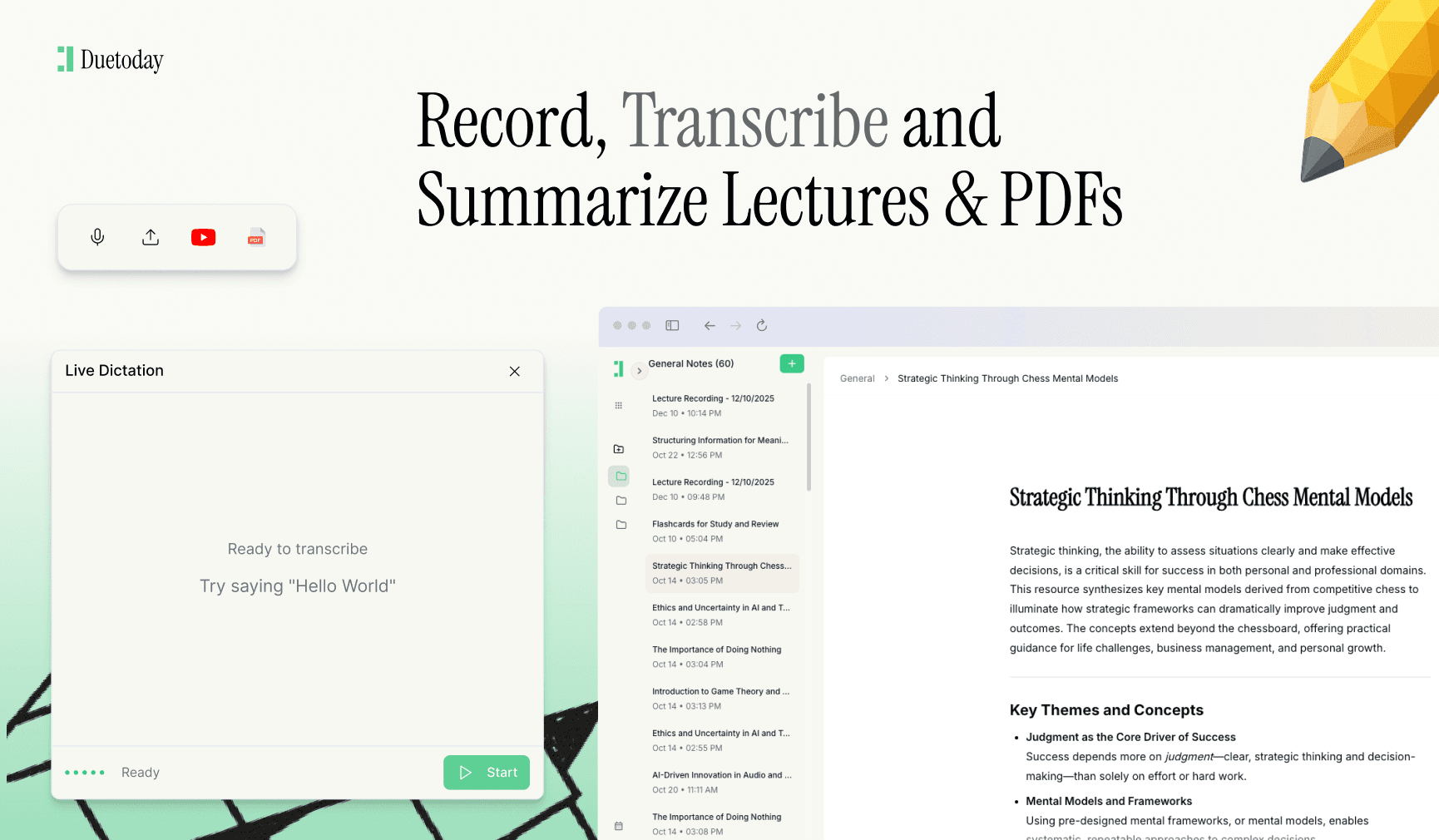
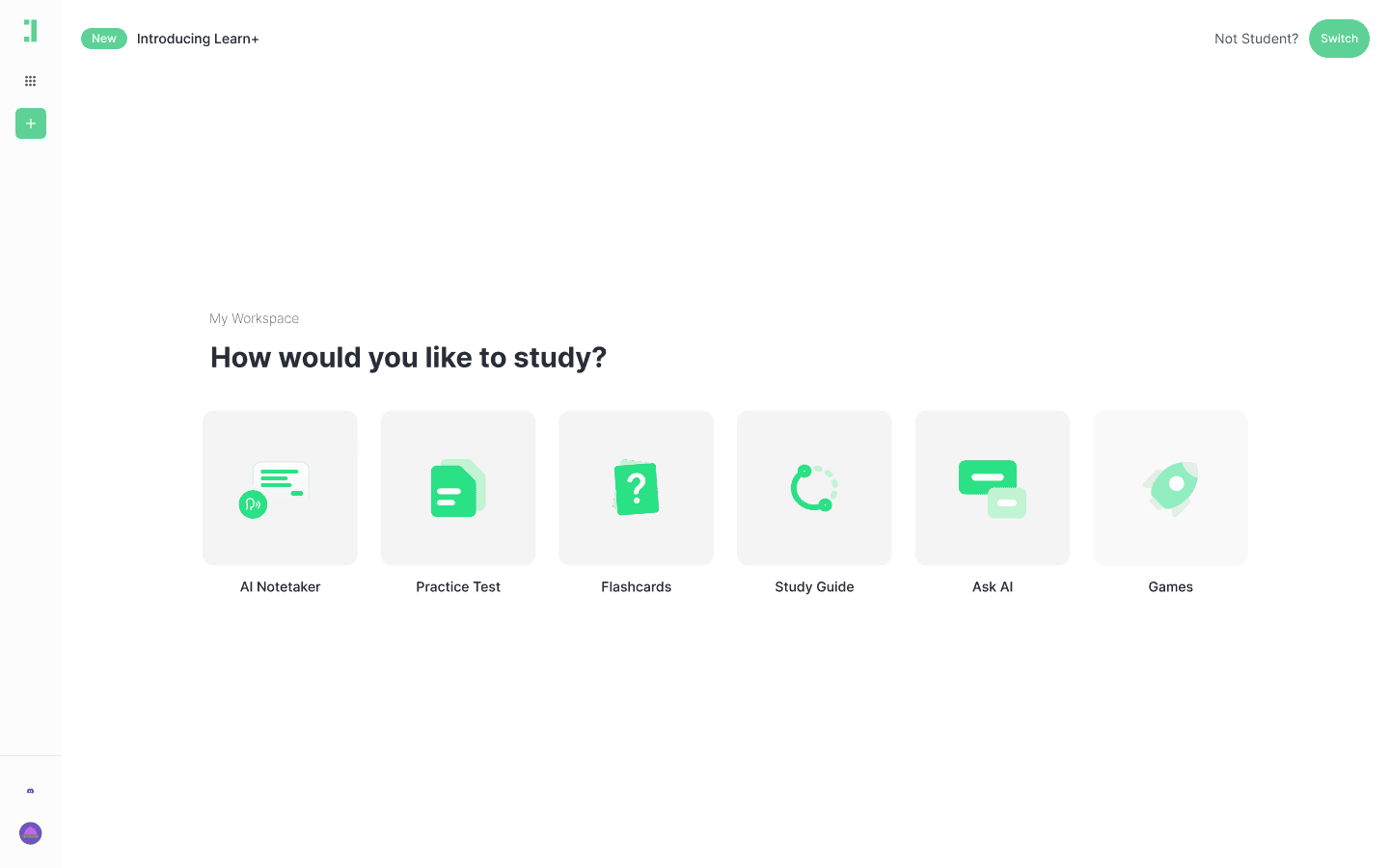
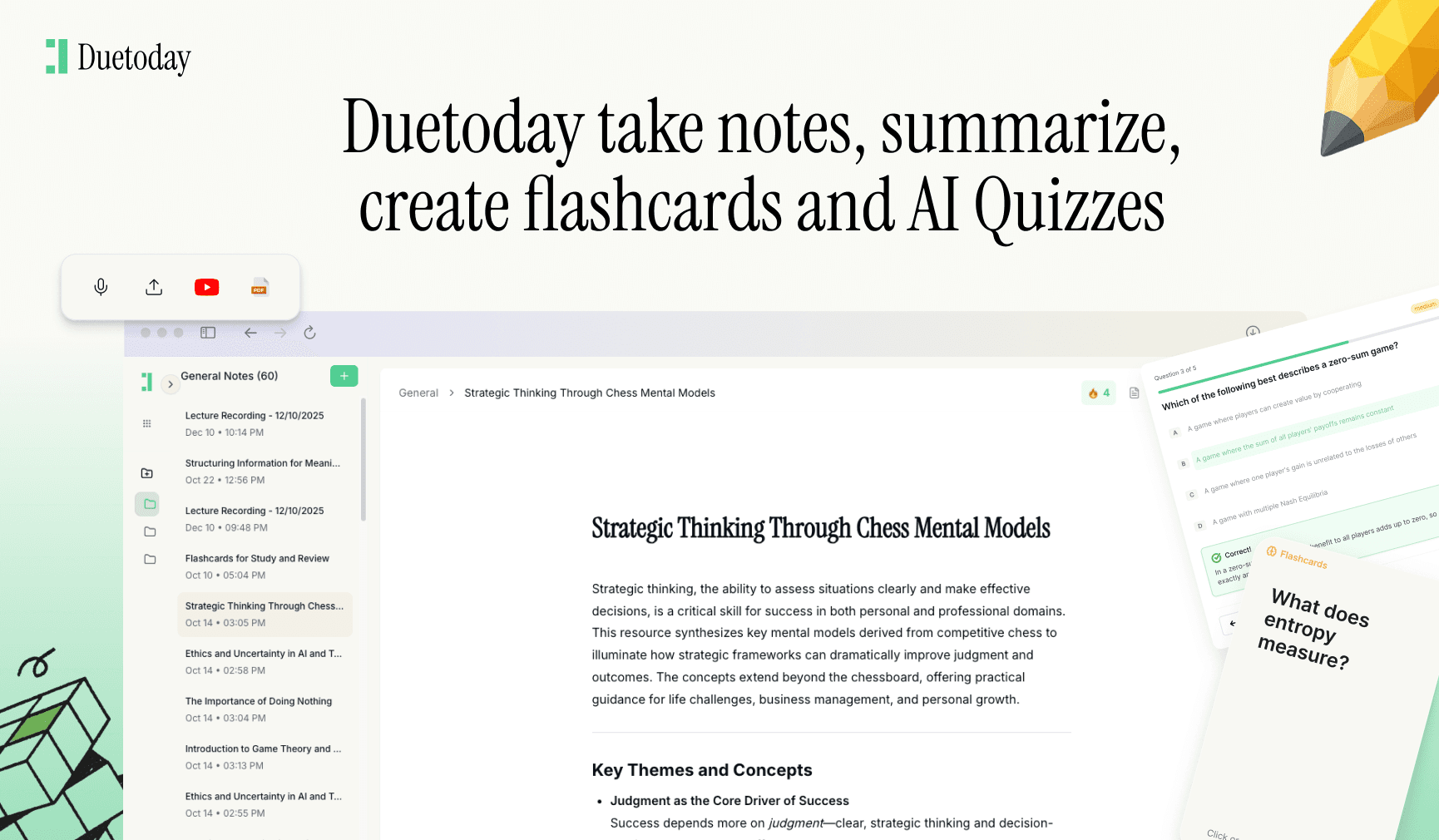
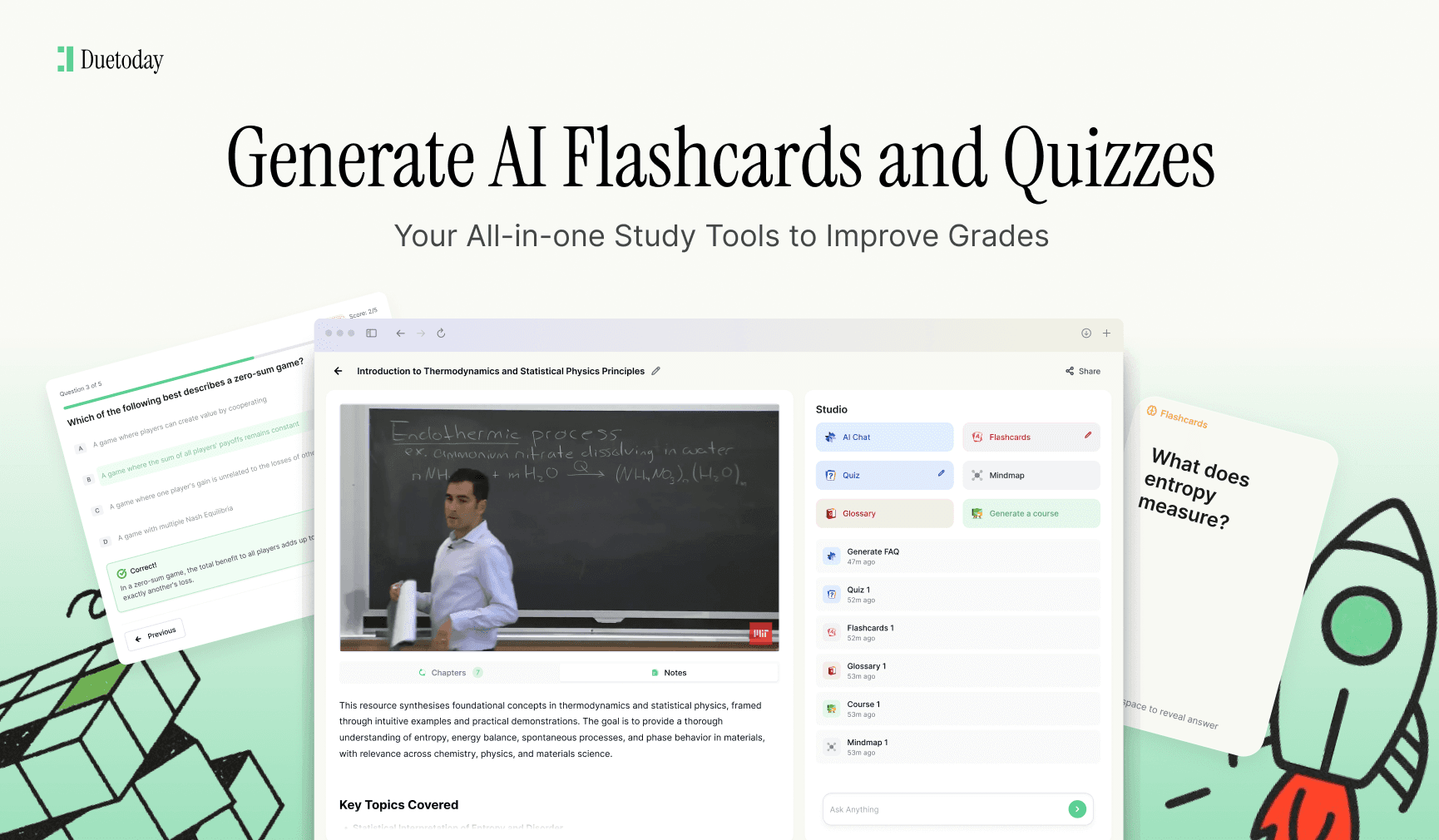
While general AI tools can be helpful, specialized platforms offer a much more streamlined experience for university students. Duetoday AI is an innovative learning platform designed to turn your messy lectures and dense PDFs into high-quality summaries and structured study tools automatically. Instead of spending hours trying to prompt a chatbot correctly, Duetoday acts as a personalized AI tutor that creates flashcards and quizzes directly from your uploaded materials. This allows you to spend your valuable time actually learning and retaining information rather than just organizing it, ensuring you stay ahead of your deadlines without the typical stress of finals week.
Structuring Your AI Prompt for Better Results
If you are using a general AI assistant to build your guide, the quality of your output depends entirely on your input. Instead of simply asking the AI to summarize a topic, give it a specific structure to follow. Ask it to identify the top ten most important concepts from your notes and provide a real-world example for each. Instruct the AI to create a table of contents or a glossary of terms that you might find difficult to remember. By providing clear constraints, such as keeping definitions under twenty words, you ensure the guide remains readable and concise.
Another effective strategy is to ask the AI to play the role of a professor. Tell the AI to look at your notes and generate five difficult essay questions or a set of multiple-choice questions based on the content. This turns a static study guide into an interactive session. You aren't just reading information; you are testing your knowledge in real-time. This method of active testing is scientifically proven to improve long-term memory retention compared to passive reading.
Refining and Fact-Checking Your Guide
AI is powerful, but it is not infallible. One of the most important steps in creating an AI-generated study guide is the review process. Always cross-reference the AI’s output with your original lecture slides to ensure no 'hallucinations' or inaccuracies have slipped through. This review phase is actually a secret study session in disguise. By checking the AI’s work, you are engaging deeply with the material and catching gaps in your own understanding.
Once you are satisfied with the accuracy, format your guide for quick scanning. Use different font sizes for headers, add images or diagrams where necessary, and perhaps even color-code different sections based on their difficulty level. A well-organized document is much more likely to be used frequently than a wall of gray text. The final product should be a personalized roadmap that guides you through your revision period, making you feel confident and prepared for whatever your professors throw your way.
The Long-Term Benefits of AI Learning
Adopting AI tools early in your university career sets you up for success in the professional world. The ability to synthesize large amounts of data and communicate complex ideas clearly is a skill that is highly valued in almost every industry. By mastering these tools now, you are not just getting better grades; you are building a modern workflow that will serve you long after graduation. University is the perfect time to experiment with these technologies, finding the right balance between human intuition and machine efficiency.
Can I use AI to study for any subject?
Yes, AI is versatile enough to handle everything from humanities and social sciences to complex STEM subjects by processing text and data.
Is using AI to create study guides considered cheating?
Creating a study guide with AI is a study aid, similar to using a highlighter or a tutor. As long as you use it to help you learn and do not submit AI-generated work as your own assignments, it is generally accepted as a productivity tool.
How do I ensure the AI doesn't miss important details?
The best way is to provide specific source material like lecture notes or specific PDF chapters rather than asking broad general questions.
What is the best format for an AI study guide?
A mix of bulleted summaries, a glossary of key terms, and a section of practice questions usually provides the best results for exam preparation.