How to Avoid Plagiarism in University: The Ultimate Student Guide
Understanding Academic Integrity in the Modern Era
Stepping into university life brings a wave of excitement, but it also introduces a level of academic rigor that many students find daunting. Among the most critical concepts to master is academic integrity. At its core, avoiding plagiarism is not just about avoiding punishment; it is about respecting the intellectual labor of others and developing your own voice as a scholar. Whether you are writing a first-year essay or a final-year dissertation, understanding how to properly credit sources is the foundation of your academic success.
Plagiarism often happens unintentionally. Many students fall into the trap of poor note-taking or last-minute rushing, leading to missing citations or phrases that look a little too similar to the original text. In a world where information is just a click away, the line between inspiration and imitation can sometimes feel blurred. However, universities use sophisticated software to detect these overlaps, making it essential for you to have a solid strategy in place from the moment you start researching your topic.
The Different Faces of Plagiarism
To avoid the pitfalls of academic misconduct, you first need to recognize what it looks like. Most people think of plagiarism as simply 'copy-pasting' from Wikipedia, but it goes much deeper than that. There is 'collusion,' which happens when you work too closely with a friend on an individual assignment. Then there is 'self-plagiarism,' where you submit work you previously wrote for a different module. Even paraphrasing someone's unique idea without giving them credit counts as plagiarism because the intellectual property still belongs to them.
Developing a systematic approach to your research is the best defense. When you find a great quote or a compelling statistic, record the source immediately. Do not wait until the end of the week to organize your references, as you are likely to forget where a specific idea came from. By keeping a running bibliography, you ensure that every thought in your paper is either your own or clearly attributed to its creator. This level of organization not only protects your reputation but also makes the final editing process much smoother.
Mastering the Art of Paraphrasing
One of the most valuable skills you can learn in university is paraphrasing. This is the process of taking someone else's idea and explaining it in your own words. The trick is to change more than just a few words; you need to absorb the meaning and restructure the sentence entirely. A common mistake students make is 'patchwriting,' which involves swapping out synonyms while keeping the original sentence structure. Professors and AI detectors often flag this as plagiarism because the underlying logic and flow remain identical to the source.
To paraphrase effectively, read the passage until you fully understand it, then look away and try to explain the concept out loud as if you were telling a friend. Write down that spoken version, and then check it against the original to ensure you haven't accidentally used the same phrasing. Even when you use your own words, remember that the idea still belongs to the original author, so a citation is still required. This balance of original expression and honest attribution is what creates a high-quality academic paper.
Leveraging Technology for Smarter Studying
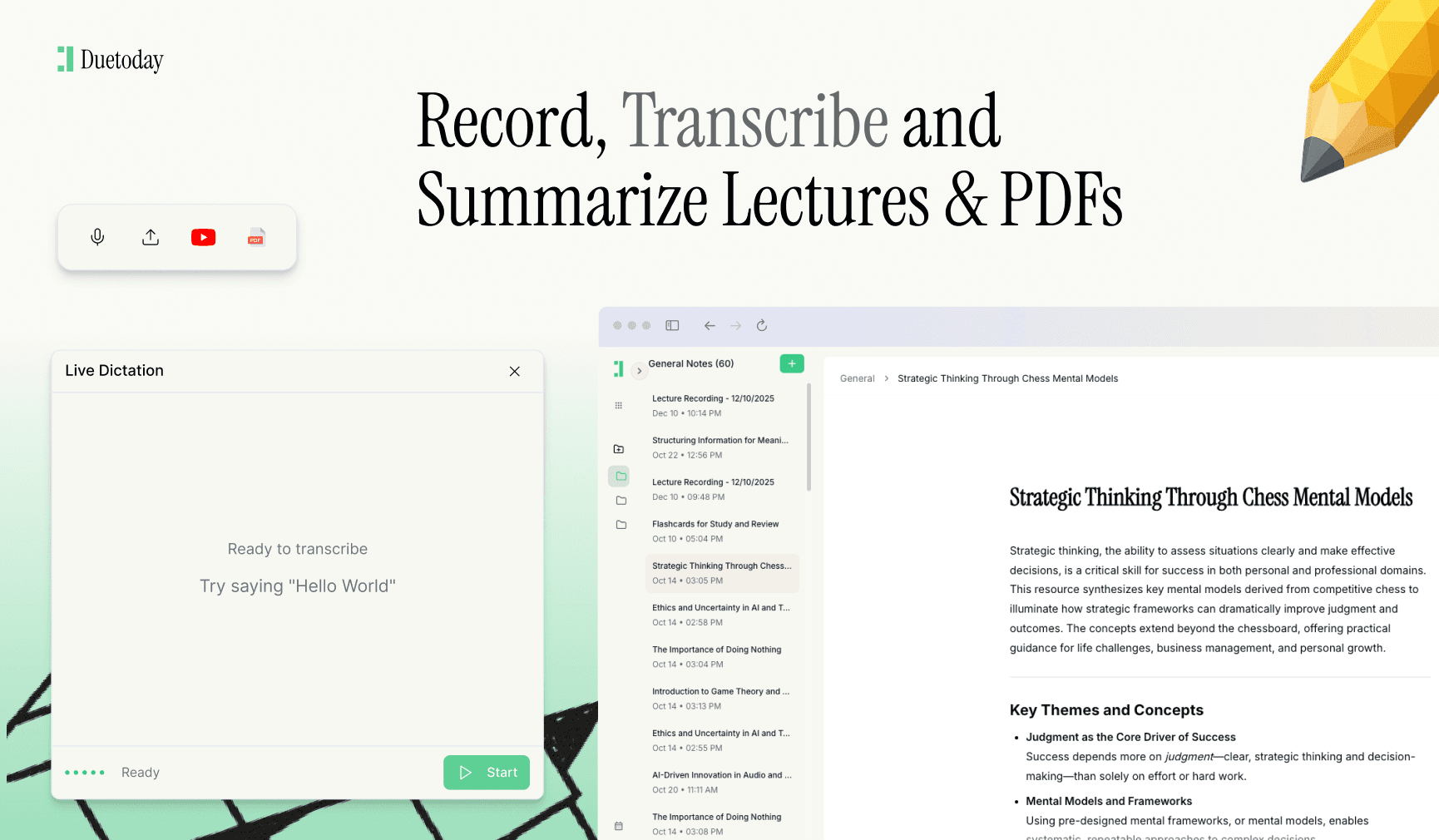
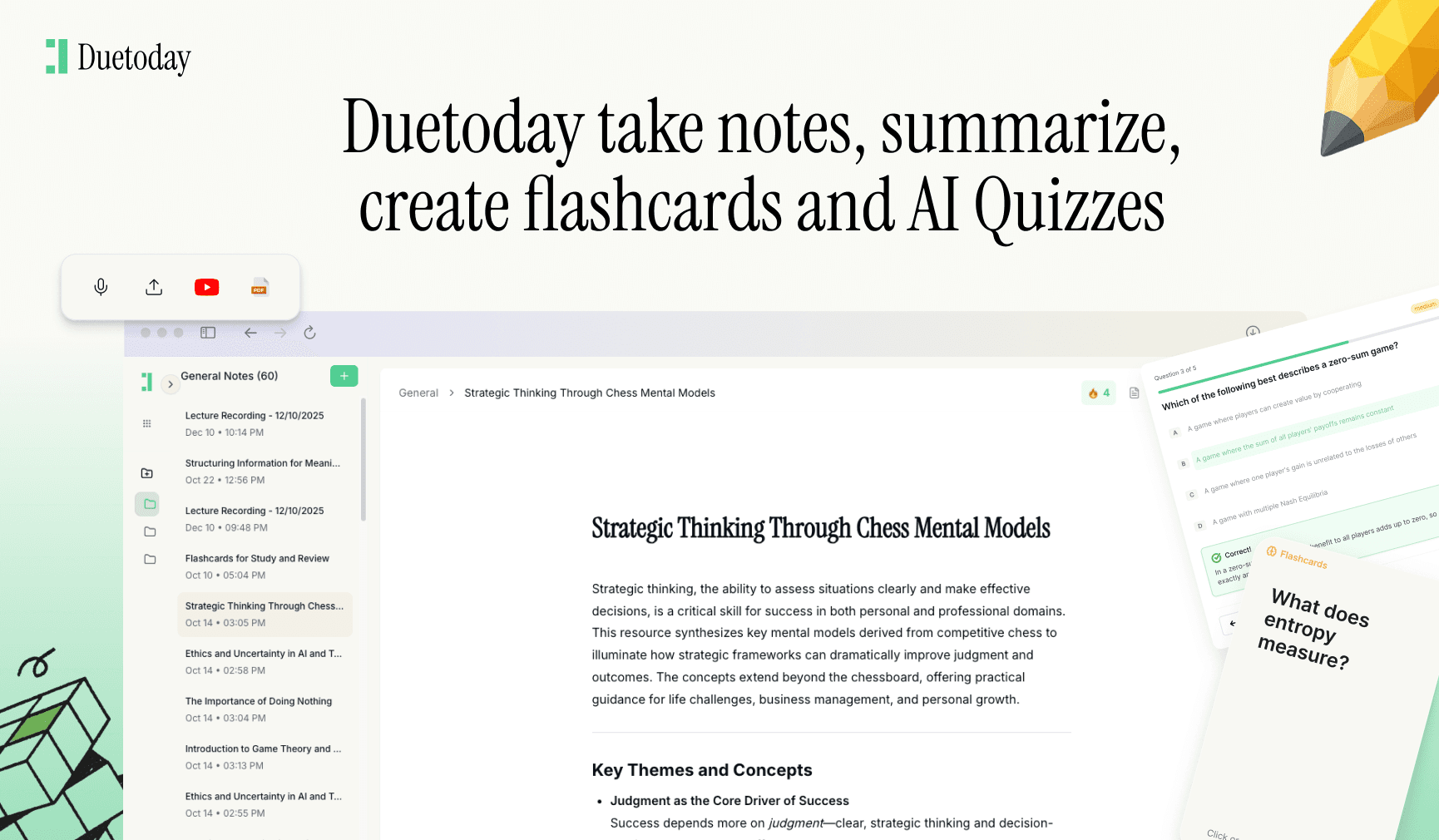
While the pressure to stay original can be high, technology is also evolving to help students manage their workloads more effectively. This is where Duetoday AI becomes an essential part of your academic toolkit. Duetoday is an AI-powered learning platform that turns your lectures, PDFs, and messy notes into clear summaries, flashcards, and structured study tools automatically. Instead of feeling overwhelmed by a mountain of research papers and risking accidental plagiarism through messy note-taking, you can use Duetoday to stay organized. It acts as a personalized AI tutor, helping you understand complex concepts and retain information without the stress of manual rewriting, ensuring you have a clear grasp of your material before you even start writing your essay.
The Role of Citation Styles
Every university and department has a preferred citation style, such as APA, MLA, or Harvard. Mastering these formats early on will save you endless hours of frustration. These systems provide a standardized way for readers to track your research journey. When you cite correctly, you are showing your professor that you have done the work, engaged with the existing literature, and are now contributing something new to the conversation. It adds weight to your arguments and demonstrates a professional level of scholarship that is highly valued in higher education.
Using reference management software can be a lifesaver. Tools like Zotero or Mendeley allow you to save papers and generate bibliographies with a single click. However, do not rely on them blindly. Always double-check the generated citations against your university's official style guide. Sometimes, small errors in metadata can lead to incorrect formatting in your reference list. Taking five minutes to verify your bibliography can be the difference between a high grade and a meeting with the academic integrity board.
Creating an Original Voice
The ultimate goal of avoiding plagiarism is to find your own academic voice. University is not just about repeating what experts have said; it is about analyzing those experts and offering your own perspective. When you use a quote, follow it up with your own analysis. Why is this quote relevant? Does it support your argument, or does it present a flaw in the current way of thinking? By sandwiching every piece of evidence between your own thoughts, you ensure that the majority of your paper is original content.
Finally, always leave enough time for a final review. Plagiarism often creeps in during the final hours before a deadline when students are tired and rushed. If you finish your draft 48 hours early, you have time to run it through a similarity checker and review your citations with fresh eyes. This practice allows you to spot missing page numbers or quotation marks that you might have overlooked in the heat of the moment. Consistent effort and a proactive approach to organization are the keys to a stress-free and successful university career.

What is the most common form of unintentional plagiarism?
The most common form is poor paraphrasing, where a student changes a few words but keeps the original sentence structure without realizing it still requires a citation.
Can I use AI to help write my essay?
Most universities consider generating entire essays with AI as a form of academic misconduct. However, using AI for summarizing notes or creating study aids is generally encouraged.
Do I need to cite common knowledge?
No, facts that are widely known and accepted, like the dates of World War II, do not usually require a citation, but when in doubt, it is always safer to cite.
What happens if I forget a citation?
Even if it is an accident, missing a citation can lead to a loss of marks or a formal warning, depending on your university's specific policies.