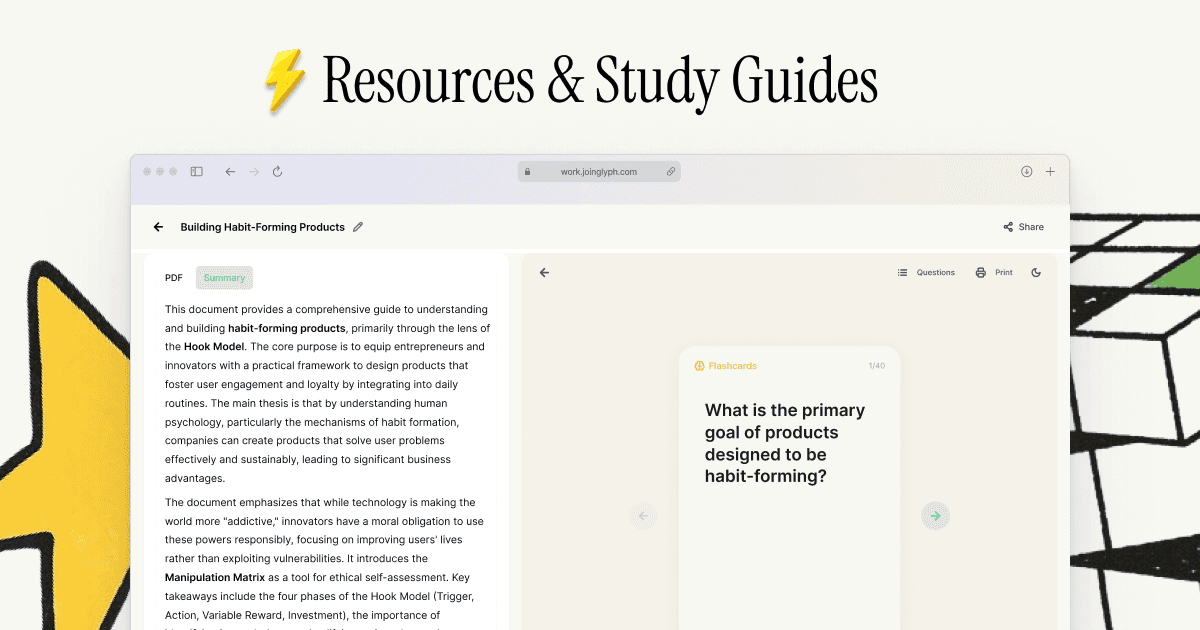
Transcribe Online Class Recordings to Notes (Next-Level Notes in Minutes)
Learn how to transcribe online class recordings into organized study notes. Convert audio/video lectures into searchable, high-quality revision materials fast.
Upload Your Recording
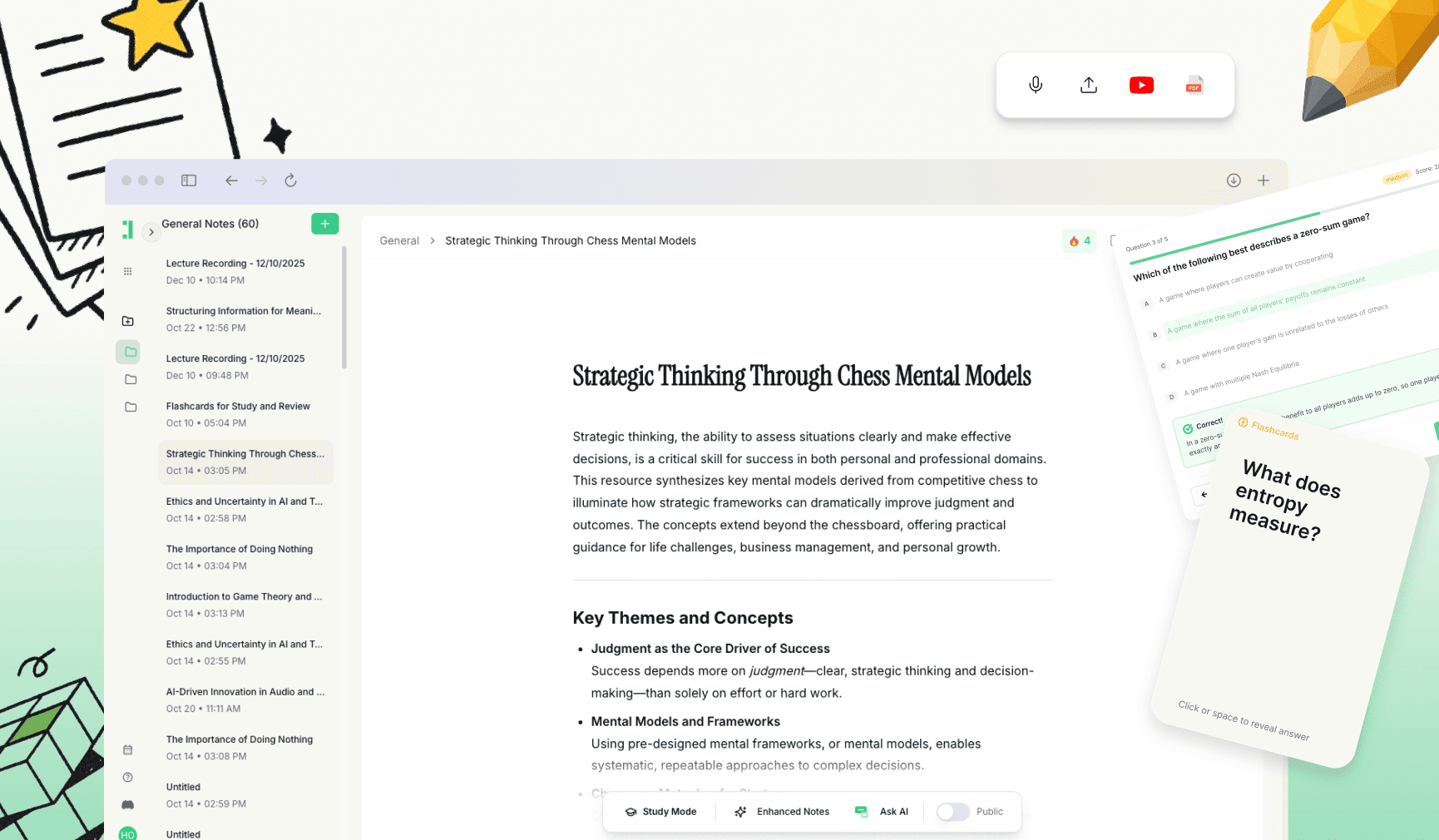
The Challenge of Modern Learning
Keeping up with the pace of online class recordings can be an uphill battle. Whether you are dealing with dense academic theories, complex technical frameworks, or fast-moving case studies, trying to manually type every word a lecturer says often means you miss the underlying nuance. The cognitive load of switching between listening and writing causes you to lose focus on the actual concepts being taught.
Transcribing your online class recordings into notes is a total cheat code for academic success. Instead of scrambling to catch every sentence, you can capture the full explanation, including those vital "exam hints" and spontaneous examples that professors often share but never put on their slides. This method ensures you have a complete record of the session without the stress of manual transcription.
The best part about this workflow is its versatility. It works perfectly whether you are recording a live session via dictation or uploading pre-recorded video and audio files. From Zoom recordings to MP4 lecture videos and mobile voice memos, any file format can be transformed into a structured, searchable document that serves as the foundation for your revision.
Why Transcribing Lectures is Powerful
When you shift from manual note-taking to a transcription-based workflow, you unlock a level of detail that traditional methods simply can't match. It allows you to stay present during the lecture, focusing on understanding rather than just recording. This is especially useful for subjects that require deep synthesis of information or multi-step problem solving.
By turning your recordings into text, you create a digital asset that is far more valuable than a raw video file. You can search for keywords, jump to specific topics, and organize information logically. Here is what you can expect from this approach:
Retain every specific definition and contextual example provided.
Create highly searchable revision guides before major exams.
Extract specific frameworks, formulas, and process steps easily.
Perform faster weekly reviews without the need to rewatch hours of video.
Bridge the gap between spoken word and written study materials.
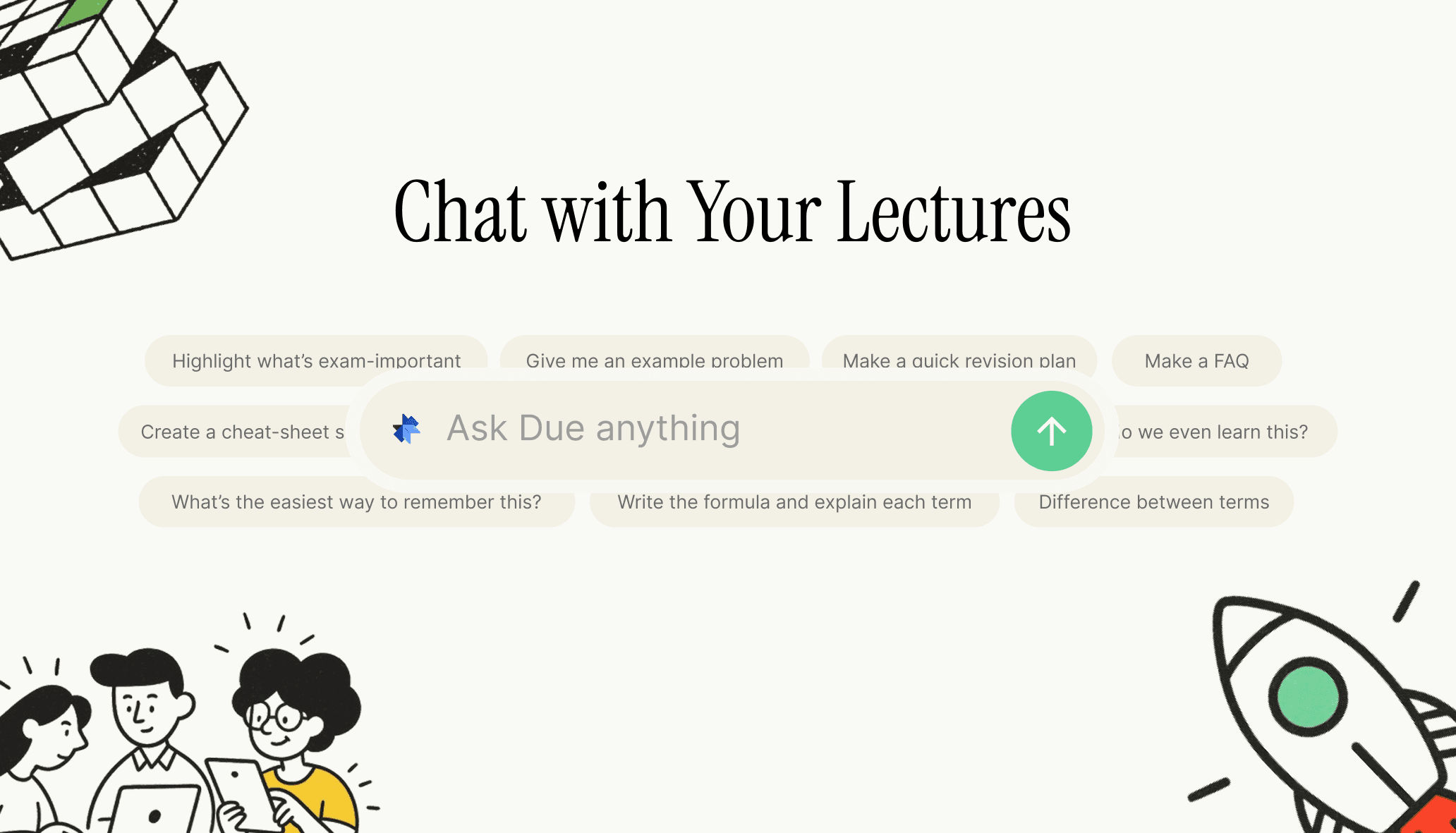
The Next-Level Workflow: Lecture to Clean Notes
Step 1: Capture the lecture or upload your file. You can use your phone’s voice memo app for in-person classes, or save the recording from an online lecture platform like Zoom or Teams. If you already have the video file sitting on your hard drive, you are ready to begin. The process accommodates both live dictation and existing file uploads.
Step 2: Transcribe and structure it for study. Use a tool to convert the audio into text. Modern AI transcription is incredibly accurate, but the real power lies in the structure. Ensure your transcript includes clear headings, logical sections, and speaker labels if there is a Q&A session, making it easier to navigate later.
Step 3: Shape the notes for your subject. Turn the raw transcript into a format that mirrors how you will be tested. If your subject is heavy on definitions, pull those out into a glossary. If it involves processes or formulas, organize them into a step-by-step guide or a framework list that highlights when and how to apply certain rules.
Step 4: Do a quick cleanup pass. No AI or transcript is 100% perfect for an exam until you’ve reviewed it. Use this checklist to refine your notes:
Correct technical names or specific academic terms.
Highlight key definitions for quick scanning.
Format formulas or mathematical frameworks.
Tag examples that the professor mentioned as "exam-likely."
Add a sentence or two of context to clarify transitions.
Break down large blocks of text into readable sections.
Step 5: Study smarter with a revision loop. Now that you have structured notes, use them for active recall. Instead of just reading them, turn headings into questions or use the content to create a summary. This makes your notes a living document that grows as your understanding of the subject increases.
What to Include in Your Notes
To make your study notes effective, you need to include more than just the transcript. Focus on these core elements:
Key definitions explained in plain English.
Formulas or frameworks and their practical applications.
Step-by-step processes or logical sequences.
Detailed case studies or worked examples from the lecture.
Common misconceptions clarified by the instructor.
Direct hints from the lecturer about potential exam questions.
Comparison tables for contrasting theories or methods.
Assumptions or conditions required for specific rules to apply.
Using Duetoday for Your Lectures
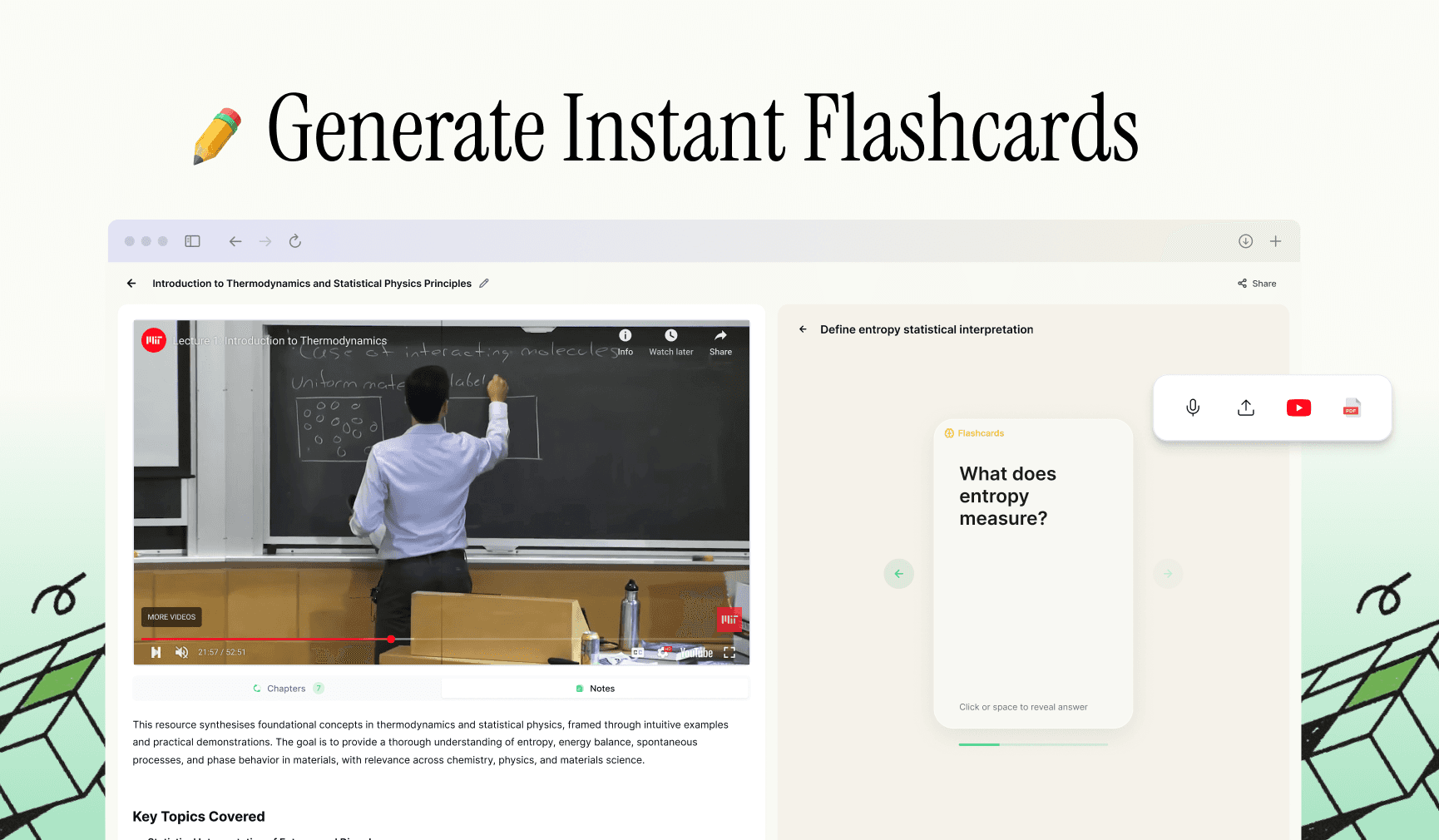
If you are looking for a streamlined way to handle this workflow, Duetoday is an AI note-taker designed specifically for students. It takes the heavy lifting out of organization by handling both live dictation and file uploads for audio and video recordings. It captures the lecture and immediately produces an organized transcript and structured notes tailored for revision.
Beyond just transcription, Duetoday offers a suite of study tools that adapt to your content. You can generate flashcards, practice quizzes, or chat with an AI tutor to clarify difficult concepts within your notes. It is a practical option for students who want to spend less time formatting and more time learning.
Common Issues and Simple Fixes
Too far from the speaker: If the audio is muffled, try to sit closer to the front in live settings or use a dedicated microphone. For online classes, ensure the system audio is being captured directly rather than through speakers.
Background noise: Background hum can interfere with clarity. Try to record in a quiet environment and avoid typing on your laptop keyboard too close to the microphone.
Multiple speakers: When several people are talking, use tools that offer speaker diarization to label who is speaking, which helps keep the context of class discussions clear.
Long lectures: For three-hour seminars, consider splitting the file into chapters or modules. This makes the final notes much easier to digest and prevents information overload.
Example of Transcription Transformation
Raw Transcript: "So like, the principle of scarcity, right, it means when things are limited but people want them, the price goes up, like in the 1970s oil crisis example I mentioned earlier..."
Cleaned Notes: The Scarcity Principle: An economic theory stating that limited supply coupled with high demand results in increased prices. Example: The 1970s oil crisis demonstrates how restricted supply drives market shifts.
How accurate is lecture transcription for online classes? Modern AI models are highly accurate, usually reaching over 90% precision. For technical subjects, you may need a quick pass to ensure specific terminology is spelled correctly.
What file types can I use (audio/video)? You can use almost any standard file format including MP4, MOV, and AVI for video, or MP3, WAV, and M4A for audio recordings.
Can I use dictation instead of uploading a file? Yes, dictation works perfectly for live lectures where you want to record the audio in real-time through your device microphone rather than uploading a saved recording.
Can I transcribe online lectures (Zoom/Teams/recorded video)? Absolutely. You can record the system audio during the meeting or upload the saved recording file provided by the platform after the class ends.
How long does it take to transcribe a 60-minute lecture? Transcription is typically very fast, often taking only a few minutes to process an hour-long recording, allowing you to start studying almost immediately.
Is a transcript enough, or should I convert it into structured notes? A transcript is a great start because it is searchable, but converting it into structured notes makes it easier to memorize and navigate during intense revision sessions.
Can I turn notes into flashcards and practice questions? Yes, once you have your structured text, you can easily use it as a source to generate flashcards and quizzes, which are essential for active recall and exam preparation.
Duetoday is an AI-powered learning OS that turns your study materials into personalised, bite-sized study guides, cheat sheets, and active learning flows.
GET STARTED
Most Powerful Study Tool
for Students and Educators
Try Out Free. No Credit Card Required.