Transcribe Lectures to Notes (Next-Level Notes in Minutes)
Learn how to transcribe lectures to notes quickly. Turn audio and video recordings into organized study guides, flashcards, and searchable text with this guide.
Upload Your Recording
Transcribe Lectures to Notes (Next-Level Notes in Minutes)
Keeping up with a fast-paced lecture can feel like a losing battle. Whether you are dealing with complex terminology, rapid-fire formulas, or dense conceptual frameworks, trying to write everything down manually often means you miss the nuances that actually help you understand the material. When you focus solely on the act of writing, your brain stops processing the information in real-time, leaving you with incomplete thoughts and messy scrawls.
Transcribing your lectures into structured notes is the ultimate academic cheat code. Instead of capturing fragmented sentences, you capture every explanation, every spontaneous example, and those crucial "exam hints" that lecturers often drop mid-sentence. By turning the spoken word into text, you shift your focus from transcription to comprehension, ensuring you never miss a vital piece of the puzzle again.
The best part about modern workflows is the flexibility they offer. This process works perfectly whether you are recording a live session using dictation or uploading pre-recorded files. It supports any audio or video format, including lecture recordings, online class videos, and Zoom or Teams sessions. You are no longer limited by how fast you can type; you are only limited by how much you want to learn.
Why Transcribing Lectures is Especially Powerful
Transcribing isn't just about having a script of the class; it’s about creating a searchable, high-fidelity database of your education. When you have a full transcript, you can quickly search for specific keywords or concepts weeks later during exam season, saving you hours of scrubbing through audio or video timelines.
Furthermore, having the full context of a lecture allows you to see the connections between different topics that might have seemed unrelated at the time. You can pull out frameworks and formulas with 100% accuracy, ensuring your revision is based on the actual facts presented by your professor rather than your best guess at what they said.
Keep every definition and specific example intact for better context.
Create a searchable revision bank for quick answers before exams.
Pull exact frameworks, formulas, and process steps without errors.
Complete your weekly reviews faster without having to rewatch full videos.
The Next-Level Workflow: Lecture to Clean Notes
Step 1: Capture the lecture or upload a file. You can use your phone’s voice memo app for in-person dictation or record directly on your laptop. If you have an online class, save the recording or download the video file. Whether it is a .mp3, .wav, or .mp4, the goal is simply to get the high-quality audio into your digital workspace.
Step 2: Transcribe and structure it for study. Once you have the audio, the next step is generating the text. Modern AI models are incredibly accurate, but the real power lies in the structure. Ensure your transcript is broken down by headings or timestamps so you can easily reference specific parts of the lecture later on.
Refining Your Transcription into Study Material
Step 3: Turn the transcript into notes that match your subject. A raw transcript is just a wall of text; you need to shape it into something usable. Focus on identifying the core definitions, step-by-step processes, and any comparative analysis the professor made. If it’s a stem subject, isolate the formulas; if it’s humanities, focus on the arguments and evidence.
Step 4: Do a quick cleanup pass. This is where you ensure the notes are polished and ready for long-term storage. Spend ten minutes scanning the text to ensure technical terms are spelled correctly and the hierarchy of information makes sense. Use the following checklist to guide your review:
Fix key terms, names, and academic jargon.
Highlight and bold important definitions.
Pull and format formulas or logical frameworks.
Mark specific examples mentioned as likely exam questions.
Add any missing context from your own memory or slides.
Split long, dense paragraphs into digestible sections.
Step 5: Study smarter with a revision loop. Now that you have clean, structured notes, use them for active recall. Instead of just reading them, turn them into summaries or self-test questions. Because your notes are digital and organized, you can easily move them into a spaced repetition system to ensure the knowledge sticks long after the lecture ends.
What to Include in Your Subject Notes
To make your notes truly effective, they should contain a mix of raw data and interpreted meaning. Don't just record what was said—record why it matters and how it applies to your upcoming assessments.
Key definitions explained in plain English.
Formulas and the specific conditions in which they apply.
Step-by-step processes for solving problems or analyzing texts.
Case studies or worked examples used during the session.
Common mistakes or misconceptions highlighted by the lecturer.
Direct hints about exam structure or potential questions.
Comparison tables (e.g., Theory A vs. Theory B).
Key assumptions and theoretical conditions.
Using Duetoday for Your Lectures
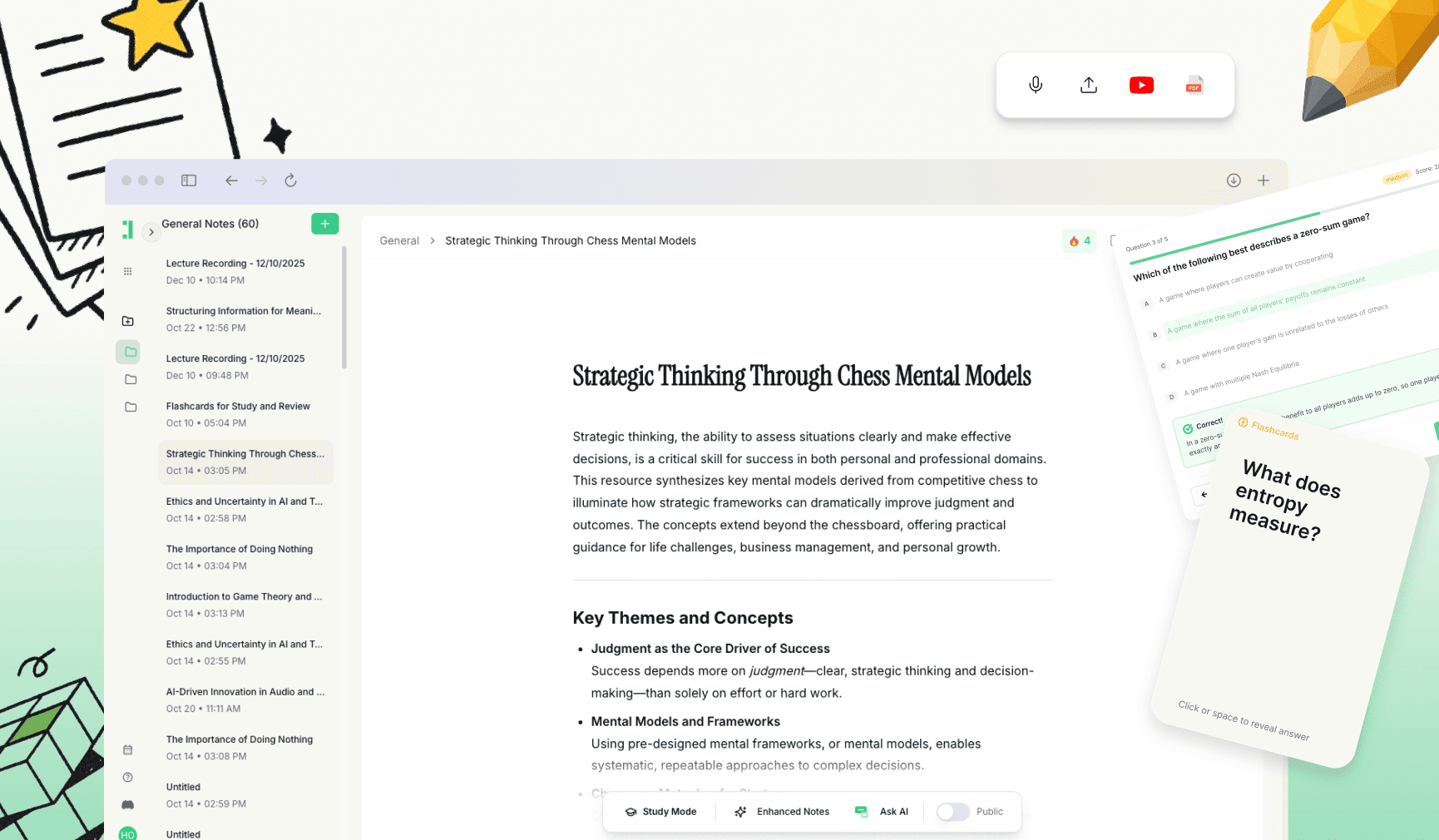
If you are looking for a streamlined way to manage this entire process, Duetoday is an excellent option. It serves as an AI-powered note-taker designed specifically for students who need to turn audio or video into study-ready material. It handles everything from live dictation during a seminar to uploading 4K video files from an online portal.
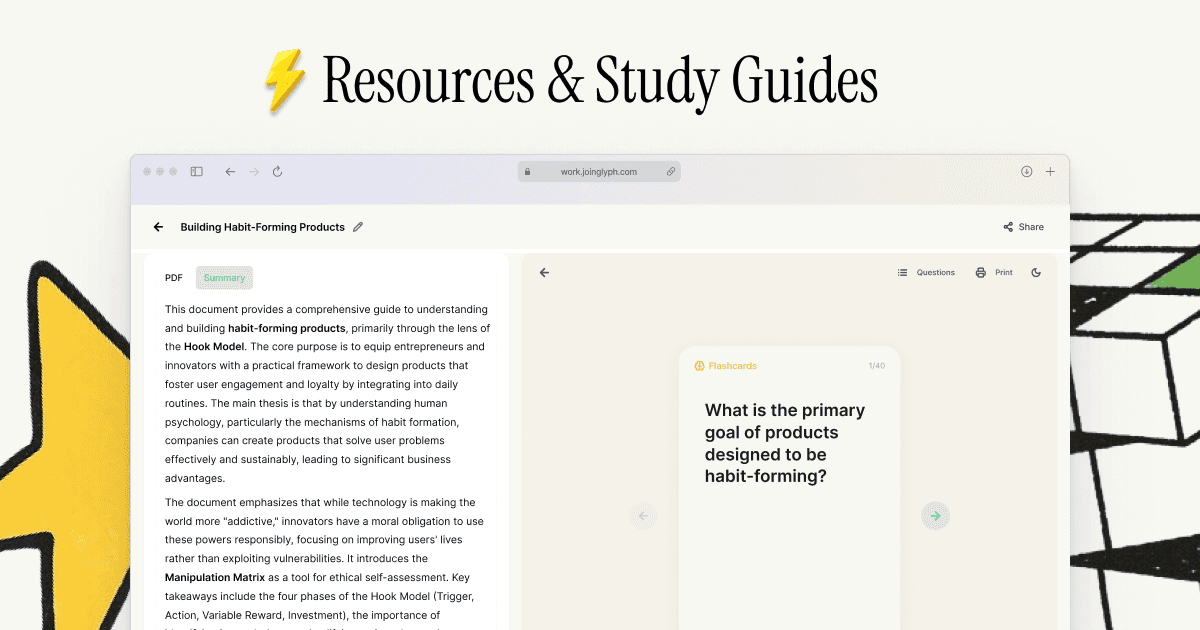
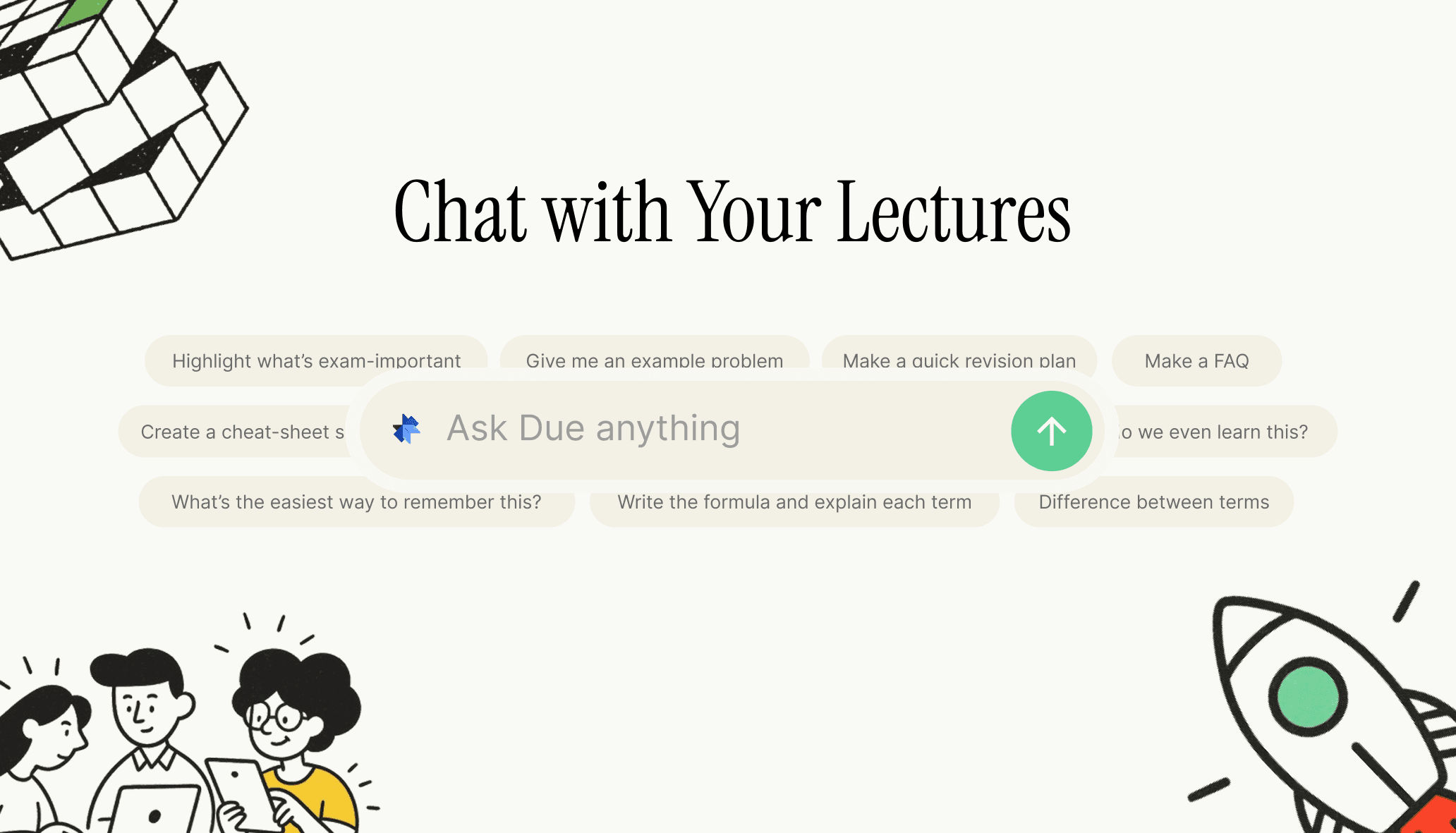
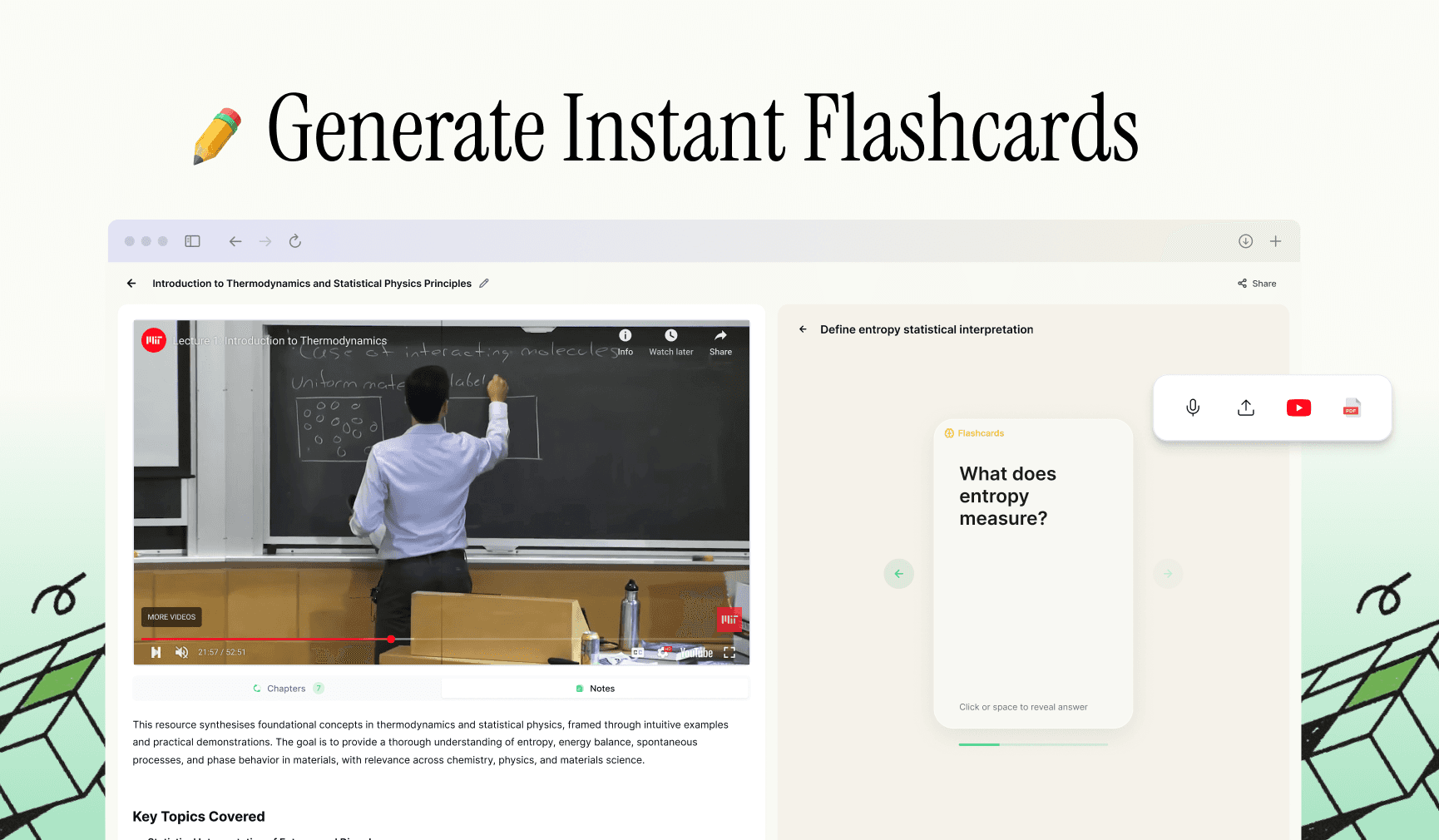
Once the lecture is processed, Duetoday doesn't just stop at a transcript. It helps generate organized notes and provides optional study tools like flashcards, practice quizzes, and an AI tutor. It’s built to bridge the gap between simply "having the information" and actually understanding it for your next exam.
Common Issues and Simple Fixes
Too far from the speaker: If your recording is muffled, try to sit closer to the lecturer or use an external microphone. For online classes, ensure you are recording the system audio directly rather than using your speakers.
Background noise: Background chatter can interfere with clarity. Choose a quiet spot to record and avoid typing loudly on your keyboard if your microphone is right next to your keys.
Multiple speakers: In seminars or group discussions, use tools that offer speaker labels. This allows you to differentiate between the professor’s instructions and student questions.
Long lectures: For three-hour sessions, consider splitting the files into segments or using an AI tool to summarize per chapter to keep the volume of text manageable.
Example: From Raw to Refined
Messy Transcript: "So, uh, the mitochondria is like the powerhouse, right? It makes ATP which is the energy currency of the cell, basically for everything it does."
Clean Notes Version: Mitochondria: Known as the 'powerhouse of the cell.' Its primary function is the production of ATP (Adenosine Triphosphate), which serves as the fundamental energy currency for cellular processes.
How accurate is lecture transcription for my subjects? Modern AI transcription is highly accurate, often exceeding 95% for clear audio. While specialized technical jargon might occasionally need a quick manual fix, the context usually makes it easy to correct quickly.
What file types can I use (audio/video)? You can use almost any standard file format, including MP3, WAV, and M4A for audio, or MP4, MOV, and MKV for video recordings.
Can I use dictation instead of uploading a file? Yes, most systems allow you to record live dictation using your device's microphone, which is perfect for in-person lectures or seminars where a file isn't provided.
Can I transcribe online lectures (Zoom/Teams/recorded video)? Absolutely. You can record the session audio or download the meeting recording and upload it directly to your transcription tool to get a full text version.
How long does it take to transcribe a 60-minute lecture? With modern AI tools, a one-hour lecture can usually be transcribed and formatted into notes in just a few minutes, significantly faster than manual typing.
Is a transcript enough, or should I convert it into structured notes? While a transcript is a great archive, converting it into structured notes is essential for learning. Notes help you highlight the most important takeaways and make the information easier to digest for exams.
Can I turn notes into flashcards and practice questions? Yes, once you have your lecture text, you can easily use AI tools or manual methods to generate flashcards and quizzes for active recall and spaced repetition study.
Duetoday is an AI-powered learning OS that turns your study materials into personalised, bite-sized study guides, cheat sheets, and active learning flows.
GET STARTED
Most Powerful Study Tool
for Students and Educators
Try Out Free. No Credit Card Required.