Transcribe Android Lectures to Notes (Next-Level Notes in Minutes)
Learn how to transcribe Android lectures to notes efficiently. This guide covers dictation, video uploads, and turning transcripts into study-ready materials.
Upload Your Recording
The Challenge of Manual Note-Taking on Android
Taking notes during a lecture on an Android device can be a struggle, especially when the professor is moving through dense materials or complex terminology at lightning speed. You often find yourself choosing between listening intently to grasp a difficult concept or frantically typing to capture everything on the screen. This trade-off usually results in fragmented notes that miss the nuances of the explanation.
Transcribing your Android lectures into structured notes is the ultimate productivity hack for students. Instead of worrying about every word, you can focus on the lecture's flow while your device captures the full context. This method ensures you don't miss those off-the-cuff examples, deep-dive explanations, or subtle exam hints that never make it onto the official slide deck.
The best part is that this workflow is incredibly flexible. Whether you are sitting in a live hall using live dictation, recording a voice memo on your phone, or uploading a pre-recorded video file from your downloads folder, you can convert any audio or video source into a clean, searchable text format. It works seamlessly with lecture recordings, online class videos, and even Zoom or Teams sessions saved to your device.
Why Transcribed Android Notes are Better for Your Subject
When you move beyond manual typing, you unlock a level of detail that traditional note-taking simply cannot match. For subjects that rely heavily on specific terminology or logical flows, having a verbatim record allows you to revisit the logic behind a formula or the specific details of a case study without relying on a fuzzy memory. It turns your Android device from a simple communication tool into a high-powered academic workstation.
By automating the transcription process, you create a digital archive that is far more useful than a notebook. You can instantly search for specific keywords, jump to certain sections of a lecture, and organize your materials by week or topic. This makes your weekly review sessions dramatically faster because you aren't hunting through pages of messy handwriting or rewatching hours of video just to find one ten-second explanation.
Capture every definition and niche example provided by the lecturer.
Create a searchable database for fast revision before midterms.
Extract specific frameworks, formulas, and process steps with ease.
Save hours of time by avoiding manual re-typing and video scrubbing.
The Next-Level Workflow: From Android Recording to Clean Notes
Step 1: Capture the lecture (dictation or recording) OR upload a file. You can use your Android phone's built-in voice recorder, a dedicated recording app, or simply record a video of the lecture. If you are attending an online class, you can upload the saved video file or audio track directly from your internal storage.
Step 2: Transcribe and structure it for study. Once you have your file or live recording, convert it into text. Modern tools ensure high accuracy, but the real value comes from the structure. Ensure your transcript is broken down into manageable sections with timestamps or speaker labels so you can cross-reference the original audio if needed.
Step 3: Turn the transcript into notes that match how the subject is tested. Raw text is just the beginning; you need to shape it. Group related concepts together, highlight the core definitions, and separate the lecturer’s anecdotes from the actual academic content. Organize the data into frameworks or comparison tables that align with your exam format.
Step 4: Do a quick cleanup pass. AI handles the bulk of the work, but a five-minute human review ensures everything is perfect for your learning style. Use this checklist to finalize your document:
Fix any misheard technical terms or names.
Bold or highlight move-important definitions.
Isolate formulas or procedural frameworks.
Mark specific examples labeled as "exam-likely."
Add a sentence of context to bridge logic gaps.
Convert long walls of text into bulleted lists.
Step 5: Study smarter with the notes. Use your newly created notes for active recall and spaced repetition. Because the notes are digital and structured, you can easily copy sections into flashcard apps or use them as a prompt for practice questions. This completes the revision loop, moving the information from your phone into your long-term memory.
What to Include in Your Android Lecture Notes
Effective study notes are more than just a transcript; they are a curated version of the lecture's most valuable points. When reviewing your Android transcription, ensure you include these specific elements to maximize your grade potential:
Core definitions explained in plain English.
Formulas, frameworks, and their specific applications.
Step-by-step processes or logical sequences.
Real-world case studies and examples used in class.
Common student misconceptions clarified by the professor.
Direct hints about what will appear on future exams.
Comparison tables for contrasting different theories or methods.
Key conditions or assumptions for when specific rules apply.
Streamlining the Process with Duetoday
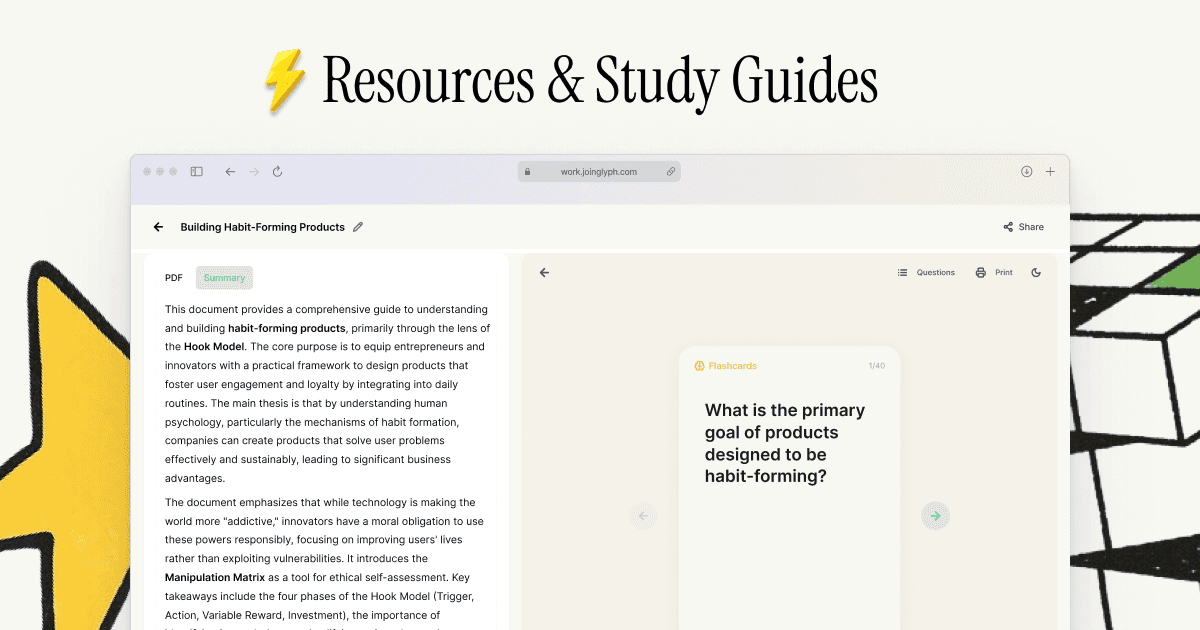
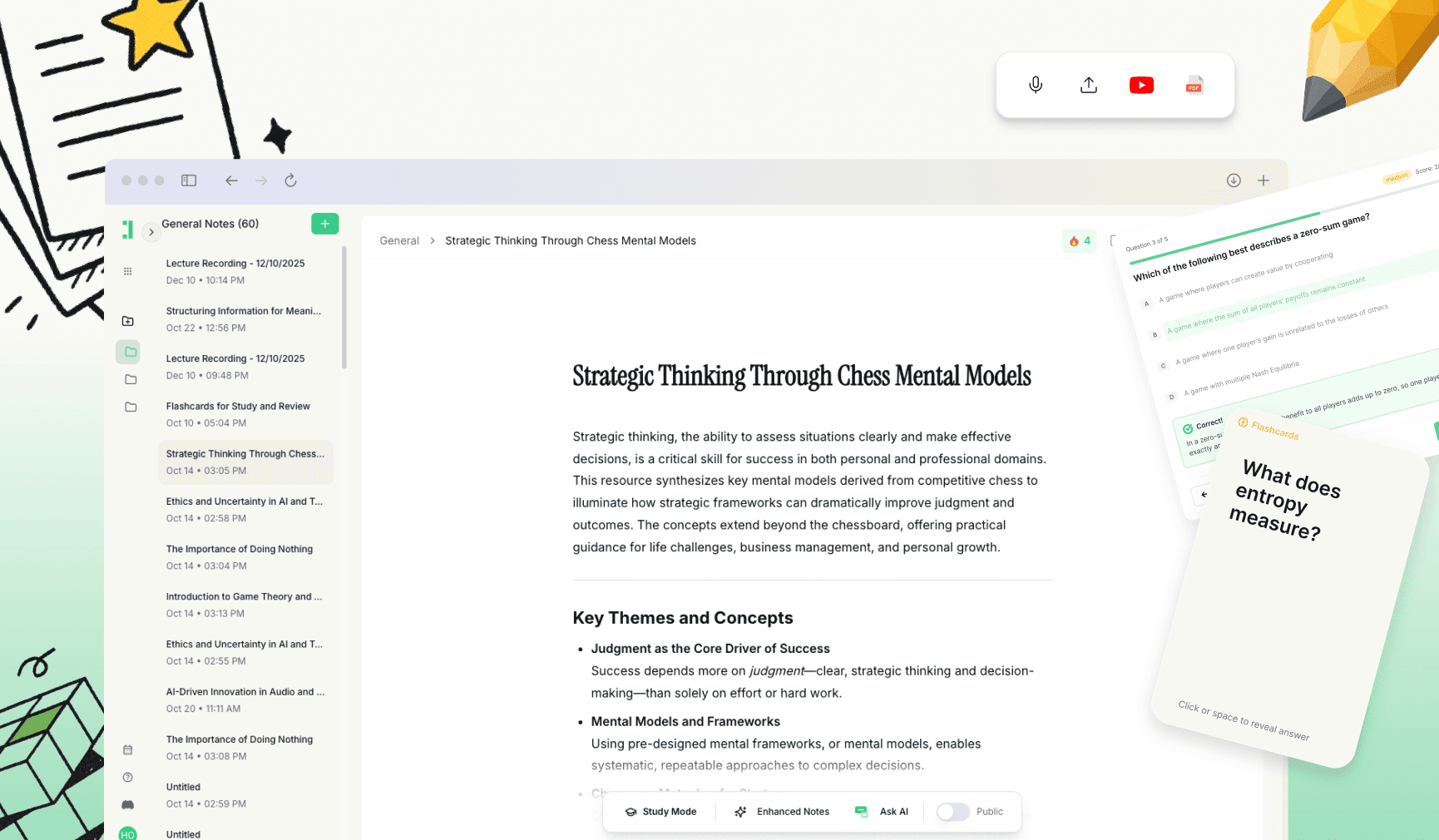
If you want to simplify this entire workflow, Duetoday offers a streamlined solution designed specifically for students. It serves as an AI-powered note-taker that handles the heavy lifting of converting your Android-based recordings into structured, academic-grade materials. Whether you are using live dictation during a seminar or uploading a batch of video recordings from your online portal, it processes the data quickly and accurately.
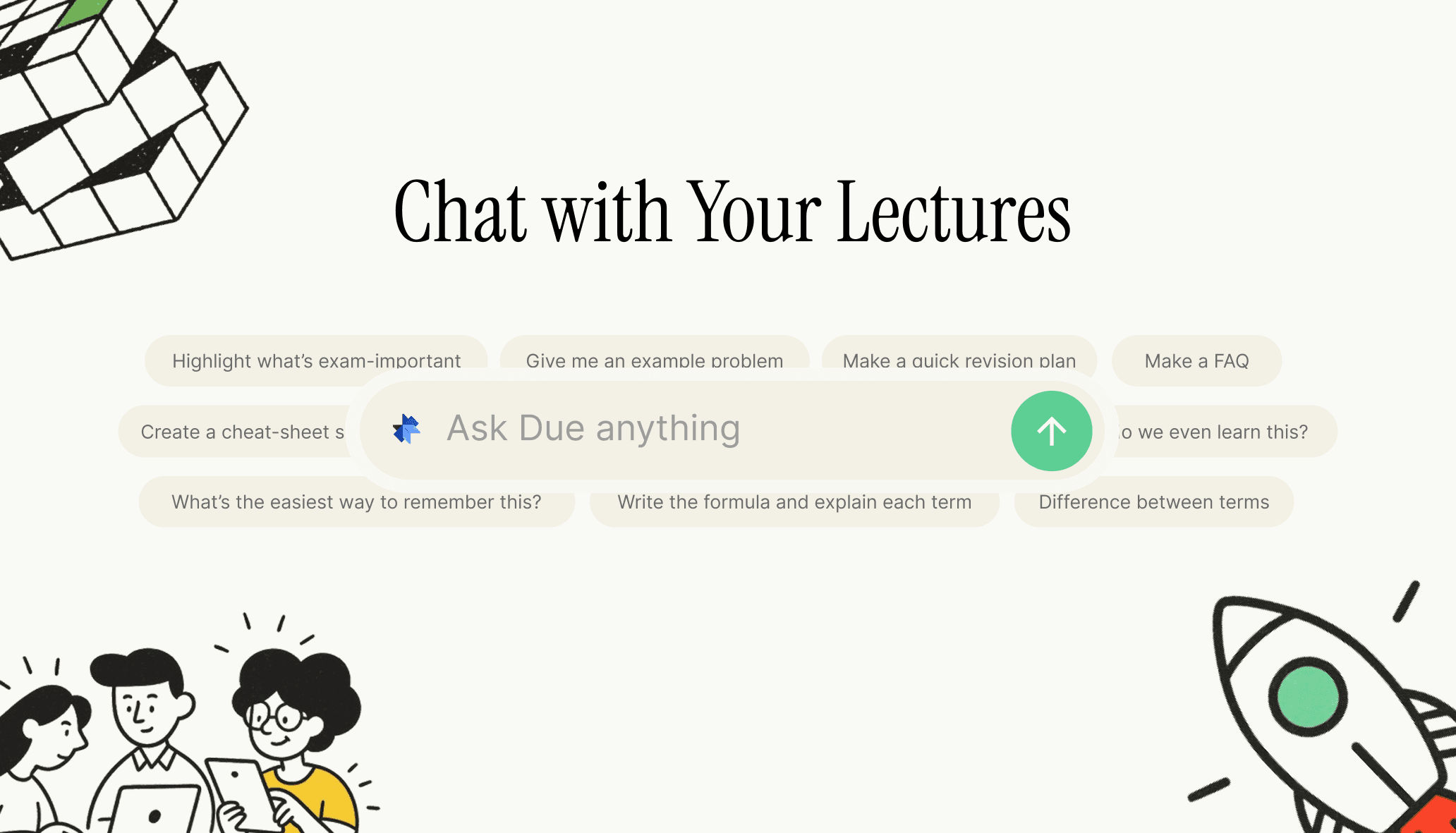
Beyond just providing a transcript, Duetoday helps you organize the content into useful study formats. It can automatically generate flashcards and practice quizzes based on your lecture notes, and even provides an AI tutor to help clarify difficult sections. It is a powerful option for students looking to maximize their efficiency and build a better revision library without the manual grind.
Common Issues and Simple Fixes
Too far from the speaker: If your recording is muffled, try to sit closer to the front row or use a plug-in directional microphone for your Android device to capture clearer audio.
Background noise: Background chatter can interfere with clarity; try to record in a quiet environment or use software-based noise suppression during the upload process.
Multiple speakers: When professors take questions from the class, use tools that offer speaker diarization to clearly separate the lecturer's answers from student queries.
Long lectures: For three-hour marathons, consider splitting the file into chapters or modules to make the resulting notes easier to navigate and review.
Transcription Example
Raw Transcript: "So the... uh... the mitochondrion is like the... it's the powerhouse of the cell because of ATP, right? It's where the energy happens, basically for all the functions."
Structured Notes:
Topic: Cellular Energy
Key Term: Mitochondria
Definition: Often referred to as the 'powerhouse of the cell.'
Function: The primary site for ATP (Adenosine Triphosphate) production, providing energy for cellular processes.
Frequently Asked Questions
How accurate is lecture transcription for my subject? Modern AI models are highly accurate, often reaching over 95% precision for standard academic English. They perform exceptionally well with technical terminology, though a quick manual check is always recommended for very niche formulas.
What file types can I use (audio/video)? You can use almost any standard media format, including MP3, WAV, and M4A for audio, or MP4, MOV, and AVI for video lecture recordings stored on your device.
Can I use dictation instead of uploading a file? Yes, you can use live dictation to transcribe in real-time as the professor speaks. This is a great way to see your notes forming live during the class session.
Can I transcribe online lectures (Zoom/Teams/recorded video)? Absolutely. You can record your screen or download the class recording and upload the file to your transcription tool to get a full text version of the session.
How long does it take to transcribe a 60-minute lecture? Typically, it takes only a few minutes to process an hour of audio. The speed depends on the tool and your internet connection, but it is significantly faster than manual typing.
Is a transcript enough, or should I convert it into structured notes? A transcript is a great starting point, but structured notes are better for studying. Organizing the raw text into headings and summaries makes it much easier to memorize and review later.
Can I turn my notes into flashcards and practice questions? Yes, once you have the text on your Android device, you can easily input it into study tools that use AI to generate active recall materials like flashcards and quizzes.
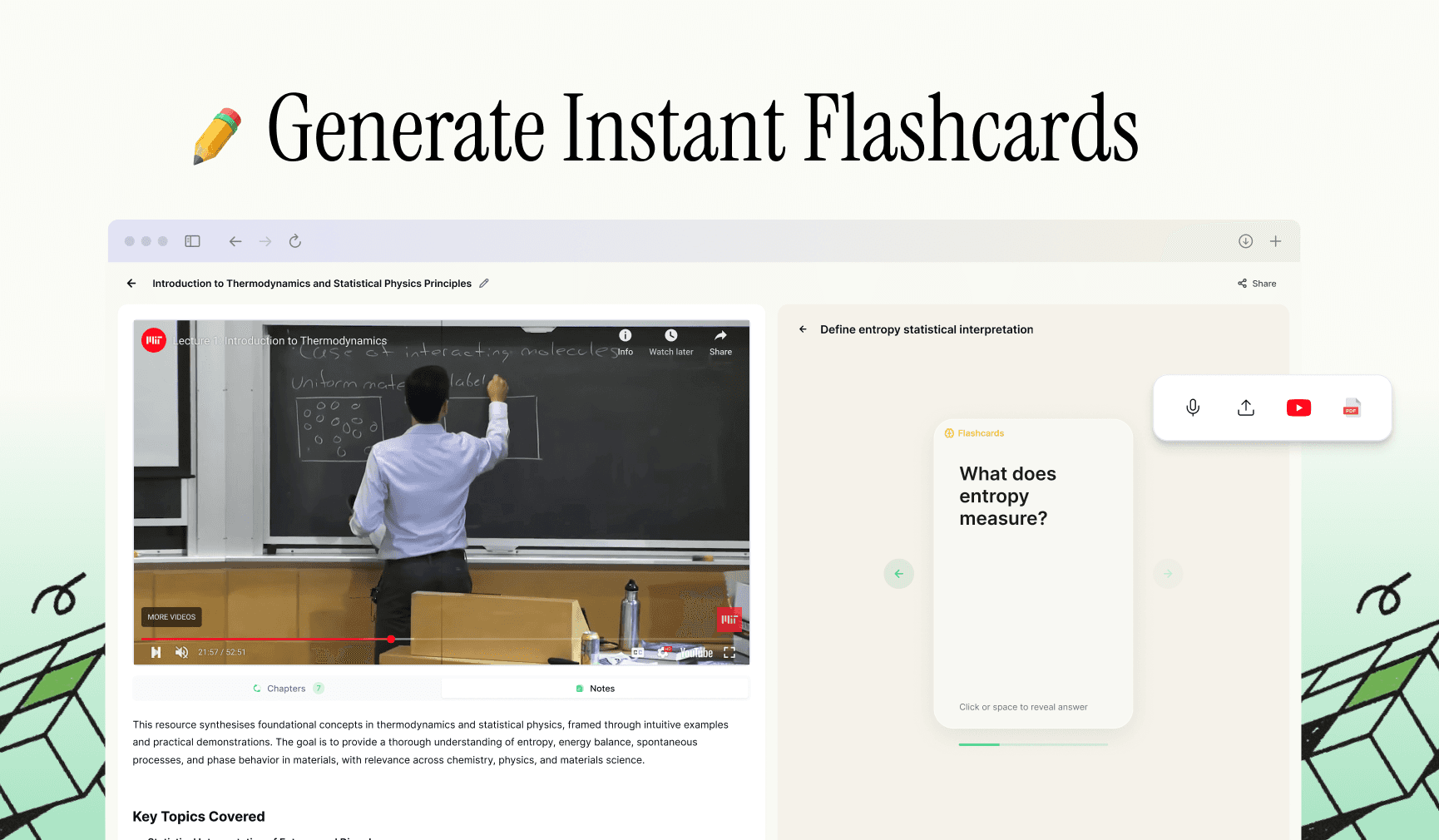

Duetoday is an AI-powered learning OS that turns your study materials into personalised, bite-sized study guides, cheat sheets, and active learning flows.
GET STARTED
Most Powerful Study Tool
for Students and Educators
Try Out Free. No Credit Card Required.