>
>
Transcribe How to Transcribe Lectures in Real Time to Notes (Next-Level Notes in Minutes)
Learn how to transcribe lectures in real time and turn them into organized study notes. Full guide on using dictation and video uploads for better revision.
Upload Your Recording
The Challenge of Real-Time Note-Taking
Trying to keep up with a professor who speaks at 150 words per minute while you can only type at 60 is a recipe for frustration. In complex subjects where every technical term and nuanced explanation matters, missing a single sentence can leave a giant gap in your understanding. You often find yourself choosing between listening intently to the concept or frantically scribbling down what was just said.
Transcribing lectures in real time or from recordings is a total cheat code for academic success. By capturing the full audio, you ensure that every exam hint, niche formula, and detailed case study is preserved forever. You no longer have to worry about your handwriting failing you or your focus slipping halfway through a dense 90-minute session.
This workflow is incredibly versatile. Whether you prefer live dictation by recording the audio as it happens or you have a library of uploaded files from online portals, the process remains the same. You can use any file type, including MP3 audio, MP4 video recordings, or even Zoom and Teams exports, to create a searchable database of your entire curriculum.
Why Transcribing Lectures is Especially Powerful
For technical or content-heavy subjects, a transcript acts as a safety net that catches everything your brain might filter out during a live session. It allows you to participate in class discussions and look at the slides without the anxiety of missing a key point. Having a word-for-word record means your revision is based on exactly what the lecturer said, not just what you remembered later.
Using a transcription-first approach offers several distinct advantages over traditional pen-and-paper methods:
Capture every complex definition and specific example provided in class.
Create a searchable archive to find keywords instantly before midterms.
Extract specific frameworks, formulas, and process steps with 100% accuracy.
Drastically reduce weekly review time by skimming text instead of rewatching videos.
Ultimately, this approach transforms a passive lecture into an active asset. Instead of a messy notebook, you end up with a high-fidelity document that serves as the foundation for all your future study sessions and assignments.
The Next-Level Workflow: Lecture to Transcript to Clean Notes
Converting raw audio into high-quality notes requires a systematic approach. It is not just about having the text; it is about making that text useful for your specific learning needs.
p>Step 1: Capture the lecture (dictation or recording) OR upload a file
The first step is getting the audio. You can use your phone’s voice memo app for in-person dictation, use a laptop to record the room audio, or download the recording of an online lecture. If you are watching a pre-recorded lecture video, simply save the file to your device. Modern tools handle almost any format, so focus on getting a clear recording where the speaker's voice is audible.
Step 2: Transcribe and structure it for study
Once you have the audio or video, the next step is generating the transcript. Modern transcription technology is highly accurate, but the real value comes from the initial structure. Look for ways to break the text into sections using timestamps or speaker labels. This makes it much easier to navigate the document later when you are looking for a specific part of the lecture.
Step 3: Turn the transcript into notes that match how the subject is tested
A transcript is a wall of text; notes are a study tool. Reorganize the information to match your exam format. If your subject relies on definitions, group those together. If it is a process-based subject, turn the transcript’s narrative into a step-by-step guide. Focus on shaping the raw data into frameworks and comparisons that help you memorize the material faster.
Step 4: Do a quick cleanup pass
Spend five to ten minutes reviewing the generated text to ensure it aligns with your subject’s specific terminology. This is your chance to add the finishing touches that turn a transcript into a professional study guide. Use this checklist during your review:
Correct any specialized technical terms or proper names.
Bold or highlight core definitions for quick scanning.
Format formulas and frameworks so they stand out visually.
Identify and label specific examples that might appear on exams.
Add context lines if the professor referenced a previous week's material.
Break down any remaining large blocks of text into readable sections.
Step 5: Study smarter with the notes (revision loop)
Now that you have clean, structured notes, use them for active recall. Instead of just reading them, use the notes to create a revision loop. Cover sections and try to explain them out loud, or use the summarized points to test your knowledge. You can also easily convert these structured notes into other study formats like digital flashcards or practice quiz questions to prepare for exam day.
What to Include in Your Notes
To make your notes truly effective, ensure they capture the nuances of the lecture. Every subject has its own 'anchor points' that are essential for scoring high marks. Make sure your final document includes:
Key definitions explained in plain English.
Formulas and the logic behind when to used them.
Detailed step-by-step processes or workflows.
Real-world case studies mentioned by the professor.
Common misconceptions or pitfalls to avoid.
Explicit hints about what will be covered in the exam.
Comparison tables for similar concepts.
Assumptions or conditions required for specific rules to apply.
Using Duetoday for Your Lectures
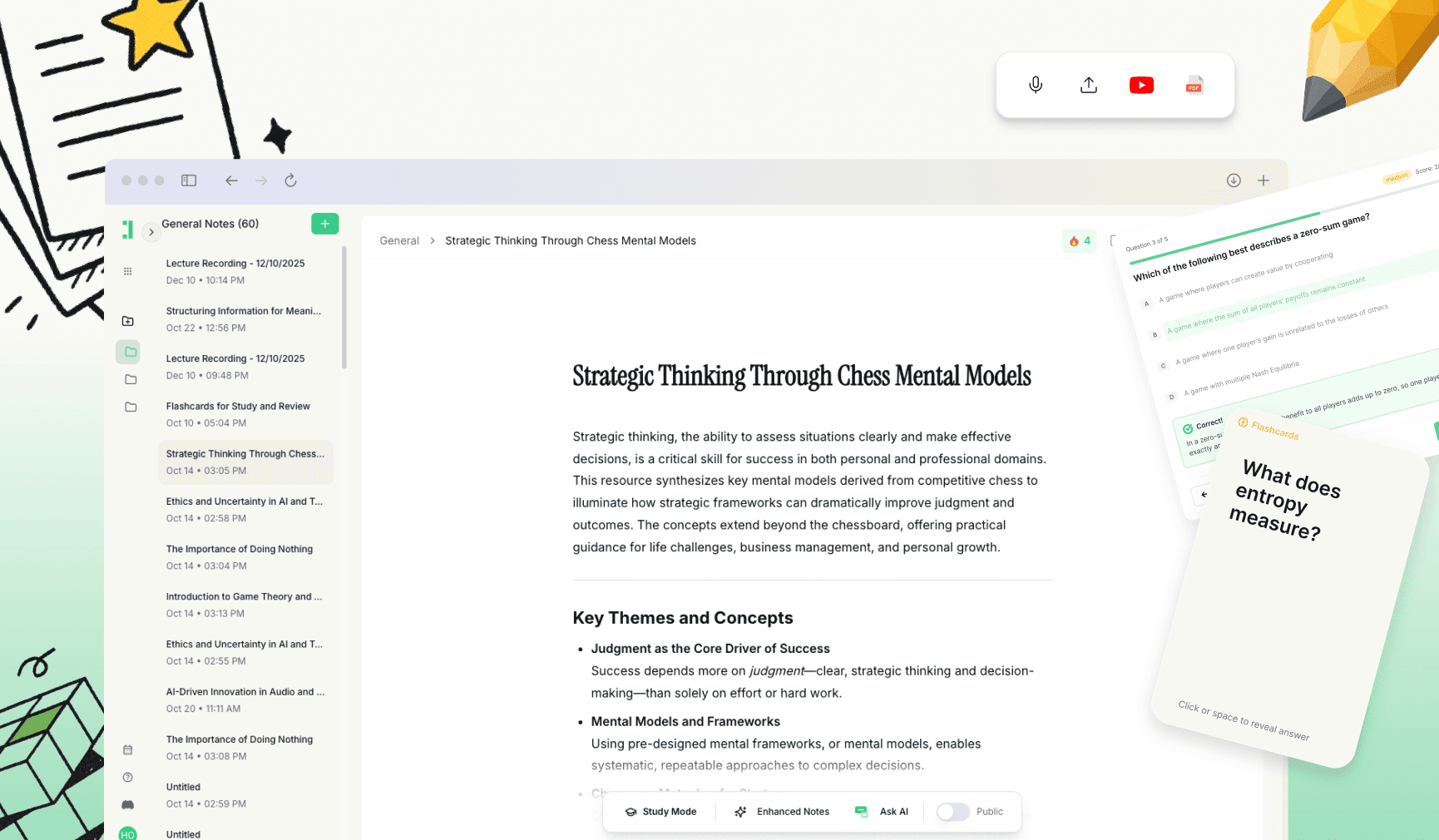
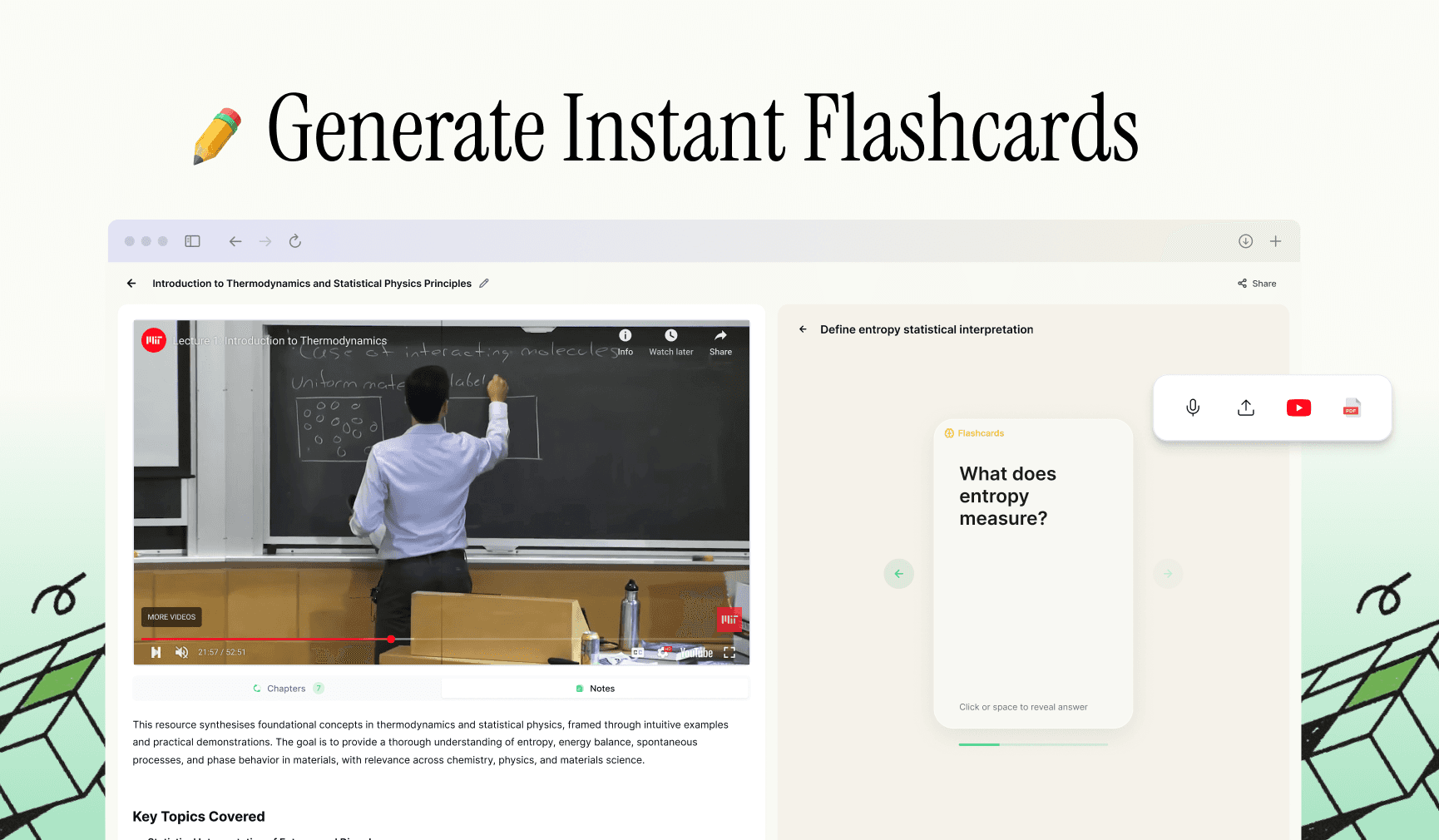
Duetoday is an AI-powered note-taker designed specifically to help students manage the heavy load of lecture content. It simplifies the entire transition from audio to study guide by automating the transcription and organization process. Whether you are using live dictation during a seminar or uploading a batch of recorded video files from your online portal, it handles the heavy lifting.
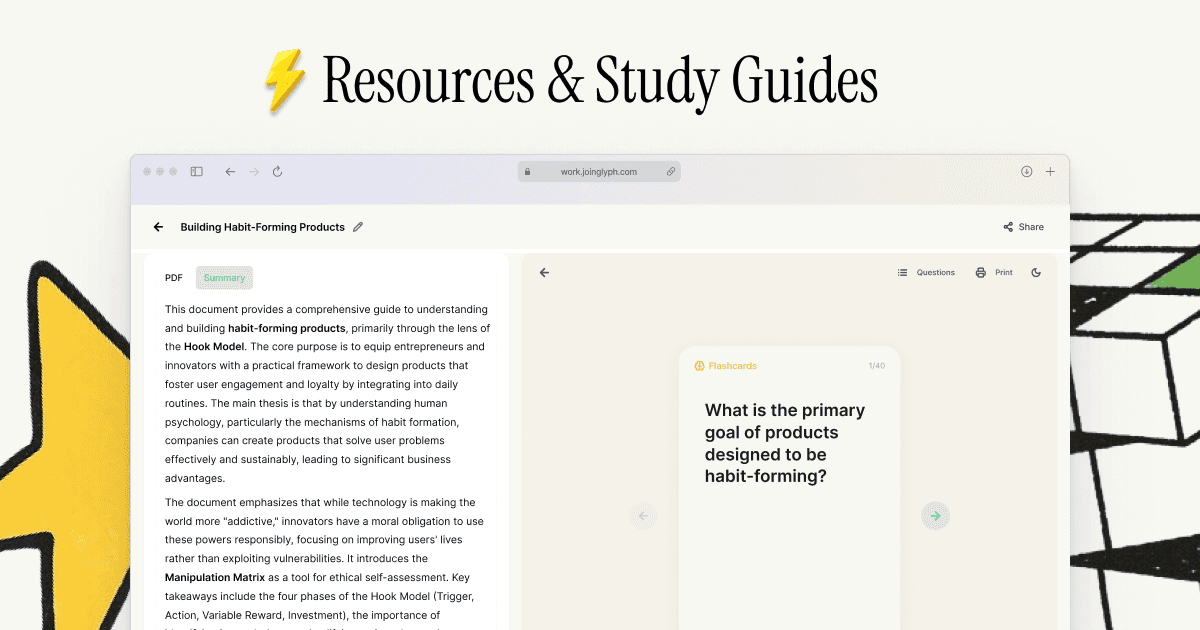
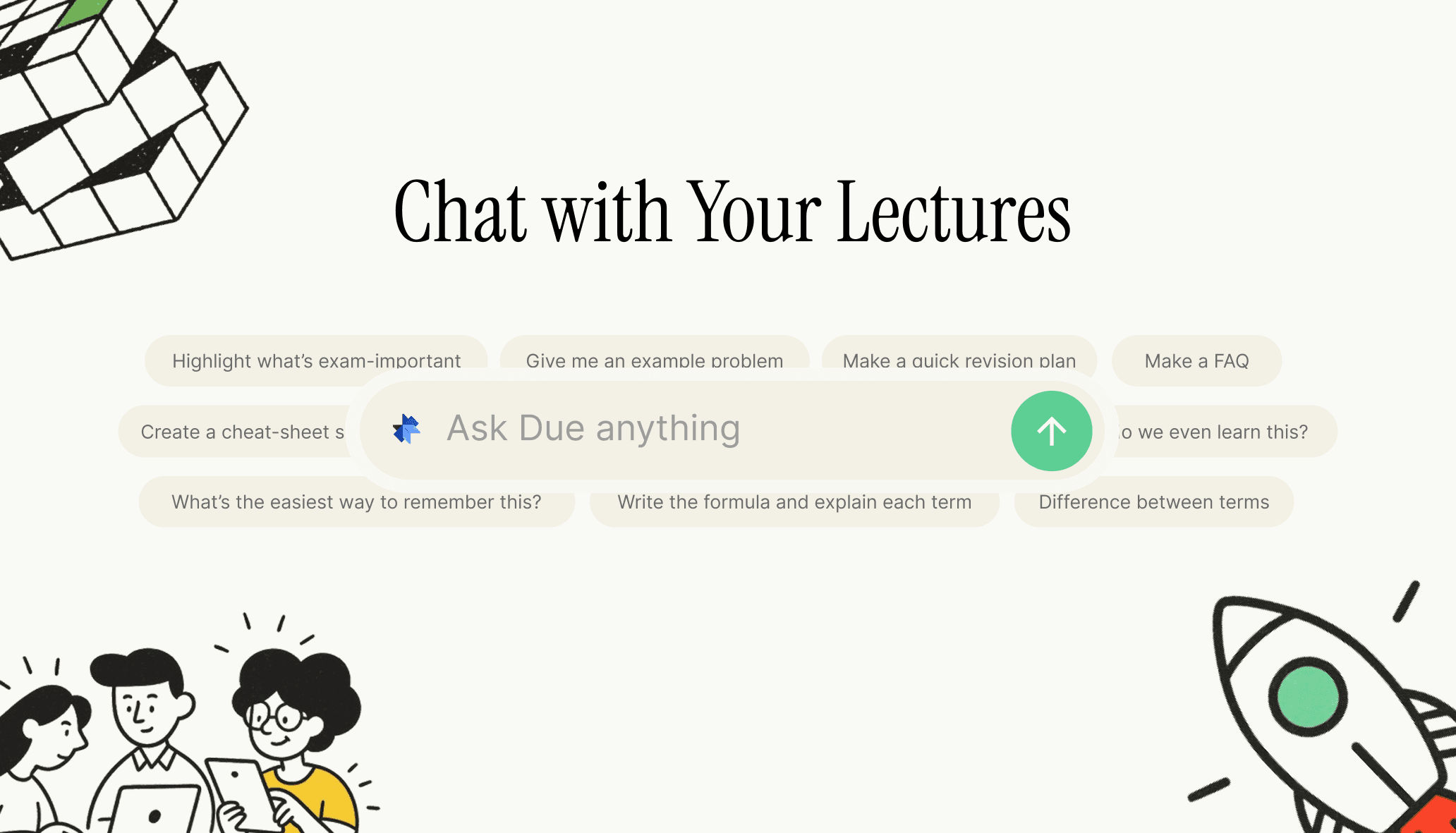
Beyond just transcription, Duetoday helps you turn that raw text into organized notes with a few clicks. It also offers a suite of integrated study tools, such as an AI tutor to answer questions about the lecture and the ability to generate flashcards and quizzes directly from your notes, ensuring you are fully prepared for your next exam.
Common Issues and Simple Fixes
Too far from the speaker: If the audio is faint, try to sit closer to the front row or use an external microphone. For online lectures, recording the system audio directly usually results in perfect clarity.
Background noise: Background chatter can interfere with accuracy. When recording, try to minimize your own typing noise or paper shuffling near the microphone to keep the lecturer's voice prominent.
Multiple speakers: In seminars or Q&A sessions, it can be hard to track who said what. Use tools that support speaker labels to distinguish between the professor’s points and student questions.
Long lectures: For three-hour sessions, it is best to split the files into chapters or topics. This makes the resulting notes much more manageable and easier to review in short bursts.
A Quick Conversion Example
Raw Transcript Snippet: "So the concept of supply and demand basically means when there is a lot of something but nobody wants it the price goes down then when everyone wants it but there isn't much the price goes up that is the equilibrium point usually."
Cleaned Study Notes:
Concept: Market Equilibrium
- High Supply + Low Demand = Price Decrease
- Low Supply + High Demand = Price Increase
- Equilibrium: The point where supply and demand balance out.
Frequently Asked Questions
How accurate is lecture transcription for this subject? Modern AI models are highly accurate even with complex terminology, though it is always smart to do a quick pass to ensure specific formulas or niche names are spelled correctly.
What file types can I use? You can use almost any standard audio or video format, including MP3, WAV, M4A, MP4, and MOV, making it easy to work with any recording device or platform.
Can I use dictation instead of uploading a file? Yes, you can use real-time dictation by recording directly into your device during the lecture, which is perfect for in-person classes where you don't have a pre-existing file.
Can I transcribe online lectures from Zoom or Teams? Absolutely. You can record the session or upload the saved video file from the platform to generate a full transcript and set of notes afterward.
How long does it take to transcribe a 60-minute lecture? Transcription is typically very fast, usually taking only a a few minutes for a full hour of audio, allowing you to start studying almost immediately after class ends.
Is a transcript enough, or should I convert it into structured notes? While a transcript is a great record, converting it into structured notes is essential for effective studying, as it helps you organize the hierarchy of information and identify key takeaways.
Can I turn my notes into flashcards and practice questions? Yes, once you have the structured text, it is very simple to pull out key terms for flashcards or use the main concepts to create practice questions for active recall session.

Duetoday is an AI-powered learning OS that turns your study materials into personalised, bite-sized study guides, cheat sheets, and active learning flows.
GET STARTED
Most Powerful Study Tool
for Students and Educators
Try Out Free. No Credit Card Required.