Transcribe Lecture Recordings to Notes (Next-Level Notes in Minutes)
Learn how to transcribe lecture recordings into organized study notes. Our guide covers dictation, uploads, and AI workflows to save study time.
Upload Your Recording
The Challenge of Modern Lecture Environments
In many academic subjects, the pace of information delivery is faster than most students can write or type. Whether you are dealing with complex legal frameworks, dense scientific terminology, or rapid-fire historical analysis, trying to capture every detail manually often leads to gaps in your understanding. You end up focusing so much on the act of writing that you stop actually processing what the lecturer is saying.
Transcribing your lecture recordings into notes is a total cheat code for mastering your subject. Instead of finishing a class with half-baked sentences and missing context, transcription allows you to capture every nuanced explanation, every off-hand example, and those crucial 'exam hints' that lecturers often drop when they aren't looking at their slides. It shifts your role from a frantic scribe to an active listener.
The best part about modern transcription workflows is their flexibility. This process works perfectly whether you are using live dictation to record as you sit in the front row or uploading pre-existing files later. It supports every common media format, including audio voice memos, video recordings of online classes, and exported Zoom or Microsoft Teams sessions. No matter how the information is delivered, you can turn it into text.
Why Transcribing Lectures is Especially Powerful
For subjects that rely on precise definitions and logical flow, having a full transcript ensures that you never misinterpret a core concept. A single missed word in a technical explanation can change the entire meaning of a theory or formula. By converting the audio to text, you create a permanent, searchable record of the course material that serves as the ultimate foundation for your revision.
Beyond just capturing words, this method allows you to organize information in a way that matches how your brain actually learns. You can move from a wall of text to a structured hierarchy of ideas, making it significantly easier to find what you need three weeks later during finals prep. It effectively turns your lectures into a personalized textbook.
Capture every technical definition and specific example provided by the lecturer.
Create a searchable archive for rapid revision before exams and midterms.
Extract complex frameworks, formulas, and multi-step processes with 100% accuracy.
Drastically reduce weekly review time by skimming text instead of rewatching videos.
The Next-Level Workflow: Lecture to Transcript to Clean Notes
Step 1: Capture the lecture or upload your file
Everything starts with the source material. You can record live using a phone voice memo app or a laptop recording tool if you are physically in the room. If your university provides recordings via a portal, or if you are attending an online session via Zoom or Teams, simply download the audio or video file. Modern tools handle everything from MP3s to high-quality MP4 video files with ease.
Step 2: Transcribe and structure it for study
Once you have your file or live recording, the next step is generating the transcript. Modern AI-driven transcription is incredibly accurate, but the real value lies in the initial structure. Ensure your transcript includes basic paragraph breaks and, if possible, speaker labels to distinguish between the professor’s lecture and student questions, which often provide helpful clarifications.
Step 3: Turn the transcript into notes that match your subject
A transcript is a raw resource; notes are a finished product. Look through the text to identify how the material is likely to be tested. If you are studying a process-heavy subject, look for sequence markers. If it is a conceptual subject, look for 'compare and contrast' language used by the professor. Start shaping the raw text into headings that reflect the syllabus modules.
Step 4: Do a quick cleanup pass
Spend five to ten minutes reviewing the output to ensure the most critical information stands out. This is where you transform a casual transcript into an academic asset. Use this time to verify that the most complex terms were captured correctly and that the document is visually easy to navigate.
Correct any subject-specific terminology or proper names.
Bold or highlight core definitions for quick scanning.
Isolate formulas, frameworks, or specific case study names.
Mark specific sections where the lecturer emphasized exam relevance.
Add brief context lines to clarify why a certain example was used.
Break down large blocks of text into digestible bullet points.
Step 5: Study smarter with the revision loop
Now that you have structured notes, use them for active revision. Instead of just reading them, use the notes to generate your own study materials. Because your text is digitized and organized, it is much faster to move into a phase of active recall, where you test yourself on the material rather than just looking at it. This turns a one-time lecture into a recurring learning tool.
What to Include in Your Subject Notes
Every subject has its own 'DNA' of information that results in high marks. When refining your transcript into notes, look for these specific elements to ensure your study material is comprehensive and effective for your specific field of study.
Key academic definitions explained in plain English.
Formulas or frameworks and the specific scenarios where they apply.
Step-by-step logical processes or historical timelines.
Specific worked examples or real-world case studies mentioned in class.
Common mistakes or misconceptions the lecturer warned about.
Explicit hints about what topics are likely to appear on the exam.
Comparison tables that highlight the differences between two theories.
Underlying assumptions or conditions required for a rule to be valid.
Using Duetoday for Your Lectures
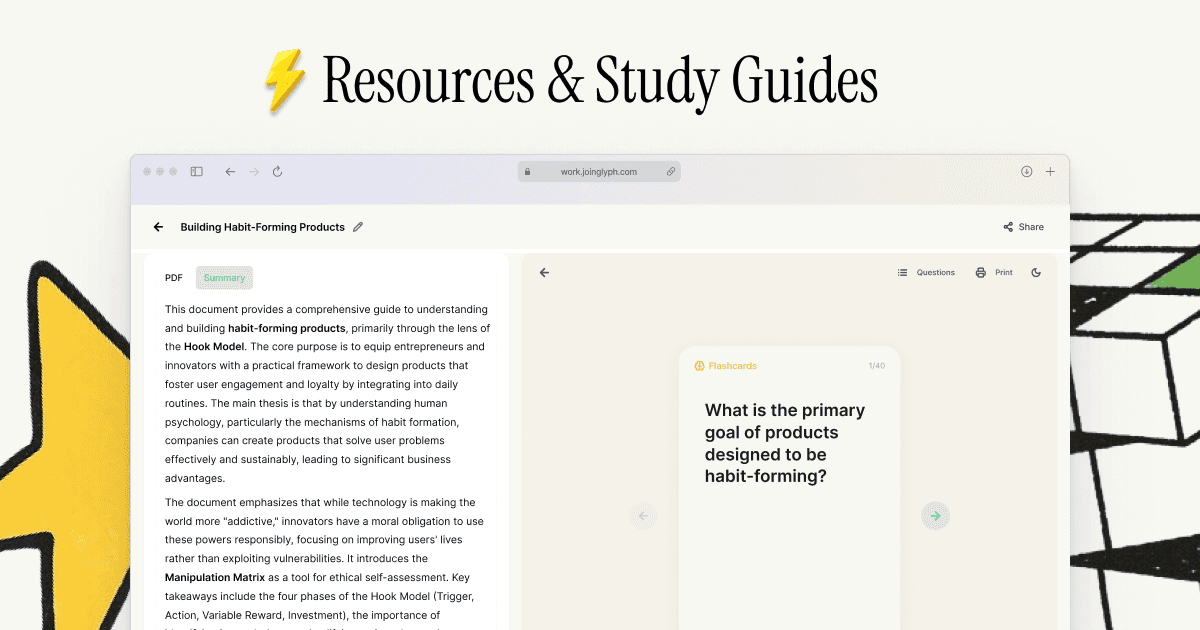
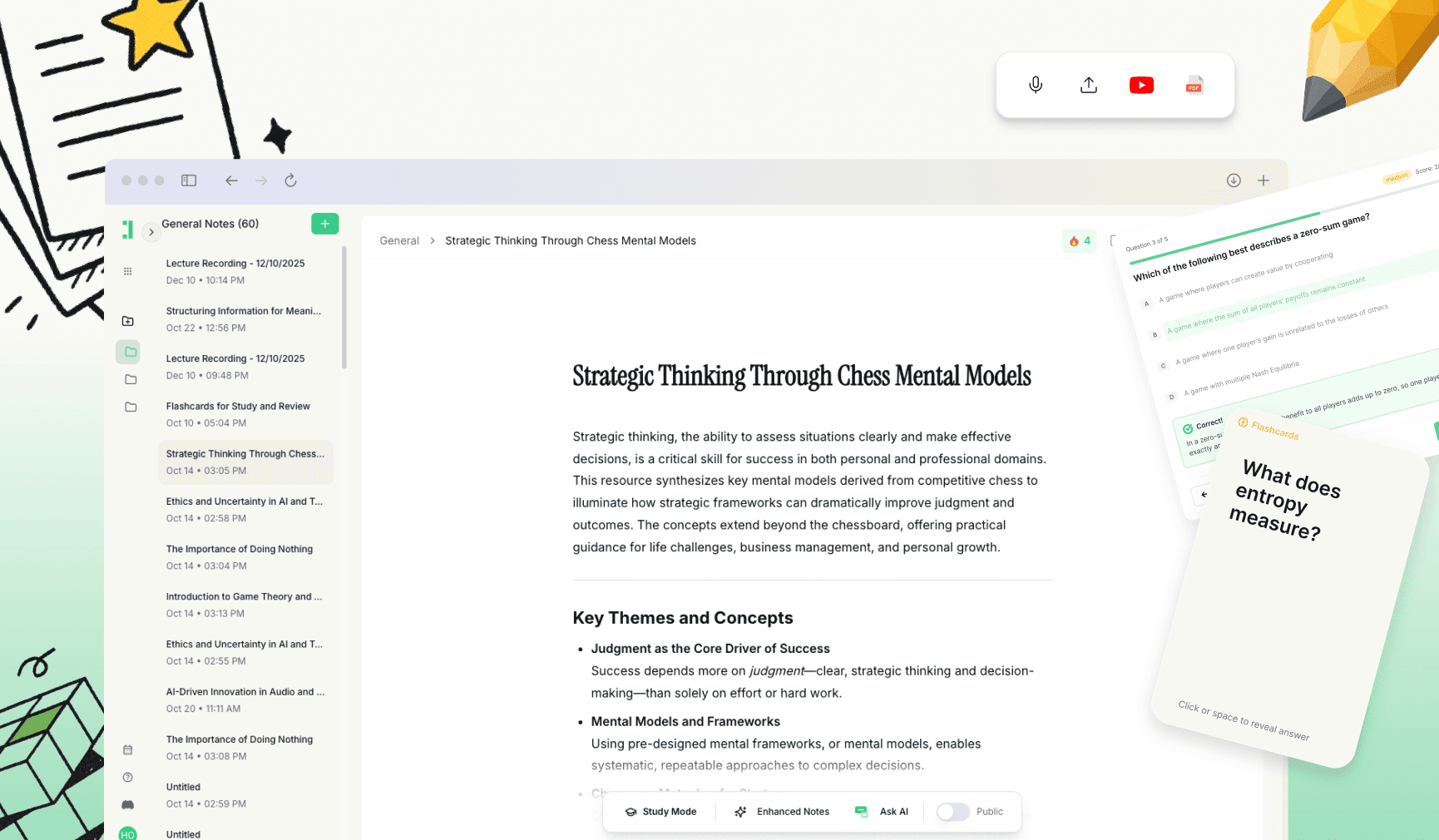
Duetoday is an AI-powered note-taker and study tool designed specifically to help students manage the heavy load of lecture content. It streamlines the entire process by handling both live dictation and file uploads, allowing you to focus on the lecture while the technology handles the documentation. It processes both audio and video files effortlessly, ensuring no class session is left behind.
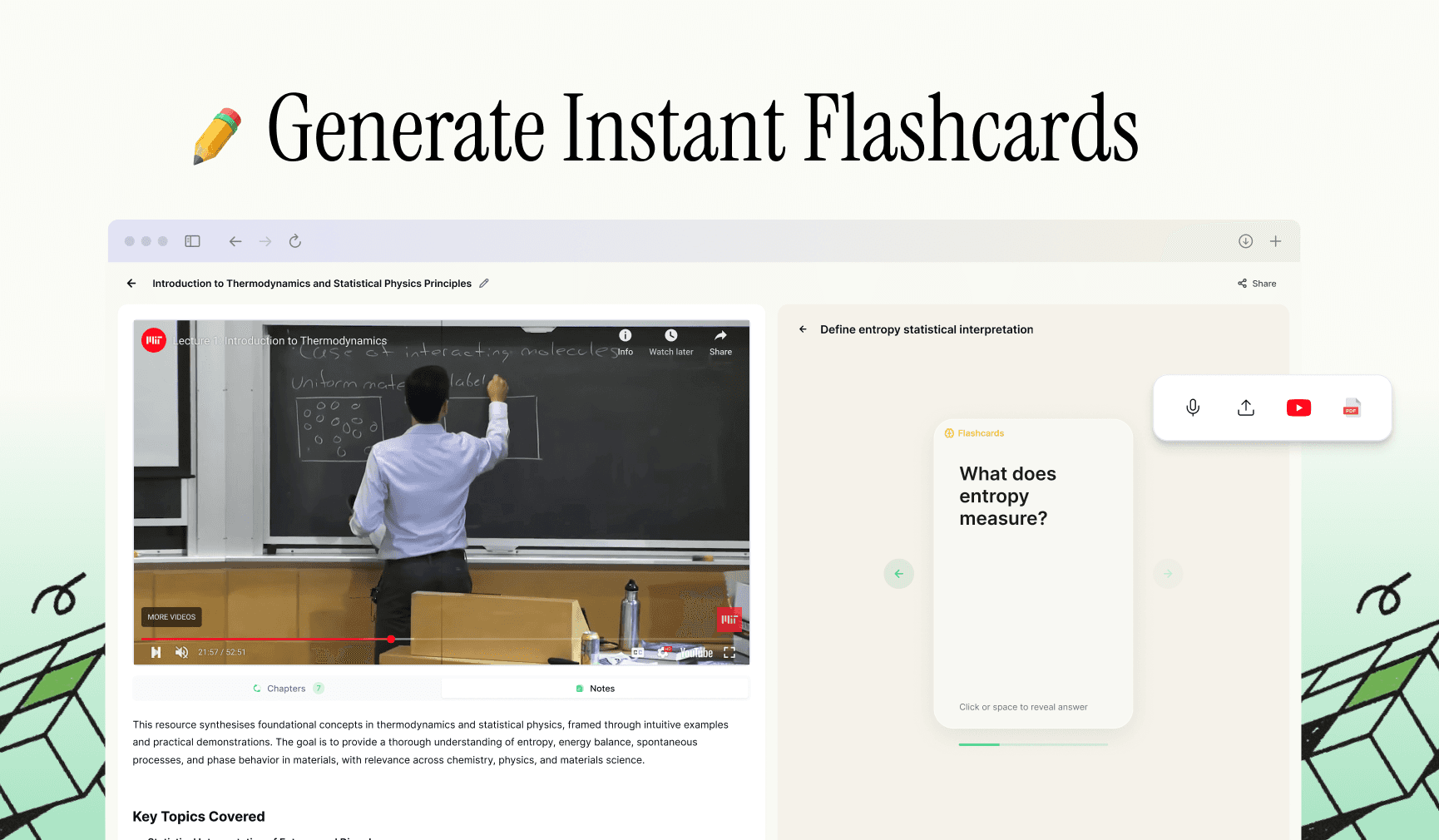
Once the lecture is processed, Duetoday doesn’t just give you a block of text; it helps you generate organized notes and offers a suite of study tools. You can quickly turn your lecture content into flashcards, practice quizzes, or engage with an AI tutor to ask questions about specific parts of the transcript. It’s an all-in-one solution for turning raw class recordings into a complete revision system.
Common Issues and Simple Fixes
Too far from the speaker: If your recording is faint, try to sit as close to the front of the hall as possible or use an external microphone for your laptop. High-quality input lead to much cleaner transcripts with fewer errors.
Background noise: Background chatter or the sound of your own typing can interfere with the audio. Try to place your recording device away from your keyboard and avoid recording in high-traffic areas if you are watching a video at home.
Multiple speakers: In seminars or Q&A sessions, it can be hard to track who said what. Use tools that offer speaker diarization or manually insert a quick line break when the speaker changes to keep the context clear.
Long lectures: For three-hour marathons, it is often better to split the file or process it in sections. This allows you to create specific summaries for each chapter or topic covered rather than one massive, unmanageable document.
Notes Example
Raw Transcript Snippet: "So the second law here, it basically says that, uh, the force equals mass times acceleration, and you can see this when we, like, drop the weight in the lab experiment earlier..."
Cleaned Study Notes:
Newton’s Second Law of Motion
• Formula: F = ma (Force = Mass × Acceleration)
• Context: Demonstrated via the 'Weight Drop' lab experiment.
• Key Takeaway: Force is directly proportional to acceleration.
How accurate is lecture transcription for my subject?
Modern AI transcription is highly accurate, often reaching over 95% precision. It handles complex academic language and technical terms very well, though it is always a good idea to do a quick pass to ensure specific names or niche formulas are spelled correctly based on your textbook.
What file types can I use (audio/video)?
You can typically use almost any standard media file. Common audio formats like MP3, M4A, and WAV work perfectly, as do video formats like MP4, MOV, and AVI. This covers everything from phone voice memos to downloaded Zoom recordings.
Can I use dictation instead of uploading a file?
Yes, you can record live using dictation software while the lecture is happening. This is great for capturing the audio in real-time and seeing the text appear as the professor speaks, which can help you stay engaged during the session.
Can I transcribe online lectures (Zoom/Teams/recorded video)?
Absolutely. If you have a recording of a Zoom or Microsoft Teams meeting, or even a video file from a platform like YouTube or a university portal, you can upload that file to a transcription tool to generate formatted notes.
How long does it take to transcribe a 60-minute lecture?
Using modern AI tools, a 60-minute lecture usually takes only a few minutes to transcribe. This is significantly faster than manual transcription, which typically takes four to five hours for every hour of audio recorded.
Is a transcript enough, or should I convert it into structured notes?
A transcript is a great archive, but it is usually too wordy for efficient studying. It is highly recommended to convert the transcript into structured notes with headings, bullets, and summaries to make the information actually usable for exam revision.
Can I turn my notes into flashcards and practice questions?
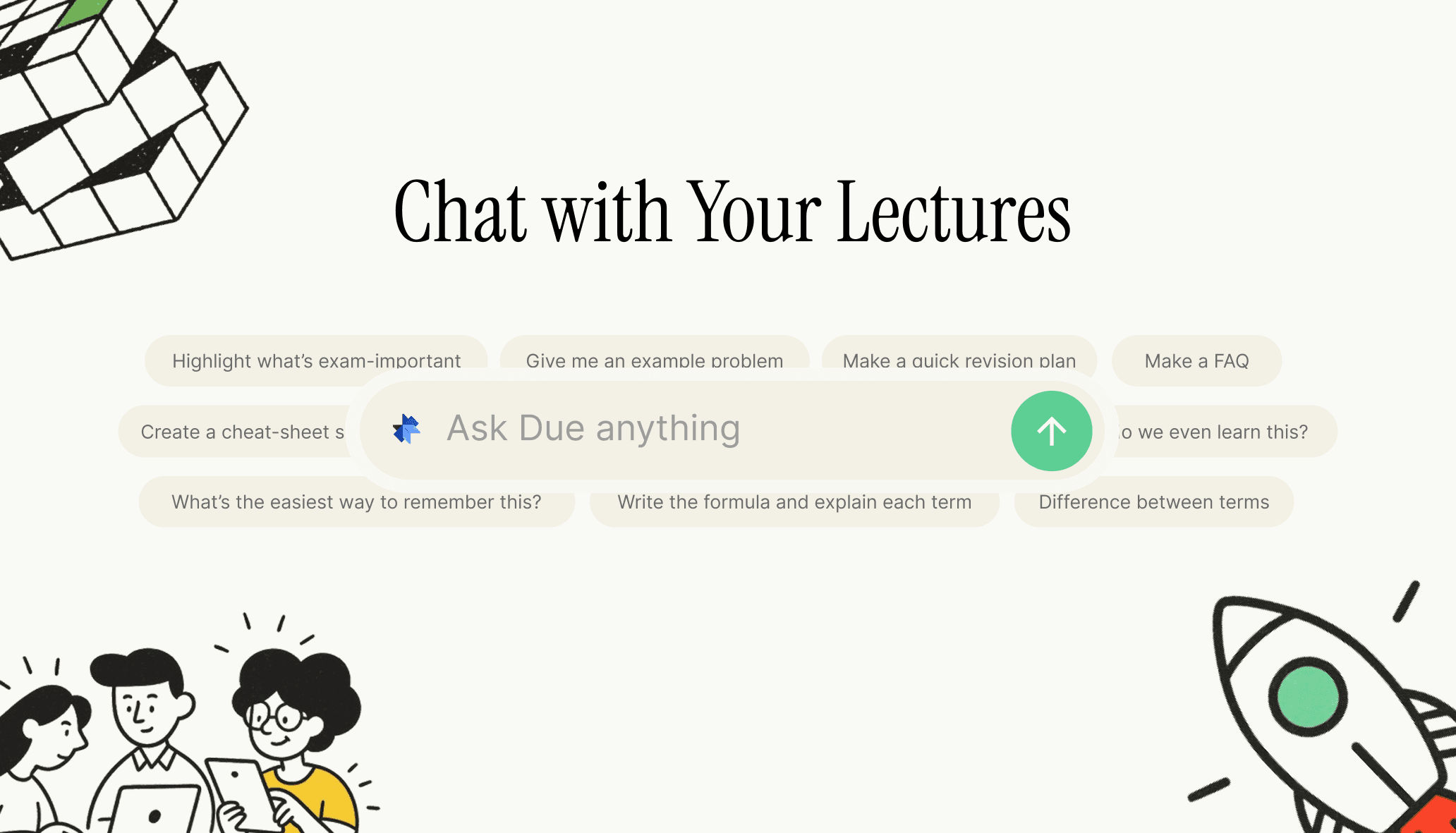
Yes, once your lecture is in text format, you can easily use it as the basis for active recall tools. Many students use AI features to automatically pull key concepts from their notes and generate flashcards or practice test questions for better retention.

Duetoday is an AI-powered learning OS that turns your study materials into personalised, bite-sized study guides, cheat sheets, and active learning flows.
GET STARTED
Most Powerful Study Tool
for Students and Educators
Try Out Free. No Credit Card Required.