Transcribe Audio Lectures to Notes (Next-Level Notes in Minutes)
Learn how to transcribe audio lectures into organized, searchable notes. Capture every detail from recordings or live dictation to boost your study efficiency.
Upload Your Recording
The Challenge of Keeping Up With Audio Lectures
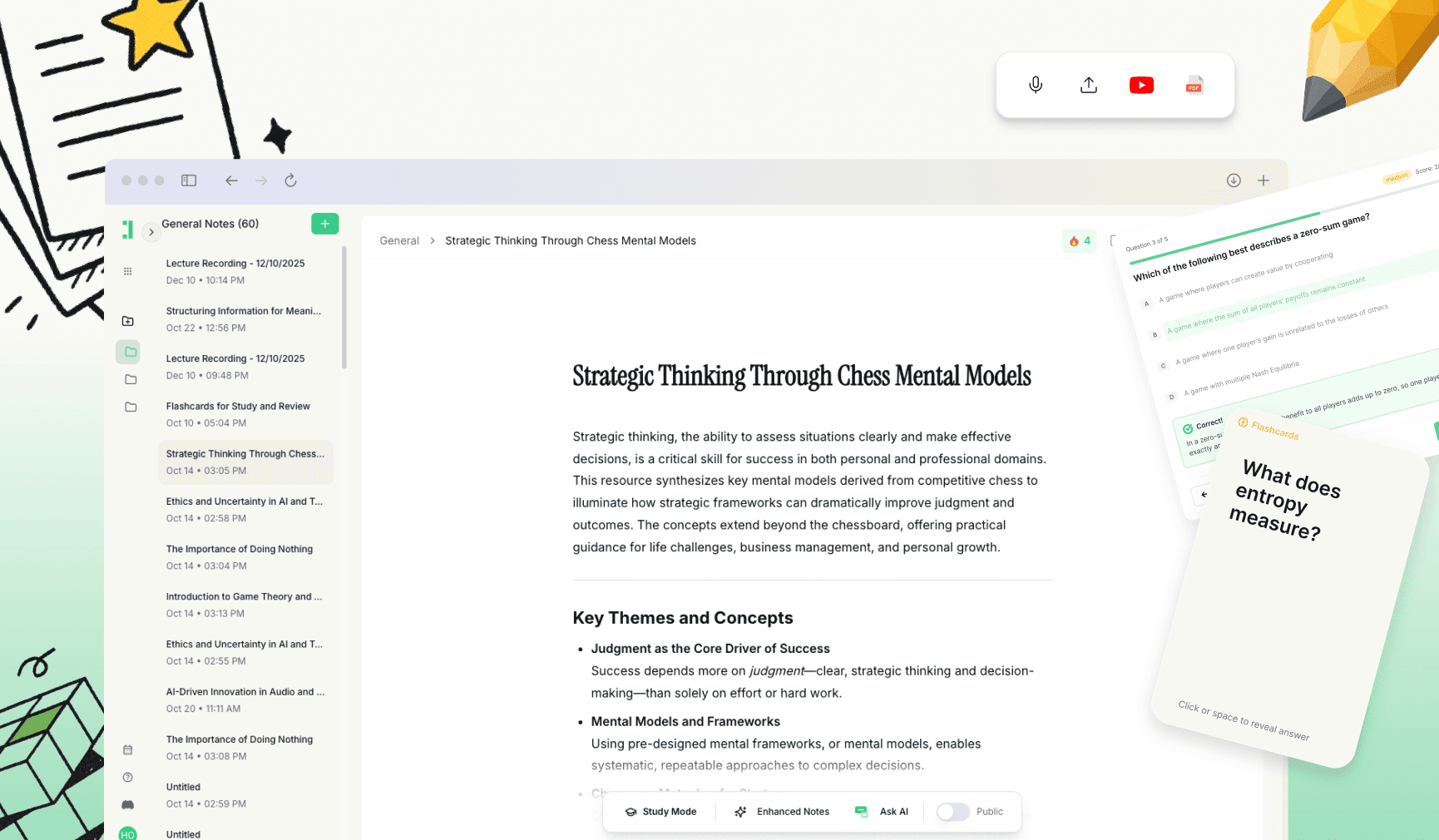
Capturing every critical detail in a fast-paced lecture can feel like an impossible task. Whether it is complex terminology, dense formulas, or rapid-fire case studies, traditional pen-and-paper or manual typing often falls short. You end up with fragmented thoughts and gaps in your knowledge that make revision stressful and incomplete.
Transcribing your lectures into structured notes is the ultimate academic cheat code. Instead of frantically writing, you can focus on the professor’s explanations and logic. This method ensures you capture the exam hints, specific examples, and nuanced explanations that are usually lost when you are just trying to keep up with the slides.
The best part of this workflow is its flexibility. It works seamlessly whether you are using live dictation to speak and record on the spot, or uploading existing files from your device. It supports any file format, including audio recordings from your phone or video files from Zoom, Teams, and online class portals.
Why Transcribing Lectures is Especially Powerful
Moving from raw audio to a text-based transcript changes how you interact with your course material. It turns a static, linear recording into a dynamic document that you can search, edit, and reorganize according to your study needs. It bridges the gap between hearing information once and truly understanding it.
When you have a full transcript, you have a safety net. You no longer need to worry about missing a definition or a specific step in a process because the transcript serves as a verbatim record of the session. This is particularly useful for subjects where the exact phrasing of a concept is vital for high marks.
Keep every definition and contextual example perfectly intact.
Create searchable revision documents for quick pre-exam checks.
Extract frameworks, formulas, and process steps with zero effort.
Complete your weekly review in half the time without rewatching videos.
The Next-Level Workflow: Lecture to Clean Notes
Step 1: Capture the lecture or upload your file. You can record a live session using a voice memo app on your phone or a recording tool on your laptop. If your professor provides lecture videos or recordings from an online platform, simply download those files. The workflow handles everything from MP3s to high-quality video formats.
Step 2: Transcribe and structure for study. Use a tool to convert the audio into text. Modern AI handles this with high accuracy, but the real value is in the structure. Ensure the transcript is broken down into manageable sections with timestamps or speaker labels so you can cross-reference the audio if a specific point needs more clarity.
Refining the Raw Data
Step 3: Turn the transcript into notes that match your testing style. Raw transcripts are a great starting point, but they are too long for quick review. Shape the content into definitions, processes, and comparisons. If your exam focuses on applications, pull out every worked example mentioned in the audio.
Step 4: Do a quick cleanup pass. This is where you transform bulk text into a study-ready document. Use this checklist to ensure your notes are high quality:
Fix technical terms or specific names the AI might have missed.
Highlight core definitions and bold key concepts.
Pull out formulas or frameworks into separate blocks.
Mark examples the lecturer specifically highlighted for exams.
Add a line of context for why a certain topic was introduced.
Split long blocks of text into readable thematic sections.
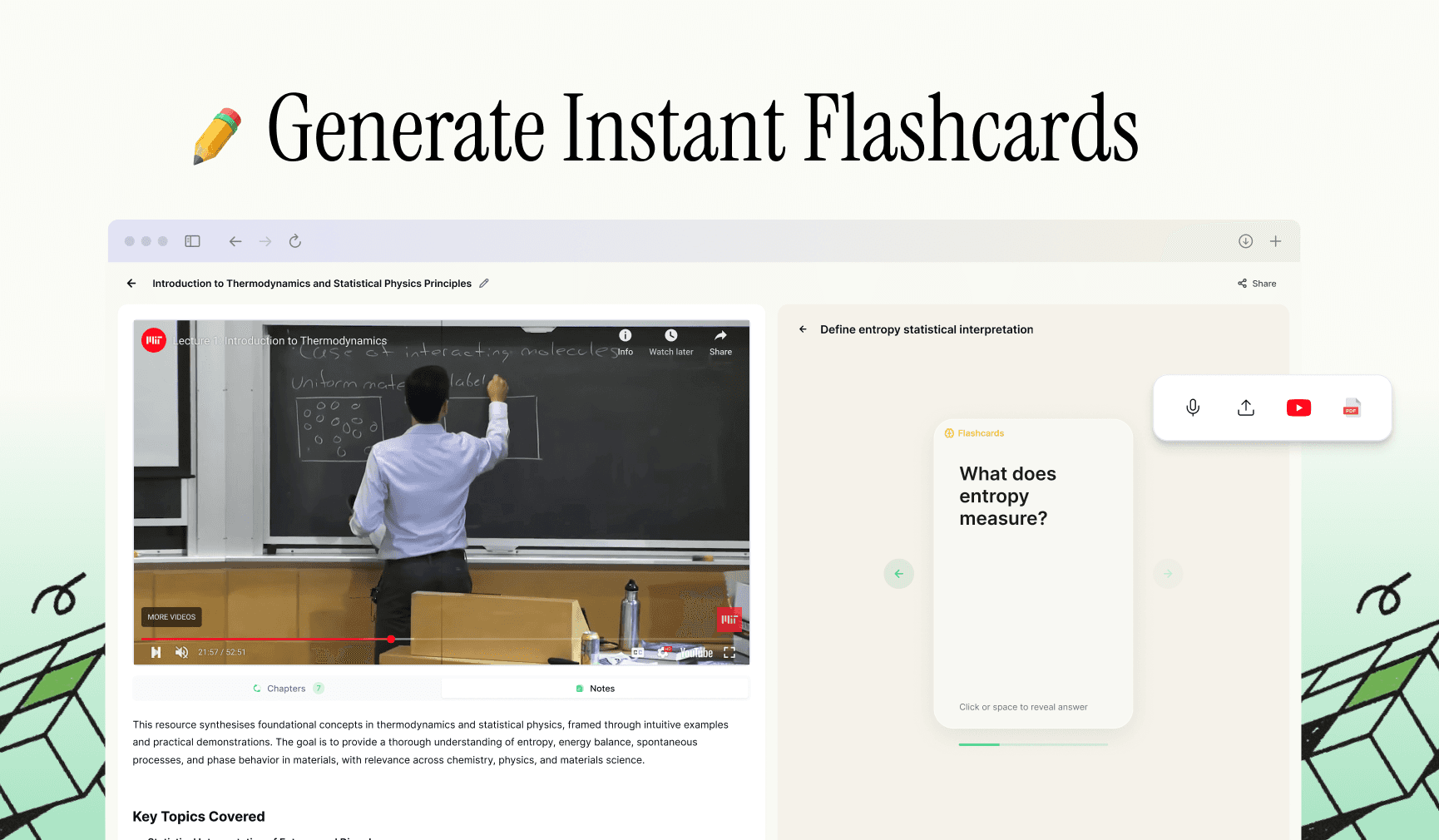
Step 5: Study smarter with the notes. Once your notes are clean, use them for a revision loop. Instead of just reading them, use the notes to create active recall triggers. You can easily convert these structured sections into flashcards or practice questions to test your knowledge throughout the semester.
What to Include in Your Notes
To make your notes truly effective, you need to focus on the elements that lead to high grades. A good set of notes isn't just a summary; it's a map of the subject's essential components.
Key definitions explained in plain English.
Formulas or frameworks and their specific use cases.
Step-by-step processes or logical sequences.
Case studies and practical applications mentioned in class.
Common mistakes and misconceptions the professor warned about.
Specific 'exam hints' or areas of high importance.
Comparison tables for similar concepts.
Conditions or assumptions under which a rule applies.
Streamline the Process with Duetoday
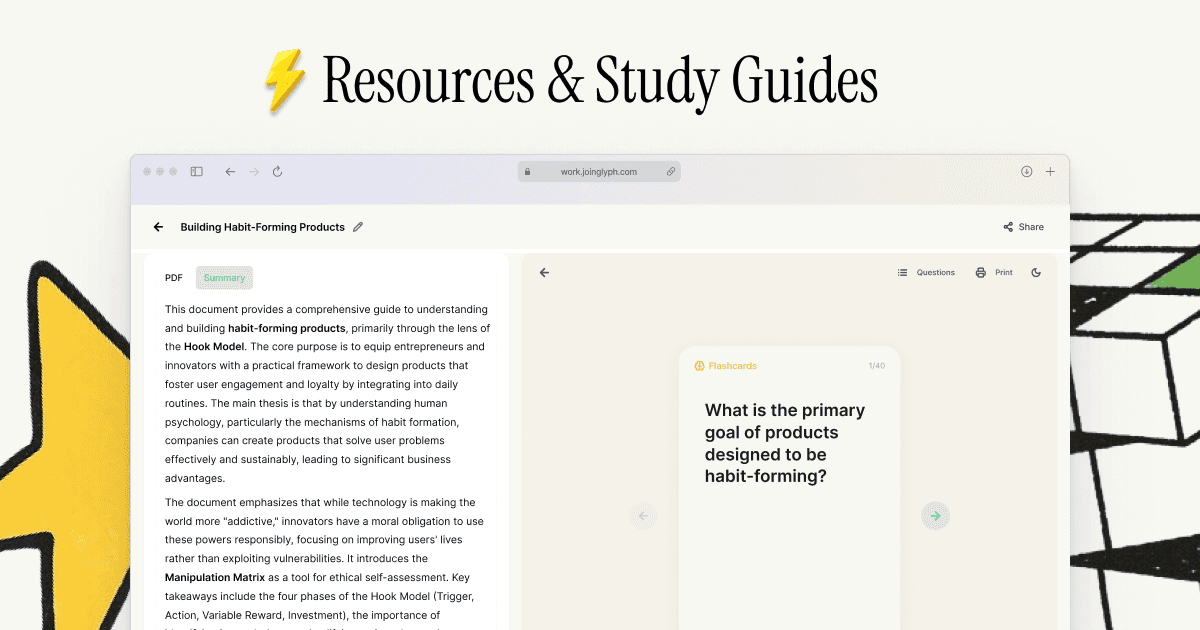
Duetoday is an AI-powered note-taker designed specifically for students who want to maximize their study time. It streamlines the entire transcription-to-notes workflow by handling the heavy lifting of organization and summarization automatically.
Whether you prefer live dictation during a lecture or uploading audio and video files later, Duetoday generates accurate transcripts and organized notes. Beyond just notes, it provides tools like flashcard generation, practice quizzes, and an AI tutor to help you master the material faster.
Common Issues and Simple Fixes
Too far from the speaker: If the audio is muffled because of distance, try to sit closer to the front row or use an external microphone for your phone or laptop to improve clarity.
Background noise: Background chatter or keyboard typing can interfere with scripts. Try to record from a quiet area or use noise-canceling software settings during the recording phase.
Multiple speakers: When several people are talking, use a tool that supports speaker labels. This allows you to differentiate between a professor’s lecture and a student’s question.
Long lectures: For two-hour sessions, it is best to split the file or summarize it by chapter. This makes the final notes easier to digest and less overwhelming to review at once.
A Quick Conversion Example
Raw Transcript: "So the market equilibrium is where the supply curve meets the demand curve and at this point the quantity supplied equals the quantity demanded which is super important for your finals guys so remember that."
Clean Notes:
Concept: Market Equilibrium
Definition: The intersection point of supply and demand curves.
Condition: Quantity Supplied (Qs) = Quantity Demanded (Qd).
Note: High exam importance.
How accurate is lecture transcription for complex subjects?
Modern AI models are highly accurate even with technical terminology. While you might need to do a quick pass to fix highly niche terms or local names, the bulk of the content is usually captured perfectly, providing a solid foundation for your notes.
What file types can I use for transcription?
You can use almost any standard audio or video file type. This includes MP3, WAV, and M4A for audio, as well as MP4, MOV, and AVI for video lecture recordings or online class sessions.
Can I use dictation instead of uploading a file?
Yes, you can use live dictation. This allows you to record the lecture in real-time while you listen, which is helpful if you want to start the transcription process the moment the class concludes.
Can I transcribe online lectures from Zoom or Teams?
Absolutely. If you have a recorded video from a virtual meeting platform like Zoom, Teams, or Google Meet, you can upload the recording directly to a transcription tool to generate formatted notes.
How long does it take to transcribe a 60-minute lecture?
Transcription is typically very fast. For a 60-minute lecture, a modern AI tool can usually process the entire file and return a full transcript and structured notes in just a few minutes.
Is a transcript enough, or should I convert it into structured notes?
A transcript is a great archive, but it is often too long for efficient studying. Converting it into structured notes with headings and bullets makes the information more manageable and much easier to memorize during revision.
Can I turn my notes into flashcards and practice questions?
Yes, one of the biggest benefits of having digital text is the ability to instantly convert your notes into study aids. Many students use AI tools to automatically generate flashcards and quizzes directly from their transcribed lecture material.

Duetoday is an AI-powered learning OS that turns your study materials into personalised, bite-sized study guides, cheat sheets, and active learning flows.
GET STARTED
Most Powerful Study Tool
for Students and Educators
Try Out Free. No Credit Card Required.