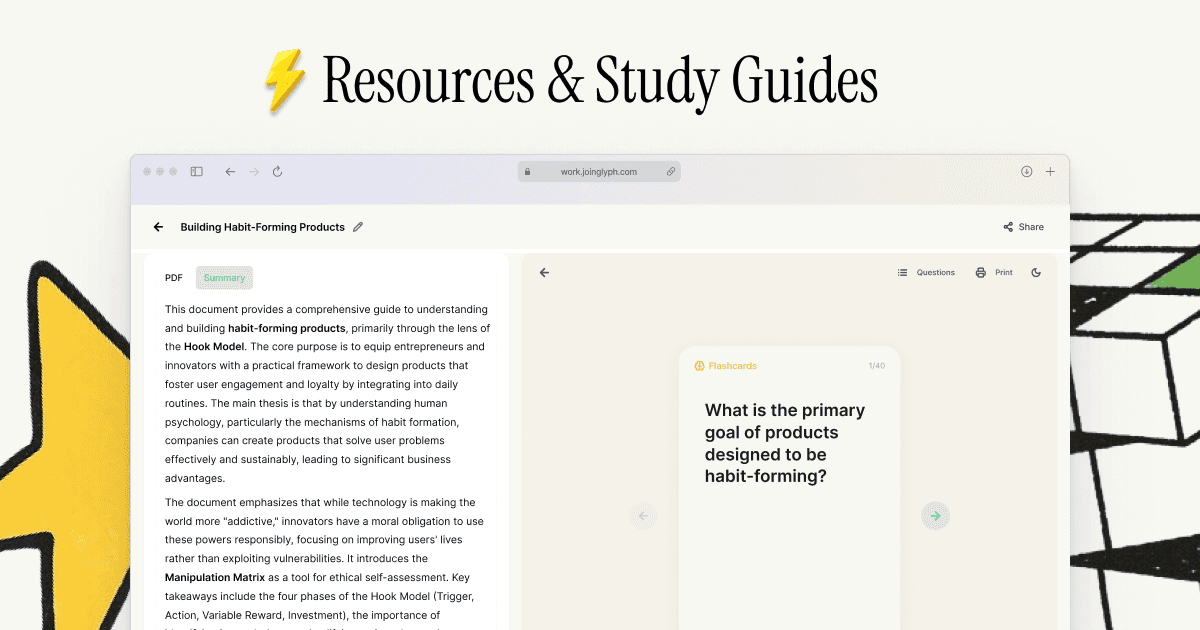
Transcribe University Lectures to Notes (Next-Level Notes in Minutes)
Learn how to transcribe university lectures to notes efficiently. Convert audio or video recordings into organized study guides, flashcards, and summaries.
Upload Your Recording
The Challenge of University Lectures
University lectures can be a whirlwind of complex terminology, fast-paced explanations, and dense conceptual frameworks. Students often find themselves choosing between listening intently to grasp a theory and frantically scribbling down every word the professor says. This struggle often leads to incomplete notes and missed nuances that are crucial for exam success.
Transcribing university lectures into structured notes is a genuine cheat code for academic success. By capturing the full lecture, you ensure that every specific explanation, verbal exam hint, and spontaneous example is recorded. Instead of relying on fragmented sentences, you have a complete repository of information that serves as the foundation for high-quality revision materials.
The best part about modern transcription workflows is their flexibility. Whether you prefer live dictation by recording directly into a tool during class or uploading existing audio and video files later, the process remains seamless. This guide works for any file type, including local recordings, online class videos, and Zoom or Microsoft Teams sessions, transforming raw audio into searchable, reusable assets.
Why Transcribing Lectures is Especially Powerful for University Students
In a higher education setting, the volume of information delivered in a single hour is immense. Transcribing allows you to move beyond passive listening and creates a bridge between the lecture hall and your final grades. It removes the stress of 'missing something' and allows you to focus on synthesized learning rather than stenography.
Retain every technical definition and complex example provided by the lecturer.
Create a searchable database of your entire semester for rapid revision.
Identify specific frameworks and formulas without rewatching hours of video.
Conduct faster weekly reviews by scanning text instead of scrubbing through audio.
The Next-Level Workflow: Lecture to Transcript to Clean Notes
Step 1: Capture the lecture (dictation or recording) or upload a file. You can use your smartphone’s voice memo app for in-person classes, or a laptop recording tool for digital seminars. If your professor provides lecture videos or online recordings afterwards, simply save the audio or video file to your device for processing.
Step 2: Transcribe and structure it for study. Once you have your file, use a transcription tool to convert the speech to text. Modern AI models are incredibly accurate even with technical jargon. Ensure the output is structured with clear headings or timestamps so you can easily navigate between different topics discussed during the session.
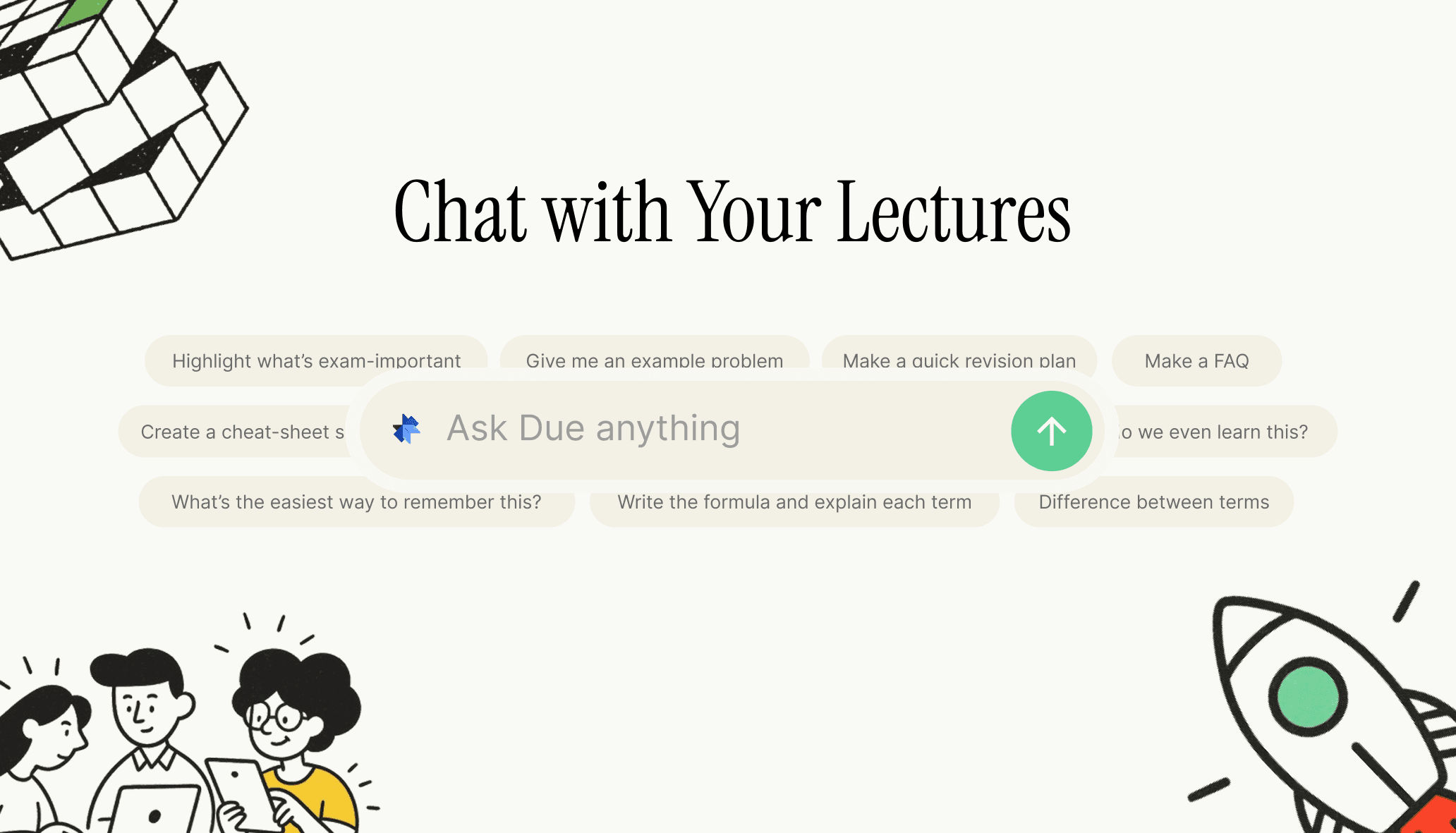
Step 3: Turn the transcript into notes that match how the subject is tested. A raw transcript is just a wall of text; you need to shape it. Group information into definitions, step-by-step processes, and comparative frameworks. For example, if you are studying Law, group your notes by case names and rulings; for Science, focus on hypotheses and experimental results.
Step 4: Do a quick cleanup pass. Since transcripts capture spoken word—including ‘umms’ and repetitions—a quick edit makes them much more readable.
Fix key academic terms and proper names.
Highlight and bold core definitions.
Pull out specific formulas or theoretical frameworks.
Mark examples that the lecturer emphasized for exams.
Add context lines where the lecturer referred to visual slides.
Split long monologues into digestible sections.
Step 5: Study smarter with the notes. Use your newly formatted notes for a revision loop. Instead of just reading, use the structured text to create active recall triggers. The notes serve as a high-fidelity reference point that you can revisit throughout the semester to ensure your understanding remains sharp.
What to Include in Your University Lecture Notes
To ensure your notes are truly effective for exam preparation, they should contain more than just a summary. You want to capture the specific 'flavor' of the academic discourse presented during the lecture.
Precise definitions and their meaning in plain English.
Thematic frameworks and when to apply them.
Detailed step-by-step processes or proofs.
Original case studies or worked examples mentioned in class.
Common misconceptions the lecturer warned against.
Direct hints about exam structure or potential questions.
Comparison tables for contrasting theories or methods.
Assumptions or conditions required for a specific rule to hold true.
Using Duetoday for Smarter Notes
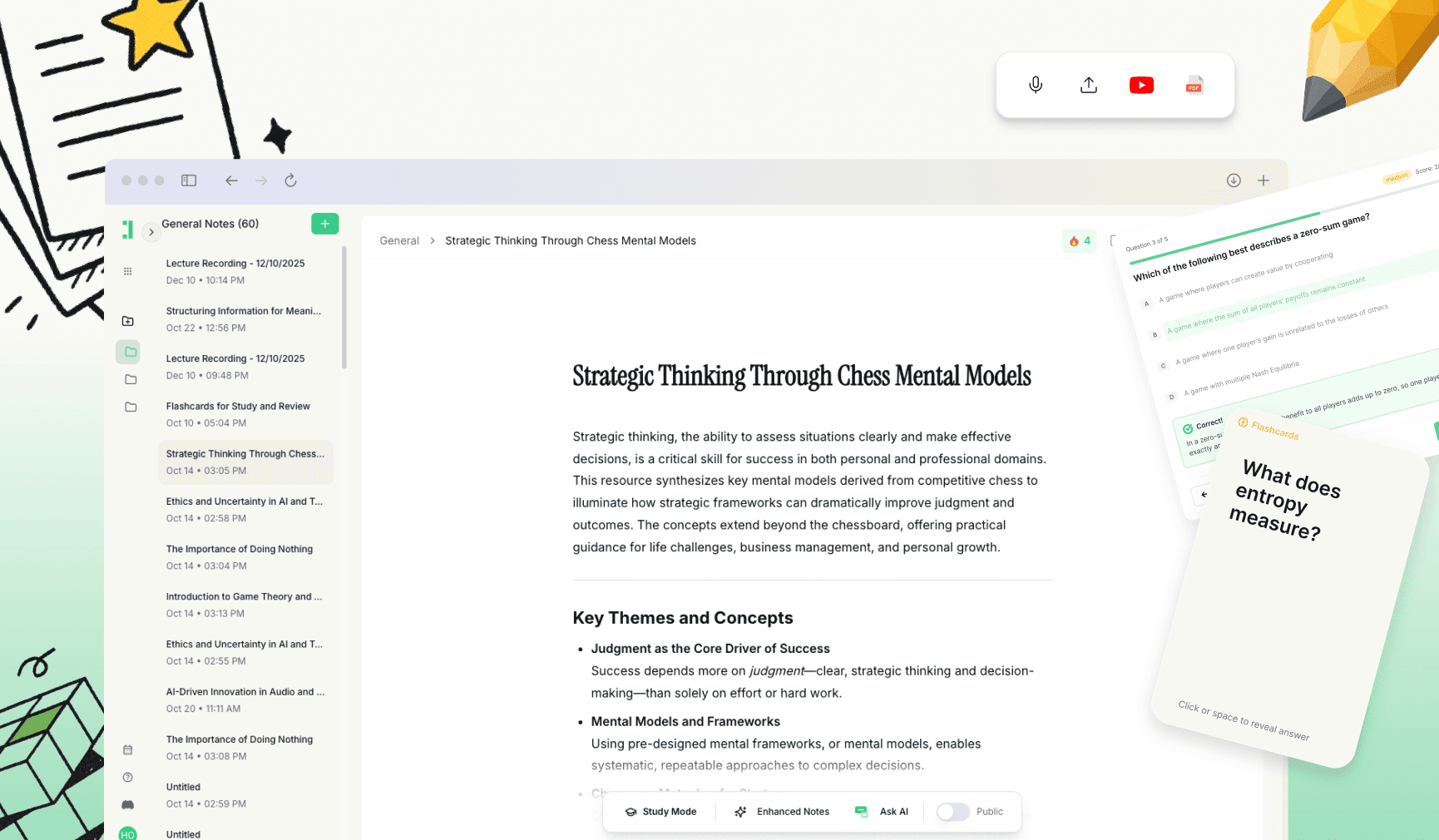
Duetoday acts as a dedicated AI note-taker designed specifically for students who want to maximize their study time. It streamlines the entire process by handling both the transcription and the organization of your lecture content, allowing you to focus on learning rather than formatting.
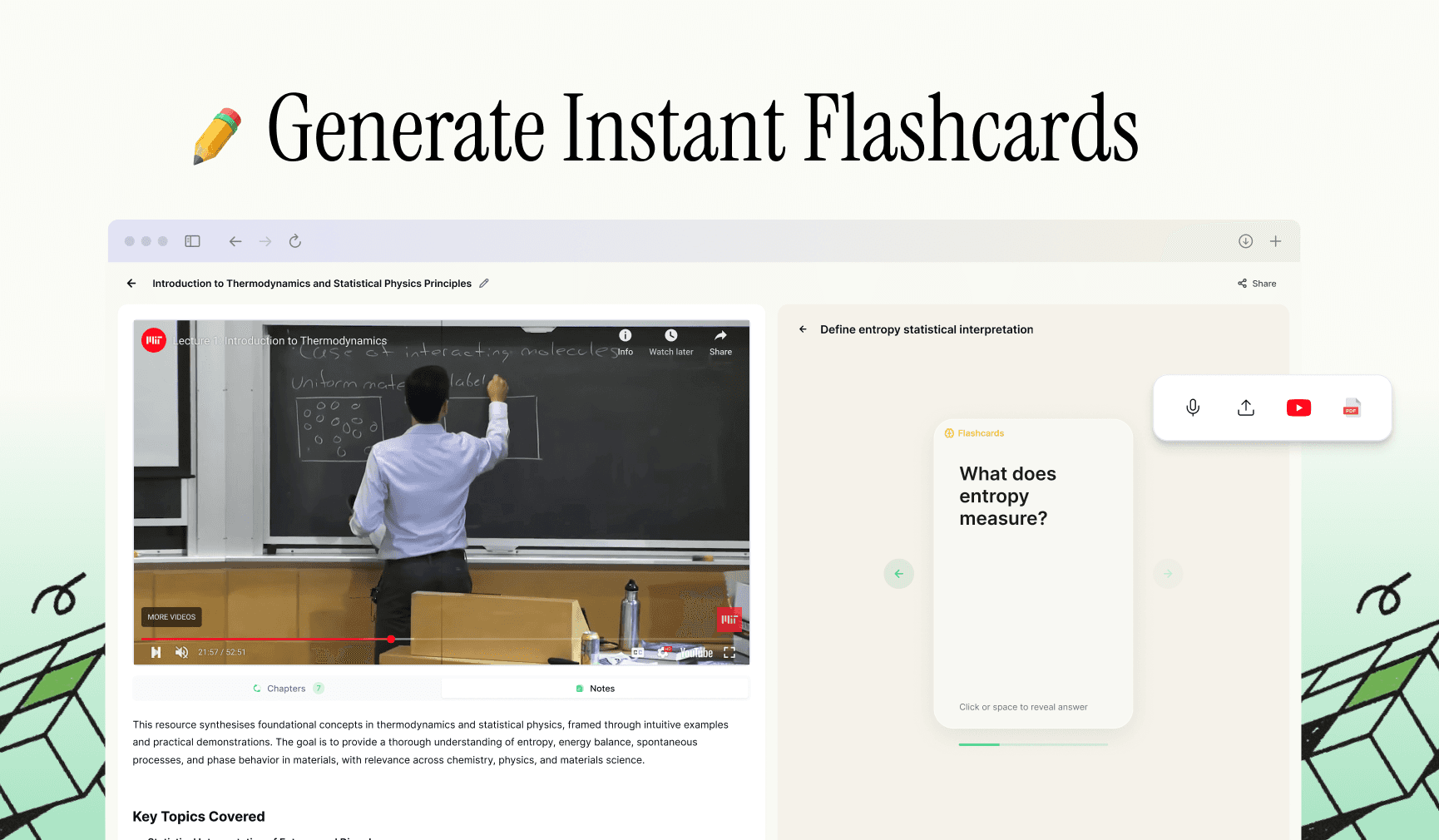
The platform supports live dictation and file uploads for both audio and video formats. Beyond just providing a transcript, Duetoday can generate organized study notes, flashcards, and practice quizzes tailored to your specific lecture. It even includes an AI tutor to help you clarify difficult concepts during your revision sessions.
Common Issues and Simple Fixes
Too far from the speaker: If your recording is muffled, try to sit in the front row or use an external directional microphone to improve the primary audio source quality.
Background noise: High-traffic areas or loud typing can interfere with clarity; choosing a quiet spot and keeping your recording device away from clicking keyboards helps significantly.
Multiple speakers: In seminar-style classes, make sure to use a tool that supports speaker labels so you can distinguish between student questions and professor answers.
Long lectures: For three-hour sessions, it is often more effective to split the recording into one-hour chapters to make the resulting notes more manageable and focused.
Transcription Example
Raw Transcript: "So, uh, the Second Law of Thermodynamics, right, it basically says that, well, entropy always increases in an isolated system, so things get more chaotic over time, okay?"
Cleaned Notes: Second Law of Thermodynamics: In an isolated system, the total entropy can never decrease over time; it can only remain constant or increase. Core Concept: Systems naturally evolve toward a state of maximum disorder (chaos).
Frequently Asked Questions
How accurate is lecture transcription for university subjects? Modern transcription models are highly accurate and can handle complex academic terminology, though a quick manual check of specific formulas or niche names is always recommended.
What file types can I use (audio/video)? You can use almost any standard media format, including MP3, WAV, and M4A for audio, or MP4, MOV, and AVI for video lecture recordings.
Can I use dictation instead of uploading a file? Yes, you can use live dictation to record the lecture in real-time if you are attending in person or watching a live stream.
Can I transcribe online lectures (Zoom/Teams/recorded video)? Absolutely; simply record the session or download the provided recording and upload the file to your transcription tool.
How long does it take to transcribe a 60-minute lecture? Most AI-powered tools can process a full hour of audio in just a few minutes, significantly faster than manual typing.
Is a transcript enough, or should I convert it into structured notes? A transcript is a great starting point, but converting it into structured notes makes the information much easier to scan, memorize, and use for revision.
Can I turn university notes into flashcards and practice questions? Yes, once you have a clean transcript, you can use study tools to automatically generate flashcards and quizzes for active recall practice.

Duetoday is an AI-powered learning OS that turns your study materials into personalised, bite-sized study guides, cheat sheets, and active learning flows.
GET STARTED
Most Powerful Study Tool
for Students and Educators
Try Out Free. No Credit Card Required.