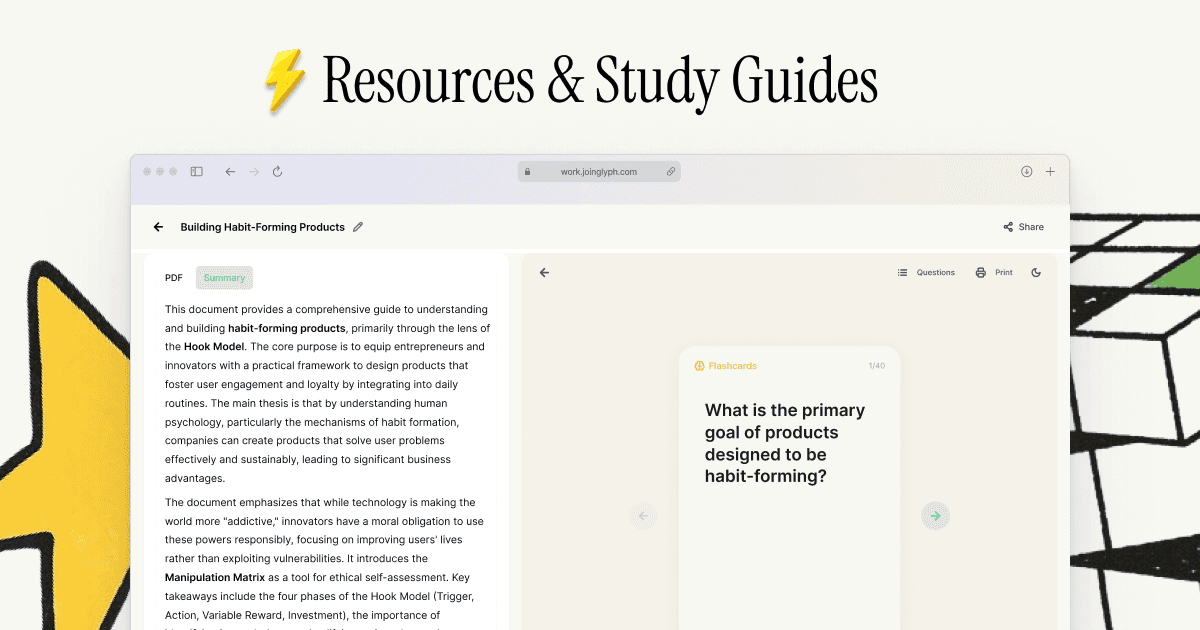
Convert any PDF to lab report outline instantly
Learn how to transform complex research papers and experiment data PDF to lab report outline using Duetoday's AI study tools for students.
PDF to lab report outline
Turning a raw PDF to lab report outline is one of the most effective ways to jumpstart your scientific writing process. Instead of staring at a blank page, you can extract the core hypotheses, methodologies, and data points from your source material to create a structured framework.
Duetoday makes it simple to convert dense academic papers or lab instructions into a clear, actionable guide. By using AI to parse your documents, you ensure that every critical section—from the abstract to the conclusion—is accounted for before you start writing.
TL;DR:
Quickly convert data-heavy PDFs into structured report skeletons.
Use Duetoday’s AI tutor to identify missing variables or experimental gaps.
Save hours on formatting and organization by automating the outline phase.
How to do PDF to lab report outline in Duetoday (step-by-step)
Upload your source PDF: Drag and drop your experiment instructions, data sheets, or research papers into the Duetoday dashboard.
Process the document: Let the AI scan the text. For better results, rename the file to something specific like Chemistry_Lab_Week_4 to keep your workspace organized.
Navigate to the 'Notes' tab: Select the primary document you want to use for your PDF to lab report outline.
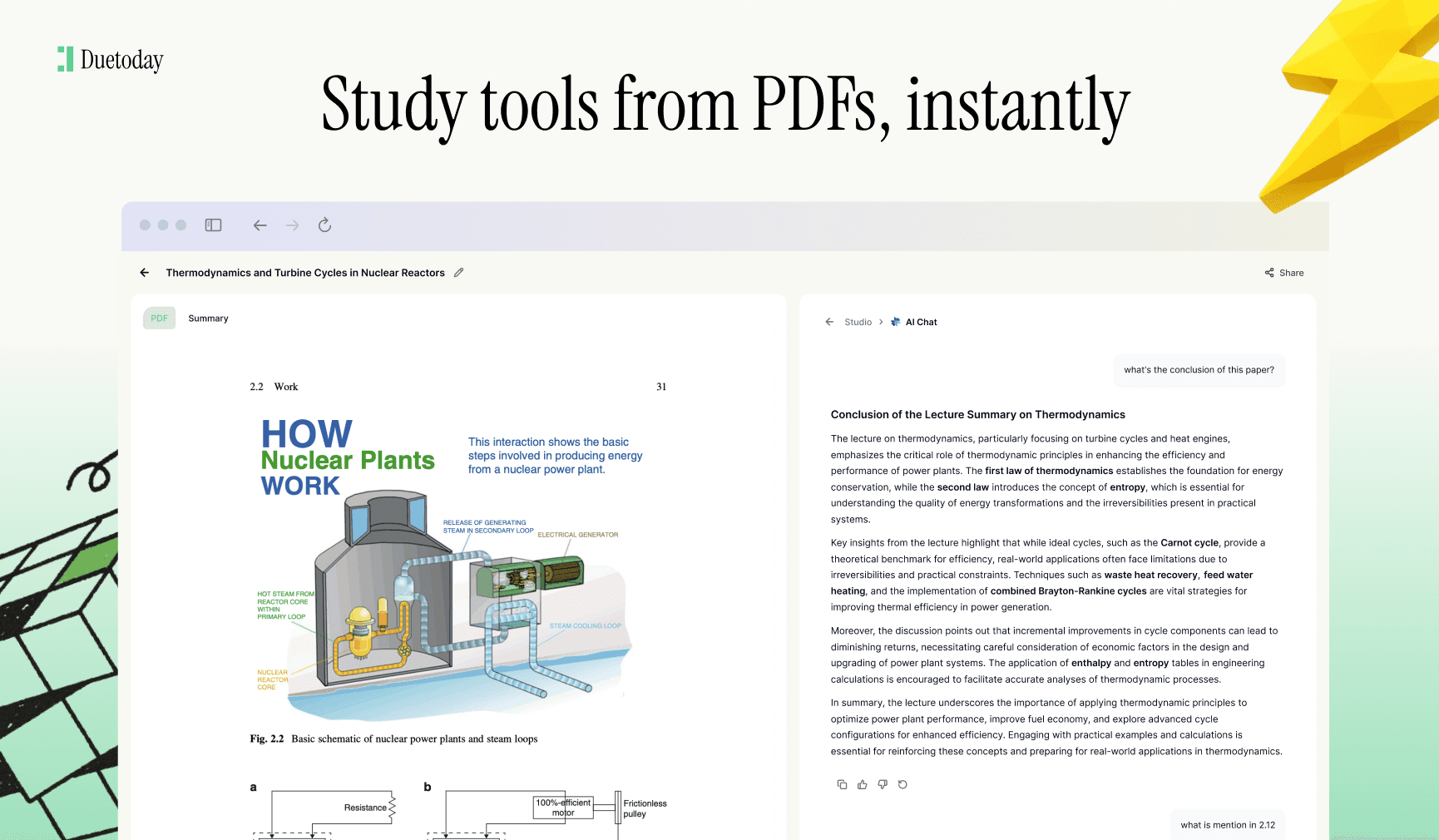
Use the AI Chat for extraction: Open the AI tutor side panel and ask it to Create a formal lab report outline based on this document.
Define your sections: Instruct the AI to include specific headings like 'Methodology', 'Results', and 'Discussion'.
Split by chapters: If your PDF contains multiple experiments, use the chapter split feature to generate separate outlines for each section.
Customize the level of detail: Ask the AI to provide bullet points under each heading for specific data sets found in the text.
Refine the hypothesis: Use the AI tutor to extract the specific objective stated in the PDF and place it at the top of your outline.
Select question styles: If you need to include a 'Review Questions' section, toggle the quiz generator to create practice prompts based on the lab's theory.
Review and edit: Manually adjust any headings to match your specific professor’s rubric or departmental guidelines.
Export your structure: Once the outline looks perfect, copy the text or export it to your favorite word processor.
What you can generate from your PDF
When you process a PDF to lab report outline, Duetoday doesn't just give you a list of titles. You can generate a full suite of study aids:
Flashcards: Automatically create cards for chemical formulas, units of measurement, or scientific laws mentioned in the PDF.
Quiz (MCQ): Generate a pre-lab quiz to test your understanding of the safety protocols and procedures.
AI Tutor: Ask the chat to explain complex results or clarify the statistical methods used in the source PDF.
Upload Your PDF Here
Mini example: Photosynthesis Rate Experiment
Input: A 12-page PDF containing a laboratory protocol on measuring oxygen production in Elodea plants under varying light intensities.
Output (Lab Report Outline):
I. Title: The Effect of Light Intensity on the Photosynthetic Rate of Elodea.
II. Introduction: Overview of photosynthesis; role of chlorophyll and light energy.
III. Hypothesis: If light intensity increases, then the rate of oxygen bubble production will increase proportionally.
IV. Materials: Elodea plants, 1% sodium bicarbonate solution, lamp, ruler, beaker.
V. Procedure: 8-step process for measuring distance and counting bubbles.
VI. Results: Table template for Distance (cm) vs. Bubble Count (per min).
VII. Discussion: Analyzing the inverse square law of light.
VIII. Conclusion: Summary of findings and potential sources of error.
Tips to get higher-quality results
Clean your PDF: Remove unrelated pages like cover letters or reference lists before uploading to focus the AI on the data.
Be specific in chat: Tell the AI, Include a section for statistical analysis using p-values found on page 4.
Context is key: If the lab is for a specific course (e.g., Organic Chemistry), mention that in your initial prompt for better terminology.
Use high-res scans: If you are uploading a handwritten lab manual, ensure the lighting is bright so the AI can read the text clearly.
Troubleshooting
Scanned PDF text is garbled: Try using a dedicated OCR tool or re-scanning the document in high-contrast mode.
Outline is too brief: Ask the AI tutor to expand on the methodology section with more granular steps.
Formatting is messy: Use the 'Simplify' button in the dashboard to strip away unnecessary PDF styling before generating the outline.
Missing data points: Ensure the PDF isn't password-protected, which can sometimes block the AI from reading the full content.
Final step
Stop struggling with scientific structure and start writing faster. Turn your next PDF to lab report outline with Duetoday and keep your focus on the science, not the formatting. Try Duetoday for free today.

Duetoday is an AI-powered learning OS that turns your study materials into personalised, bite-sized study guides, cheat sheets, and active learning flows.