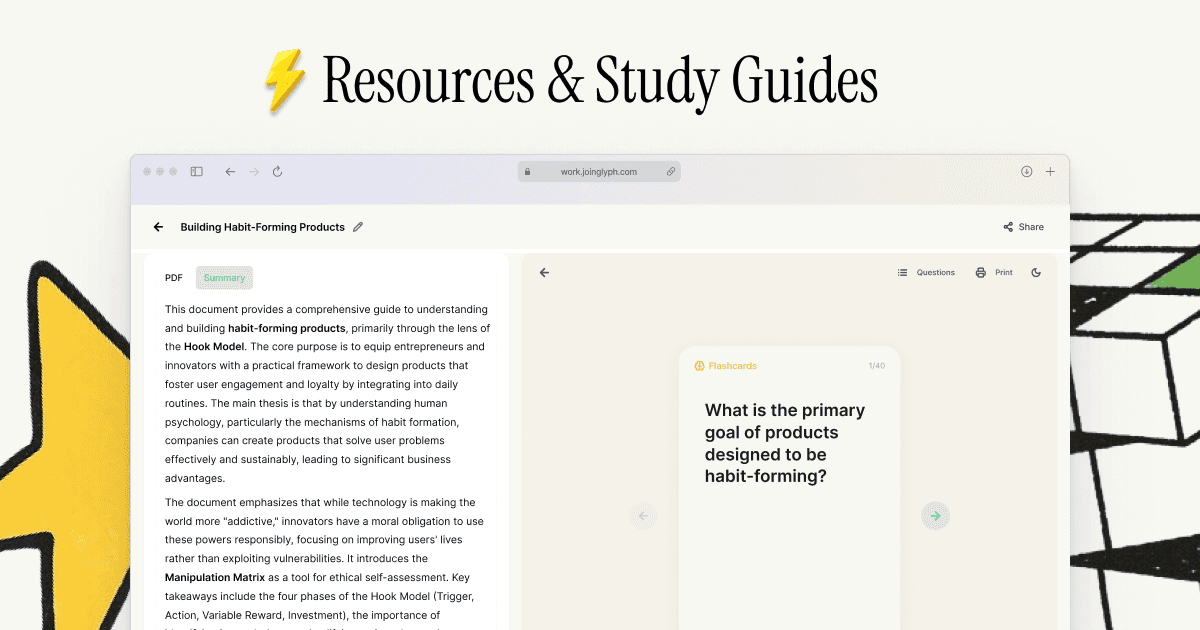
Convert any PDF to chronological notes instantly
Learn how to transform your lecture PDFs into organized, chronological notes using Duetoday AI to save hours of manual typing and study better.
PDF to chronological notes
Transforming a PDF to chronological notes allows you to follow the natural flow of a lecture or textbook and retain information much faster. When you convert a PDF into organized, time-ordered notes, you eliminate the chaos of scattered information and create a logical roadmap for your study sessions.
TL;DR:
Upload any PDF and get structured, chronological notes in seconds.
Convert complex slides into clear, linear summaries.
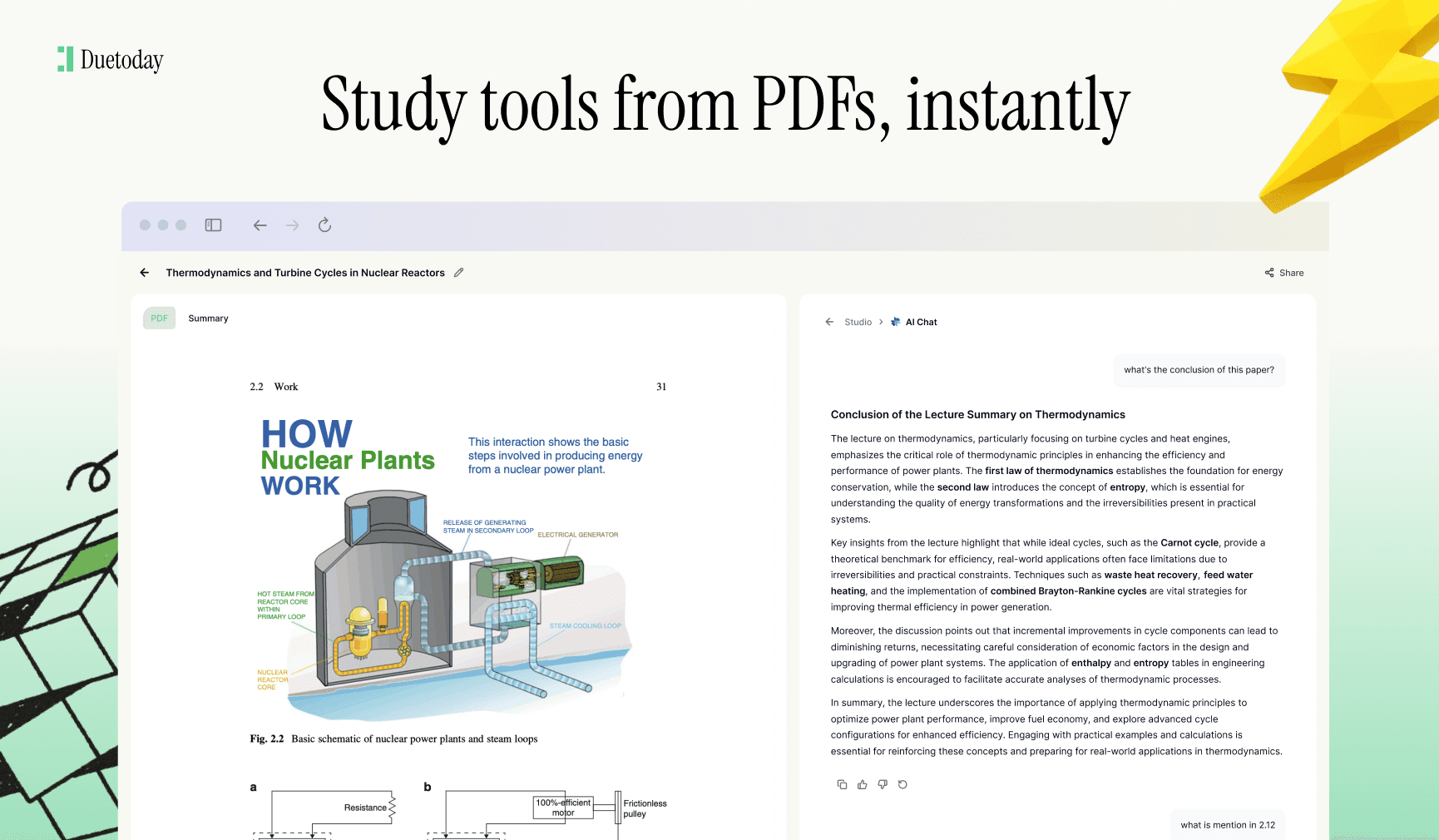
Interact with your notes via an AI tutor for deeper understanding.
How to do PDF to chronological notes in Duetoday (step-by-step)
Create your Duetoday account: Sign in to the dashboard to access your personal study workspace.
Upload your PDF: Drag and drop your textbook chapter or lecture slides into the upload zone.
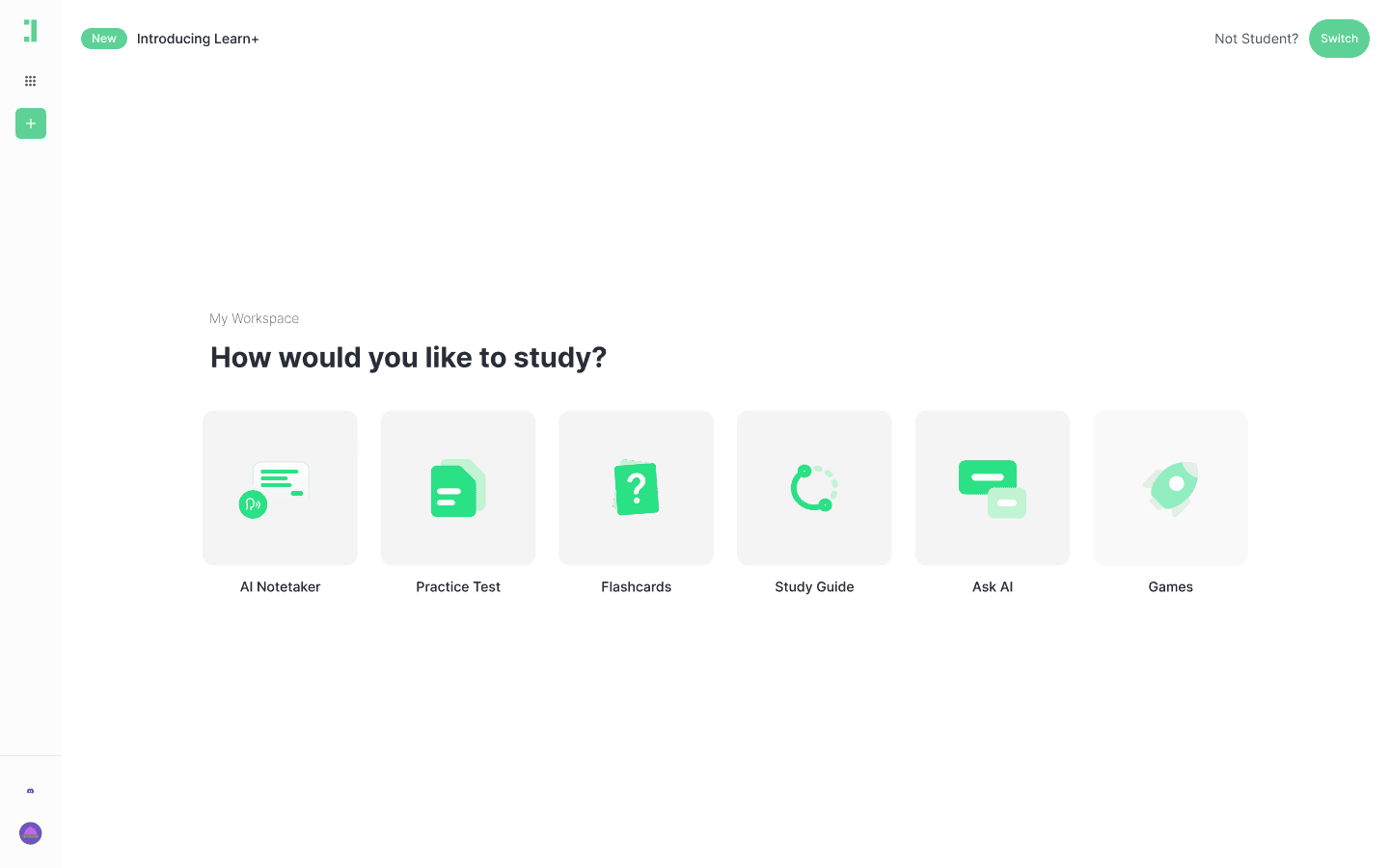
Select your output type: Choose 'Notes' to ensure the AI focuses on a structured narrative rather than just flashcards.
Name your session: Give your file a clear name like Intro to Psych - Chapter 1 to keep your chronological bank organized.
Define the structure: Use the settings to specify that you want a linear, chronological summary and not just bullet points of random facts.
Process the document: Click generate; the AI will scan every page to identify the logical progression of the content.
Review the Draft: Check the initial summary to ensure it captures the timeline or sequence of the original PDF correctly.
Rename headings: Edit the generated headings to match your syllabus or specific lecture dates.
Split chapters: If your PDF is massive, use the tool to split it into smaller, more manageable chronological sections.
Refine the detail level: Ask the AI to expand on specific sections that feel too brief to ensure your notes are comprehensive.
Generate complementary tools: Once your notes are ready, toggle the 'Quiz' or 'Flashcard' options to test your knowledge of the sequence.
Save and Export: Keep your notes in the cloud or export them to your preferred study app for offline review.
What you can generate from your PDF
Beyond simple summaries, turning a PDF to chronological notes opens up several helpful study formats:
Linear Study Guide: A section-by-section breakdown of your material.
AI Tutor Chat: Ask What happened after X? to verify the sequence of events.
Sequential Flashcards: Cards organized in the order they appear in the text to help with memory mapping.
Knowledge Quizzes: Short tests that follow the logic of your document from start to finish.
Upload Your PDF Here
Mini example: History of European Industrialization
Input: A 15-page PDF document covering the timeline and technological shifts from 1760 to 1840.
Output (Chronological Notes):
1760s - The Spark: Introduction of the spinning jenny and early textile innovations in Britain.
1780s - Steam Power: James Watt’s improvements to the steam engine revolutionize factory locations.
Early 1800s - Transport: The development of the locomotive and expansion of the rail network.
1840s - Social Impact: Shifts in urbanization and the rise of the industrial working class.
Summary: The transition from agrarian economies to machine-led manufacturing over an 80-year period.
Tips to get higher-quality results
Clean the PDF: Remove the table of contents and bibliography pages before uploading for a cleaner chronological flow.
Use High-Quality Sources: Ensure the text isn't blurry so the AI can distinguish between different headers and dates.
Provide Context: If the PDF is part of a specific course, add a small note about the subject matter to help the AI emphasize the right details.
Sectioning: For 100+ page books, upload one chapter at a time to maintain the highest level of detail in your notes.
Troubleshooting
Scanned PDF is unreadable: Try using a clearer copy or ensuring the scan is straight. If text can't be highlighted with your mouse, it may need a better OCR pass.
Chronology is jumbled: This happens with multi-column PDFs. Check that the original file flows naturally or try splitting the pages.
Too much irrelevant info: Use the 'Focus' feature to tell the AI to ignore introductory fluff and focus only on core facts.
Output is too short: Change your settings to 'Detailed' or 'Comprehensive' to force the AI to extract more information from each page.
Master your studies with Duetoday
Stop wasting hours trying to re-type your slide decks and textbooks. Converting your PDF to chronological notes is the fastest way to move from reading to understanding. Let Duetoday do the heavy lifting so you can focus on mastering the material. Start organizing your notes today and see the difference in your grades.

Duetoday is an AI-powered learning OS that turns your study materials into personalised, bite-sized study guides, cheat sheets, and active learning flows.