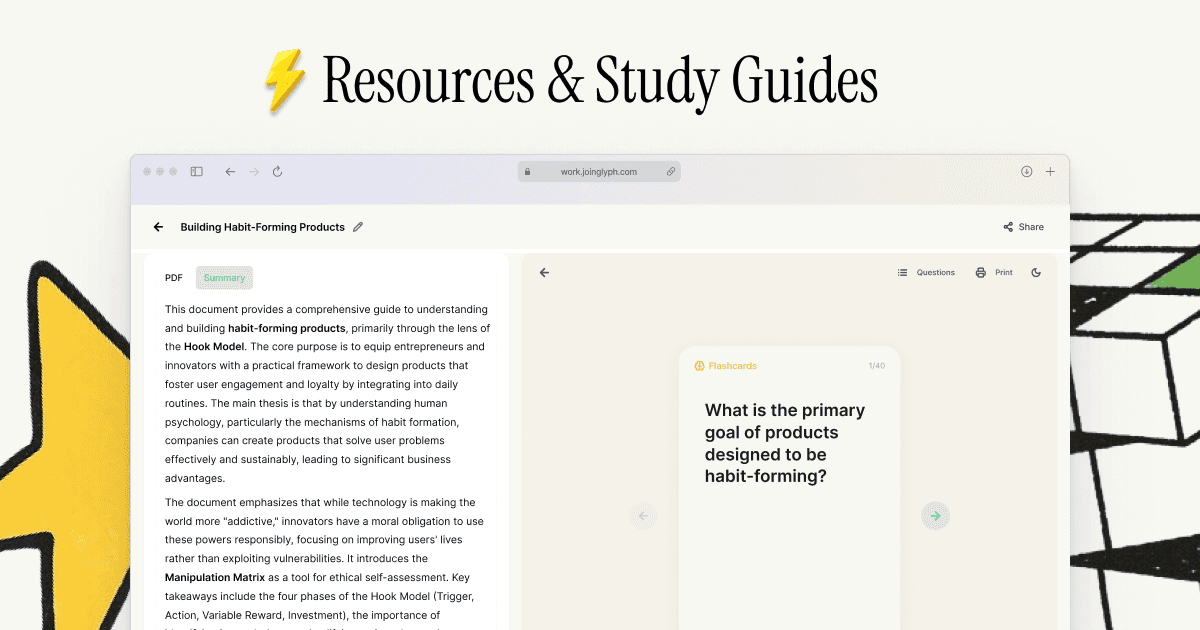
The Fastest Way to Convert Your PDF to Algorithms Notes
Learn how to turn complex PDFs into structured algorithms notes and study guides effortlessly using Duetoday's AI-powered learning tools.
PDF to algorithms notes: Streamline Your Technical Studies
Learning complex data structures and computational logic is challenging, but converting your PDF to algorithms notes shouldn't be. Whether you are prepping for a coding interview or a computer science final, Duetoday helps you transform dense textbooks and lecture slides into actionable study material instantly.
TL;DR:
Upload any computer science PDF and get structured notes in seconds.
Generate targeted flashcards for Big O notation and specific logic patterns.
Access an interactive AI tutor to clarify complex pseudocode or edge cases.
How to do PDF to algorithms notes in Duetoday (step-by-step)
Log in to Duetoday: Access your dashboard and select the 'New Study Set' option to begin the conversion process.
Upload your PDF: Drag and drop your algorithms textbook chapter, research paper, or lecture slides into the upload zone.
Filter Junk Pages: Use the page selector to exclude unnecessary content like cover pages, bibliographies, or index pages to keep your notes focused.
Select Your Goal: Choose 'Generate Notes' from the dashboard to initiate the automated synthesis of your PDF to algorithms notes.
Define Chapters: If your PDF covers multiple topics (e.g., Sorting and Graph Theory), use the 'Split by Chapter' feature to create organized, distinct study sections.
Choose Note Style: Select your preferred format, such as Cornell Notes for structured reviewing or Outline style for quick skimming of logic steps.
Adjust Depth: Use the settings to toggle between 'High Level' for concepts or 'Deatiled' for literal pseudocode and line-by-line breakdowns.
Generate Flashcards: Simultaneously create a deck of flashcards from the text to help memorize time complexities and data structure properties.
Review and Rename: Check the generated headings for accuracy; you can easily rename sections to match your syllabus or lecture titles.
Refine with AI Chat: If a specific algorithm like 'Red-Black Trees' is still confusing, use the side-panel AI tutor to ask for a simpler explanation based on your PDF.
Export Your Work: Once satisfied, export your PDF to algorithms notes as a new document or keep them in the Duetoday cloud for mobile access.
What you can generate from your PDF
Structured Study Guides: Hierarchical breakdowns of algorithms, including best/worst case scenarios and space complexity.
Coding Flashcards: Cards designed for term-definition pairs or 'Cloze' deletions to test your knowledge of specific syntax or steps.
Algorithmic Quizzes: Multiple-choice or short-answer questions that test your ability to predict the output of a specific logic flow.
Logic Summaries: Simplified explanations of the 'why' behind specific computational patterns.
Upload Your PDF Here
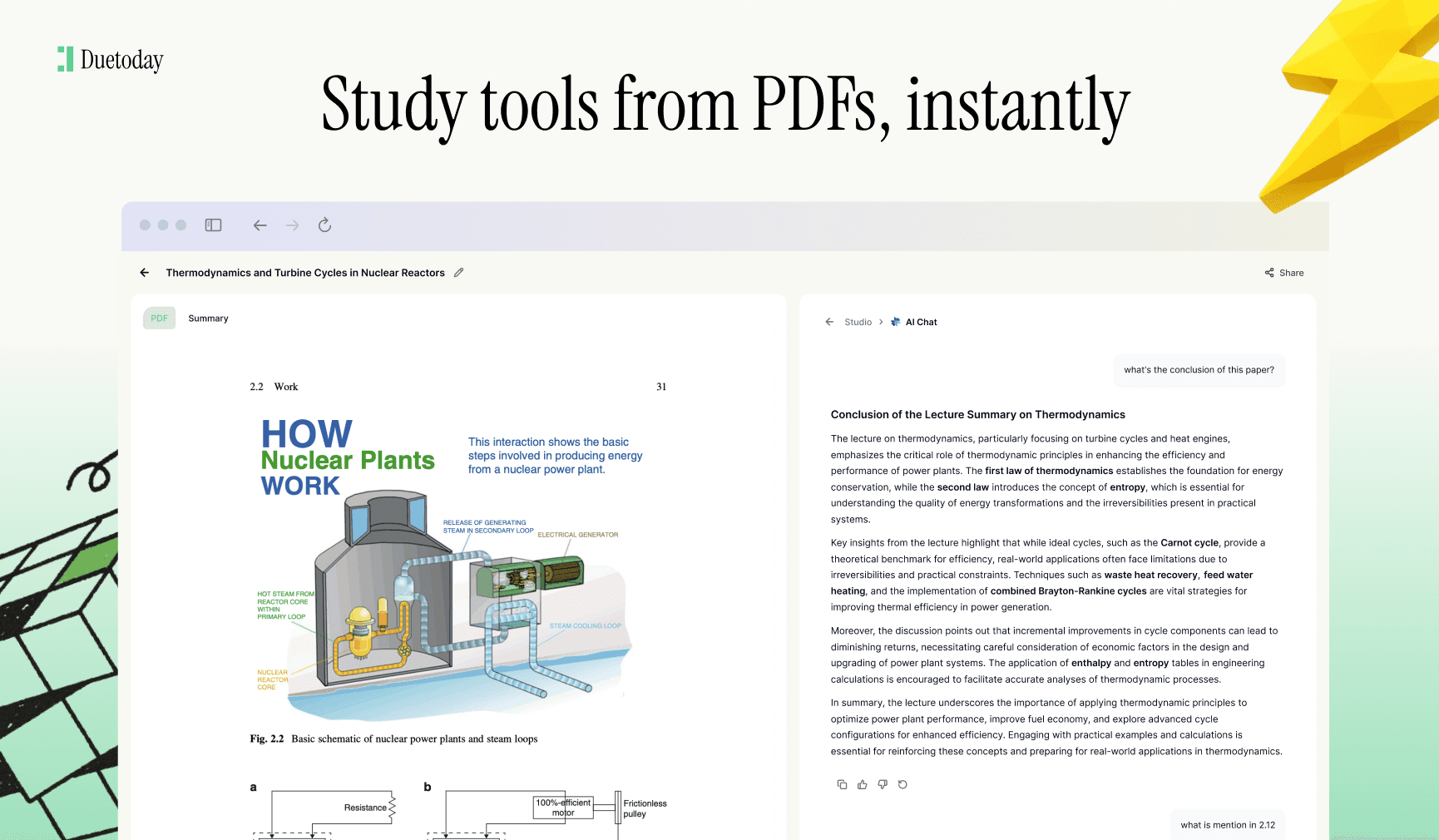
Mini example: Balanced Binary Search Trees
Input: A 3-page PDF excerpt explaining the mechanics of AVL Trees, including rotation logic and balancing factors.
Output (Sample Notes):
Title: AVL Tree Fundamentals
Key Definition: A self-balancing binary search tree where the height difference between subtrees is at most 1.
Core Concept: Rotations (Left, Right, Left-Right, Right-Left) are used to maintain balance after insertions or deletions.
Complexity: Search, Insert, and Delete operations all maintain O(log n) time.
Summary: AVL trees are more rigidly balanced than Red-Black trees, providing faster lookups but potentially slower insertions due to frequent rotations.
Tips to get higher-quality results
Clean Your PDF: Ensure your PDF doesn't have overlapping text or heavy watermarks that might confuse the text extraction.
Segment by Topic: If your PDF is a 500-page textbook, upload it in chapters. Smaller chunks allow the AI to be more granular and specific.
Provide Context: Use the 'Focus' feature to tell the AI if you want to focus on mathematical proofs or practical coding implementations.
Remove Non-Content: Delete image-heavy advertisements or blank filler pages before processing to improve the logic flow.
Troubleshooting
Scanned PDF shows errors → Try using an OCR tool first or ensure the upload is a high-resolution scan.
Notes are too brief → Change the 'Detail Level' in your settings to 'In-Depth' and re-run the generation.
Output is too generic → Highlight specific sections of the PDF and use the 'Chat' feature to ask for notes specifically on that text.
Wrong terminology → If the AI uses a different name for a concept, you can manually edit any heading or definition in the Duetoday editor.
Final step: Level up your CS studies
Stop wasting hours manually copying pseudocode and definitions. Let Duetoday handle the heavy lifting of turning your PDF to algorithms notes so you can focus on what actually matters: mastering the logic and passing your exams. Ready to transform the way you learn? Try Duetoday for free today.

Duetoday is an AI-powered learning OS that turns your study materials into personalised, bite-sized study guides, cheat sheets, and active learning flows.