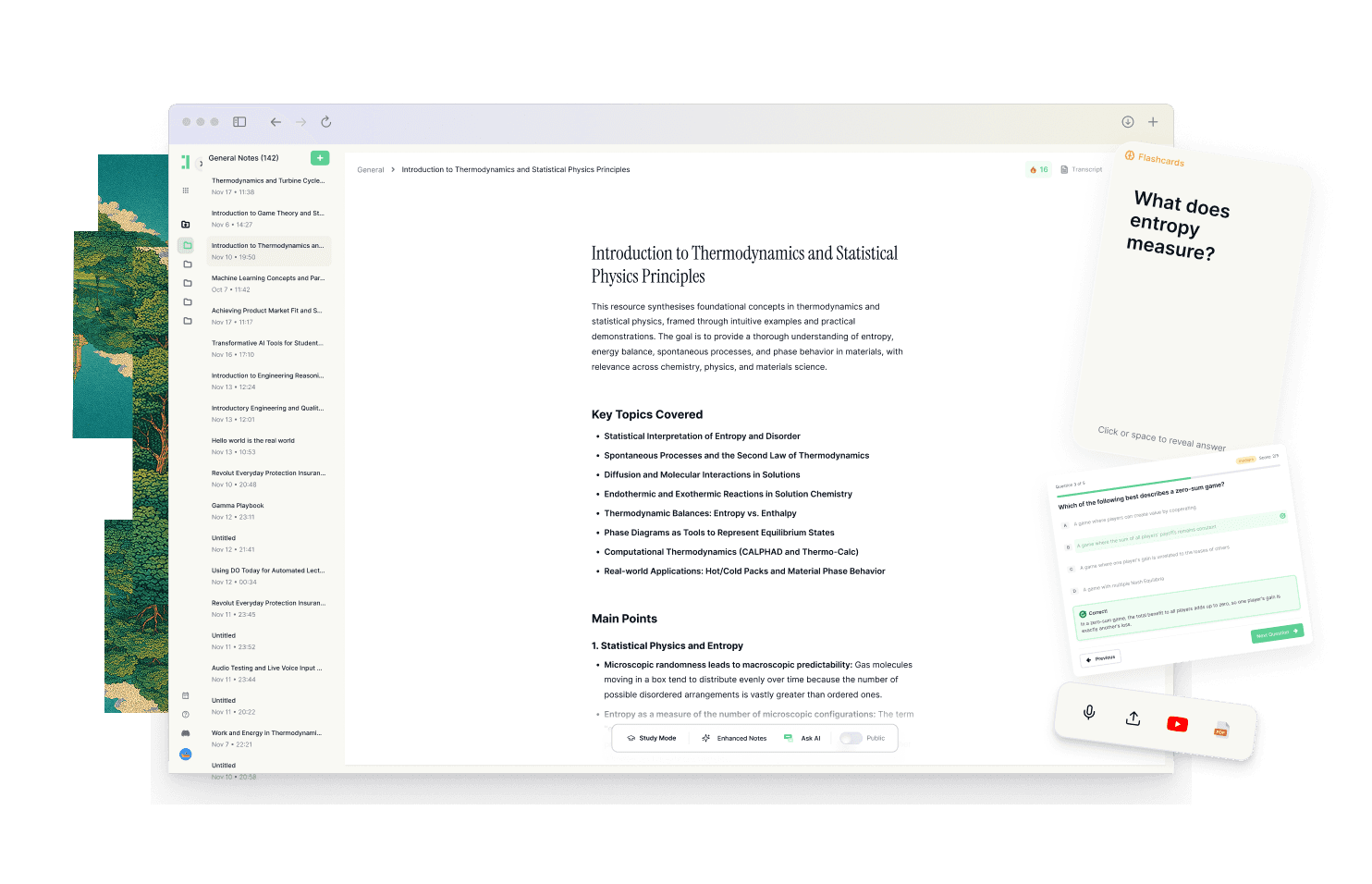
Best Turboscribe Alternatives in 2026 [For Students/Teachers]
Discover why Duetoday is the best alternative to TurboScribe for students who need more than just transcriptions. Compare features, workflows, and study tools.
Why people look for a TurboScribe alternative
Many students and lifelong learners start their journey with TurboScribe because of its impressive speed and accuracy in converting audio to text. It is a powerful utility for anyone who needs to transcribe hours of lecture footage or interviews quickly. However, once the transcription is finished, students often find themselves staring at a wall of text. The challenge isn't just getting the words on the page; it is turning those words into knowledge that sticks. This is usually where the search for an alternative begins, as learners realize they need a system that helps them process information rather than just storing it.
TurboScribe is excellent at what it does, but it is ultimately a single-purpose tool. For a university student juggling a dozen modules, having a transcript in one tab, a PDF in another, and a flashcard app in a third creates a fragmented workflow. People look for alternatives because they want to reduce the friction between receiving information and mastering it. They want a workspace where the transcript isn't the final destination, but the starting point for active learning and exam preparation.
Quick verdict
At-a-glance:
Best for building a knowledge vault: TurboScribe
Best for a real study system: Duetoday
Best if you want both: Use TurboScribe for high-volume raw transcription, and Duetoday for retention and planning.
What TurboScribe is great at
TurboScribe excels in the niche of high-accuracy, high-volume transcription. It is built for efficiency, allowing users to upload massive amounts of audio or video and receive text outputs in record time. For researchers or journalists who need to archive every word spoken during a long interview, its reliability is hard to beat. The interface is clean and focused, ensuring that users can get in, upload their files, and get out with their text without unnecessary distractions.
The power of TurboScribe lies in its simplicity and its robust AI models. It handles background noise and technical terminology with a high degree of precision. It is a fair choice for someone whose primary goal is document creation. If you are someone who enjoys manually highlighting transcripts and building your own index of raw text files, TurboScribe provides a solid, dependable foundation for that specific task.
Where TurboScribe breaks for students on deadlines
The primary issue for students using transcription-only tools is the phenomenon of productive procrastination. It feels like work to transcribe a lecture, but having a transcript is not the same as understanding the content. Students often spend hours organizing these files into folders without ever actually learning the material. When a deadline approaches, a 5,000-word transcript becomes a liability rather than an asset. It is too long to read quickly and lacks the structure needed for rapid revision.
Furthermore, TurboScribe does not solve the problem of fragmentation. A student might use it for a recorded lecture, but then they still have to manually create summaries in Notion, make flashcards in Anki, and keep track of their exam dates in Google Calendar. This disconnected workflow makes it easy for important details to fall through the cracks. Because the tool is markdown-first and text-heavy, it struggles to accommodate the mixed-media reality of modern learning, which involves YouTube videos, research PDFs, and handwritten notes alongside audio recordings.
What Duetoday does instead
Duetoday is designed as a unified learning workspace that goes far beyond simple transcription. While it handles lecture recordings and audio uploads with ease, the transcription is just one part of a larger retention loop. When you upload a lecture or a YouTube link, Duetoday doesn't just give you text; it creates a structured environment where that content is automatically turned into study outputs like summaries, cheatsheets, and comprehensive study guides. It bridges the gap between raw information and exam readiness by generating active recall tools, such as flashcards and quizzes, directly from your materials.
The core of Duetoday is its ability to keep everything connected to the source. You can ask an AI tutor questions about your specific lectures, and the answers are grounded in the files you uploaded, not generic web data. This reduces the risk of hallucinations and ensures your study sessions remain relevant to your curriculum. By integrating with tools like Notion and Google Calendar, Duetoday ensures that your study plan aligns with your real-world schedule. It turns your learning materials into an execution layer where the next right action—whether it is reviewing a difficult concept or finishing a practice quiz—is always obvious.
How the Duetoday workflow feels in real life
Imagine it is Monday afternoon and you have just finished a complex biology lecture. Instead of just saving the recording, you upload it to Duetoday. By the time you get home, the system has transcribed the audio, generated a summary of the key concepts, and created a set of flashcards for the week ahead. You don't have to spend your evening deciding what to study; the system has already prepared the materials for you. You spend twenty minutes on the bus reviewing the generated quiz to test your initial understanding.
As the exam approaches, your weekly reviews become more focused. Because your PDFs, YouTube clips, and lecture notes are all in one place, you can use the AI chat to clarify a specific point from three weeks ago without scrolling through hours of text. Your Google Calendar reminds you of the upcoming test, and Duetoday shows you exactly which tasks are left to complete. You aren't just managing files; you are following a repeatable system that moves you closer to mastery every day.
Duetoday vs TurboScribe in plain English
Setting up TurboScribe is fast because it only does one thing. You upload a file and wait for the text. However, the learning curve actually happens after the transcription is done, as you have to figure out how to use that text effectively. Duetoday requires a slightly more intentional setup because it organizes your entire learning life. However, once your materials are inside, the effort required to produce study aids is significantly lower because the system handles the transformation of data into usable knowledge.
In terms of mixed-media support, TurboScribe is limited to audio and video. Duetoday, by contrast, thrives on variety. It can pull in content from websites, PDFs, and even Notion pages, creating a holistic view of your subject. While TurboScribe is a great vault for storing what was said, Duetoday is a cognitive partner that helps you remember it. For a student, the difference is between having a library of transcripts and having a personal tutor who knows exactly what you've been taught.
Who should choose Duetoday
Duetoday is the ideal choice for university students who are overwhelmed by the sheer volume of information they need to process. If you find yourself lecture-heavy and deadline-driven, you need more than a transcript; you need an automated way to generate practice questions and summaries. It is perfect for those who want a structured, unified workflow where all their study materials—from YouTube to lecture audio—are connected in one place.
Who should still choose TurboScribe
TurboScribe remains the better option for professionals who strictly need high-volume, local-first transcription without the extra study features. If you are a transcriptionist, a lawyer, or a researcher whose job ends once the transcript is accurate, you will appreciate its dedicated focus. It is also suitable for those who prefer to build their own systems from scratch using custom plugins and have no need for integrated flashcards or calendar-based study planning.
Verdict
The choice between these two tools comes down to whether you need a vault or a system. TurboScribe is an excellent vault for storing raw audio data as text. Duetoday is a comprehensive study system that turns that same data into long-term retention. For students who want to stop organizing and start learning, the unified workflow of Duetoday offers a clarity that simplified transcription tools cannot match.
FAQ
Is Duetoday only flashcards and quizzes? No, while active recall is a major part of the system, it also includes transcription, AI-powered summaries, cheatsheet generation, and an AI tutor. It acts as a full workspace for organizing all your academic materials, not just a testing tool.
Does Duetoday work for lectures and YouTube? Yes, Duetoday is built to handle multiple types of inputs including direct lecture recording uploads, audio files, and YouTube links. It processes these alongside PDFs and websites to create a connected learning experience.
Will it help reduce cramming? By automatically generating study materials like flashcards and quizzes as soon as you upload a lecture, Duetoday encourages consistent review. The integration with your calendar helps pace your learning so you don't end up facing a mountain of information the night before an exam.
Can I still use Notion or Google Calendar? Yes, Duetoday integrates with both. You can pull content from Notion into your learning brain and connect your Google Calendar to ensure your study tasks are aligned with your actual deadlines and available time.
Who is TurboScribe still best for? TurboScribe is best for users who only require the raw text of their audio files and do not need any additional study tools or AI tutoring. It serves professional transcribers and long-term researchers who want simple, high-volume transcription services.
The most effective way to learn is to move information from the screen into your memory as efficiently as possible.
Read More Alternative To Comparison
Turn lectures, PDFs, and notes into AI-Powered summaries, bite-sized
courses, flashcards, quizzes, and study plans.